The difference between a $2,500 and $12,000-plus four-person infrared sauna lies in its heaters, materials, electromagnetic shielding, and structural physics. Heating-element quality drives both manufacturing cost and therapeutic performance. Human skin peaks near 9.4 µm, within the 3.0 to 15 µm band commonly described as far infrared in photobiology.
Spectral Economics: What Emitter Type Reveals About Unit Cost
The primary driver of manufacturing cost and therapeutic efficacy in a home sauna is the spectral power distribution (SPD) of its heating elements. The ISO 20473 standard defines the infrared spectrum across distinct boundaries: Near-Infrared (NIR) spans 0.78 to 3.0 µm, Mid-Infrared (MIR) spans 3.0 to 50 µm, and Far-Infrared (FIR) spans 50 to 1000 µm. But in human photobiology, the term 'far-infrared' is commonly applied to wavelengths between 3.0 and 15 µm. This specific band matches the natural thermal emission profile of human skin (which peaks near 9.4 µm) and activates TRPV1 (transient receptor potential vanilloid 1) channels in nerve endings, triggering rapid systemic vasodilation and deep, profuse sweating.
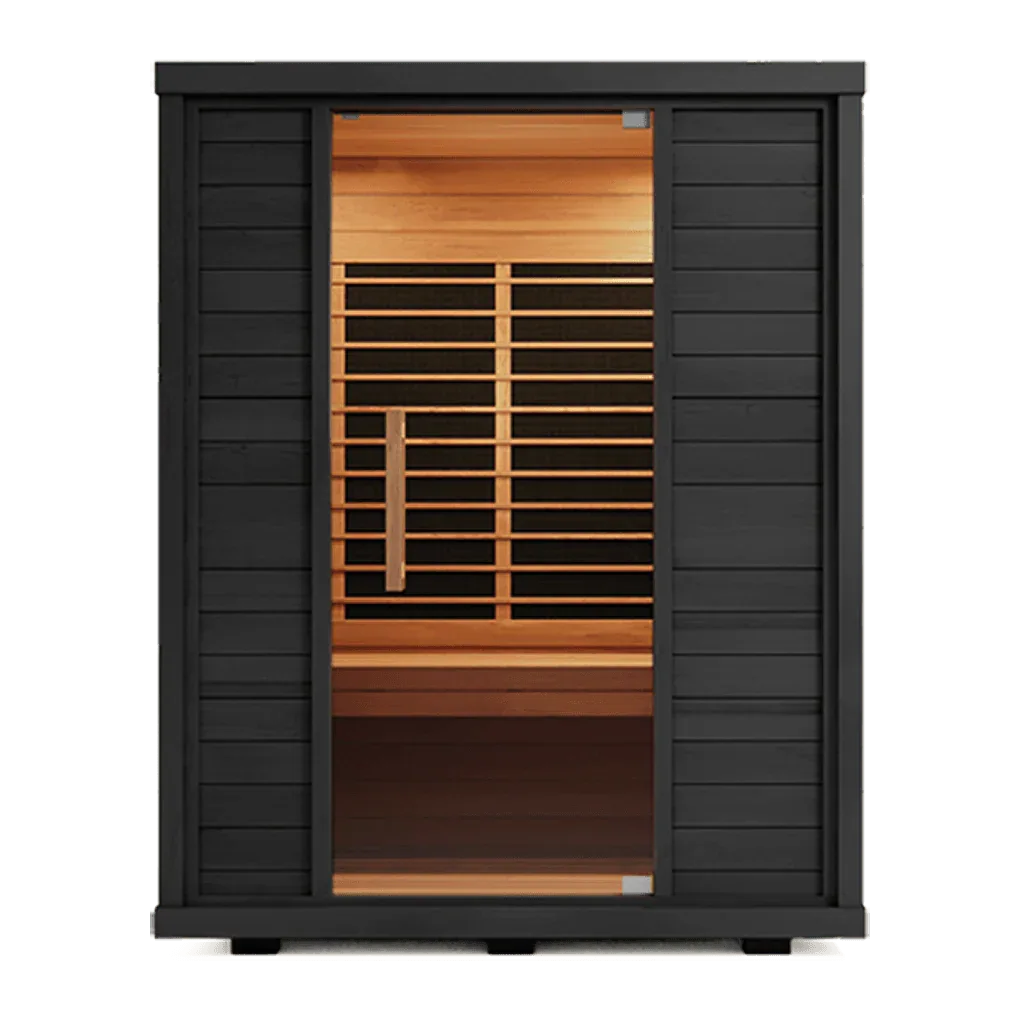
Low-cost saunas typically use basic carbon-fiber sheets printed with organic graphite paste. These sheets are cheap to manufacture but suffer from low thermal emissivity, uneven heat distribution, and high electromagnetic fields. Because they cannot sustain a uniform high-density output, they fail to emit consistently within the optimal 9.4 µm band. In contrast, premium systems, such as the Sun Home Equinox, use micro-crystallized carbon-ceramic composite heaters. By combining the high-emissivity properties of carbon with the structural heat retention of ceramic compounds, these advanced emitters maximize output within the precise wavelength windows required for therapeutic tissue penetration. Sun Home Saunas
Furthermore, true 'full-spectrum' saunas that incorporate Near-Infrared (NIR) and visible red light add significant manufacturing complexity. Near-infrared radiation in the 780 to 1400 nm range targets Cytochrome c Oxidase (CCO) in the mitochondria, boosting adenosine triphosphate (ATP) production and accelerating cellular repair. Delivering this biologically active energy safely requires medical-grade light-emitting diodes (LEDs) or specialized quartz halogen lamps. These emitters must be paired with protective, heat-resistant glass lenses and sophisticated cooling heat-sinks. Lower-end manufacturers often cut corners by installing cheap incandescent 'red light' bulbs that generate simple surface heat rather than the precise, calibrated wavelengths necessary to stimulate CCO. This distinction in emitter engineering represents a major cost differentiator.
Thermal Budget Scaling: Power, Insulation, and Heater Density
A 4-person sauna represents a massive volume of air, typically between 150 and 250 cubic feet, that must be heated and maintained at therapeutic temperatures of 120°F to 150°F (49°C to 66°C). Also when four active adults enter the cabin, they introduce up to 320 kg of water-rich biomass, which acts as a powerful heat sink. Managing this thermal load requires a highly engineered heating network.
To achieve this without scorching the occupants, premium saunas use the Stefan-Boltzmann law ($P = \epsilon \sigma A T^4$) to optimize heat delivery. By maximizing the surface area ($A$) of the heaters and maintaining high emissivity ($\epsilon \approx 0.98$), they can deliver high total power (typically 3.5 kW to 5.0 kW) while keeping emitter surface temperatures low enough to prevent wood charring or the off-gassing of wood resins. This requires high-grade resistive alloys, such as industrial Nichrome (Nickel-Chromium), encapsulated in protective layers. In contrast, cheap units use smaller, low-density elements run at extremely high temperatures. This creates localized hot spots, poor heat distribution, and rapid component degradation.
Insulation is equally critical to the thermal budget. Premium manufacturers use double-walled tongue-and-groove construction with an internal air gap or non-toxic, radiant-barrier insulation (such as food-grade aluminum foil shields). Budget saunas often feature single-walled construction or use cheap, industrial polyurethane foam or fiberglass insulation, which can off-gas toxic volatile organic compounds (VOCs) when exposed to sustained temperatures above 110°F.
Material Cost Drivers: Cedar Wood and EMF Shielding Requirements
The choice of timber is not merely aesthetic; it is a critical safety and longevity factor. Grade-A, kiln-dried Canadian Red Cedar (Thuja plicata) is the gold standard for sauna construction. It contains natural phenols (plictic acid) that make it highly resistant to rot, mold, and warping under extreme temperature and humidity cycles. Also its low thermal density ensures that the wood remains comfortable to sit on, even at peak operating temperatures. But sourcing premium, vertical-grain, kiln-dried cedar is exceptionally expensive. To lower prices, budget manufacturers turn to cheap engineered plywood, hemlock composites, or softwoods held together by chemical glues that warp and split over time.
Another critical engineering cost is electromagnetic field (EMF) and extremely low frequency (ELF) shielding. Standard 240V AC electrical currents running through large heater panels naturally generate alternating magnetic fields. Cheap saunas can emit EMF levels exceeding 100 mG (milligauss) directly at the heater surface, which is undesirable for wellness environments.
Mitigating this requires expensive electrical engineering. Premium brands use bifilar winding techniques, where two parallel wires carry current in opposite directions, canceling out the magnetic fields to near-zero levels. Also all power delivery lines are encased in grounded, heavy-gauge metal conduits, and the control units are shielded behind metal plates. This ensures that EMF levels remain below 2.0 mG, and ELF levels below 10 V/m, at the point of body contact.
While single-person alternatives like an Infrared Sauna Blanket offer an effective, portable solution for individual recovery sessions , they cannot replicate the spacious, low-EMF environment and shared social recovery benefits of a premium, solid-wood 4-person cabin.
Frequently Asked Questions
Why is there such a huge price difference between cheap and premium 4-person infrared saunas?
The price discrepancy, which ranges from $2,500 to well over $12,000, is determined by the engineering of the heating elements, material purity, electromagnetic shielding, and structural physics. Premium units use advanced components like carbon-ceramic composite heaters and Grade-A Canadian Red Cedar. In contrast, cheaper units save on manufacturing costs by using low-quality heaters, single-walled construction, and inferior materials that can off-gas toxic compounds.
What is the best type of wood for a home infrared sauna and why?
Grade-A, kiln-dried Canadian Red Cedar is the gold standard for sauna construction. It contains natural phenols that make the wood highly resistant to rot, mold, and warping under extreme temperature and humidity cycles. Also its low thermal density ensures that the wood remains comfortable to sit on, even at peak operating temperatures.
How do premium saunas handle EMF radiation compared to budget models?
Budget saunas can emit electromagnetic field (EMF) levels exceeding 100 milligauss (mG) directly at the heater surface. Premium brands mitigate this risk by using bifilar winding techniques, where two parallel wires carry current in opposite directions to cancel out magnetic fields. They also encase power delivery lines in grounded, heavy-gauge metal conduits and shield control units behind metal plates.
What is the difference between cheap carbon heaters and premium heaters in infrared saunas?
Cheap saunas typically use basic carbon-fiber sheets printed with organic graphite paste, which suffer from low thermal emissivity, uneven heat, and high electromagnetic fields. Premium systems use micro-crystallized carbon-ceramic composite heaters to combine carbon's high emissivity with ceramic's structural heat retention. This design allows premium heaters to safely maximize output within the precise wavelength windows required for therapeutic tissue penetration.
What should I look for to ensure a "full-spectrum" infrared sauna is actually effective?
An effective full-spectrum sauna must use medical-grade light-emitting diodes (LEDs) or specialized quartz halogen lamps paired with protective, heat-resistant glass lenses and cooling heat-sinks. These high-end emitters deliver the precise, calibrated wavelengths necessary to stimulate cellular repair. Lower-end manufacturers often cut corners by installing cheap incandescent "red light" bulbs that generate simple surface heat rather than therapeutic wavelengths.