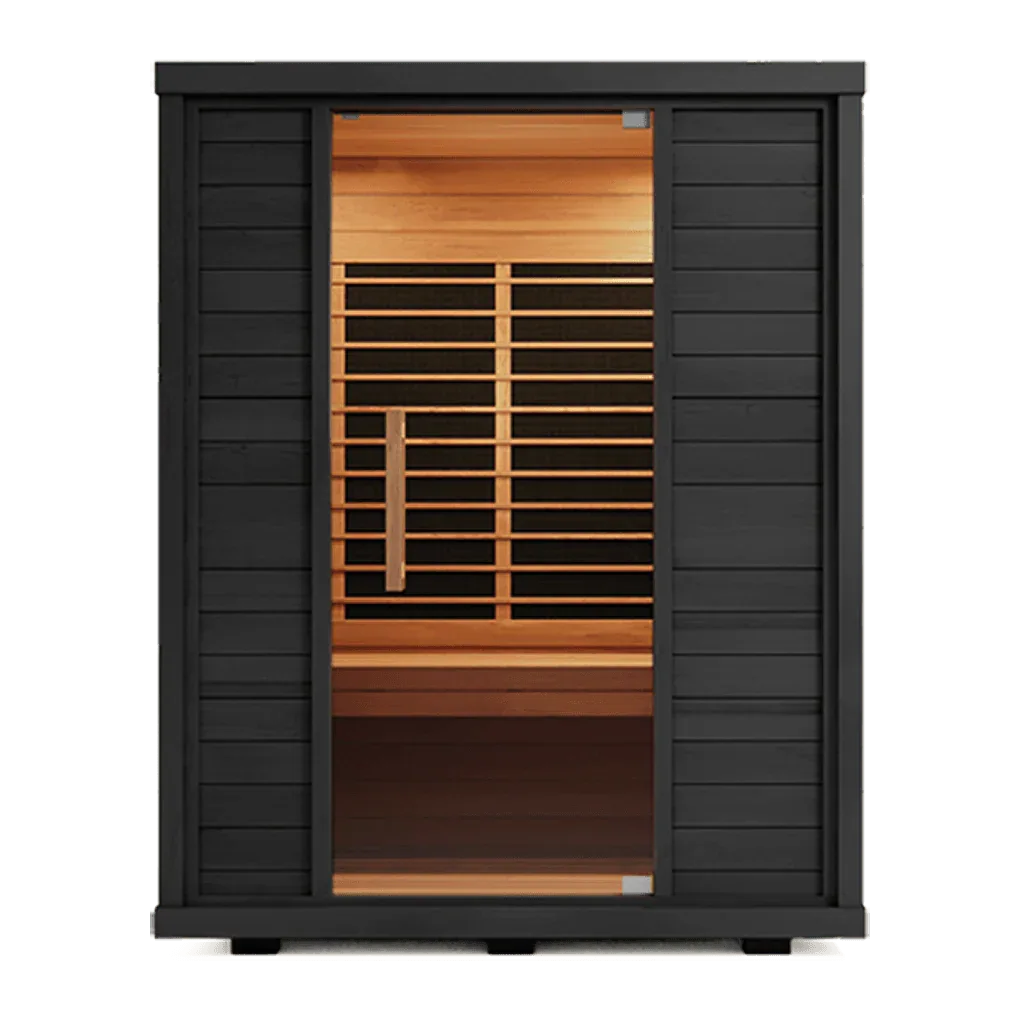

Choose a two-person hemlock sauna with ample emitter coverage and heaters positioned at the back, sides, and calf level for uniform warmth. Compact cabins that reduce emitter surface area create uneven heating and cold spots. Canadian Hemlock limits heat loss with thermal conductivity of about 0.11 W/m·K, helping direct energy from low-EMF carbon and ceramic heaters toward both occupants.
Radiative Transfer Geometry in Hemlock-Enclosed 2-Person Cabins
Most compact 2-person saunas make the critical mistake of reducing emitter surface area to fit the cabin's footprint. This design flaw leads to uneven heat distribution and cold spots, undermining the therapeutic value of the session. To prevent this, premium cabin engineering utilizes Canadian Hemlock (Tsuga canadensis). With an exceptionally low thermal conductivity of approximately 0.11 W/m·K, Hemlock acts as a highly efficient thermal boundary, minimizing radiative and conductive heat loss to the surrounding environment.
This low conductivity ensures that the electromagnetic energy emitted by low-EMF carbon and ceramic heaters is directed inward toward the occupants rather than escaping through the cabin walls. In a premium layout like the Sun Home Equinox, heaters are strategically positioned to optimize the "view factor", the mathematical proportion of radiation leaving the emitter that directly intercepts the user's skin. By placing heaters at back, side, and calf levels, the cabin achieves a uniform radiative heat flux, ensuring both occupants experience deep, therapeutic thermal penetration without requiring skin-scorching air temperatures. Sun Home Saunas
Biologically Effective IR Spectra: Wavelength Selection and Emitter Placement
Understanding the biophysics of infrared radiation is essential to maximizing therapeutic outcomes. According to ISO 20473 standards, the infrared spectrum is divided into near-infrared (0.78 to 3.0 µm), mid-infrared (3.0 to 50 µm), and far-infrared (50 to 1000 µm). Wellness-focused thermal therapy primarily targets the 0.8 to 14 µm range to achieve physiological activation.
Far-infrared wavelengths in the 7 to 14 µm range match the resonant frequency of water molecules in human tissue. This resonance allows for gentle absorption and deep dermal penetration (up to 3–4 mm), which uncoils collagen structures, stimulates microcirculation, and upregulates heat shock proteins such as HSP70. Conversely, near-infrared light in the 0.8 to 1.4 µm range targets intracellular photorereceptors, specifically cytochrome c oxidase within the mitochondrial electron transport chain. This stimulates adenosine triphosphate (ATP) production and accelerates cellular repair. A premium 2-person hemlock cabin utilizes a sophisticated multi-wave configuration to deliver both deep systemic thermal storage and localized cellular rejuvenation.
Thermal Mass and Heat Flux Uniformity in Low-Conductivity Enclosures
The stability of a sauna's microclimate depends heavily on the thermal mass of its enclosure. Canadian Hemlock features a volumetric heat capacity of approximately 1.2 MJ/m³·K. This property allows the wood to absorb and steady the climate inside the cabin, preventing sudden temperature drops when the door is opened and closed.
During a standard 30-minute session, this thermal inertia limits internal temperature drift to less than 0.5°C per minute. This level of environmental stability is crucial for establishing a sustained, controlled rise in the user's core and tympanic temperature to approximately 38.5°C. Reaching and maintaining this thermal threshold is the primary mechanism for triggering the body's acute heat shock response, which aids in cellular cleanup and protein folding. Cheaper, thin-walled saunas constructed from synthetic materials or lower-grade softwoods fail to maintain this steady heat flux, resulting in fluctuating core temperatures and a compromised therapeutic experience.
Volatile Organic Compound (VOC) Prolonged Release and Respiratory Safety
While the physiological benefits of heat therapy are vast, the safety of the breathing environment inside a sauna cabin is often overlooked. Under high-heat conditions (up to 65°C/150°F), many woods and synthetic adhesives offgas toxic volatile organic compounds (VOCs). Cedar, while aromatic and naturally rot-resistant, contains high concentrations of plicatic acid and natural terpenes. For individuals with sensitive airways or asthma, these natural VOCs can cause respiratory irritation and mild bronchoconstriction, which counteracts the beneficial systemic vasodilation of the therapy.
Kiln-dried Canadian Hemlock is a non-allergenic, odorless softwood that exhibits exceptionally low natural terpene levels. Testing reveals that premium, untreated hemlock saunas maintain CO₂ and VOC offgassing levels below 0.01 ppm, preventing airway irritation and preserving cutaneous blood flow, as measured by laser Doppler imaging. This makes a hemlock-constructed cabin the ideal choice for a clean, pure breathing environment during intense cardiovascular conditioning.
Operator-Adjustable Dosimetry: Peak Power vs. Sustained Exposure Protocols
To unlock the full clinical benefits of sauna therapy, users must treat their sessions as a precise, dosed exposure. This is known as thermal dosimetry. Rather than simply blasting the body with maximum heat, a scientifically optimized protocol balances peak emitter power with sustained exposure.
A typical therapeutic dose involves preheating the cabin to 50–55°C (122–131°F) to prime the autonomic nervous system. Upon entering, the user undergoes a 25-to-30-minute session where the emitters maintain a continuous, low-intensity flux of far-infrared energy. This sustained, low-intensity exposure delivers an energy dose of approximately 150 to 200 Joules per square centimeter of skin surface. This slow, steady thermal load safely improves cardiac output and induces deep, restorative sweating without causing acute sympathetic nervous system distress. For those looking to incorporate portable options alongside a dedicated cabin, an Infrared Sauna Blanket can provide targeted on-the-go thermal therapy, though it cannot match the full-body, multi-angle radiative geometry of a dedicated two-person Hemlock cabin.
Material Selection Tradeoffs: Hemlock vs. Cedar vs. Thermally Modified Woods
When investing in a premium home wellness sanctuary, choosing the right material is paramount to long-term durability and safety. While red cedar has been a traditional favorite due to its resistance to moisture and decay, its strong aroma can be polarizing and irritating to sensitive individuals. On the other hand, thermally modified woods often undergo chemical or extreme thermal alterations that can compromise structural integrity or release trace compounds under high heat.
Kiln-dried Canadian Hemlock represents the gold standard for indoor, low-EMF infrared cabins. Hemlock resists warping and splitting under extreme temperature cycling, boasts high structural density, and remains entirely neutral and scent-free. This ensures that your investment retains its aesthetic appeal and structural performance for decades. Choosing a hemlock cabin backed by a lifetime warranty and flexible financing options (such as payments starting from $199/month) completely eliminates risk, transforming a substantial financial decision into a smooth lifestyle upgrade.
Frequently Asked Questions
Why is Canadian Hemlock preferred over Cedar for people with sensitive airways?
Cedar contains natural terpenes and plicatic acid, which can offgas at high temperatures and cause respiratory irritation or mild bronchoconstriction in sensitive individuals. In contrast, kiln-dried Canadian Hemlock is a non-allergenic, odorless softwood with exceptionally low natural terpene levels. Testing shows that premium hemlock saunas maintain CO₂ and VOC offgassing levels below 0.01 ppm, ensuring a clean and safe breathing environment.
How does the thermal mass of Canadian Hemlock help maintain a stable temperature inside the sauna?
Canadian Hemlock has a volumetric heat capacity of approximately 1.2 MJ/m³·K, which allows the wood to absorb and steady the climate inside the cabin. This thermal inertia prevents sudden temperature drops when the door is opened and closed, limiting internal temperature drift to less than 0.5°C per minute. This stability is crucial for establishing the sustained rise in core temperature required to trigger the body's heat shock response.
What are the specific therapeutic benefits of far-infrared vs. near-infrared wavelengths in a sauna?
Far-infrared wavelengths (7 to 14 µm) penetrate deep into the dermal tissue to uncoil collagen, stimulate microcirculation, and upregulate heat shock proteins. Near-infrared wavelengths (0.8 to 1.4 µm) target photoreceptors inside the mitochondria to stimulate ATP production and accelerate cellular repair. Together, a premium multi-wave configuration delivers both deep systemic thermal storage and localized cellular rejuvenation.
What is the recommended session protocol for achieving optimal thermal dosimetry?
An optimized protocol begins by preheating the sauna cabin to 50–55°C (122–131°F) to prime the autonomic nervous system. The user then undergoes a 25-to-
Related Reading
Pros
- Excellent thermal insulation (0.11 W/m·K) prevents energy waste
- Hypoallergenic, non-gassing kiln-dried hemlock wood is safe for sensitive airways
- Even radiative heat distribution with targeted multi-emitter placement
Cons
- Requires a dedicated indoor space with standard power access
- Premium price point reflects high-grade materials and engineering standards
Technical Verdict
From an engineering perspective, Canadian Hemlock provides the optimal balance of low thermal conductivity, high volumetric heat capacity, and structural stability for indoor infrared cabins. This thermal efficiency ensures stable, deep-tissue penetration at safer, more comfortable air temperatures. For a premium, non-toxic, and scientifically validated home sanctuary, the Sun Home Equinox is the absolute benchmark.
→ View Specs & Pricing