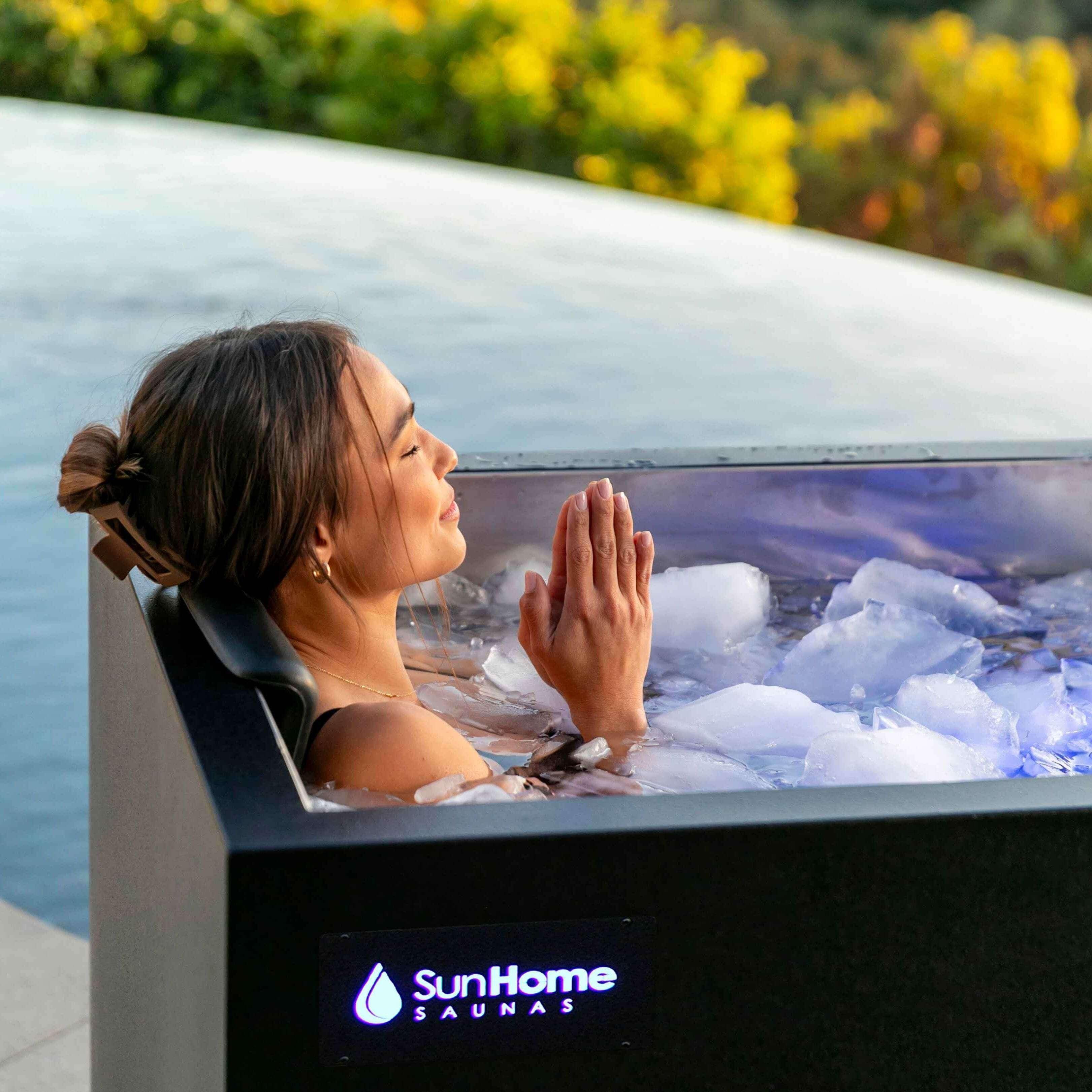
Buy a home cold plunge with precise digital temperature control that can maintain water between 10°C and 15°C. This range creates the skin-to-water temperature difference needed to trigger physiological adaptations without extreme cellular stress or hypothermia. Reliable cooling also preserves that therapeutic gradient throughout each session, giving you consistent conditions for recovery, stress management, and sleep.
Thermal Gradient Physics: Why Water Conducts Heat 24x Faster Than Air
The sanctuary experience begins the moment your skin contacts the water. To understand why a cold plunge feels so fundamentally different from standing in cold air, we must look to the laws of thermodynamics. Water possesses a thermal conductivity rating roughly 24 times greater than that of stationary air. When you submerge your body, energy transfer occurs via conduction rather than convection, rapidly pulling thermal energy away from your skin. This creates a steep, immediate temperature gradient between your core and the surrounding medium.
To achieve the optimal therapeutic effect, this gradient must be tightly controlled. A skin-to-water temperature delta that targets a 10–15°C water temperature is the sweet spot for triggering physiological adaptations without inducing extreme cellular stress or hypothermia. Investing in a highly engineered system like the [Plunge Cold Plunge ] ensures that your water remains at a precise, digitally calibrated temperature, maintaining this vital thermodynamic gradient consistently throughout your session.
The TRPA1/TRPM8 Cold Receptor Cascade and Sympathetic Activation
As you lower yourself into the cold water, your sensory nervous system instantly awakens. This intense feeling of presence is mediated by specific thermoreceptors located in your skin. The primary sensors responsible for detecting cold are the Transient Receptor Potential Melastatin 8 (TRPM8) and Transient Receptor Potential Ankyrin 1 (TRPA1) ion channels. TRPM8 responds to moderate cold temperatures (below 26°C), while TRPA1 is activated by noxious cold (typically below 17°C).
When these receptors trigger, they send a cascade of electrical signals directly to your central nervous system, activating a powerful sympathetic outflow. This is the physiological origin of the legendary 'cold shock' response. The immediate result is a massive surge of norepinephrine and epinephrine from both the adrenal medulla and sympathetic nerve terminals. This hormonal spike sharpens mental focus, improves mood, and establishes a profound state of cognitive clarity that lasts for hours after you exit your sanctuary.
RBM3 Induction: Caloric Expenditure via Brown Adipose Tissue UCP1
Beyond the mental clarity, cold therapy acts as a quiet metabolic powerhouse within your cellular architecture. Under the influence of cold-induced sympathetic activation, your body begins to express cold-shock proteins, most notably RNA-binding motif protein 3 (RBM3). RBM3 plays a crucial role in maintaining muscle mass, preventing atrophy, and facilitating structural synaptic plasticity, which supports long-term brain health.
Simultaneously, repeated exposure to cold water upregulates Mitochondrial Uncoupling Protein 1 (UCP1) within your brown adipose tissue (BAT). Unlike standard white fat, which stores energy, brown fat is packed with mitochondria and specializes in thermogenesis, burning lipids to generate heat. The activation of UCP1 allows protons to leak across the inner mitochondrial membrane, bypassing ATP synthesis to produce direct thermal energy. This process can increase your baseline thermogenic capacity by approximately 45% per session, turning your quiet recovery sanctuary into a highly efficient engine for caloric expenditure and metabolic health.
Post-Immersion Reactive Hyperemia and Inflammatory Cytokine Clearance
The benefits of your cold sanctuary do not end when you step out of the water. In fact, the physical transformation is just beginning. During submersion, the massive sympathetic response triggers profound peripheral vasoconstriction, shunting blood from your limbs to your vital organs to preserve core temperature. Once you exit, this process reverses in a phenomenon known as reactive hyperemia.
As your tissue begins to warm, endothelial nitric oxide synthase (eNOS) is activated within your blood vessels, leading to rapid vasodilation. A fresh wave of oxygenated, nutrient-rich blood floods back into your peripheral tissues. This natural pumping mechanism accelerates cellular waste clearance, significantly reducing markers of muscle damage and systemic inflammation, such as Creatine Kinase (CK) and Interleukin-6 (IL-6), within two hours of your plunge. You emerge not only physically restored but deeply relaxed, ready for a night of restorative, deep sleep. Experiencing this level of recovery is simple with a premium setup like the [Plunge Cold Plunge ], designed to deliver this biological flush daily.
Session Timing and Temperature Parameters per ISO 13731-2006
To unlock these physiological benefits safely and consistently, your cold practice must be guided by established human thermal physiology standards. Under ISO 13731, human thermal strain is carefully calculated based on exposure time, water temperature, and individual biometrics. A scientifically validated protocol does not require extreme, dangerous endurance tests. Instead, consistency and precise dosimetry are key.
Research demonstrates that the optimal therapeutic window is achieved with water temperatures maintained between 10°C and 15°C (50°F to 59°F). Sessions should last between 2 to 5 minutes per exposure, accumulating up to 11 to 15 total minutes of cold exposure per week. Exceeding these parameters does not yield linear increases in benefit; rather, it increases physical stress and risks hypothermia. Managing these precise parameters requires high-performance cooling systems that can maintain exact temperatures regardless of ambient seasonal shifts.
Integrating the Cold Plunge Into a Periodized Recovery Protocol
To truly improve your lifestyle, your cold plunge should be integrated into a broader, periodized wellness protocol. For active individuals, timing is critical. Because cold-induced vasoconstriction suppresses the acute inflammatory response necessary for muscle hypertrophy, it is best to avoid cold plunges immediately following heavy resistance training if your primary goal is muscle growth. Instead, use the cold plunge on active recovery days, in the morning to spark focus, or as part of a contrast therapy routine paired with a premium sauna like the [Sun Home Equinox Sun Home Saunas].
By alternating between the deep, penetrating infrared heat of a sauna and the crisp, invigorating chill of a cold plunge, you create an active vascular workout. This contrast therapy dilates and constricts your blood vessels in rapid succession, maximizing nutrient delivery, flushing metabolic waste, and leaving your body in a state of profound, tranquil equilibrium. Step into your sanctuary, embrace the science, and claim the ultimate upgrade for your mind and body.
Frequently Asked Questions
Why does a cold water plunge feel so much colder than being in cold air?
This difference is explained by the laws of thermodynamics, as water has a thermal conductivity rating roughly 24 times greater than stationary air. When you submerge in water, energy transfer occurs through conduction instead of convection. This process rapidly pulls thermal energy away from your skin, creating a steep and immediate temperature gradient.
What is the recommended temperature and duration for a cold plunge session?
Based on human thermal physiology guidelines, the optimal therapeutic window is achieved with water temperatures maintained between 10°C and 15°C (50°F to 59°F). Individual sessions should last between 2 to 5 minutes per exposure. To safely achieve physiological benefits, you should target an accumulated total of 11 to 15 minutes of cold exposure per week.
How does cold water therapy affect metabolism and fat burning?
Cold exposure upregulates Mitochondrial Uncoupling Protein 1 (UCP1) within brown adipose tissue, which specializes in burning lipids to produce heat. This process allows protons to bypass ATP synthesis and generate direct thermal energy. As a result, a single session can increase your baseline thermogenic capacity by approximately 45%, promoting highly efficient caloric expenditure.
Should I use a cold plunge immediately after lifting weights?
If your primary goal is muscle growth, you should avoid cold plunging immediately following heavy resistance training. Cold-induced vasoconstriction suppresses the acute inflammatory response that is necessary for muscle hypertrophy. Instead, it is best to use the cold plunge on active recovery days, in the morning to increase focus, or as part of a contrast therapy routine.
What happens to your circulation and muscles after exiting a cold plunge?
Upon exiting the water, your body undergoes a process called reactive hyperemia, where blood vessels dilate after severe vasoconstriction. A fresh wave of oxygenated, nutrient-rich blood floods back into your peripheral tissues. This natural pumping mechanism accelerates cellular waste clearance, significantly reducing markers of muscle damage and systemic inflammation within two hours.
Related Reading
Pros
- Precise digital temperature control maintains the crucial 10-15°C therapeutic gradient
- Advanced multi-stage filtration ensures pristine, crystal-clear water for every plunge
- Durable, weather-resistant construction suitable for indoor or outdoor installations
Cons
- Requires a dedicated physical footprint in your home or backyard
- Higher initial investment compared to manual ice-and-tub setups
Technical Verdict
The Plunge Cold Plunge utilizes advanced commercial-grade refrigeration and sanitation systems to deliver a stable, reliable 10–15°C thermal gradient. This precise engineering removes the friction of manual ice prep, ensuring consistent, daily activation of the TRPM8 and RBM3 pathways for optimal cognitive and metabolic recovery.
→ View Specs & Pricing