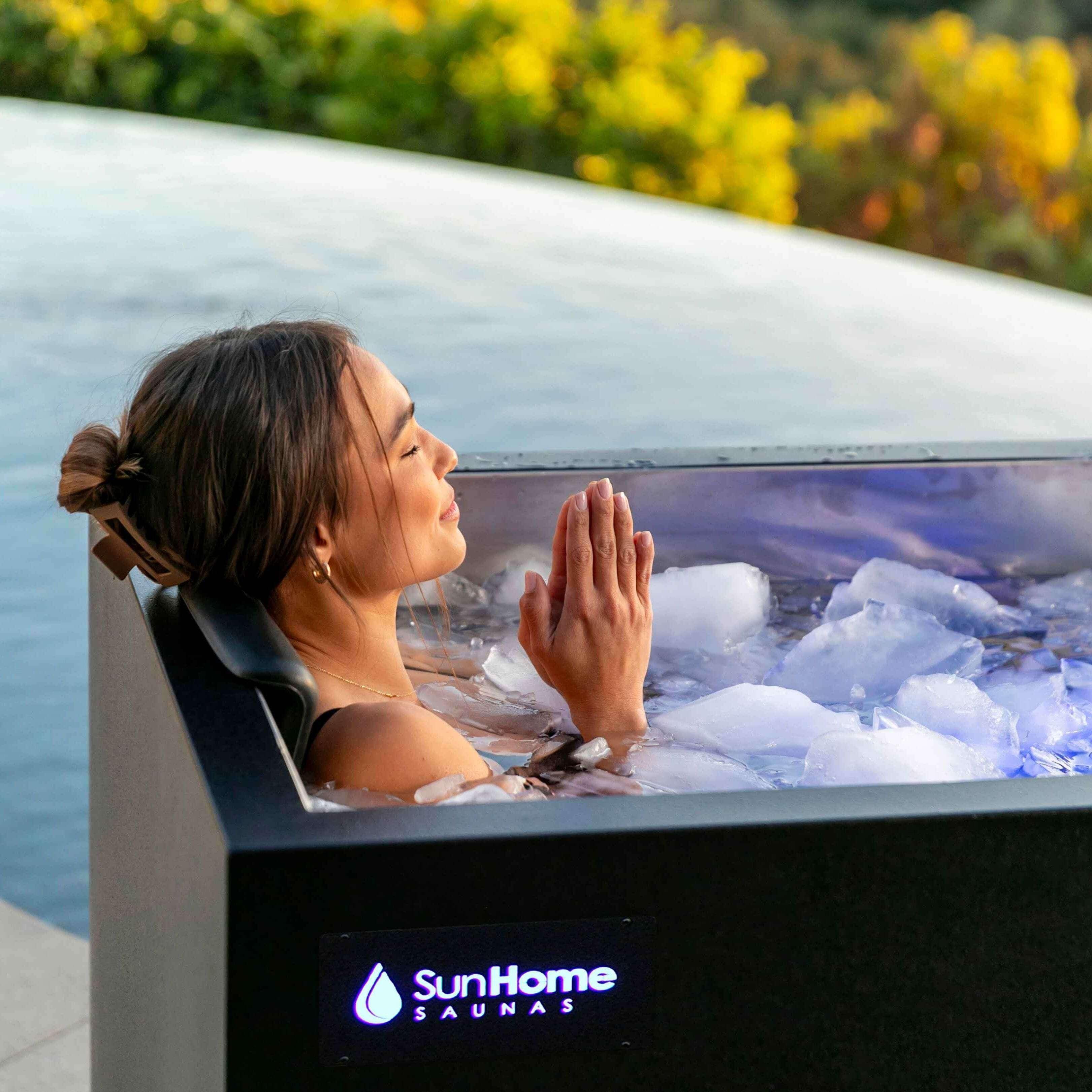

Cold plunge tubs support athletic recovery by rapidly pulling heat from the body and triggering peripheral vasoconstriction. Water conducts heat about 25 times more effectively than ambient air, so immersion lowers skin temperature almost instantly. In 10°C water, a standard session removes approximately 100 watts per square meter of skin surface area.
Thermal Conductivity and Heat Transfer Calculations
The profound physiological shift experienced during cold immersion begins with a stark thermodynamic reality: water's thermal conductivity (approximately 0.6 W/m·K) is roughly 25 times greater than that of ambient air. When you step into a cold plunge, heat energy is not gently radiated away; it is aggressively conducted out of your body. This conductive heat transfer is governed by Fourier's Law, meaning that the rate of heat loss is directly proportional to the temperature gradient between your skin and the water.
Because water is such an efficient thermal conductor, immersion drops skin temperature almost instantaneously. To quantify this energy transfer, we look at the specific heat capacity of water (4,184 J/kg·K). A standard immersion session in 10°C (50°F) water drains approximately 100 Watts per square meter of skin surface area. This massive thermal drain initiates rapid peripheral vasoconstriction, shunting blood away from the extremities to protect the vital organs of your core. If you are looking to integrate this elite thermal management into your own home, choosing an engineered system like the Plunge All-In ensures absolute temperature consistency during high-conductive load.
TRPM8 Activation and Shivering Onset Thresholds
The immediate mental clarity and physiological surge of a cold plunge are driven by neural signaling. The skin contains specialized thermoreceptors, specifically the Transient Receptor Potential Melastatin 8 (TRPM8) ion channels. These channels are highly sensitive to cold temperatures and begin to activate as skin temperature drops below 26°C (78.8°F), reaching peak activation between 10°C and 15°C (50°F to 59°F).
Once activated, TRPM8 channels trigger a solid sympathetic nervous system response. This 'cold shock' response causes an immediate release of norepinephrine and adrenaline, boosting focus, heart rate, and metabolic activity. keeping the water within this 10–15°C window allows you to achieve maximum sympathetic drive and beta-endorphin release without crossing the threshold into violent somatic shivering. Shivering introduces muscular fatigue and can disrupt the meditative calm of your sanctuary, meaning precise temperature control is critical to maintaining a therapeutic, non-shivering thermogenic state.
Pump Flow Rate Impacts on Convective Heat Flux
One of the most common engineering oversights in amateur cold plunges is the absence of water movement. When you sit in still water, your body warms the micro-layer of water immediately adjacent to your skin, creating a thermal boundary layer that acts as an insulating barrier. This boundary layer artificially reduces convective heat transfer, making the water feel warmer than it actually is.
To destroy this boundary layer and maintain continuous thermal extraction, professional-grade tubs use high-capacity recirculation pumps. According to convective heat transfer coefficients outlined in ANSI/ASHRAE Standard 55-2020, moving water increases convective heat flux by up to 30%. By using a pump with a flow rate of at least 1,000 Liters per hour (L/h), the water is kept in a turbulent state. This turbulence constantly replaces the warmed boundary layer with fresh, chilled water, forcing your body to adapt to the true target temperature rather than an insulated micro-climate. For an optimized thermal flux, the Plunge Tub integrates high-flow filtration to maintain continuous boundary-layer disruption.
Cold Shock Proteins vs Prolonged Muscle Soreness
Beyond the immediate psychological lift, cold immersion triggers a profound molecular cascade. Brief exposures (<3 minutes) in cold water trigger the upregulation of cold-shock proteins, most notably RNA-binding motif protein 3 (RBM3), in brown adipose tissue (BAT). This molecular pathway stimulates non-shivering thermogenesis via Mitochondrial Uncoupling Protein 1 (UCP1) activation, increasing metabolic rate by 15% to 20% long after you leave the water.
Also this rapid cooling drastically limits the inflammatory response. By reducing local tissue temperatures, cold therapy decreases the velocity of nerve conduction and induces local vasoconstriction. This limits the accumulation of inflammatory cytokines that cause delayed onset muscle soreness (DOMS). Rather than enduring days of physical recovery, a highly managed cold exposure resets your muscular baseline, allowing you to train harder and feel better. Integrating a daily 2-minute plunge into your sanctuary routine offers an unmatched unfair advantage for both physical longevity and mental resilience.
Insulation Loss and Structural Tub Materials
To maintain a highly efficient home sanctuary, the structural engineering of your cold plunge is just as important as the pump. The thermal efficiency of your tub directly impacts energy consumption and compressor wear. Tubs constructed from rotomolded polyethylene or insulated stainless steel provide vastly superior thermal resistance (R-value) compared to uninsulated acrylic or basic plastics.
Stainless steel provides a highly hygienic, non-porous surface that resists bacterial growth, but it must be backed by high-density polyurethane foam insulation to prevent rapid heat gain from the surrounding environment. Without proper insulation, ambient air temperatures will rapidly warm the water, forcing the chiller to run continuously. Investing in a dual-walled, insulated structural tub ensures that your sanctuary remains chilled to the exact degree, silent, and ready for you at a moment's notice, all while keeping electrical draw to a minimum.
Frequently Asked Questions
What is the ideal water temperature for a cold plunge?
The ideal water temperature for a cold plunge is between 10°C and 15°C (50°F to 59°F), which corresponds to the peak activation range of TRPM8 thermoreceptors. Staying within this window triggers a solid sympathetic nervous system response, releasing norepinephrine and adrenaline to boost focus. this temperature range allows you to achieve maximum therapeutic benefits without crossing the threshold into violent somatic shivering.
Why is water movement or a pump important in a cold plunge tub?
Sitting in still water allows your body to warm a micro-layer of water immediately adjacent to your skin, creating an insulating thermal boundary layer. To destroy this barrier, professional-grade tubs use recirculation pumps with a flow rate of at least 1,000 Liters per hour to keep the water turbulent. This constant movement increases convective heat flux by up to 30%, forcing your body to adapt to the true target temperature.
How does cold water immersion help reduce muscle soreness?
Cold immersion limits the body's inflammatory response by lowering local tissue temperatures, which decreases nerve conduction velocity and causes local vasoconstriction
Related Reading
Pros
- Maximum convective heat transfer via continuous high-flow pump circulation
- Precise temperature control prevents shivering while maximizing TRPM8 activation
- Superior multi-layer insulation reduces energy costs and guarantees quiet operation
Cons
- Premium upfront investment compared to basic, uncirculated ice chests
- Requires a dedicated footprint and access to standard electrical power
Technical Verdict
By pairing high-volume water circulation with precise, insulated refrigeration, engineered cold plunges eliminate the insulating thermal boundary layer that compromises basic ice baths. This ensures maximum, consistent heat extraction and predictable TRPM8 receptor activation. Investing in a scientifically backed cold sanctuary is the ultimate lifestyle upgrade for physical recovery, stress resilience, and cognitive optimization.
→ View Specs & Pricing