The true cost of running a home sauna comes from preheat demand, continuous cabin heat loss, insulation quality, and the target temperature. Traditional saunas require a large initial energy input to heat dense stones before warmth reaches the body. High-emissivity infrared models bypass those stones, while a higher wall R-value reduces ongoing heat loss through the enclosure.
Thermal Dynamics: Stone Mass, Insulation R-Value, and Preheat Cost Per Joule
The energy consumption of any thermal cabin is governed by a fundamental thermodynamic balance equation: E = (m * Cp * dT) + Q_loss. In this equation, 'm' represents the mass of the air and internal materials, 'Cp' is the specific heat capacity, 'dT' is the target temperature differential, and 'Q_loss' represents continuous heat loss through the cabin envelope. For traditional saunas, preheat time is dominated by the high thermal inertia of the heater stones, typically composed of olivine diabase, which possesses a high specific heat capacity of approximately 0.9 kJ/kg·K. Heating 20 kilograms of dense rock to operational temperatures requires a vast upfront investment of energy before any heat is transferred to your body.
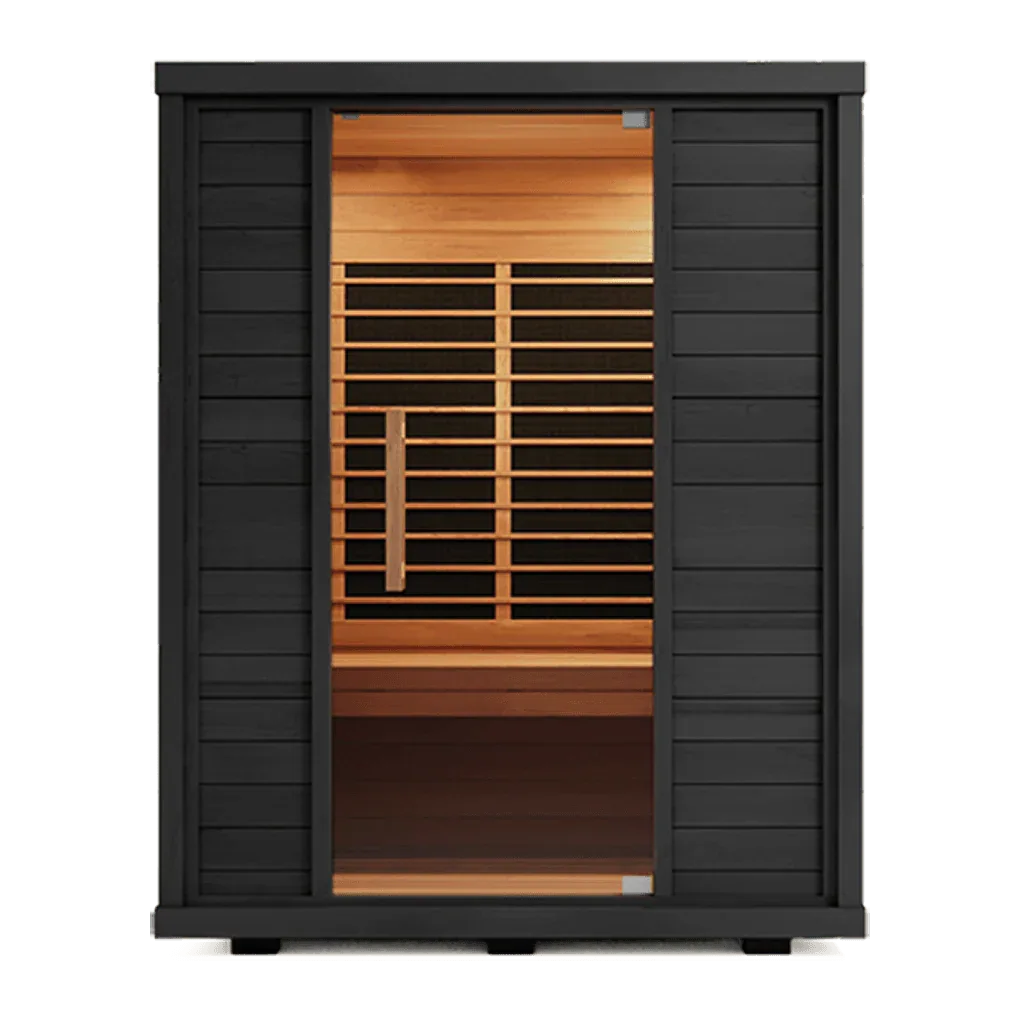
By contrast, high-emissivity infrared saunas bypass the need to heat massive thermal buffers. According to ISO 6946, heat loss (Q_loss) through the walls scales proportionally with surface area and temperature differential, divided by the R-value of the enclosure, which is why a larger cabin costs more to hold at temperature; if you are weighing a 2-person versus 3-person infrared sauna size and price tradeoff, that surface-area penalty belongs in the calculation alongside the sticker price. Traditional cabins with poor insulation suffer from massive convective currents, forcing the heater to cycle continuously. High-performance cabins like the Sun Home Equinox 2-Person Full-Spectrum Infrared Sauna use dual-wall tongue-and-groove construction to maximize the boundary layer R-value, minimizing thermal bridging and dramatically lowering the cost per joule during preheat and active phases. Sun Home Saunas
Electricity Pricing Realities: Time-of-Use Models vs. Heater Duty Cycle
The true operational cost of a home sauna is heavily dictated by your local utility provider's structure. Under Time-of-Use (TOU) tariff models, electricity prices during peak evening hours can be three to four times higher than off-peak morning rates. If your sauna relies on a high-wattage traditional heater (typically 6 kW to 9 kW), operating it during peak hours can quickly escalate your monthly utility bill.
Also the physical laws of radiation dictate that heat loss increases exponentially at higher temperatures. Under the Stefan-Boltzmann law, thermal radiation loss scales with absolute temperature to the fourth power (T^4). A minor temperature overshoot of just 1°C at an operating temperature of 80°C increases radiative heat loss from the cabin envelope by approximately 6%. This forces the heater's duty cycle to increase, consuming more kilowatt-hours to maintain equilibrium. Infrared cabins manage this risk by using highly efficient carbon-and-halogen heating arrays that directly target human tissue, allowing for a lower ambient air temperature and minimizing the T^4 radiative losses through the exterior walls.
Ventilation-Driven Losses: Latent Heat, Vapor Pressure, and ASHRAE Compliance
Adequate ventilation is non-negotiable for safety and air quality inside a thermal cabin. Under ASHRAE 62.1-2022 standards, mechanical or natural ventilation must provide at least 4 air changes per hour (ACH) to prevent carbon dioxide accumulation. But introducing cold, dry outdoor air creates a dual thermodynamic penalty: sensible heat loss (heating the incoming air) and latent heat loss (the energy required to vaporize moisture).
This latent heat loss is driven by vapor pressure differentials. At an indoor cabin temperature of 90°C with moderate humidity, the internal vapor pressure can exceed ambient residential room vapor pressure by more than 2 kPa. This massive pressure differential forces moisture to migrate rapidly toward any exit point or ventilation exhaust. As warm, moist air escapes, it carries away latent heat. If a sauna's ventilation system is poorly calibrated, this continuous air and moisture exchange forces the heating element to run at a 100% duty cycle, compounding energy draw and eroding the economic efficiency of your daily wellness ritual.
Structural Degradation: Condensation Cycles, Mold, and Long-Term Efficiency
The long-term operating costs of a home sauna are not limited to the electric meter; they are also determined by structural durability. When warm, humid air migrates through the sauna walls, it eventually hits the cooler dew point within the wall assembly. This results in interstitial condensation. According to EN 13162 data, repeated moisture accumulation in low-grade insulation materials can degrade their thermal resistance (R-value) by up to 15% over a 5-year period.
This degradation of thermal resistance leads to progressive heat loss, forcing your heating system to work harder year after year to reach the same thermodynamic setpoints. Also poor moisture management leads to wood rot, warping, and mold growth, which can render a sanctuary unusable. Investing in a premium, double-walled engineered cabin like the Sun Home Equinox 2-Person Full-Spectrum Infrared Sauna mitigates these structural risks. These cabins feature precise joinery, premium kiln-dried vertical grain cedar, and optimized heat distribution that naturally prevents localized cold spots and moisture traps, ensuring your sanctuary maintains its high insulation value for decades. Sun Home Saunas
Frequently Asked Questions
Why do traditional saunas take longer to heat up than infrared models?
Traditional saunas require a long preheat time due to the high thermal inertia of their heater stones, which are often composed of olivine diabase. These stones have a high specific heat capacity of approximately 0.9 kJ/kg·K, demanding a significant upfront investment of energy. Infrared saunas bypass this process by using heating arrays that directly target human tissue without needing to heat massive thermal buffers.
How does temperature overshoot affect the energy efficiency of a sauna?
According to the Stefan-Boltzmann law, thermal radiation loss scales with absolute temperature to the fourth power. Because of this, a minor temperature overshoot of just 1°C at an operating temperature of 80°C increases radiative heat loss from the cabin envelope by approximately 6%. This forces the heater's duty cycle to increase, resulting in higher electricity consumption to maintain equilibrium.
How does ventilation affect a sauna's energy use and heat loss?
To comply with ASHRAE standards, a sauna must provide at least 4 air changes per hour, but introducing cooler air creates both sensible and latent heat loss. At an internal temperature of 90°C, the vapor pressure differential can exceed ambient room pressure by more than 2 kPa, forcing moist air to escape rapidly. If the ventilation is poorly calibrated, this continuous exchange forces the heating element to run at a 100% duty cycle, drastically increasing energy draw.
Can moisture inside the sauna walls damage its insulation over time?
Yes, when warm, humid air migrates through the walls and hits the cooler dew point, it causes interstitial condensation. According to EN 13162 data, repeated moisture accumulation in low-grade insulation can degrade its thermal resistance by up to 15% over a 5-year period. This progressive loss of R-value causes ongoing heat loss, forcing the heating system to work harder and consume more electricity over time.
How do Time-of-Use electricity tariffs affect the cost of running a sauna?
Under Time-of-Use (TOU) tariff models, electricity prices during peak evening hours can be three to four times higher than off-peak morning rates. Operating a high-wattage traditional heater of 6 kW to 9 kW during these peak hours can rapidly escalate your utility bills. Infrared saunas mitigate this issue by using efficient carbon-and-halogen arrays that allow for lower ambient operating temperatures, minimizing radiative heat loss.
Related Reading
Related reading
Pros
- Highly directional full-spectrum infrared heating minimizes preheat energy waste.
- Premium double-walled kiln-dried wood prevents R-value degradation and mold.
- Plug-and-play 120V design bypasses expensive 240V commercial electrical installations.
Cons
- Higher upfront capital cost than low-end, uninsulated portable tents.
- Requires a dedicated 20-amp outlet to support maximum heater efficiency.
Technical Verdict
From a thermodynamics standpoint, a home sauna's efficiency is defined by its ability to prevent heat transfer to the surrounding environment while directly heating the human body. By utilizing full-spectrum infrared technology and premium double-walled insulation, you bypass the massive energy sink of stone-mass preheating and minimize continuous heat loss. Investing in engineered excellence protects both your home's structural integrity and your monthly utility budget. <AffiliateButton slug="sunhome-sun-home-equinox-2-person-full">Check Availability</AffiliateButton>
→ View Specs & Pricing