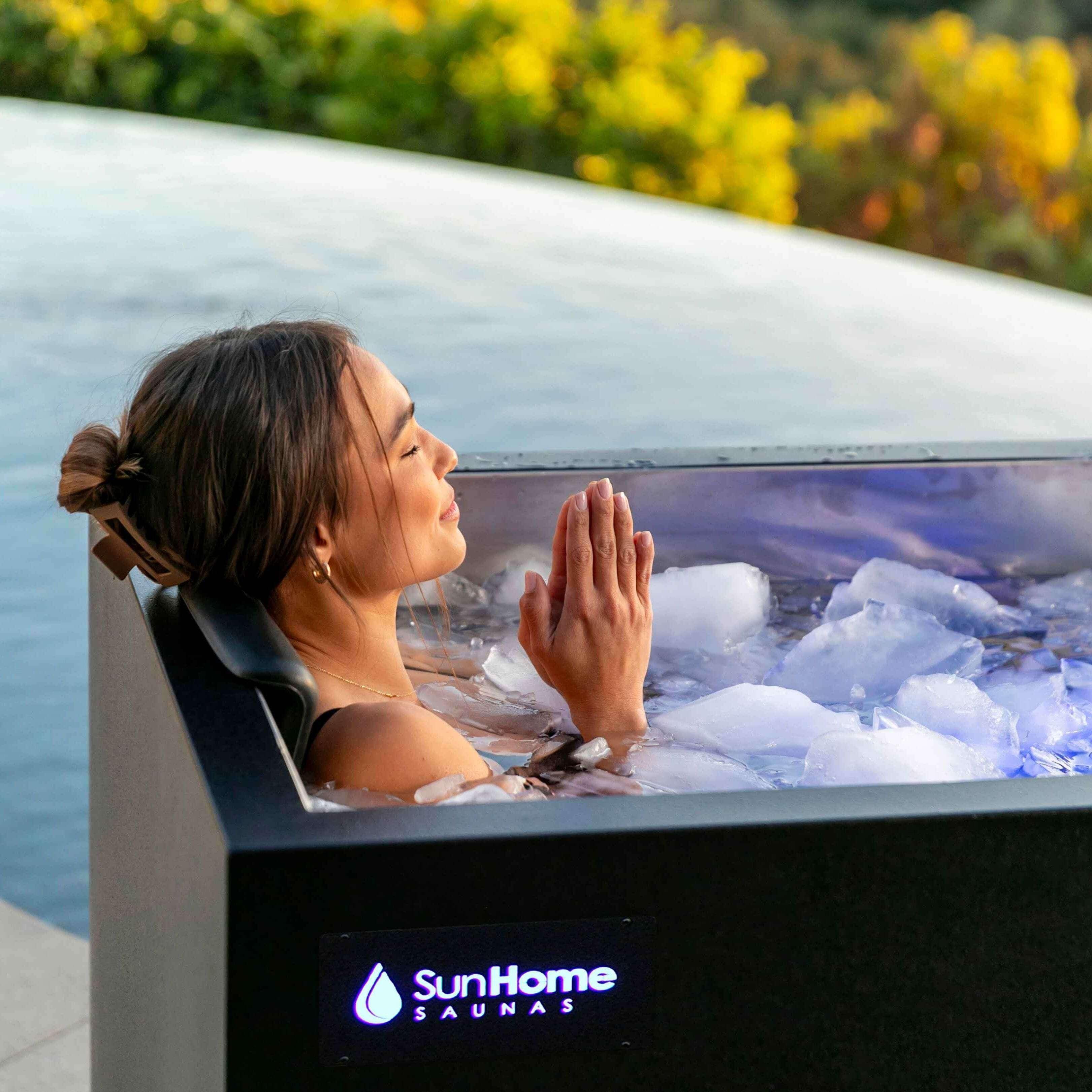
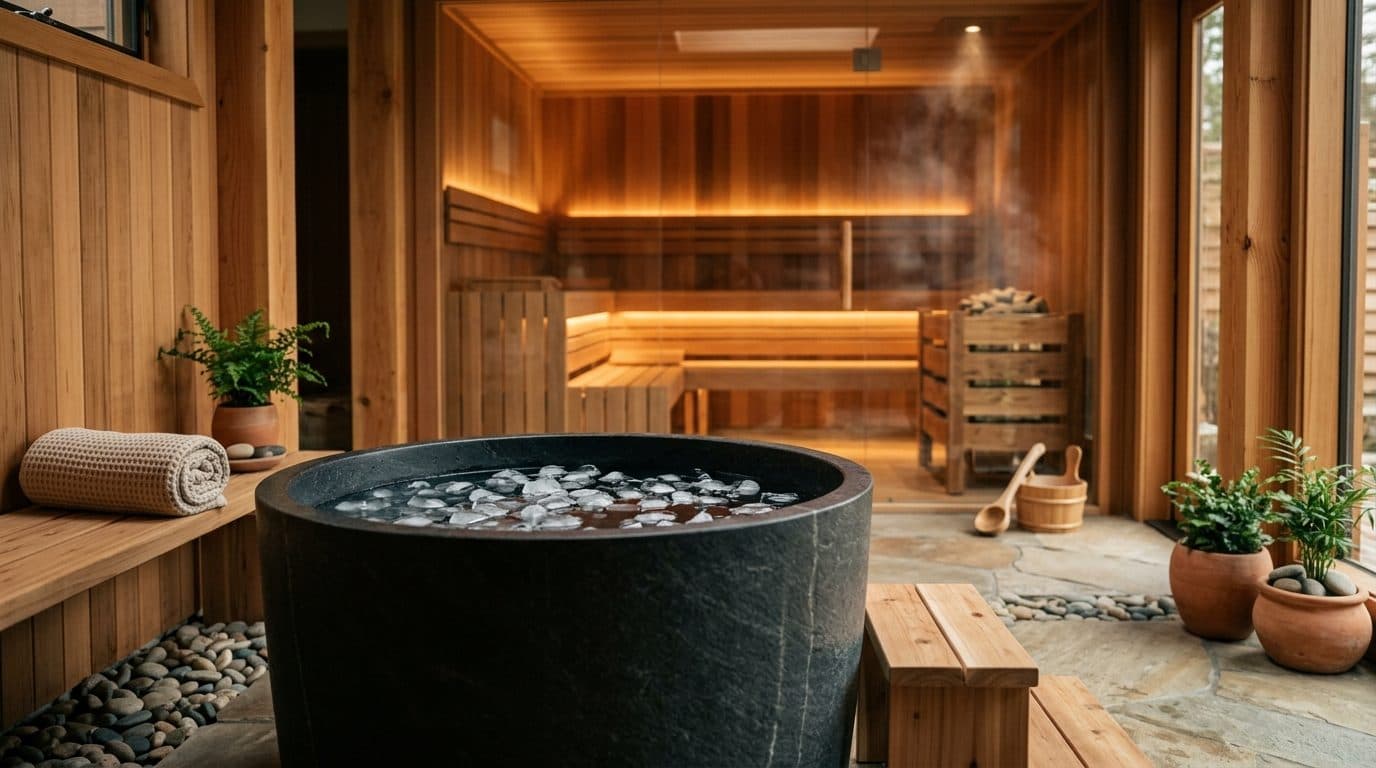
The OG Plunge Tub makes professional-grade home cold immersion available at an accessible price point. Water removes body heat about 24 times faster than air because of its greater thermal conductivity, supporting rapid whole-body cooling. Effective immersion also depends on turbulent water flow, which disrupts the warm boundary layer that forms next to the skin.
Thermal Physics of Immersion: Conduction, Convection, and Insulation
To understand the efficacy of The OG Plunge Tub, we must analyze the thermal physics of cold-water immersion. Water possesses a remarkably high specific heat capacity of 4.18 J/g·K, whereas air has a specific heat capacity of only ~1.005 J/g·K. Because water is approximately 24 times more thermally conductive than air, heat transfer away from the body occurs at an accelerated rate when submerged.
But a common bottleneck in static cold immersion is the formation of a thermal boundary layer. When you sit perfectly still, your body heats the microscopic boundary layer of water directly adjacent to your skin. If this layer remains undisturbed, the rate of heat transfer slows dramatically. To maintain a high cooling rate and drive continuous systemic adaptation, turbulent flow must be introduced, raising the Nusselt number to a value greater than 1. Simply moving your limbs slightly disrupts this boundary layer, forcing your body to continuously adapt to the true temperature of the bath.
To prevent the surrounding ambient environment from heating the water, the structural insulation of the tank must have a high R-value. Standard foam-insulated designs exhibit a steady-state heat gain of only ~0.1–0.3°C/min under warm ambient conditions. This thermal resistance ensures that the energy you expend cooling the water, or the physical ice you deposit, is preserved for therapeutic use rather than lost to the surrounding environment.
The OG Plunge Tub Material: Rotomolded Polyethylene vs. Metal Conductivity
When choosing a home cold plunge, material selection dictates both the physical lifespan of the unit and its thermal efficiency. Many budget designs use single-walled galvanized metal tanks. While structurally sound, metals possess extraordinarily high thermal conductivity. Stainless steel, for instance, has a thermal conductivity of approximately 16 W/m·K, while copper exceeds 300 W/m·K. In practical terms, a metal tank acts as a thermal highway, pulling ambient heat directly into your cold sanctuary and rapidly melting your ice.
In contrast, The OG Plunge Tub utilizes a high-density, rotomolded polyethylene (PE) dual-wall construction. Polyethylene has a native thermal conductivity of only ~0.33 to 0.5 W/m·K. By sandwiching a dead-air space or an insulated foam core between these two walls, the structural R-value is increased exponentially. This material barrier ensures that the internal thermal dynamics remain stable, isolating the water from external temperatures.
Also rotomolding is a low-stress manufacturing process that produces a smooth, single-piece structural shell. This eliminates the weak points, weld lines, and joints common in metal and cheap plastic alternatives. This industrial-grade construction means your private sanctuary will not leak, crack, or rust, even when exposed to outdoor elements year-round.
Filtration and Chiller Integration: Thermodynamic Load and Energy Efficiency
For entry-level users, manually adding ice is the most direct and cost-effective method to achieve therapeutic temperatures. But calculating the thermodynamic load is critical. To lower 300 liters of water from an ambient 20°C (68°F) to a therapeutic 10°C (50°F), you must absorb approximately 12.5 megajoules of thermal energy. In practical terms, this requires a substantial volume of ice, making structural insulation the single most important factor in preventing rapid temperature rebound.
As your practice matures, upgrading to a mechanical chiller is a logical progression. The OG Plunge Tub is designed with this scalability in mind, featuring pre-installed inlet and outlet ports that smoothly connect to external chiller systems.
When choosing a chiller, look for units with integrated ozone or UV-C sterilization and a high-efficiency heat exchanger. Because the rotomolded body of the tub minimizes parasitic ambient heat gain, an integrated 1/4 HP or 1/2 HP chiller can operate at an optimized duty cycle, reducing overall power consumption and extending the operational lifespan of the compressor.
User Safety: TRPM8 Activation and Cold Shock Risk Mitigation Protocols
Stepping into a cold plunge triggers an immediate, profound physiological response. The sudden drop in skin temperature activates Transient Receptor Potential Melastatin 8 (TRPM8) ion channels. These channels are the primary cold nociceptors in the skin, and their rapid stimulation triggers a massive catecholamine surge, causing a sudden rise in epinephrine and norepinephrine.
This biochemical cascade initiates the 'cold shock response,' characterized by involuntary hyperventilation, peripheral vasoconstriction, and a spike in heart rate. While this response is highly beneficial for mental resilience and vascular tone, it must be managed with precise, controlled protocols to ensure user safety.
To mitigate cold shock risks, enter the tub slowly, keeping your chest and torso, which represent roughly 55% of your body's total surface area, submerged while focusing on slow, prolonged exhalations. By controlling your respiratory rate, you activate the parasympathetic nervous system, dampening the sympathetic 'fight-or-flight' spike. Over time, consistent exposure downregulates the sensitivity of these TRPM8 pathways, transforming what was once a shock into a deeply meditative, tranquil experience.
Validating Temperature Control: Accuracy vs. Setpoint Drift in Budget Designs
A common point of failure in low-cost cold therapy setups is erratic temperature control and setpoint drift. Cheaper, thin-walled inflatable or single-layer vinyl tubs struggle to maintain stable temperatures. If the water temperature fluctuates wildly between 5°C and 15°C, your body cannot establish a consistent baseline for physiological adaptation.
To prevent this, the structural mass and thermal resistance of The OG Plunge Tub work in harmony to maintain a highly stable thermal equilibrium. When ice is added, the dual-wall polyethylene design distributes the cooling effect evenly, preventing localized thermal pockets.
For those using an external chiller, the tub's efficient thermal barrier prevents the sensor probe from experiencing rapid 'cycling', a phenomenon where the chiller constantly turns on and off due to rapid ambient heat intrusion. This stable environment ensures your setpoint is held with precision, giving you exact control over your daily recovery protocol.
Longevity of Thermal Barriers: UV Degradation and Foam Core Delamination Rates
An outdoor sanctuary must be built to withstand the elements. When inferior plastics are exposed to solar radiation, ultraviolet (UV) rays degrade the polymer chains, a process known as photo-oxidation. This leads to micro-cracking, color fading, and physical embrittlement. Also cheap double-walled tubs filled with sub-standard insulating foam often suffer from delamination, where the inner lining separates from the foam core due to thermal expansion and contraction cycles.
The OG Plunge Tub addresses these materials-science challenges by using UV-stabilized, virgin polyethylene. This material contains specialized additives that absorb and dissipate harmful UV radiation, preserving the physical integrity of the shell. Also the structural walls are engineered to flex slightly under thermal stress, preventing the internal shear forces that cause foam core delamination. By investing in solid materials science, you ensure that your physical sanctuary remains functional and beautiful for years to come.
Frequently Asked Questions
How long does water stay cold in The OG Plunge Tub?
With its triple-layer thermal insulation, it can maintain water temperature under 55°F for up to 24 hours depending on local weather conditions. This high thermal retention drastically reduces the amount of ice required for daily sessions.
Do I need a custom chiller?
The OG Plunge Tub is designed for manual ice addition, making it the perfect budget-friendly entry point before investing in a mechanical chiller. But it features built-in ports, allowing you to easily upgrade to a mechanical chiller system whenever you are ready to automate your sanctuary.
Is the tub easy to drain and clean?
Yes. The tub features a dedicated bottom drain valve that allows you to empty the water quickly without tilting the unit. The non-porous rotomolded polyethylene surface resists organic buildup, making cleaning as simple as a quick wipe-down with mild, eco-friendly soap.
Can this tub be kept outdoors in winter?
Absolutely. The high-density polyethylene construction is designed to withstand extreme temperature differentials without cracking, warping, or fading, making it an ideal year-round outdoor recovery solution.
Pros
- smooth rotomolded construction prevents leaks and ensures long-term outdoor durability.
- Dual-wall insulation provides superior thermal efficiency compared to metal and thin plastic tubs.
- Integrated ports make it fully compatible with future chiller upgrades.
Cons
- Manual ice addition is required unless paired with an external chiller upgrade.
- Larger footprint requires dedicated outdoor or wet-room space.
Technical Verdict
The OG Plunge Tub leverages advanced materials science and dual-wall rotomolded design to minimize thermal conductivity and maximize structural longevity. It offers a mathematically proven thermal barrier that preserves cold temperatures, making it the premier budget-friendly entry point into scientific cold therapy.
→ View Specs & Pricing