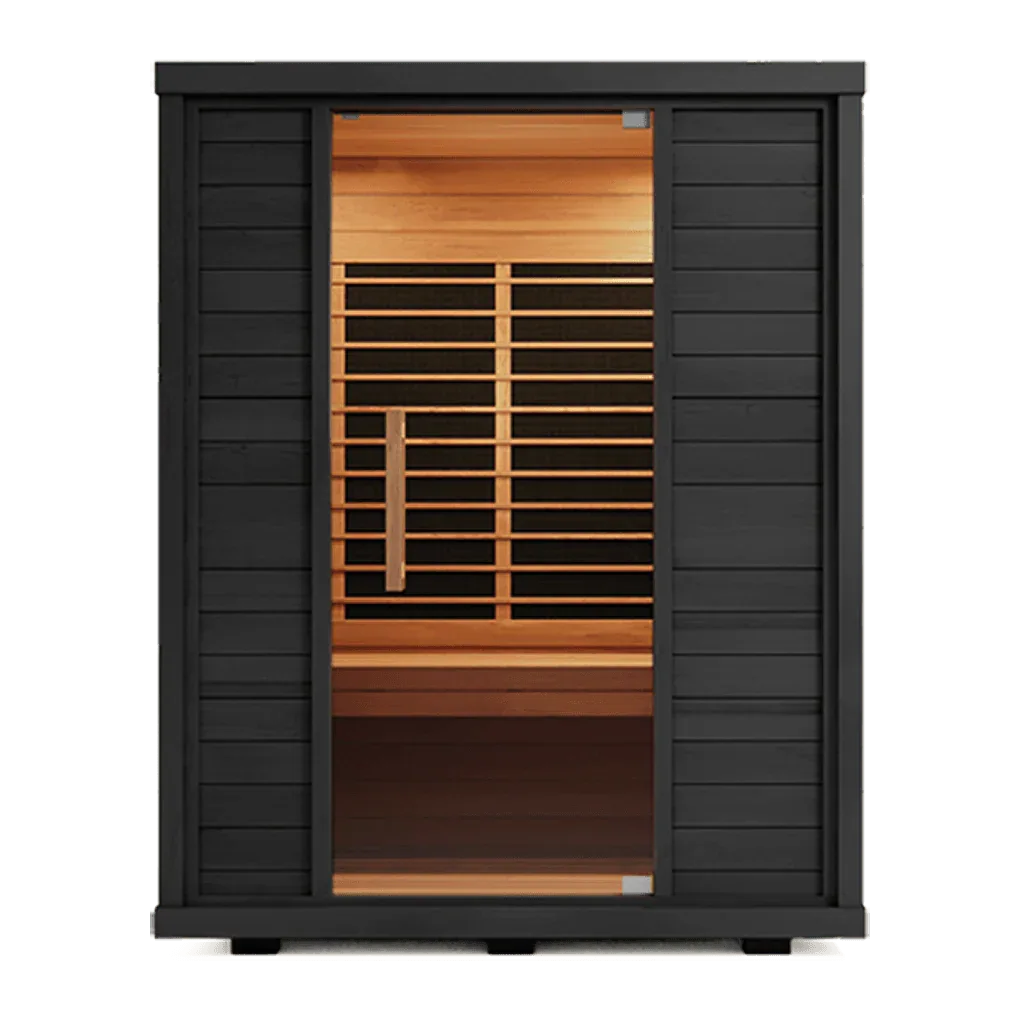

Imagine stepping out of a chaotic, high-stress workday and directly into a private, silent sanctuary of enveloping warmth. The soft, amber glow of your home infrared suite beckons, offering an immediate escape from the persistent cognitive noise of modern life. As the deep heat begins to penetrate your muscles, your heart rate settles, your mind clears, and a profound sense of calm washes over you. This is not just a high-end home addition; it is a systematic, daily reset for your nervous system, a dedicated sleep sanctuary and a biological recovery chamber that improves your baseline health. However, transforming this lifestyle vision into a physical reality requires looking far beyond beautiful cedar woodwork. The therapeutic efficacy of an infrared sauna is governed entirely by the physics of its heater panels. If those panels cannot deliver the precise wavelengths your cells require, your sanctuary is reduced to an expensive, dry toaster. To make an informed, lifetime investment in your longevity, we must ground our desire for relaxation in the cold, hard facts of heater engineering, spectral physics, and cellular biology.
Spectral Profile Verification: Full-Band vs. Far-IR
To understand why some saunas leave you feeling deeply restored while others merely make you feel hot and uncomfortable, we must analyze the physics of the electromagnetic spectrum. Under the international standard ISO 20473, the infrared spectrum is strictly divided into three distinct bands: Near-Infrared (IR-A: 780 to 1,400 nm), Mid-Infrared (IR-B: 1,400 to 3,000 nm), and Far-Infrared (IR-C: 3,000 nm to 1 mm). Many basic home saunas use low-cost, far-infrared-only carbon sheets. While Far-IR is highly efficient at heating bulk water molecules within the skin, it lacks the deep tissue penetration required for comprehensive cellular recovery and photobiomodulation.
A true medical-grade sanctuary requires a validated full-spectrum profile. Near-infrared (IR-A) wavelengths bypass the superficial layers of the skin to reach subcutaneous tissues up to 4 to 5 millimeters deep. Here, they interact with cellular chromophores, accelerating mitochondrial recovery at the source. Mid-infrared (IR-B) penetrates slightly shallower, targeting joint spaces and blood vessels to promote rapid vasodilation and localized circulatory recovery. Far-infrared (IR-C) completes the therapeutic triad by vibrating the water molecules in your sweat glands, initiating a deep, detoxifying sweat at much lower, more comfortable air temperatures than traditional steam saunas. For those seeking the gold standard in full-spectrum performance, engineering-focused systems like the Sun Home Equinox cabin use precisely tuned arrays that target all three bands simultaneously, ensuring no gap in your biological recovery. Sun Home Saunas
Emitter Material Science: Carbon, Ceramic, and Halogen
The kinetic performance of an infrared panel is fundamentally dictated by its material composition. The industry primarily utilizes three emitter materials: carbon fiber, ceramic, and halogen (quartz) bulbs. Each has a distinct thermal profile that dictates its dominant wavelength emission, a relationship mathematically defined by Wien's Displacement Law. This physical law states that the peak wavelength of blackbody radiation is inversely proportional to its absolute temperature.
Carbon fiber heaters operate at a relatively low surface temperature (typically 60 to 80 degrees Celsius). This low-temperature operation shifts their peak emission output directly into the deep Far-IR range (around 9.4 microns), making them exceptionally comfortable for long, close-range exposure. However, because they run cool, they produce virtually zero IR-A. Ceramic heaters run much hotter (280 to 420 degrees Celsius), shifting their peak output to the mid-infrared range, offering faster heat-up times and high-intensity radiant energy. Halogen or quartz emitters operate at extremely high temperatures (often exceeding 1,000 degrees Celsius), generating concentrated, short-wave IR-A light. The ultimate engineering solution is a hybrid carbon-ceramic panel. By combining the high surface area and uniform Far-IR emission of carbon with the high-intensity, deep-penetrating thermal kinetics of ceramic, hybrid panels deliver a balanced, comfortable, and biologically active thermal field.
Separate Material Theory from Finished-Panel Evidence
Emitter material explains why a heater may behave a certain way, but it does not by itself verify the output of the finished panel. Carbon fiber, ceramic, and halogen have different thermal profiles, and Wien's Displacement Law supplies the physical framework connecting temperature with peak wavelength. A buyer still needs evidence showing how the assembled product performs rather than assuming that every heater made from the same material produces an identical result.
Ask the seller to identify the exact object represented by each spectral chart. Determine whether the data concerns a material sample, an exposed emitter, a completed panel, or the installed sauna configuration. Then compare the documentation with product photographs and descriptions. If the cabin contains more than one emitter type, establish which evidence applies to each panel instead of allowing one result to characterize the entire system.
Apply the same discipline to "full-band" and Far-IR language. ISO 20473 provides the categories Near-Infrared, Mid-Infrared, and Far-Infrared, but a category label is not a complete spectral profile. Nor can warmth, glow, or material identity establish how output is distributed across those bands. The strongest evidence is tied clearly to the exact panel being offered and uses the same terminology consistently throughout the sales material.
Good implementation distinguishes physical theory, product measurement, and expected user experience. Bad implementation presents an accurate explanation of emitter science, then quietly treats that explanation as a test result. Before purchasing, verify that the panel's advertised spectral identity comes from documentation for the finished heater. The scientific vocabulary may be correct while the product-specific evidence remains incomplete.
Evaluate Heater Coverage from the Seated Position
The panel layout determines whether capable emitters function as a coherent system. A specification sheet can describe material and spectral output without revealing which parts of the body face active surfaces during normal use. Bench position, backrest shape, cabin corners, and preferred posture can create gaps or concentrate warmth even when the individual heaters perform as claimed.
Use interior photographs and drawings to map every active panel. Separate emitting areas from decorative woodwork and note where carbon fiber, ceramic, or halogen elements are installed. Place the expected seated position on that map and trace which panels face the front, back, and sides of the body. If the sauna combines emitter types, check whether their physical placement supports the way the overall spectral profile is described.
The answer changes with the user. Height, posture, and choice of seat alter alignment with the panels. A layout that looks balanced in an empty cabin may feel uneven once the user leans naturally against the backrest. Strong warmth from one nearby heater can also distract from areas receiving little direct exposure. Repeated turning, leaning, or avoidance of a particular panel signals that the geometry is forcing the user to compensate.
Good implementation makes active heater locations easy to identify and explains why each panel occupies its position. It supports relaxed use without relying on visual symmetry, total heater capacity, or amber glow as proxies for coverage. Bad implementation provides extensive material claims but too little information to reconstruct the occupied cabin. Before buying, assess the heater arrangement around your normal posture. A panel can be technically impressive and still be poorly placed for the person expected to use it.