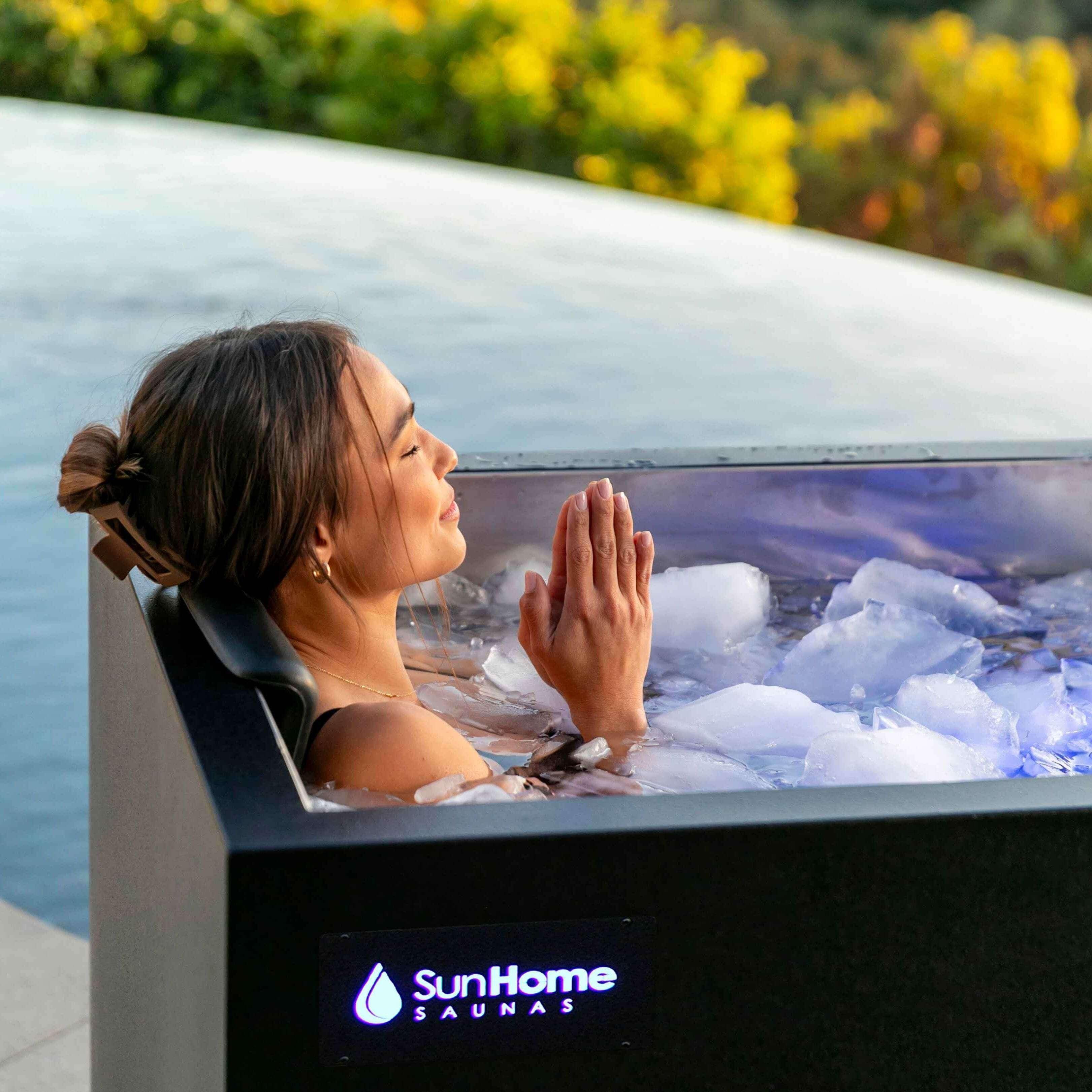
When optimizing physical recovery, many wellness enthusiasts ask: is a $3000 cold plunge worth it vs diy ice bath total cost and maintenance 2026? Sinking into freezing water triggers a profound vascular flush, upregulates cold shock proteins, and dramatically lowers systemic inflammation. However, the friction of maintaining that freezing sanctuary can quickly turn a therapeutic ritual into a grueling chore. Choosing between a premium, turn-key commercial unit and a self-assembled setup requires looking past the initial price tag to analyze the true economics of cold therapy.
What's the Verdict on a $3000 Cold Plunge vs DIY in 2026?
While a $3000 cold plunge has a higher upfront cost, when you factor in maintenance time and effort, it often proves more cost-effective than a DIY ice bath over three to five years.
Many consumers fall into the "upfront cost trap," believing that a cheap stock tank or an inflatable tub will save them thousands of dollars. They envision a simple, rustic routine of throwing a few bags of ice into a container of water in their backyard. However, when evaluating the question of whether a is a $3000 cold plunge worth it vs diy ice bath total cost and maintenance 2026, the operational reality paints a very different picture. Over a multi-year horizon, the daily friction and financial drain of DIY ice procurement rapidly erode those initial savings.
Total Cost of Ownership Analysis
A rigorous total cost of ownership assessment reveals that a $3000 commercial unit amortizes its cost far more efficiently than a DIY alternative. While the initial investment of a commercial system is high, its running costs are highly predictable and manageable. In contrast, the cumulative expenses of a DIY setup—such as purchasing plastic bags of ice, replacing burnt-out utility pumps, or upgrading poorly insulated tubs—climb continuously. By year three, a high-frequency plungger using a DIY setup will often have spent more cash out-of-pocket than if they had bought a dedicated, warrantied system on day one.
Lifestyle and Maintenance Impact
The emotional value of a home sanctuary lies in its accessibility and ease of use. If you must spend thirty minutes prepping your tub, driving to the store for ice, and skimming leaves before every single session, your usage frequency will inevitably plummet. A commercial unit with an integrated commercial chiller offers push-button convenience, maintaining a steady 39°F (3.9°C) around the clock. This constant state of readiness transforms cold therapy from a high-friction chore into an effortless, daily restorative ritual.
Upfront Costs: Commercial Cold Plunge vs DIY Ice Bath Setup
Commercial cold plunges start at $3000, but a DIY ice bath can cost as little as $100 in materials, yet may require a chiller or ongoing ice purchases that add hidden costs.
To understand the financial landscape of 2026, we must look at the direct, out-of-pocket entry barrier for both options. Premium systems are no longer exclusive to commercial training facilities; instead, sleek, integrated units designed for residential use have flooded the market. Meanwhile, the DIY community has engineered highly creative solutions using agricultural stock tanks and modified chest freezers. Both approaches have clear, distinct starting budgets that dictate your initial financial exposure.
Commercial Cold Plunge Market: $3000 Price Point
The $3000 tier represents the "sweet spot" of the consumer cold therapy market in 2026, balancing commercial-grade cooling with residential affordability. Major players like Plunge, RENU, and Sun Home provide turn-key packages within the $2,500–$5,000 range, featuring durable acrylic, military-grade drop-stitch PVC, or eco-friendly wood finishes. These units ship with dedicated 1/2 HP or 1/4 HP chillers, integrated sediment filters, and ozone or UV-C sanitization systems. This upfront cold plunge cost buys not just structural components, but an engineered thermodynamic system backed by multi-year manufacturer warranties.
DIY Ice Bath Options and Their True Initial Cost
On the other side of the spectrum, a basic DIY ice bath cost appears incredibly attractive at first glance. A standard Rubbermaid Stock Tank (100–150 gallons) from Tractor Supply runs between $100 and $500, while basic inflatable tubs from brands like Nurecover or Polar Recovery cost just $100 to $300. However, this basic ice bath setup is nothing more than an uninsulated container. To make it functional, you must purchase secondary accessories: a floating thermometer, debris skimmer, heavy-duty cover, and drainage fittings. If you eventually decide to bypass buying ice and add a dedicated aquarium chiller (like Active Aqua or Hydro Masta), your DIY costs will quickly surge by an additional $800 to $1,500.
Monthly Maintenance Costs: The Real Difference
Ongoing monthly costs for a commercial cold plunge run about $30–$60, while DIY ice baths can cost over $100 per month when factoring in ice, electricity for a chiller, and frequent water changes.
The true divide between these two recovery strategies lies in the recurring operational expenses. Sinking into cold water requires strict sanitization and temperature control, both of which carry a continuous financial cost. Many first-time buyers underestimate how quickly weekly expenses accumulate when managing water hygiene and thermal dynamics manually.
Commercial Cold Plunge Maintenance: Filtration, Chemicals, Electricity
A premium commercial unit utilizes automated systems to minimize both your physical effort and your recurring maintenance cost. These systems keep the water clean and clear through continuous circulation, a 20-micron sediment filter, and built-in ozone or UV-C purification. Your monthly chemical regimen is minimal, requiring only a trace amount of non-chlorine sanitizer (like hydrogen peroxide or oxidizer) at a cost of $5–$10. The system's commercial chiller runs efficiently on a dedicated thermostat, consuming modest electricity to maintain your target temperature.
DIY Ice Bath Maintenance: Ice, Water Changes, Cleaning
A manual DIY setup lacks automated filtration, making ice bath maintenance a demanding, hands-on routine. Without active sanitization, standing water quickly collects skin cells, sweat, and environmental debris, turning the tub into a breeding ground for bacteria and algae. To keep the water sanitary without filters, you must drain, scrub, and refill a 100-to-150-gallon tank every 1 to 2 weeks. Additionally, buying ice is a massive, recurring expense. Sourcing 4 to 8 bags of commercial ice per plunge at $3–$5 per bag costs $12–$40 per session—quickly adding up to hundreds of dollars each month.
Energy and Water Usage: What Does Running a Cold Plunge Actually Cost?
Commercial chillers consume significant electricity but maintain water quality with less waste, whereas DIY methods often require constant ice purchases and more frequent water changes, increasing both cost and environmental impact.
To calculate the precise operating economics, we must look at the physical energy required to cool water and the municipal cost of water consumption. In 2026, rising utility rates and growing environmental awareness make resource efficiency a critical factor in the purchasing decision.
+-------------------------------------------------------------------------+
|                  THERMODYNAMIC EFFICIENCY COMPARISON                    |
+-------------------------------------------------------------------------+
|                                                                         |
|  [Commercial Chiller Unit]                                               |
|  Power Draw: 0.8 kWh                                                    |
|  Daily Runtime: 8 Hours (Thermo-regulated)                              |
|  Daily Energy Used: ~6.4 kWh                                            |
|  Daily Cost (at $0.16/kWh): $1.02                                       |
|                                                                         |
|  [DIY Ice-Sourced Bath]                                                 |
|  Water Volume: 100 Gallons                                              |
|  Required Ice to drop temp 20°F: ~150 lbs                               |
|  Daily Ice Cost (at $3.50/bag): $52.50                                  |
|  Embedded Carbon/Water Footprint of Ice Production: Extremely High      |
|                                                                         |
+-------------------------------------------------------------------------+
Energy Consumption of Commercial Chillers vs DIY Ice
A modern commercial chiller uses an efficient compressor loop to remove heat from the water, drawing roughly 0.5 to 1.5 kWh of energy per hour of active cooling. Once the water reaches your target temperature, the insulated tub cover holds the cold, and the chiller only runs occasionally to offset ambient heat. On average, a chiller runs 8 to 12 hours a day, resulting in a monthly electricity consumption of 120 to 360 kWh.
Depending on your regional utility rates, this costs about $30 to $60 per month:
- Texas (~$0.12/kWh): ~$21.60 – $43.20 / month
- California (~$0.30/kWh): ~$54.00 – $108.00 / month
In contrast, a DIY setup using raw ice avoids direct household electricity draw but shifts that cost to the retail price of manufactured ice. The energy used by commercial ice plants to freeze, package, and transport those bags is highly inefficient, making your indirect carbon footprint and actual cash expenses much higher.
Water Usage and Filtration Costs
A commercial unit's advanced filtration system keeps the water pristine for 3 to 6 months before requiring a complete drain and refill. For a 100-gallon tub, this means you only use about 200 to 400 gallons of water per year.
Conversely, an untreated DIY stock tank must be dumped every 7 to 14 days to prevent biofilm and slime from building up on the walls. Over a year, this frequent draining translates to 2,600 to 5,200 gallons of wasted municipal water. This frequent draining not only increases your utility bills but also wastes water, especially in drought-prone regions where water conservation is critical.
If you are exploring commercial options to minimize this waste, you can view high-efficiency, premium setups by browsing premium cold plunge tubs.
Lifespan, Durability, and Total Cost of Ownership Over Time
When you calculate total cost of ownership over five years, a $3000 cold plunge can be comparable to or even cheaper than DIY, which often requires replacing tubs, chillers, or other components.
A complete financial comparison must look beyond weekly costs to project expenses over 1, 3, and 5 years. This long-term analysis reveals how structural wear, component failures, and the recurring costs of buying ice affect your wallet over time.
- Year 1 Total Cost:
- DIY Ice-Only: $2,500 (Initial tub $300 + $180/month ice/water over 12 months)
- DIY Retrofit Chiller: $1,900 (Initial setup $1,100 + $65/month power/filters)
- Commercial $3000 Plunge: $3,660 (Initial purchase $3,000 + $55/month power/filters)
- Year 3 Total Cost:
- DIY Ice-Only: $6,820 (Ice costs continue to accumulate; tub shows UV damage)
- DIY Retrofit Chiller: $3,460 (Requires replacement pump and plumbing fixes)
- Commercial $3000 Plunge: $4,980 (System remains highly stable under warranty)
- Year 5 Total Cost:
- DIY Ice-Only: $11,140 (Extreme cost accumulation, multiple tub replacements)
- DIY Retrofit Chiller: $5,020 (Likely requires a second compressor replacement)
- Commercial $3000 Plunge: $6,300 (Chiller remains highly efficient; high resale value)
       CUMULATIVE TOTAL COST OF OWNERSHIP (5-YEAR PROJECTION)
  $12,000 +---------------------------------------------------------+
          |                                                   # DIY |
  $10,000 |                                                 # (Ice) |
          |                                               #         |
   $8,000 |                                             #           |
          |                                           #             |
   $6,000 |                                         #      * Comm.  |
          |                                  *    *      *          |
   $4,000 |                           *    *    *      o      o DIY |
          |                    *    *    o    o    o         (Chil) |
   $2,000 |             *    o    o                             |
          |      o    *                                             |
       $0 +---------------------------------------------------------+
                Year 1      Year 2      Year 3      Year 4      Year 5

          Legend:  * = Commercial Plunge ($3k)   o = DIY Chiller Setup   # = DIY Ice Bath
How Long Does a Commercial Cold Plunge Last?
A professionally manufactured, $3000 cold plunge is built to withstand years of regular use and outdoor exposure. The shells are typically crafted from marine-grade acrylic, durable fiberglass, or high-density, UV-stabilized rotational plastics. The internal plumbing features secure, high-pressure fittings that resist cracking and leaking under temperature shifts. Furthermore, commercial units come with structured manufacturer warranties (typically 1 to 3 years) that cover the expensive compressor and electrical components. If you decide to upgrade down the road, a well-maintained commercial cold plunge retains a resale value of 50-70% of its original cost after 2-3 years, unlike DIY setups which have near-zero resale value.
Time and Effort: The Hidden Costs of DIY Ice Baths
Beyond the financial outlay, the time investment in a DIY ice bath is substantial and often overlooked. Sourcing ice daily, cleaning the tub frequently, and managing water quality can consume hours each week. In contrast, a commercial unit with automated filtration and sanitization reduces this to minutes per week. Industry data suggests that DIY enthusiasts spend an average of 2-3 hours per week on ice bath maintenance, while commercial owners spend less than 30 minutes. For professionals with busy schedules, this convenience factor may justify the $3000 price point on its own.
Pros and Cons: Quick Comparison of Cold Plunge vs DIY Ice Bath
To summarize, here are the main pros and cons of each approach:
Commercial Cold Plunge ($3000):
- Pros: Low maintenance, consistent temperature, efficient filtration, warranty, high resale value, time-saving.
- Cons: Higher upfront cost, requires electricity and space, may need professional installation.
DIY Ice Bath:
- Pros: Lower initial cost, customizable, no electricity if using ice.
- Cons: High ongoing ice costs or chiller electricity, frequent water changes, time-consuming maintenance, potential for equipment failure, low resale value.
For a deeper dive into how light therapy compares to cold plunges for recovery, see why one light therapy device cannot treat all pain.
FAQs
Is a $3000 cold plunge actually worth it compared to DIY? Yes, for most regular users, the total cost of ownership over 3-5 years is competitive with DIY when you factor in ice costs, maintenance time, and replacement parts. The convenience and automation often make it a better long-term investment.
How much does it cost to maintain a cold plunge each month? A commercial cold plunge typically costs $30-$60 per month for electricity and minimal filter chemicals, while a DIY ice bath can range from $175-$450 per month if you rely on purchased ice, or $60-$125 with a retrofit chiller.
How often do you need to change the water in a cold plunge vs a DIY tub? Commercial units with filtration require water changes every 3-6 months, whereas DIY tubs without filtration need draining and refilling every 1-2 weeks to maintain hygiene.