Imagine stepping into a private sanctuary of absolute stillness, where the mental chatter of the modern world instantly dissolves. Your morning ritual transforms from a rushed cup of coffee to an intentional, state-shifting immersion. As the crisp, crystal-clear water envelops you, a wave of profound alertness washes over your nervous system. This is the promise of premium cold therapy: a lifestyle upgrade that delivers unparalleled stress resilience, cognitive clarity, and physical rejuvenation right inside your home.
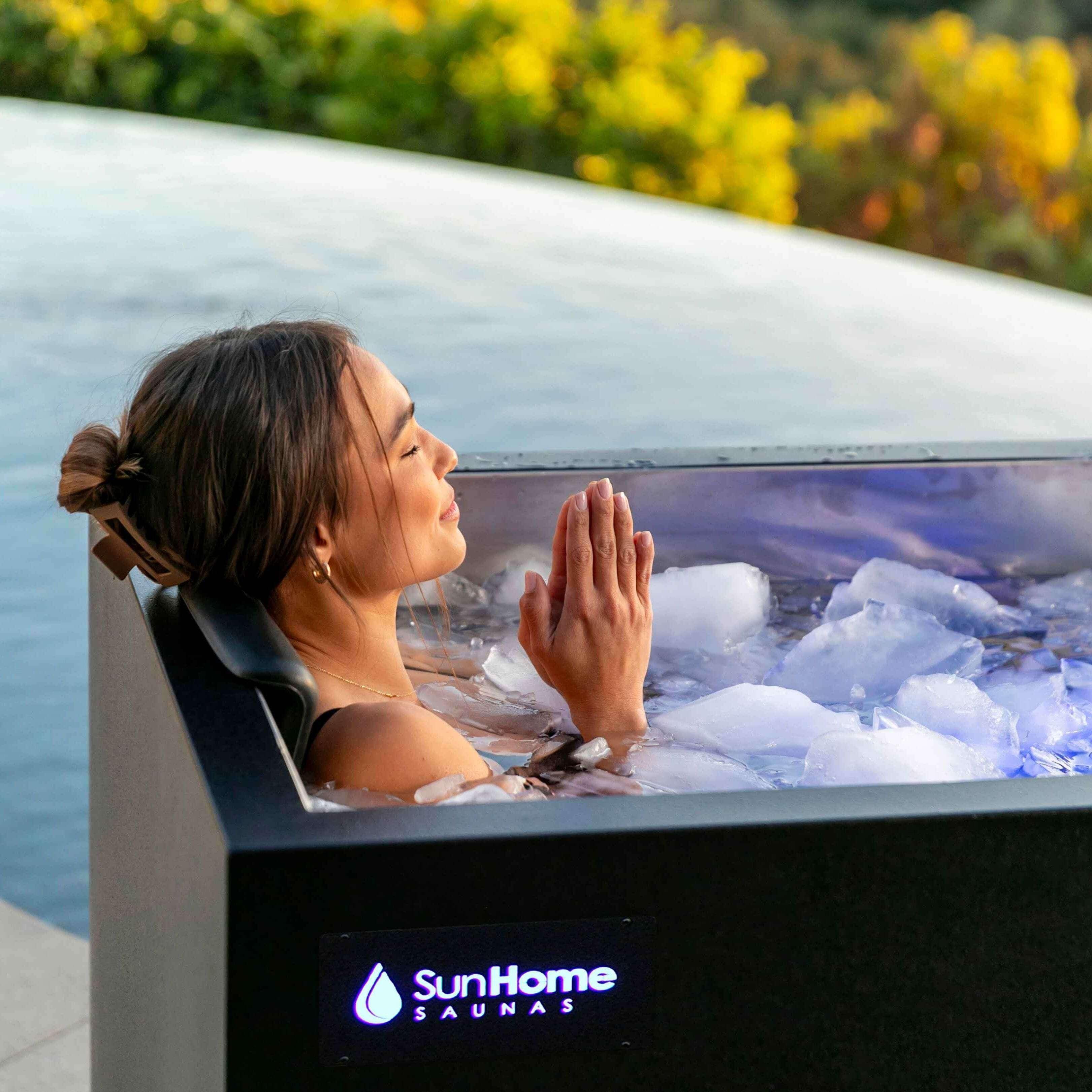
Yet, behind this tranquil sanctuary lies a complex landscape of human biology and thermal physics. To truly unlock these systemic benefits, one must look beyond commercial hype and analyze the underlying physiology. Devices like the Sun Home Cold Plunge Pro bridge this gap, translating advanced thermal engineering into a consistent, therapeutic experience. This analysis explores the biological blueprints of cold immersion to separate genuine physiological mechanisms from marketing pseudoscience. Sun Home Saunas
Incompatible Standards: ASTM F3031 vs Unregulated Tubs
The rapid growth of the consumer cold therapy market has led to a flood of entry-level, unregulated inflatable tubs and simple ice chests. From an engineering and electrical safety perspective, these products present significant risks. High-end, self-contained cold plunges must navigate the complex interface of high-voltage electrical components (pumps, chillers, and sanitation systems) and highly conductive water.
Commercial-grade wellness equipment must adhere to rigorous safety standards, such as those established under the ASTM F3031 framework or equivalent UL certifications. These protocols mandate strict grounding standards, continuous ground fault circuit interrupter (GFCI) protection, and ingress protection (IP) ratings for electrical enclosures. Unregulated consumer tubs often bypass these manufacturing standards, relying on external, consumer-grade pool pumps and unshielded chillers that lack integrated safety shutoffs.
Sanitation is another critical engineering challenge. While basic tubs require constant chemical additives (such as chlorine or bromine) to prevent bacterial biofilms, premium units use dual-stage filtration systems. Combining a high-density sediment filter with a commercial-grade ozone (O3) or ultraviolet (UV) sterilizer ensures pathogens are eliminated at the cellular level without exposing the skin to harsh chemical residues. This mechanical sanitation process maintains water purity while preserving the natural feel of the cold sanctuary. Sun Home Saunas
Thermal Dose Quantification: Defining Time and Temperature
The efficacy of cold therapy is governed by the laws of thermodynamics. To trigger a systemic adaptive response, the body must reach a specific thermal threshold. This response is not achieved by merely sitting in cool water; it requires a precise thermodynamic extraction of heat from the body's core to its periphery.
When a human body enters static cold water, a 'thermal boundary layer' of warmer water forms immediately adjacent to the skin. This micro-layer insulates the body, slowing down thermal energy transfer and reducing the physiological impact of the cold. To overcome this insulation, advanced systems use continuous circulation pumps. By keeping the water in constant motion, the system breaks the thermal boundary layer, ensuring a continuous, uniform cold exposure that maximizes heat transfer.
Physiological data suggests that the 'minimum effective dose' for metabolic and mental resilience is approximately 11 minutes of cumulative exposure per week, distributed across 2 to 3 sessions at temperatures between 50°F (10°C) and 37°F (2.7°C). Attempting to achieve this with melting ice bags in a standard bathtub is highly inefficient; without a high-capacity chiller, water temperatures quickly rise, failing to maintain the necessary thermal gradient required for therapeutic benefit.
Shivering Thermogenesis vs Brown Adipose Tissue Activation
When exposed to acute cold, the body employs two distinct mechanisms to maintain core thermal homeostasis: shivering thermogenesis (ST) and non-shivering thermogenesis (NST).
Shivering thermogenesis relies on rapid, involuntary skeletal muscle contractions to generate heat. While effective at raising core temperature, it is metabolically inefficient and can cause muscular fatigue. Non-shivering thermogenesis, conversely, is driven by the activation of brown adipose tissue (BAT). Unlike white fat, which stores energy, brown fat is packed with iron-rich mitochondria that express Uncoupling Protein 1 (UCP-1). This protein uncouples the respiratory chain from ATP synthesis, dissipating energy directly as heat.
With regular, controlled cold exposure, the body undergoes a process known as adipose tissue browning, increasing both the density and metabolic activity of BAT. This metabolic adaptation improves basal metabolic rate and improves systemic insulin sensitivity. to maximize BAT activation and transition from shivering to non-shivering thermogenesis, individuals should allow their bodies to warm up naturally post-plunge rather than immediately seeking external heat sources, a protocol known as the 'Soberg Principle.'
Hemodynamic Oscillations: Post Immersion Blood Flow Recovery
Immersion in cold water initiates a powerful, two-phase hemodynamic response. The immediate reaction to cold shock is profound peripheral vasoconstriction. Peripheral cold receptors trigger a sympathetic nervous system response, prompting smooth muscles surrounding blood vessels in the limbs to contract. This redirects blood flow away from the skin and skeletal muscle to the vital organs in the body core. Near-infrared spectroscopy (NIRS) shows that peripheral limb blood flow can decrease by up to 40% during a cold plunge.
Once you step out of the cold water, this process reverses. As the body warms up, peripheral blood vessels dilate, leading to a surge of warm, oxygenated blood returning to the limbs, a phenomenon known as reactive hyperemia. This powerful 'hemodynamic pump' enhances lymphatic drainage, reduces localized tissue edema, and accelerates the clearance of metabolic waste products from muscle tissues. The mechanical pressure of the water itself (hydrostatic pressure) further assists this process by facilitating venous return to the heart, reducing overall cardiovascular strain. Sun Home Saunas
The Hypertrophy Paradox: Timing Cold Exposure Correctly
For athletes seeking performance optimization, the timing of cold therapy is critical. While cold immersion is highly effective at reducing acute muscle soreness and systemic inflammation, its chronic use immediately after strength training can hinder long-term muscle growth.
Skeletal muscle hypertrophy relies on transient, post-exercise inflammatory signaling. Specifically, the activation of the mammalian target of rapamycin complex 1 (mTORC1) pathway, which drives muscle protein synthesis, is mediated by reactive oxygen species and inflammatory cytokines like interleukin-6 (IL-6). Immersing muscles in cold water immediately after lifting suppresses the NF-κB pathway and blunts the natural post-exercise IL-6 peak by approximately 20%. This cooling effect also decreases downstream ribosomal S6 kinase 1 (p70S6K) phosphorylation, limiting muscle fiber adaptation.
To preserve your hard-earned muscle adaptations while still enjoying the cognitive and systemic benefits of cold therapy, separate your strength training and cold exposure sessions by at least 4 to 6 hours. Alternatively, save your cold plunges for active recovery days or perform them first thing in the morning prior to resistance training.
Sensor Integration and Thermal Management
To maintain a consistent cold sanctuary, a cold plunge system must feature precise thermal engineering. Cheap tubs rely on small, low-powered chillers that struggle to maintain target temperatures, especially in warm ambient conditions. A premium system requires a heavy-duty, high-performance chiller, such as a 1-horsepower compressor, capable of rapidly cooling water and maintaining stable temperatures down to 37°F (2.7°C).
Modern engineering solves this thermal challenge through integrated sensor arrays and smart telemetry. High-end plunges use digital thermocouples that continuously monitor water temperature. When the system detects a temperature rise, the chiller activates automatically to maintain the set point. With integrated Wi-Fi connectivity, users can monitor and control water temperature remotely, ensuring their cold sanctuary is ready the moment they step outside. This level of automation improves the cold plunge from a high-maintenance chore to a smooth, premium daily ritual.
Frequently Asked Questions
What is the recommended weekly time and temperature for effective cold therapy?
Physiological data suggests that the minimum effective dose for cold therapy is about 11 minutes of cumulative exposure per week, spread across 2 to 3 sessions. To trigger a systemic adaptive response, the water temperature should be maintained between 50°F (10°C) and 37°F (2.7°C).
How do premium cold plunges keep water clean without relying constantly on chemicals?
Premium cold plunge units use a dual-stage filtration system instead of relying on constant chemical additives like chlorine or bromine. This system combines a high-density sediment filter with a commercial-grade ozone or ultraviolet sterilizer to eliminate pathogens at the cellular level while preserving the water's natural feel.
What is a thermal boundary layer and why does it matter during a cold plunge?
When you enter static cold water, a thermal boundary layer of warmer water forms directly against your skin, insulating your body and slowing down heat transfer. To overcome this, advanced cold plunge systems use continuous circulation pumps to keep the water in motion, breaking the layer to ensure uniform, effective cold exposure.
How does the Soberg Principle help maximize brown fat activation?
The Soberg Principle advises individuals to allow their bodies to warm up naturally after a cold plunge instead of immediately seeking external heat sources. This practice transitions the body from
Related Reading
Pros
- Commercial-grade 1-HP chiller provides rapid cooling and stable temperatures.
- Integrated ozone and sediment filtration minimizes maintenance and chemical use.
- Built-in Wi-Fi and smart telemetry allow for smooth remote control.
Cons
- Requires a higher initial financial investment than basic ice tubs.
- Requires dedicated space and access to a standard electrical outlet.
Technical Verdict
For those seeking a premium, reliable cold therapy experience, the Sun Home Cold Plunge Pro offers the perfect balance of strong thermal engineering and user-focused design. Its commercial-grade chiller, continuous sanitation system, and smart controls deliver a consistent, safe, and highly therapeutic experience.
→ View Specs & Pricing