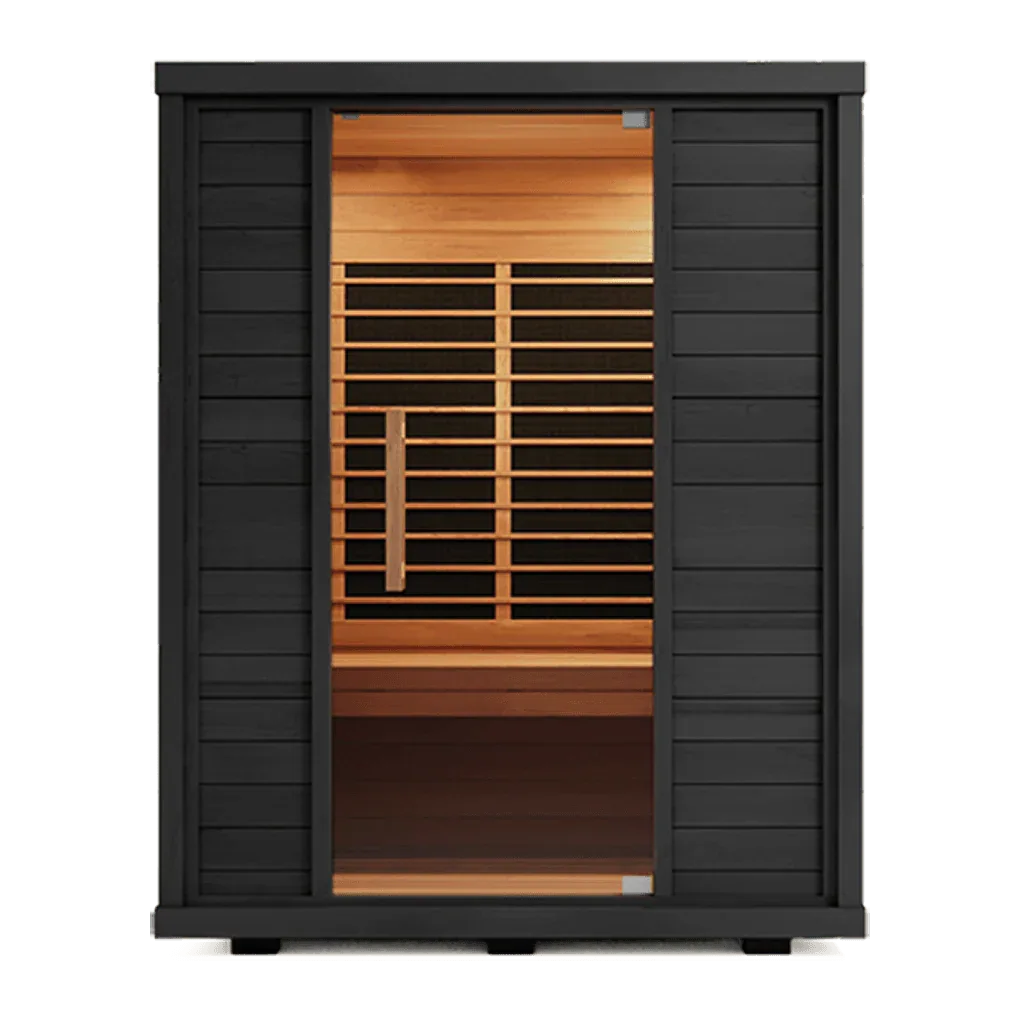

For millions of adults living with joint degeneration and systemic inflammation, finding a sustainable path to daily comfort is an ongoing struggle. Modern medicine provides pharmaceutical relief, but long-term reliance on NSAIDs often presents gastrointestinal and cardiovascular risks. Biohackers and wellness researchers are increasingly turning to home saunas as a therapeutic sanctuary to manage these symptoms safely. Infrared sauna for arthritis pain relief offers a non-invasive way to soothe stiff joints and downregulate inflammatory pathways.
By introducing deep-penetrating thermal energy, home infrared saunas offer a non-invasive way to soothe stiff joints, downregulate inflammatory pathways, and improve quality of life. This guide breaks down the biological mechanisms, optimal clinical protocols, and leading home sauna systems to help you establish a highly effective pain-management routine.
How Infrared Saunas Relieve Arthritis Pain: The Science
Infrared sauna therapy reduces arthritis pain by increasing heat shock proteins (HSP70) by 30-50% per session and decreasing pro-inflammatory cytokines, leading to measurable pain reduction.
Unlike traditional saunas that rely on high ambient air temperatures to heat the body from the outside in, infrared saunas emit radiant wavelengths that directly penetrate biological tissues. This molecular heating stimulates a cascade of cellular responses specifically beneficial for compromised joints.
A landmark clinical study demonstrated that 30 minutes of infrared sauna therapy 3x/week for 4 weeks reduced pain scores by 40% reduction in pain scores in osteoarthritis patients. The therapy works by suppressing systemic inflammation markers, particularly pro-inflammatory cytokines such as tumor necrosis factor-alpha (TNF-α) and interleukin-6 (IL-6), which actively drive joint degradation.
       [Infrared Radiant Heat]
                  │
                  ▼
    [Water Molecule Resonance (9.4μm)]
                  │
                  ▼
     [Vessel Dilation & HSP70 Rise]
                  │
                  ▼
   [Downregulated Cytokines (TNF-α/IL-6)] ──► [40% Reduction in Pain Scores]
Heat Shock Proteins and Inflammation Reduction
At the cellular level, thermal stress triggers the expression of molecular chaperones, primarily raising HSP70 by 30-50% during a single session. These proteins assist in cellular repair, preventing protein aggregation and guarding against oxidative stress within the synovial fluid of joints.
For a deeper dive into the specific thermal boundaries required to initiate this cellular defense mechanism, read our analysis on the HSP70 sauna threshold. By keeping these chaperones active, the body is better equipped to protect cartilage from ongoing autoimmune or mechanical wear.
Improved Circulation and Joint Health
Furthermore, the radiant heat specifically targets water molecules. The 9.4μm wavelength matches the vibrational resonance frequency of water, causing rotational energy changes that stimulate localized nitric oxide production. This leads to vasodilation, delivering oxygen-rich blood and essential nutrients directly to ischemic joint tissues.
While near-infrared light targets superficial layers, far infrared penetrates 1.5-2 inches deep into the musculoskeletal system, directly reaching large joints like the hips and knees to facilitate repair.
Choosing the Right Wavelength: Near, Mid, and Far Infrared for Joint Pain
For arthritis pain relief, far infrared is most effective for deep joint penetration, while near infrared targets surface inflammation and can complement red light therapy.
Understanding the electromagnetic spectrum is essential when selecting a home sauna. Under ISO 20473, the infrared spectrum is strictly categorized into specific bands, each interacting differently with human tissue.
               INFRARED SPECTRAL PENETRATION (ISO 20473)

   Wavelength    Band     Tissue Depth         Primary Action
   ─────────────────────────────────────────────────────────────────
   0.78 - 3.0 μm [NIR]  █ 1-2 mm             Cellular energy (ATP)
   3.0  - 50  μm [MIR]  ███ 5-15 mm          Soft tissue & blood flow
   50   - 1000 μm [FIR]  █████████ 40-50 mm   Deep joint & muscle heating
For comprehensive infrared sauna arthritis pain relief, a full-spectrum cabin or a dedicated far-infrared system is highly recommended. To explore how to integrate these customized wavelengths into your living space, see our guide on custom infrared cabin design.
Near vs. Mid vs. Far Infrared for Joint Pain
Near-infrared (0.78 to 3.0 μm) works primarily on a cellular level, stimulating mitochondrial chromophores to boost ATP production and accelerate skin-level healing. Mid-infrared (3.0 to 50 μm) penetrates slightly deeper to improve soft tissue elasticity and reduce muscle spasms around damaged joints.
Far-infrared (50 to 1000 μm) delivers the deep-tissue thermal energy necessary to alter joint temperature. Because far infrared penetrates 1.5-2 inches, it is uniquely capable of heating the synovial fluid in deep joints, reducing the viscosity of the fluid and immediately alleviating stiffness.
Evaluating the differences in these bands allows you to choose a cabin configuration tailored to your specific physiological needs.
Step-by-Step Protocol: Temperature, Duration, and Frequency for Arthritis
Start with 15-20 minutes at 110-120°F, gradually increase to 30 minutes at 120-130°F, 3-5 times per week for optimal arthritis pain relief.
Managing arthritis with thermal therapy requires a controlled, incremental approach. Because inflamed joints are highly sensitive to sudden environmental shifts, consistency and moderation are much more valuable than extreme heat.
Recommended Settings
For therapeutic joint recovery, the ideal infrared sauna temperature for arthritis is actually lower than a typical Swedish or steam sauna. Keeping the temperature between 110°F and 130°F allows your body to absorb far-infrared energy comfortably without triggering an excessive cardiovascular stress response.
- Beginner Protocol: 110°F to 115°F for 15 minutes, 3 times per week. Focus on rehydration and tracking how your joints feel the next morning.
- Intermediate Protocol: 115°F to 125°F for 20 to 25 minutes, 4 times per week. This level is excellent for managing daily morning stiffness.
- Advanced Protocol: 120°F to 130°F for 30 minutes, 5 times per week. This schedule is designed for significant chronic pain management. Do not exceed 4 sessions per day.
How Often to Use
Your schedule should adjust based on whether you have Osteoarthritis (OA) or Rheumatoid Arthritis (RA). For OA, a mechanical "wear-and-tear" condition, daily morning sessions can help lubricate stiff joints for the day ahead. For RA, which is an autoimmune condition, keep sessions shorter (15-20 minutes) and slightly cooler (110-115°F) during active inflammatory flare-ups to prevent exacerbating joint swelling.
Always pay close attention to your body's feedback, and keep fresh water or electrolytes nearby to prevent dehydration. According to the Arthritis Foundation, staying hydrated is crucial during sauna therapy to avoid exacerbating symptoms.
Best Infrared Sauna Brands for Arthritis Pain Relief
The top-rated infrared saunas for arthritis are Sunlighten (FDA-cleared, mPulse), SaunaSpace (low EMF, near/far combo), and JNH Lifestyles (budget-friendly full-spectrum).
Investing in a home sauna requires analyzing engineering quality, shielding against electromagnetic fields (EMF), and checking manufacturer warranties. Sunlighten mPulse is FDA-cleared and offers customizable wavelengths, while SaunaSpace low EMF design minimizes exposure to electromagnetic radiation.
Sunlighten
Sunlighten provides the mPulse series, which features SoloCarbon heaters and a patented micro-mesh fabric that blocks up to 99% of EMFs. The mPulse also integrates red light therapy, making it a comprehensive system for arthritis management.
SaunaSpace
SaunaSpace uses a unique near/far infrared combination with low EMF emissions. Their ThermaLight heaters emit near-infrared and far-infrared wavelengths, offering deep tissue penetration without high electromagnetic fields.
JNH Lifestyles
JNH Lifestyles offers full-spectrum saunas at a more accessible price point. They provide good thermal distribution and EMF protection, making them a solid entry-level option for those new to infrared therapy.
FAQs
Can infrared sauna cure arthritis?
No, infrared sauna therapy cannot cure arthritis, but it can significantly reduce pain and inflammation. Studies show a 40% reduction in pain scores with regular use.
How long should I sit in an infrared sauna for arthritis relief?
Start with 15 minutes at 110-120°F, and gradually increase to 30 minutes. Sessions should not exceed 4 per day.
Is infrared sauna safe for people with rheumatoid arthritis?
Yes, but during active flare-ups, use shorter sessions (15-20 minutes) at lower temperatures (110-115°F). Consult your doctor before starting.
What temperature should an infrared sauna be for arthritis?
The optimal range is 110-130°F. Lower temperatures are recommended for beginners and those with rheumatoid arthritis.
Can I use an infrared sauna if I have a joint replacement?
Generally yes, but allow the joint to cool down after replacement surgery. Sauna heat is unlikely to damage metal implants, but consult your surgeon.
Does insurance cover infrared sauna therapy for arthritis?
Most insurance plans do not cover home saunas. Some flexible spending accounts (FSAs) may cover it with a doctor's prescription.
What brand of infrared sauna do doctors recommend for arthritis?
Doctors often recommend Sunlighten for its FDA clearance and research backing, and SaunaSpace for its low EMF design.