Evaluating a cold plunge installation requires understanding how water sanitization impacts daily operation. When weighing cold plunge ozone vs UV sanitation, buyers often encounter conflicting claims from hardware manufacturers. Base models rely strictly on mechanical particle filters and manual chemical dosing, while premium models add built-in ozone generators or germicidal ultraviolet lamps.
These secondary sanitation systems add a $300–$1,500 price premium to the initial purchase price. To determine whether that cost delivers a practical return, you must analyze how each technology handles biological loading, contact time, and chemical maintenance schedules.
How Cold Plunge Ozone Sanitation Works (O3 Injection, Oxidation, and Off-Gassing)
Ozone sanitation injects O3 gas into the circulation loop, where it oxidizes body oils, sweat, and organic waste. This process is roughly 3,000 times more reactive than chlorine, allowing it to break down contaminants rapidly. However, ozone leaves no residual, so it cannot protect water between cycles. Off-gassing must be managed, especially indoors: OSHA recommends keeping ozone levels below 0.1 ppm in occupied spaces.
How Cold Plunge UV Sanitation Works (254nm UV-C, Contact Time, Turbidity, and Residuals)
UV sanitation uses UV-C 254nm germicidal light to neutralize floating pathogens as water flows past the lamp. Effectiveness depends on contact time and water clarity, turbidity can shield microbes. Like ozone, UV leaves no residual, so a EPA-registered residual sanitizer at 1–3 ppm (chlorine or bromine) is still required. UV lamps typically last 9,000–12,000 hours (about annually) and cost $30–$80 to replace.
Ozone vs UV Head-to-Head: Kill Spectrum, Residual Protection, Energy Use, Maintenance, Safety, and Cost
Both systems are secondary, they do not replace a residual sanitizer. UV excels at pathogen inactivation when water is clear, while ozone is superior for oxidizing organics and reducing chemical demand. Energy draw is similar: ozone generators use 10–30W, UV lamps 10–20W. Maintenance differs: UV lamps need annual replacement, ozone cells every 1–3 years. Neither provides residual protection, so chlorine or bromine must still be used.
Annual Cost of Ozone and UV Sanitation: Lamps, Cells, Electricity, and Water Changes
Annual operating costs include replacement parts and electricity. UV lamp replacement runs $30–$80 yearly; ozone cells cost $50–$150 every 1–3 years. Electricity adds roughly $10–$30 per year. With proper sanitation, water changes extended to 4–8 weeks (versus 2–4 weeks without), saving water and chemicals. Overall, annual upkeep is modest compared to the initial premium.
Indoor vs Outdoor Cold Plunge Sanitation: Ventilation, Safety, and Climate Considerations
Indoor installations require careful ventilation to avoid ozone buildup. OSHA limits ozone to 0.1 ppm. UV is safer indoors as it produces no off-gassing. Outdoors, ozone dissipates naturally, but climate affects performance: cold climates need freeze protection, while warm climates see more algae pressure. For DIY retrofits, both systems can be added with kits, but professional installation is recommended for ozone due to safety concerns.
Which Cold Plunge Brands Offer Ozone vs UV, and What the Price Premium Buys You
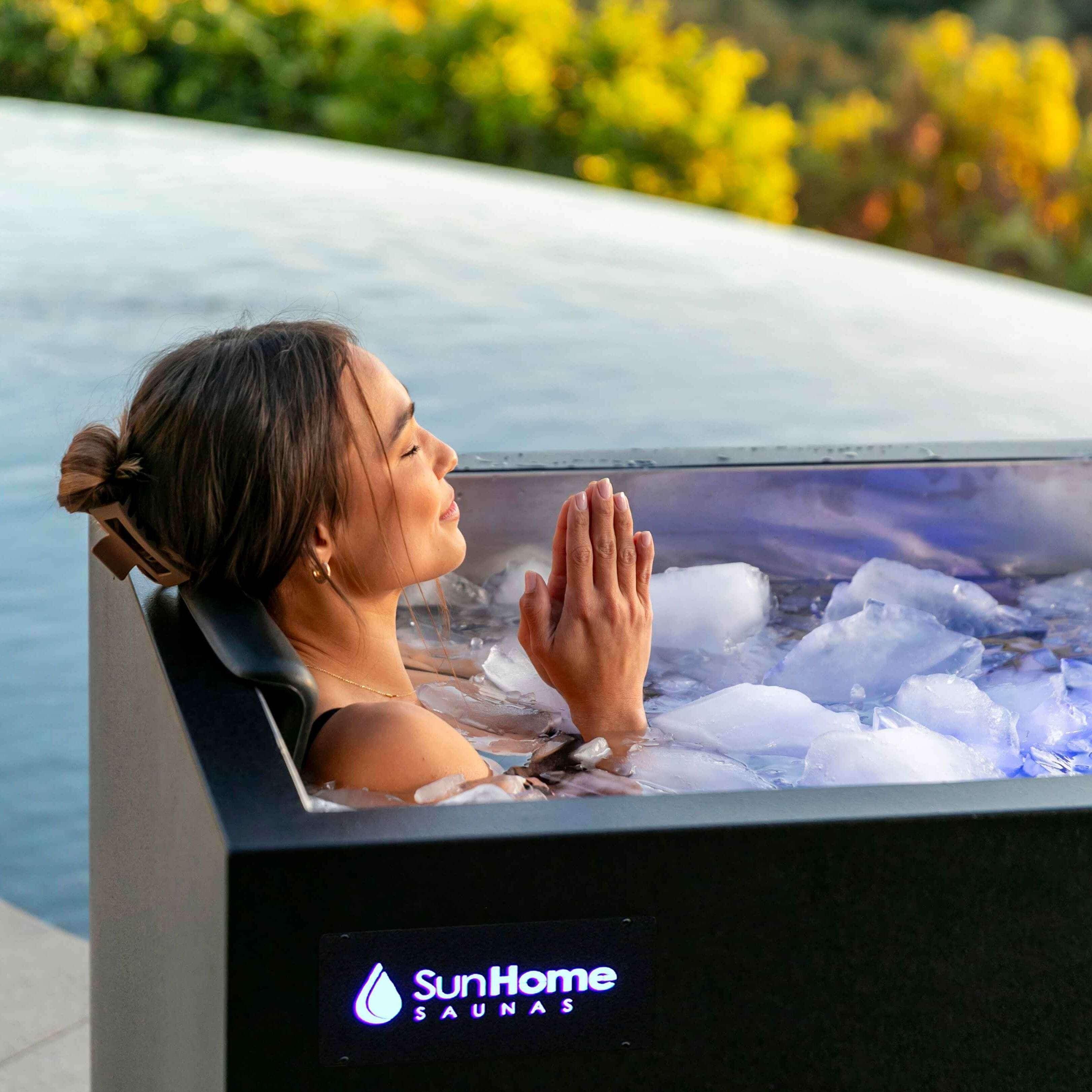
Brands like Plunge (All-In, Pro) offer ozone, while Renu Therapy and Coldture use UV. Sun Home Saunas and Blue Cube provide both options. The $300–$1,500 price premium buys reduced chemical use and less frequent water changes. For indoor use, UV is preferable; for outdoor, ozone excels at organic oxidation. Match the system to your primary failure mode: pathogens (UV) or organics (ozone).
FAQs
Is ozone or UV better for a cold plunge?
It depends on your needs: UV is better for pathogen control indoors, while ozone is better for oxidizing organics and reducing chemical demand.
Do you still need chlorine if your cold plunge has ozone or UV?
Yes, both ozone and UV leave no residual, so an EPA-registered residual sanitizer like chlorine or bromine at 1–3 ppm is still required.
Is ozone sanitization safe indoors?
Ozone can be safe indoors if properly ventilated; OSHA recommends keeping ozone levels below 0.1 ppm in occupied spaces.
How often do you replace UV lamps and ozone generators?
UV lamps typically last 9,000–12,000 hours (about annually), while ozone cells last 1–3 years depending on use.
How much more does an ozone or UV cold plunge cost?
Expect a $300–$1,500 premium over base models, with annual upkeep of $30–$150 for replacement parts and electricity.
Can you add UV or ozone to an existing cold plunge?
Yes, retrofit kits are available, but professional installation is recommended for ozone due to safety concerns.
How often do you change the water with ozone or UV sanitation?
With proper sanitation, water changes can be extended to 4–8 weeks, versus 2–4 weeks without.
Conclusion
When deciding between cold plunge ozone vs UV sanitation, consider your environment and maintenance tolerance. Both systems justify a premium by reducing chemical use and extending water changes, but neither replaces a residual sanitizer. For indoor setups, UV offers safety; for outdoor, ozone provides superior organic oxidation. Choose based on your primary contamination concern and enjoy cleaner, easier-to-maintain water.