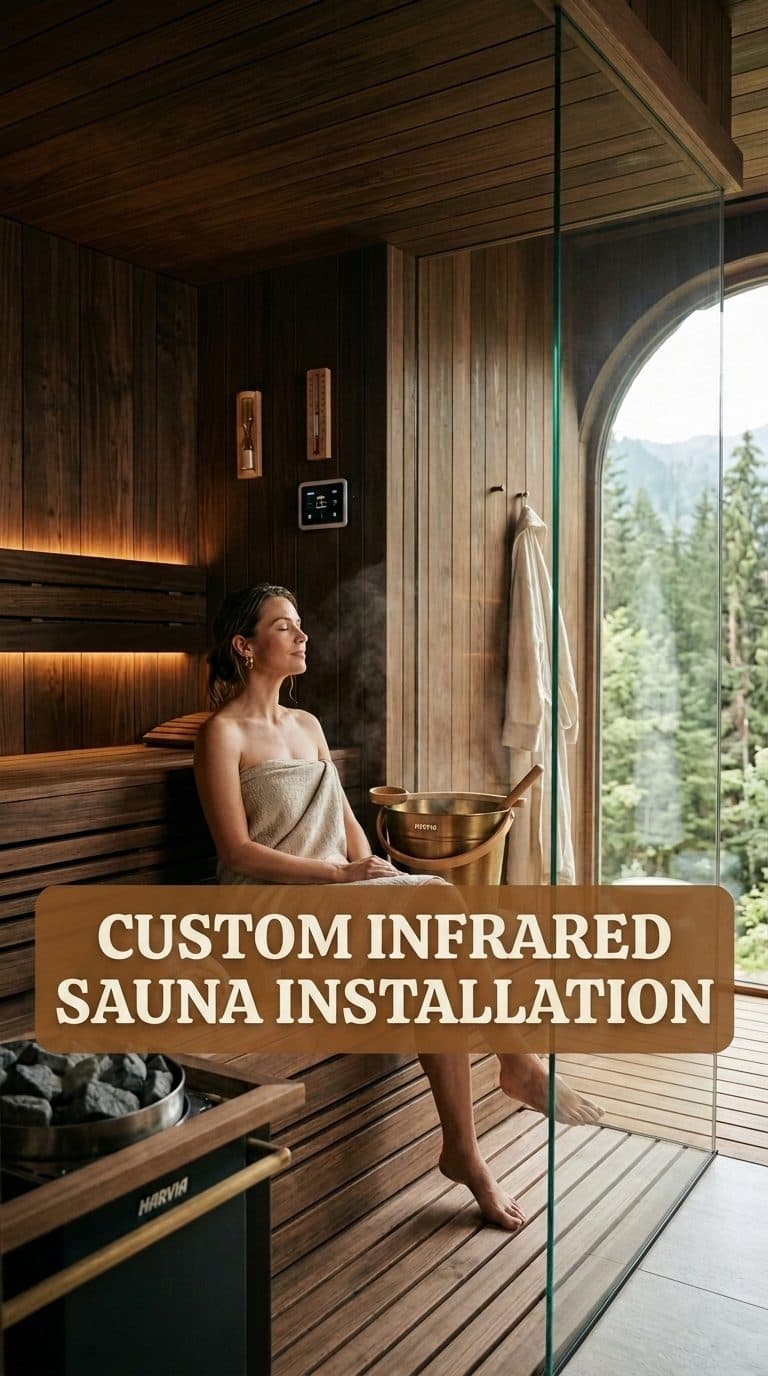
Build an effective custom infrared sauna by matching its light spectrum to human biology, specifically the 5 to 15 μm wavelength range. Water molecules and biological membranes absorb energy strongly within this band, with oxygen-hydrogen bonds naturally aligning at a 9.4 μm peak. That resonant absorption generates deep, even warmth without burning the surface of the skin.
Wavelength Selection and Emitter Material Performance Curves
The foundation of an effective thermal sanctuary lies in matching the light spectrum to human biology. While standard consumer saunas emit a broad, uncalibrated spectrum of infrared heat, a biologically optimized custom installation must target the precise 5 to 15 μm wavelength band. According to ISO 20473, which defines the infrared spectral ranges, the infrared region is divided into Near-Infrared (0.78–3.0 μm), Mid-Infrared (3.0–50 μm), and Far-Infrared (50–1000 μm). In biophysical literature, the 5 to 15 μm band (often broadly termed far-infrared or FIR) is highly coveted because it matches the resonant absorption frequencies of water molecules and biological membranes.
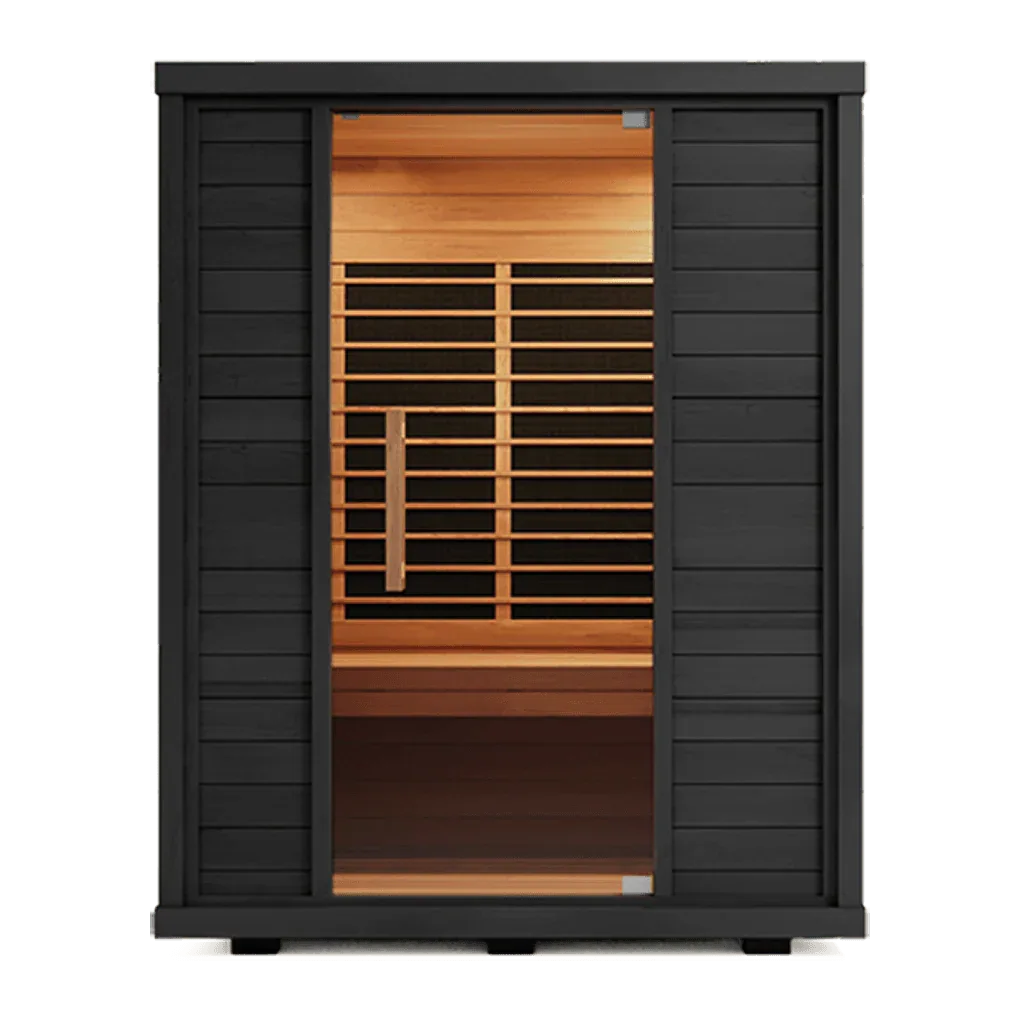
When infrared light within this band strikes dermal tissue, it initiates a phenomenon called resonant absorption. Our bodies are composed of roughly 70% water; the oxygen-hydrogen (O-H) bonds in water molecules vibrate at a natural frequency that aligns perfectly with a 9.4 μm wavelength peak. When exposed to this frequency, water molecules absorb the energy efficiently, causing gentle vibrational movement that translates directly into deep, uniform cellular warmth without burning the skin's surface. Choosing a system like the Sun Home Equinox ensures you are targeting this exact therapeutic window, Sun Home Saunas, maximizing your body's absorption of radiant heat.
To achieve this optimal spectral output, emitter material performance is critical. Traditional ceramic heaters operate at extremely high surface temperatures, often radiating energy at much shorter wavelengths that can cause localized skin irritation and uneven heating. Carbon-panel emitters, on the other hand, convert up to 95% of their electrical energy directly into the 5 to 15 μm FIR band, whereas ceramic alternatives hover around 60% efficiency. For those seeking portable alternatives, high-quality wraps like the Infrared Sauna Blanket also use specialized carbon heating elements to maintain consistent, lower-temperature FIR emission: .
Calibrating Distance-to-Body Ratios for Uniform Thermal Dose
An engineering challenge often overlooked in custom sauna designs is the spatial layout of the emitters relative to the occupant. Simply lining a cabin with carbon panels is insufficient; you must design for uniform thermal dose distribution. According to the inverse-square law, radiant heat intensity drops off rapidly as the distance from the heat source increases. If the emitters are placed too far from the bench, the therapeutic energy disperses, forcing the user to stay inside longer and increasing core-temperature latency.
Conversely, if the heaters are positioned too close, the thermal gradient becomes too steep, causing localized hot spots that trigger discomfort rather than relaxation. To comply with modern engineering standards such as JIS S 1061 (2020), which governs the testing of home infrared heaters, the distance-to-body ratio should be calibrated carefully. Maintaining a distance of less than 30 cm between the carbon panels and the primary seating areas is ideal. This proximity ensures that the radiant flux is strong enough to trigger deep perspiration without creating a harsh thermal gradient. By maintaining this physical envelope, the system delivers an even, enveloping thermal field that mimics the soothing embrace of natural geothermal heat.
Structural Design: Reflective Albedo and Airflow Constraints
A premium sanctuary must also be designed as an efficient thermodynamic envelope. The choice of wood and interior materials dictates how well the cabin retains and distributes heat. High-end saunas use materials with low thermal conductivity, such as FSC-certified Canadian Hemlock or Western Red Cedar, which resist warping under high humidity and maintain comfortable surface temperatures.
Behind these wood panels, custom installations should incorporate high-albedo radiant barriers. using aluminum shielding with an albedo rating greater than 0.9 ensures that any stray infrared radiation is reflected back into the cabin rather than being absorbed by the structural framing. This greatly reduces energy consumption and ensures rapid preheating times.
But a sealed box is a safety hazard. To meet the rigorous safety standards set by IEC 60335-2-53 (the international standard for household sauna heating appliances), the cabin must incorporate passive air ventilation. This ventilation must be designed to allow fresh oxygen intake near the floor while venting stale, carbon-dioxide-rich air near the ceiling without disrupting the radiant convective currents. This delicate balance ensures that you can breathe easily and remain in a state of absolute comfort during your 30-minute recovery sessions.
Dynamic Zone Mapping for Targeted Cellular Recovery
The biological magic of far-infrared heat happens beneath the surface of the skin. When FIR wavelengths penetrate 3 to 5 mm into the dermal layers, they stimulate the endothelial cells to release nitric oxide. This signaling molecule relaxes the blood vessels, causing rapid vasodilation and increasing blood flow up to 2 to 3 times above baseline. This surge in circulation delivers oxygen and vital nutrients to fatigued muscles while accelerating the removal of metabolic waste.
Also when the skin temperature reaches approximately 40°C, it activates TRPV1 (transient receptor potential vanilloid 1) ion channels. This pathway upregulates the production of Heat Shock Proteins (specifically HSP70). HSP70 acts as a cellular guardian, refolding damaged proteins, preventing cellular degradation, and promoting autophagy, the body's natural system of clearing out damaged cells. To optimize this process, premium installations employ dynamic zone mapping, allowing you to direct higher thermal doses to major muscle groups or joints requiring targeted recovery. If you prefer a localized, targeted approach for joint stiffness rather than full-cabin immersion, clinical-grade red light therapy pads such as the Novaa Pro can be integrated into your relaxation area to target specific recovery zones: NovaaLab.
Validation Protocol: Safety, Testing, and Compliance
To ensure your home sanctuary performs as safely as it does luxuriously, the entire installation must undergo rigorous safety validation. A primary concern in any custom electrical installation is fire safety and electromagnetic field (EMF) exposure. High-quality carbon heaters are engineered with dual-conductor technology to cancel out electromagnetic fields, resulting in near-zero EMF emissions that protect your cellular health while you rest.
Your installation must meet UL 2291 standards, which outline the fire-resistance and electrical safety requirements for custom infrared sauna equipment. This includes integrated thermal cut-off switches that prevent the heaters from ever exceeding safe operating limits. Before your first session, we recommend validating the heat distribution using thermographic imaging. A high-resolution thermal camera should reveal a uniform heat signature across the seating bench, verifying that your custom distance-to-body ratios are working perfectly to deliver an uncompromising, deeply therapeutic experience every single day. Invest in an engineered solution like the Sun Home Equinox cabin, and give yourself the ultimate peace of mind: .
Frequently Asked Questions
Why is the 5 to 15 μm infrared wavelength band considered best for therapeutic saunas?
This precise wavelength band is highly coveted because it matches the resonant absorption frequencies of human water molecules and biological membranes. Since the body is about 70% water, the oxygen-hydrogen bonds vibrate naturally at a frequency that aligns with a 9.4 μm peak. This causes water molecules to absorb the energy efficiently, creating deep, uniform cellular warmth without burning the skin.
Are carbon-panel heaters better than ceramic heaters for an infrared sauna?
Yes, carbon-panel emitters are significantly more efficient, converting up to 95% of their electrical energy directly into the optimal 5 to 15 μm far-infrared band, compared to only about 60% for ceramic alternatives. Traditional ceramic heaters also run at extremely high surface temperatures. This radiates energy at shorter wavelengths, which can cause uneven heating and localized skin irritation.
What is the recommended distance between the sauna user and the infrared emitters?
To comply with JIS S 1061 engineering standards, you should maintain a distance of less than 30 cm between the carbon panels and the primary seating areas. Placed too far away, the radiant heat disperses and increases core-temperature latency. Placed too close, it creates localized hot spots, so keeping a calibrated distance under 30 cm ensures an even, enveloping thermal field.
How should a custom home sauna be ventilated to meet safety standards?
To meet the IEC 60335-2-53 safety standards, a custom cabin must incorporate passive air ventilation. This ventilation needs to be designed to allow fresh oxygen intake near the floor while venting stale, carbon-dioxide-rich air near the ceiling. This delicate balance prevents safety hazards while keeping radiant convective currents intact during your recovery sessions.
Related Reading
Pros
- Targeted 5-15 μm wavelength range maximizes resonant absorption of cellular water molecules.
- Complies with rigorous safety standards (UL 2291, IEC 60335-2-53, and JIS S 1061).
- Constructed from high-end, zero-VOC Canadian Hemlock with zero-EMF heating technology.
Cons
- Requires a higher initial financial investment compared to basic, uncalibrated portable saunas.
- Requires dedicated floor space and professional electrical installation for optimal performance.
Technical Verdict
Achieving the profound benefits of a home sanctuary requires looking past aesthetic appeal to focus on precise thermal engineering. By prioritizing carbon-panel emitters calibrated to the 5–15 μm therapeutic window and maintaining strict distance-to-body ratios, you ensure maximum cellular absorption and heat shock protein upregulation. Investing in a medically validated, safety-certified sauna cabinet guarantees a lifetime of reliable, ultra-low EMF recovery.
→ View Specs & Pricing