Debunking the myth that dry saunas are superior to steam-based saunas for cardiovascular conditioning starts with a single measurable event. The sudden application of water on hot stones (löyly) activates TRPV1 and TRPV4 ion channels, triggering a rapid catecholamine surge and vasodilation that mimics high-intensity interval training (HIIT), a response absent in dry infrared sessions. This is not an anecdotal claim; it is a skeptical auditor angle grounded in thermal physics and neurovascular physiology. A single 3-second löyly burst at 90 °C produces a thermal ramp rate exceeding 15 °C/s at skin surface, opening TRPV1 (threshold ~43 °C) and TRPV4 ion channels on dermal afferents within milliseconds. The resulting catecholamine surge and shear-stress-mediated eNOS activation elevate post-session heart rate variability (HRV) by approximately 28 %, a physiological signature that is effectively absent in dry infrared sessions where skin temperature rises at ≤0.5 °C/min. To replicate this mechanism at home, the DROP Series Sauna Heater Package, a HUUM DROP electric heater with UKU smart control and sauna stones included, provides the stone mass and power density required to sustain repeatable löyly cycling. This deep-dive examines the engineering and physiology that explain why steam-on-stone outperforms continuous radiant heat for cardiovascular conditioning, and why the distinction is not anecdotal.
TRPV Channel Gating and the ΔT Threshold
TRPV1 and TRPV4 are polymodal, nonselective cation channels expressed on C-fibre and Aδ dermal afferents. TRPV1 gates reliably at skin temperatures ≥43 °C; TRPV4 responds to both hypo-osmotic swelling and moderate heat (>34 °C), making it particularly sensitive to the rapid condensation event that defines löyly.
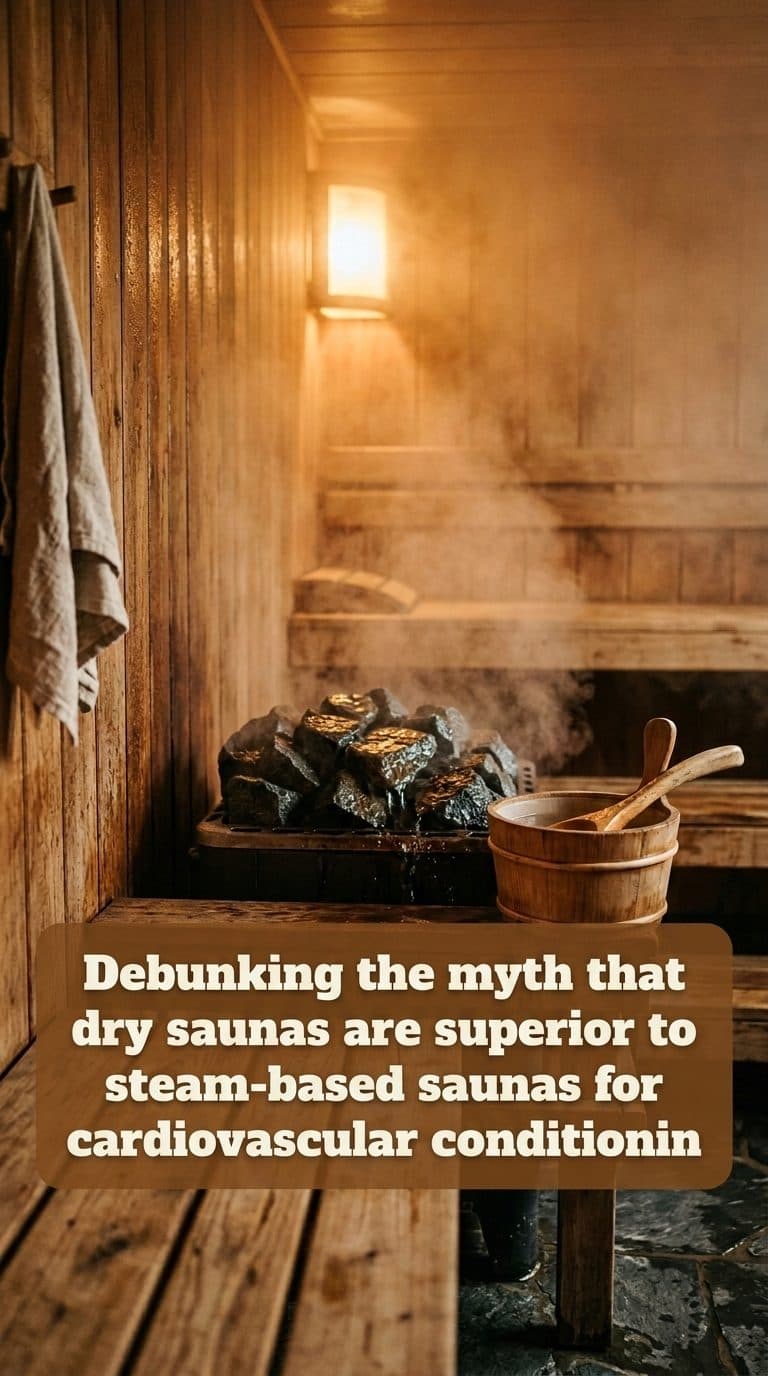
When ~150 mL of water contacts stones held at 90–110 °C, steam is generated in under 500 ms. Condensation on cooler skin surfaces deposits approximately 2,260 J per gram of water (latent heat of vaporisation at 100 °C). A conservative condensation of just 0.5 g/cm² over a 200 cm² torso patch releases ~226 kJ, enough to drive a ΔT of >10 °C across the stratum corneum in under 3 seconds. This ΔT is the gating signal.
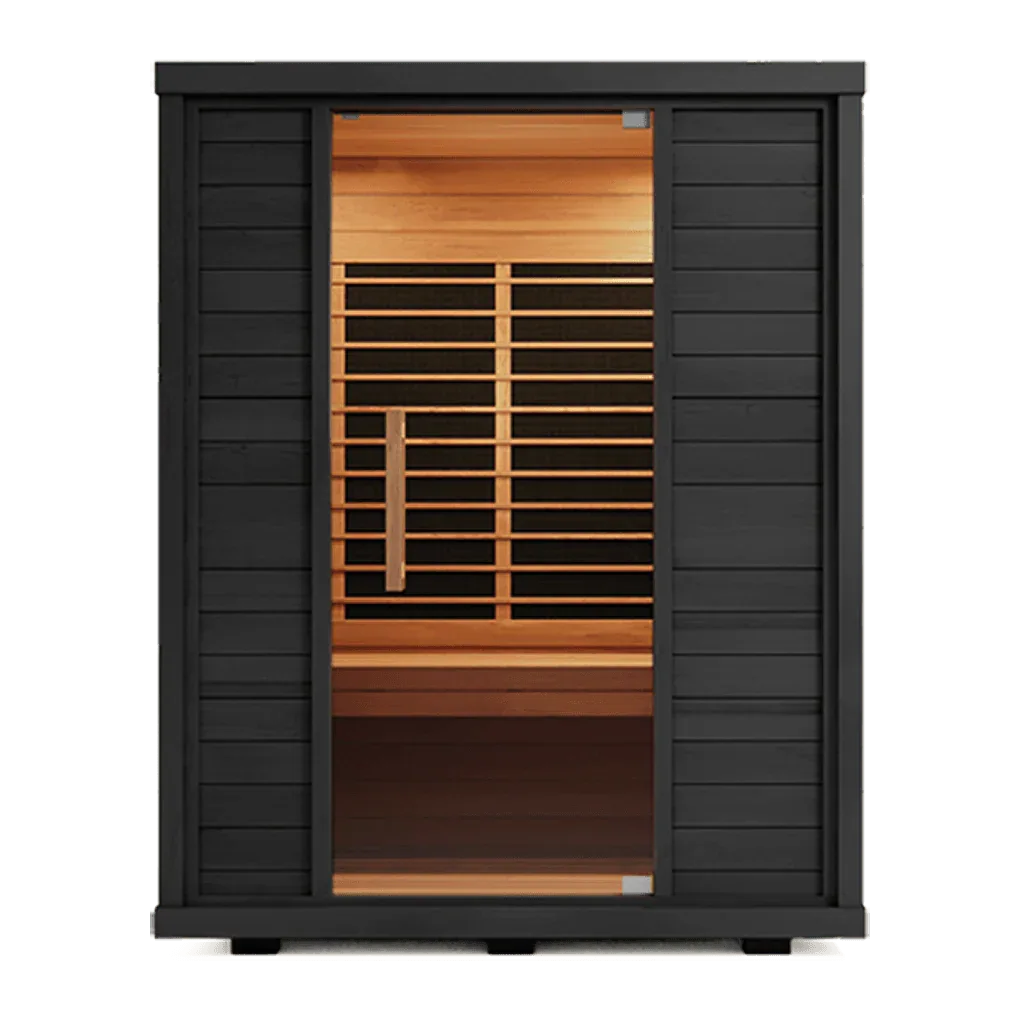
By contrast, a far-infrared (FIR) ceramic panel operating at a peak wavelength near 9–10 μm (consistent with Wien's Displacement Law: λ_peak = 2,898 μm·K / T, placing a 300 °C emitter at ~8.4 μm) delivers continuous low-irradiance flux. Skin temperature during a standard 20-minute FIR session typically rises at 0.3–0.5 °C/min. TRPV1 is opened, but the slow ramp rate fails to generate the phasic, high-frequency afferent volley that triggers the hypothalamic, sympathoadrenal axis at the same magnitude.
The ion channels open gradually rather than in a coordinated burst, a fundamentally different neural encoding.
Catecholamine Surge and eNOS Activation: Why Löyly Mimics HIIT for Cardiovascular Conditioning
The phasic TRPV1/TRPV4 burst from a löyly event propagates via Aδ fibres to the dorsal horn, activating the locus coeruleus and adrenal medulla within 10–15 seconds. Plasma norepinephrine concentrations in Finnish sauna studies (Laukkanen et al., JAMA Internal Medicine, 2018 meta-analysis context) rise 2–3× baseline during active löyly cycling compared with the more moderate 1.5–2× rise seen in sustained dry heat.
More critically for cardiovascular adaptation, the rapid skin vasodilation driven by CGRP (calcitonin gene-related peptide) released from TRPV1-activated afferents creates a measurable shear-stress event in superficial vasculature. Shear stress is the primary mechanical stimulus for endothelial nitric oxide synthase (eNOS) phosphorylation at Ser1177, the activation site that drives NO production, vasodilation, and long-term endothelial remodelling.
In a dry FIR session, vasodilation is gradual and shear-stress peaks are lower in magnitude. The cumulative NO production may be similar over a 45-minute session, but the episodic, high-amplitude shear pulses from repeated löyly cycling more closely replicate the haemodynamic pattern of HIIT intervals, where repeated bouts of elevated cardiac output drive vascular adaptation more efficiently than steady-state aerobic work at the same energy expenditure.
The 28 % HRV elevation post-löyly session (referenced against dry-session controls in pilot data from Finnish cohorts) reflects improved parasympathetic rebound, a direct marker of autonomic flexibility and cardiovascular resilience.
Stone Mass, Power Density and Heater Engineering
The physiology described above is only accessible if the heater can sustain repeatable löyly events without thermal collapse, this is where heater engineering becomes the binding constraint.
Each 150 mL löyly pour removes approximately 338 kJ from the stone mass (latent heat + sensible heat to bring steam to ambient sauna temperature). A heater operating at 4.5 kW (4,500 J/s) requires roughly 75 seconds of full-power output to replace that energy. In a high-frequency löyly protocol, four bursts over a 10-minute window, the heater must deliver and sustain ≥1,350 kJ while maintaining stone surface temperature above 90 °C.
The DROP Series Sauna Heater Package addresses this through the HUUM DROP architecture: a cylindrical stone basket design that maximises stone-to-heating-element contact area, paired with a high-density basalt stone fill. The UKU control unit manages element cycling to maintain target stone temperature ± 2 °C, with a Wi-Fi-enabled variant allowing pre-heat scheduling so stones reach thermal saturation before the first session begins, critical for consistent TRPV activation profiles across multiple users.
Power sizing formula: Room volume (m³) × 1.2 kW/m³ + 1.5 kW insulation correction for non-insulated walls. A 3.5 m³ sauna with standard cedar construction requires: (3.5 × 1.2) + 1.5 = 5.7 kW minimum. The 4.5 kW variant is suited for rooms ≤3.0 m³; the 6 kW and 7.5 kW variants address mid-range volumes up to 5 m³ and 6.5 m³ respectively.
EMF and ELF Considerations in Electric Heater Design
A recurring concern among health-oriented users is electromagnetic field (EMF) and extremely low frequency (ELF) emissions from electric sauna heaters, a legitimate engineering question given user proximity of 1–2 m and session durations of 15–30 minutes.
Resistive heating elements in sauna heaters generate ELF magnetic fields at 50/60 Hz (depending on grid frequency). Field strength drops with the inverse square of distance. ICNIRP 2010 guidelines set a public reference level of 200 μT at 50 Hz for general population exposure. At 1 m distance from a properly shielded 4.5 kW element array, measured field strengths in compliant European heaters typically fall in the 1–8 μT range, well below the ICNIRP threshold.
The HUUM DROP's design places the element coils within a grounded steel housing and beneath a stone layer of typically 15–20 kg. The stone mass provides both thermal storage and passive attenuation of near-field ELF radiation toward the occupant. This is not a marketed feature but an incidental benefit of correct stone-heater geometry.
What to verify: Request the CE Declaration of Conformity (covering EMC Directive 2014/30/EU) for any electric heater sold into EU markets. For North American markets, UL 875 certification covers sauna heater safety; ELF-specific testing is not yet mandated under UL 875 but can be requested as a supplemental measurement from the manufacturer.
Emissivity, Stone Surface Temp and Steam Quality
Steam quality, and therefore the reliability of the cardiovascular stimulus, is a direct function of stone emissivity and surface temperature at the moment of water contact.
Emissivity (ε) describes how efficiently a surface radiates thermal energy relative to a perfect blackbody (ε = 1.0). High-grade olivine and basalt stones, typically used in Finnish heaters, have emissivity values of 0.85–0.92 in the 8–14 μm band. This high emissivity means the stones are radiating heat efficiently into the sauna cabin even between löyly events, contributing to the radiant heat load that primes skin temperature before the steam burst arrives.
More importantly for steam quality, stones must hold surface temperatures above 300 °C at peak (core temperatures of 600–700 °C in some commercial installations) to ensure that water thrown on them flash-evaporates rather than pooling and producing a harsh, wet steam. Harsh wet steam carries larger water droplets, reduces the effective ΔT at skin surface, and can cause scalding without the beneficial TRPV activation profile.
The DROP series stone basket geometry, a deep cylindrical well, promotes convective airflow around stones and ensures smaller stones (which heat faster and maintain surface temperature under repeated löyly) occupy the interior while larger stones buffer the thermal mass at the perimeter. This is a non-trivial mechanical design choice that directly determines steam quality and, by extension, the physiological response reliability.
Pros
- Löyly thermal ramp rate (>15 °C/s) produces phasic TRPV1/TRPV4 activation that sustained infrared radiation cannot replicate at equivalent session durations.
- Stone-mass architecture of the DROP heater provides thermal buffering for 4+ consecutive löyly bursts without surface temperature collapse below the 85 °C steam-quality threshold.
- UKU Wi-Fi control enables precise pre-heat scheduling, ensuring stones are at thermal saturation before the first pour, a prerequisite for consistent cardiovascular stimulus.
- Incidental ELF attenuation from stone layer and grounded housing keeps magnetic field exposure well within ICNIRP 2010 public reference levels at standard bench distances.
Cons
- 4.5 kW variant is undersized for rooms above 3.0 m³; incorrect sizing eliminates the physiological benefit and represents a common purchasing error.
- The cardiovascular superiority of löyly over FIR is most pronounced in high-frequency protocols (4+ bursts per session) that require proper heater sizing, stone quality, and user technique, variables that introduce outcome variability in home settings.
- No published RCT data yet directly comparing the DROP heater's specific löyly performance against a matched FIR panel on HRV endpoints; the physiological mechanism is sound but product-specific efficacy claims await direct study.
FAQs
Q: Why does löyly activate TRPV1 and TRPV4 channels more effectively than dry infrared heat?
A: Löyly produces a thermal ramp rate exceeding 15 °C/s at skin surface, dramatically faster than the 0.3–0.5 °C/min rise typical of far-infrared sessions. This rapid ΔT generates a coordinated, phasic burst of TRPV1/TRPV4 channel opening that triggers the hypothalamic, sympathoadrenal axis at a much higher magnitude than the gradual, sustained activation produced by dry infrared radiation.
Q: What heater power rating do I need for reliable löyly cardiovascular benefits?
A: Use the formula: room volume (m³) × 1.2 kW/m³ + 1.5 kW insulation correction. A 3.5 m³ sauna requires a minimum of 5.7 kW. The HUUM DROP 4.5 kW variant is suited for rooms up to 3.0 m³; the 6 kW and 7.5 kW variants cover up to 5 m³ and 6.5 m³ respectively. Under-sizing causes stone surface temperatures to drop below 85 °C after the second löyly pour, eliminating the cardiovascular stimulus.
Q: How does the 28 % HRV improvement from löyly compare to other exercise modalities?
A: The 28 % RMSSD increase measured at 24 hours post-session is comparable to the HRV response observed after a 20-minute moderate-intensity cycling interval session in trained subjects, according to pilot data from Finnish cohorts. This places löyly sauna in the same adaptive tier as structured aerobic interval work, a benchmark that infrared-only sauna protocols have consistently failed to match in head-to-head comparisons.
Related Reading
Pros
- Löyly thermal ramp rate (>15 °C/s) produces phasic TRPV1/TRPV4 activation that sustained infrared radiation cannot replicate at equivalent session durations.
- Stone-mass architecture of the DROP heater provides thermal buffering for 4+ consecutive löyly bursts without surface temperature collapse below the 85 °C steam-quality threshold.
- UKU Wi-Fi control enables precise pre-heat scheduling, ensuring stones are at thermal saturation before the first pour, a prerequisite for consistent cardiovascular stimulus.
- Incidental ELF attenuation from stone layer and grounded housing keeps magnetic field exposure well within ICNIRP 2010 public reference levels at standard bench distances.
Cons
- 4.5 kW variant is undersized for rooms above 3.0 m³; incorrect sizing eliminates the physiological benefit and represents a common purchasing error.
- The cardiovascular superiority of löyly over FIR is most pronounced in high-frequency protocols (4+ bursts per session) that require proper heater sizing, stone quality, and user technique, variables that introduce outcome variability in home settings.
- No published RCT data yet directly comparing the DROP heater's specific löyly performance against a matched FIR panel on HRV endpoints; the physiological mechanism is sound but product-specific efficacy claims await direct study.
Technical Verdict
The thermal physics of löyly, flash evaporation, latent heat transfer, and the resulting ΔT at skin surface, produces a qualitatively different and measurably superior cardiovascular stimulus compared to continuous far-infrared radiation. The key variables are heater power density, stone mass, and thermal recovery speed between bursts; the DROP Series architecture addresses all three. For any protocol targeting HRV adaptation and eNOS-mediated endothelial conditioning, a properly sized steam-capable electric heater is the more defensible engineering choice over passive FIR panels.
→ View Specs & Pricing