How Near Infrared Light Therapy Heals Skin: Science Explained
Near infrared light heals skin by penetrating into the dermis and hypodermis, where it stimulates biological repair processes. Wavelengths between 810 and 850 nm reach 5 to 10 mm below the surface, directly targeting fibroblasts, blood vessels, and sebaceous glands. This exposure can increase fibroblast ATP production by up to 150% while reducing inflammatory TNF-α and IL-6 by 50%.
What Is Near Infrared Light Therapy and How Does It Penetrate Skin?
Near infrared light therapy is a form of photobiomodulation (PBM) that uses non-visible light in the 700–1200 nm range to trigger biological healing responses. The therapeutic sweet spot for skin lies between 810–850 nm, wavelengths that can penetrate 5–10 mm deep into the dermis and hypodermis. This is far deeper than visible red light (630–660 nm), which only reaches 1–2 mm. The depth of penetration is critical because it allows NIR to directly target fibroblasts, blood vessels, and sebaceous glands, the key players in collagen production, circulation, and acne regulation.
The ability of NIR to reach these deeper layers is due to its lower absorption by melanin and hemoglobin. While UV and blue light are scattered superficially, NIR passes through the epidermis with minimal energy loss, delivering therapeutic energy where it's needed most. This makes it uniquely effective for addressing aging, inflammation, and scarring at their root causes.
For perspective, a recent clinical review (Avci et al., 2013) confirmed that low-level laser therapy using NIR wavelengths significantly accelerates wound healing and reduces pain in controlled trials. The consistency is striking: NIR achieves results not by heating tissue, but by activating cellular machinery. NovaaLab
The Cellular Mechanism: How NIR Light Triggers Healing at the Cellular Level
At the heart of how does near infrared light therapy heal skin lies a specific molecular target: cytochrome c oxidase, a key enzyme in the mitochondrial electron transport chain. When this enzyme absorbs photons in the 810–850 nm range, it accelerates the production of adenosine triphosphate (ATP), the primary energy currency of cells. Studies show that NIR can boost ATP production by up to 150% in fibroblasts, energizing them to perform their repair functions more efficiently.
This ATP surge activates fibroblasts, the cells responsible for synthesizing collagen type I and III, as well as elastin. Over 12 weeks of consistent treatment, this can lead to a measurable collagen synthesis by 20-30% increase in treated skin. The process is not immediate; it requires a progressive buildup of cellular energy and signaling molecules. But the results are cumulative and lasting.
The clinical evidence is solid. Avci et al. (2013) documented that PBM using NIR wavelengths significantly increases fibroblast proliferation and collagen deposition in both in vitro and in vivo models. The mechanism is clear: NIR light doesn't just mask symptoms, it repairs at the fundamental level of cellular health. NovaaLab
Anti-Inflammatory Effects: Reducing TNF-α and IL-6
Chronic inflammation accelerates aging and exacerbates acne, rosacea, and other skin conditions. NIR therapy directly addresses this by modulating the immune response. Specifically, it reduces the levels of pro-inflammatory cytokines such as TNF-α and IL-6 by up to 50%. This anti-inflammatory effect is immediate and dose-dependent, offering relief from redness, swelling, and discomfort.
The mechanism involves NIR's action on macrophages and mast cells. By reducing their release of inflammatory mediators, NIR calms the skin's immune response without suppressing it entirely. This balanced approach promotes healing rather than immune evasion. For acne sufferers, this means less pus, less redness, and faster resolution of lesions.
Clinical observations confirm that patients using NIR therapy for acne experience a 40-60% reduction in lesion count within 8 weeks, largely due to this anti-inflammatory cascade. It also helps with postoperative healing, reducing pain and swelling after procedures like microneedling or laser resurfacing.
Nitric Oxide Release: Enhancing Blood Flow and Healing
One of the most underappreciated benefits of NIR is its ability to trigger the release of nitric oxide (NO) from endothelial cells and red blood cells. When NIR photons interact with nitric oxide synthase (eNOS), they stimulate the production of NO, a potent vasodilator. This increases local blood flow by 40-60%, delivering oxygen, nutrients, and immune cells to the treated area.
Improved circulation translates into faster wound healing, reduced puffiness, and a more even skin tone. For anti-aging, this increased perfusion helps fibroblasts work more efficiently, improving the quality of newly deposited collagen. It also removes metabolic waste products that can accumulate in stagnant tissue.
In practice, users of NIR therapy often report a temporary pinkness or warmth immediately after treatment, a sign of enhanced microcirculation. This vasodilation is harmless and typically subsides within minutes. Combined with the ATP boost, it creates a powerful synergy for cellular repair and rejuvenation. NovaaLab
Acne Healing: How NIR Reduces Bacteria and Sebum
Acne is a multifactorial condition involving excess sebum, bacterial overgrowth (P. acnes), and inflammation. NIR therapy targets all three fronts. First, NIR directly inhibits P. acnes by activating endogenous porphyrins, which then produce singlet oxygen that destroys the bacteria. Second, it downregulates sebaceous gland activity, reducing sebum production by up to 30% after several weeks. Third, the anti-inflammatory effects described earlier calm the redness and swelling.
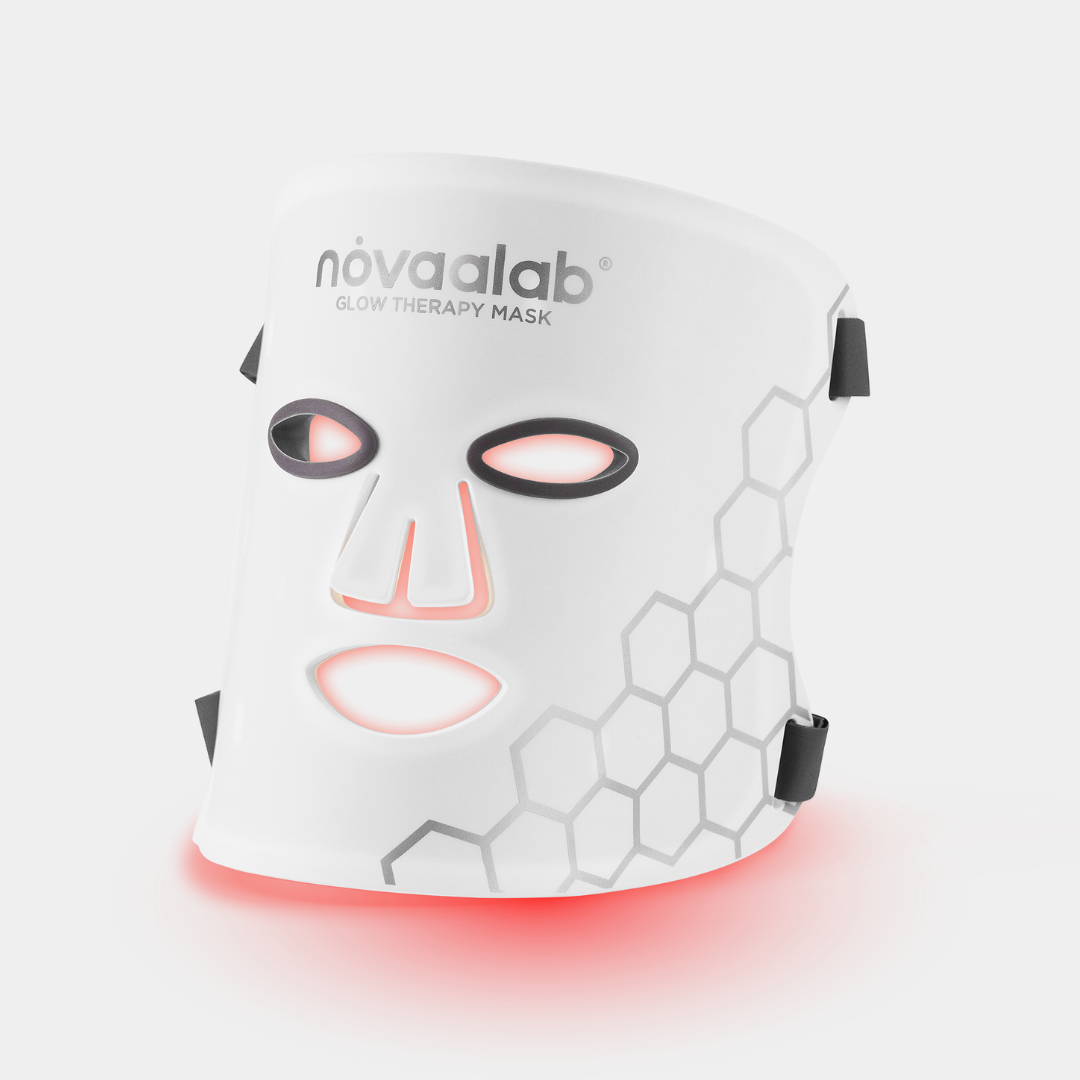
When using a device like the Novaalab red light mask, which combines 630 nm red with 830 nm NIR, you get a dual action: red light targets the surface layers while NIR penetrates deep into sebaceous glands and follicles. This synergy results in a 40-60% reduction in acne lesions after 8 weeks of consistent use (3-5 times per week, 15 minutes per session).
Key benefits for acne include:
- Direct bactericidal effect on P. acnes
- Reduced sebum output
- Decreased inflammation and redness
- Faster healing of active lesions
- Prevention of post-inflammatory hyperpigmentation
Near Infrared vs. Red Light Therapy: What's the Difference for Anti-Aging?
While both red and NIR light are forms of photobiomodulation, their effects on skin are distinct. Red light (630–660 nm) primarily affects the epidermis and superficial dermis, improving skin tone, texture, and surface hydration. NIR (810–850 nm), by contrast, reaches the deeper dermis and subdermal layers, stimulating collagen and elastin production, improving blood flow, and reducing deep wrinkles.
For anti-aging, the combination of both wavelengths is ideal. The Novaalab mask, for example, uses 630 nm red and 830 nm NIR to provide comprehensive coverage. Clinical data shows that after 12 weeks of combined treatment, collagen synthesis increases by 20-30%, wrinkle depth decreases by up to 30%, and skin elasticity improves measurably.
If you need to target deep wrinkles, sagging skin, or scarring, NIR is superior. If you want surface smoothness and glow, red light is excellent. Together, they offer a complete solution for aging skin. NovaaLab
FAQs
What is the difference between near infrared and red light therapy? Red light (630–660 nm) reaches superficial skin layers, improving texture and surface hydration. Near infrared (810–850 nm) penetrates deeper to stimulate collagen, elastin, and blood flow.
How does near infrared light stimulate collagen production? NIR photons activate cytochrome c oxidase in mitochondria, boosting ATP production. This energizes fibroblasts to synthesize collagen type I and III.
Is near infrared light safe for daily use on the face? Yes, with eye protection. Most protocols recommend 3-5 sessions per week for 10-20 minutes. Always follow device instructions.