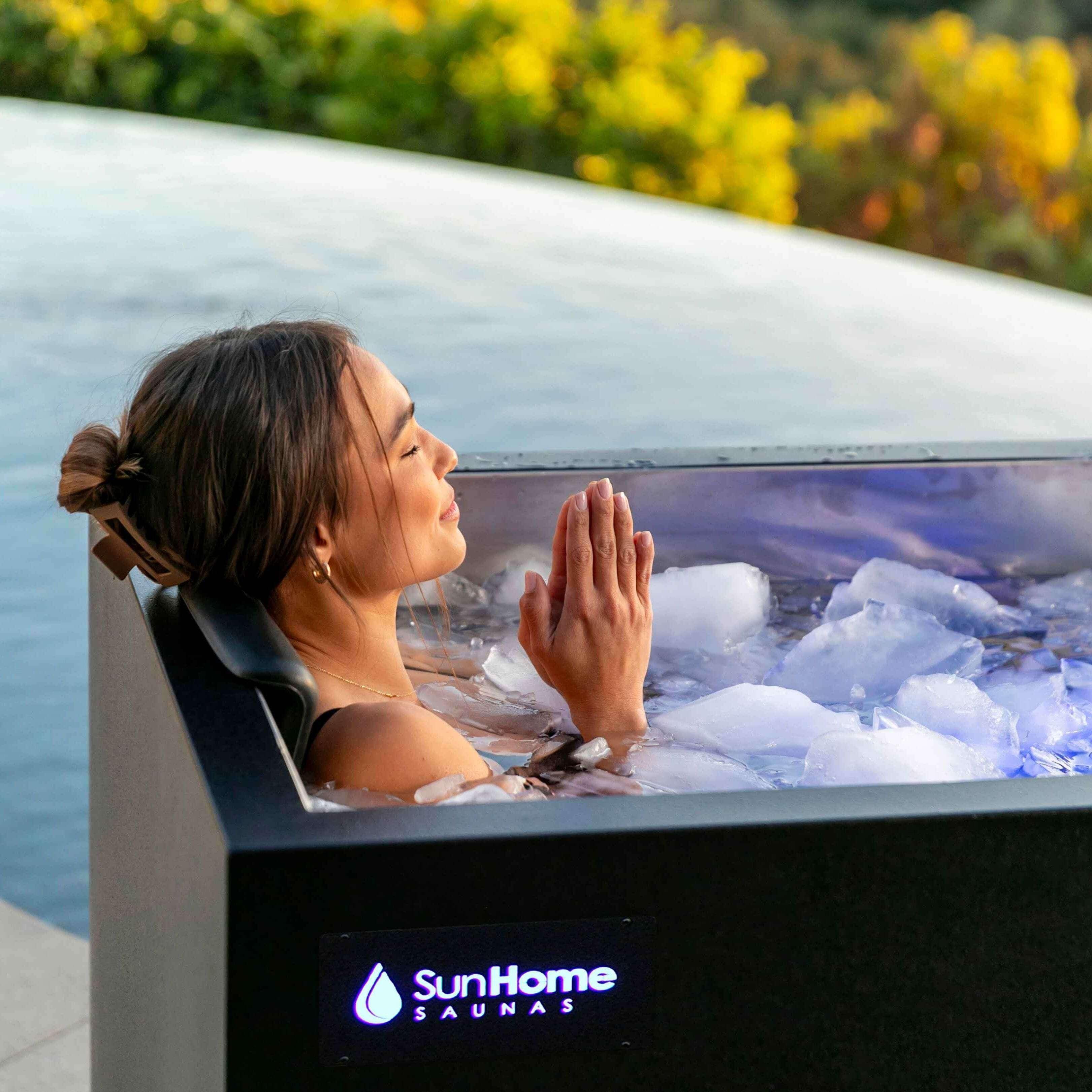

Imagine stepping into a personal sanctuary where the noise of the world instantly falls away, replaced by a profound, hyper-focused clarity. Cold therapy is no longer just a luxury reserved for elite athletic facilities; it has become the ultimate home wellness ritual for rapid recovery, stress resilience, and deep, restorative sleep. True biological transformation, however, cannot be achieved through cheap shortcuts. While budget-friendly, portable inflatable cold pods claim to deliver the therapeutic benefits of cryotherapy without the need for permanent installation, their performance is severely limited by basic physics. Achieving the profound catecholamine surge and metabolic benefits of deliberate cold exposure requires precise thermal control. To understand why standard portable pods often fall short, we must examine the physical reality of conductive heat flux, material insulation, and biological thermoregulation, and discover how engineering marvels like the Sun Home Cold Plunge Vertical [AFFILIATE:plunge:cold-plunge-tub:inline] bridge the gap between absolute luxury and scientific efficacy.
Thermal Budget: Conductive vs. Convective Heat Loss
The fundamental goal of cold water immersion is to safely extract thermal energy from the human body. This thermodynamic process is governed by Fourier's law of heat conduction: $$q = -k \nabla T$$, where $q$ represents heat flux, $k$ is the thermal conductivity of the medium, and $\nabla T$ is the temperature gradient between the skin and the water. In a static, non-circulated cold pod, this process is self-limiting. As your body loses heat, a micro-layer of warmed water forms immediately adjacent to your skin, acting as an insulating thermal envelope. This dramatically reduces the convective heat transfer coefficient ($h$) from an active flow rate of 100 W/m²·K down to less than 50 W/m²·K.
Without an active chiller and circulation system to break this thermal boundary layer, your body rapidly warms the surrounding water, stalling the heat extraction process. The Sun Home Cold Plunge Vertical solves this fundamental thermodynamic limitation by utilizing an integrated high-flow circulation pump. By continuously moving chilled water across the skin, it maintains maximum convective turbulence. This ensures that the temperature gradient remains steep and consistent, delivering a highly effective and predictable thermal shock that static, budget-friendly ice buckets simply cannot replicate.
Cold Receptor Activation: TRPM8 Dynamics
The physiological benefits of cold therapy begin at the skin. Specialized sensory neurons express cold-sensitive transient receptor potential channels, primarily TRPM8 (activated below 26°C) and TRPA1 (activated below 17°C). When these channels are stimulated, they trigger a rapid influx of calcium ions, generating action potentials that travel up the spinothalamic tract to the preoptic area of the hypothalamus. This sensory cascade initiates a massive sympathetic nervous system response, resulting in a dramatic surge of norepinephrine and dopamine.
However, this hormonal response is highly dependent on the rate of temperature change ($dT/dt$). In poorly insulated inflatable pods that lack active refrigeration, the water temperature continuously rises throughout the session. This slow, gradual cooling rate fails to trigger the intense, rapid activation of TRPM8 channels required for a robust catecholamine release. Furthermore, sustained systemic thermogenesis relies on the activation of brown adipose tissue (BAT) via mitochondrial Uncoupling Protein 1 (UCP1). This metabolic pathway is only fully activated when a consistent, deep core-to-peripheral temperature gradient is established and maintained by precise, active temperature control.
Material Science: Polyurethane Foam and Thermal Resistance
To evaluate the efficiency of portable inflatable ice baths, we must analyze their materials using standardized testing methods, specifically ASTM C518 (Standard Test Method for Steady-State Thermal Transmission Properties). Typical portable pods feature walls made of thin, air-filled nylon or basic polyurethane foam with a thermal conductivity ($k$) of approximately 0.03 to 0.04 W/m·K. While this provides some thermal resistance, their thin walls (often less than 3 inches thick) result in a very low overall R-value.
Under high ambient temperatures, heat quickly penetrates these thin walls, forcing you to constantly add large volumes of ice just to maintain therapeutic temperatures. In contrast, premium cold plunges utilize advanced structural insulation and heavy-duty, military-grade drop-stitch materials. The Sun Home Cold Plunge Vertical [AFFILIATE:plunge:cold-plunge-tub:inline] is engineered with high-density, closed-cell insulation and durable structural materials that mimic the thermal performance of commercial refrigeration units. This advanced design minimizes ambient heat transfer, allowing the system to maintain precise, near-freezing temperatures with exceptional energy efficiency.
Biofilm Risk in Static Non-Circulating Systems
An often-overlooked hazard of low-cost, non-circulating cold pods is biological contamination. Static water kept between 5°C and 15°C serves as an ideal breeding ground for opportunistic pathogens, including Pseudomonas aeruginosa and Legionella species. Without continuous filtration and active sanitization, organic matter from your skin quickly accumulates, leading to the rapid formation of resilient bacterial biofilms along the interior walls.
These biofilms shield bacteria from basic chemical treatments, making them highly resistant to manual cleaning. When you plunge into contaminated water, you risk exposing your skin, respiratory system, and open micro-wounds to harmful pathogens. Testing standards like ISO 11731 highlight the critical importance of water circulation and filtration in preventing bacterial colonization. The Sun Home Cold Plunge Vertical eliminates this biological risk by integrating a commercial-grade filtration system with built-in ozone purification. This advanced system continuously sanitizes and circulates the water, keeping it crystal clear, sterile, and safe for daily use.
Recovery Kinetics: Pods vs. Chiller Baths
The primary goal of post-exercise cold immersion is to accelerate muscular recovery by reducing secondary muscle damage and systemic inflammation. This process relies on hydrostatic pressure and cold-induced vasoconstriction to flush metabolic waste from muscle tissues. However, this recovery mechanism is highly dependent on precise, consistent temperature control.
Portable pods that rely on melting ice experience rapid temperature fluctuations, resulting in inconsistent vasoconstriction. In contrast, an actively chilled bath maintains a precise, constant temperature throughout your entire session. This stable thermal environment ensures continuous, deep-tissue vasoconstriction followed by a powerful rebound of oxygen-rich blood flow (reactive hyperemia) once you exit the plunge. This consistent physiological response is essential for reducing delayed onset muscle soreness (DOMS) and accelerating athletic recovery.
Practical Constraints: Durability and Consistency
While budget-friendly inflatable pods are often marketed as highly convenient, the daily reality of using them tells a different story. The constant need to buy, haul, and dump dozens of pounds of ice quickly becomes a tedious chore, creating a significant barrier to maintaining a consistent routine. Additionally, these temporary structures are prone to material degradation, air leaks, and structural sagging over time.
Investing in a premium, permanently chilled system like the Sun Home Cold Plunge Vertical [AFFILIATE:plunge:cold-plunge-tub:inline] completely redefines your cold therapy experience. With its powerful 1-HP chiller, advanced filtration, and vertical, space-saving design, it is always cold, clean, and ready whenever you are. This seamless, hassle-free experience eliminates the mental friction associated with cheap setups, allowing you to fully focus on your recovery and mental clarity.
Featured Yacht Charter Partner
Planning a sailing vacation? Rent a skippered or bareboat vessel with Skippercity Yacht Charter, our premier partner.
- Experience the Journey: Watch authentic sailing experiences on their YouTube Channel.
- Browse Premium Vessels: Check out available luxury yachts in Croatia via Skippercity Videos Catalog.
Frequently Asked Questions
Why do static inflatable ice baths feel less cold over time during a session?
In a static, non-circulated cold pod, a micro-layer of warmed water forms immediately adjacent to your skin as your body loses heat, creating an insulating thermal envelope. This process reduces the convective heat transfer rate from an active 100 W/m²·K down to less than 50 W/m²·K. Without active circulation, your body rapidly warms the surrounding water, stalling the heat extraction process.
How do inflatable cold pods affect the body's biological response compared to active plunges?
Hormonal benefits, such as the release of norepinephrine and dopamine, depend on a rapid rate of temperature change to trigger cold receptors like TRPM8. In poorly insulated inflatable pods, the water temperature continuously rises during a session, which fails to trigger this robust response. Additionally, sustaining metabolic benefits through brown adipose tissue activation requires a deep, consistent temperature gradient that static pods cannot maintain.
What are the insulation limitations of portable inflatable ice baths?
Typical portable pods have thin walls under three inches thick made of basic polyurethane foam or air-filled nylon, resulting in a very low overall R-value. Because of this poor insulation, ambient heat quickly penetrates the walls, forcing users to constantly add large volumes of ice to maintain therapeutic temperatures. Premium plunges solve this by using high-density, closed-cell insulation and heavy-duty structural materials.
Are there health risks associated with using non-circulating cold pods?
Yes, static water kept between 5°C and 15°C acts as an ideal breeding ground for harmful pathogens such as Pseudomonas aeruginosa and Legionella. Without active filtration, organic matter from your skin accumulates to form resilient bacterial biofilms along the interior walls. Immersing yourself in this contaminated water risks exposing your skin, respiratory system, and open micro-wounds to these pathogens.
How does the Sun Home Cold Plunge Vertical solve the thermodynamic limitations of budget pods?
The Sun Home Cold Plunge Vertical utilizes an integrated high-flow circulation pump to continuously move chilled water across the skin, preventing the formation of a warm thermal boundary layer. It is also engineered with high-density, closed-cell insulation and durable drop-stitch materials to minimize ambient heat transfer and maintain precise temperatures. Furthermore, it incorporates a commercial-grade filtration and ozone purification system to eliminate dangerous biological contaminants.
Pros
- Continuous water circulation breaks the thermal boundary layer for optimal cooling.
- Integrated ozone and high-flow filtration ensure clean, sterile water for every session.
- Powerful 1-HP chiller eliminates the hassle, cost, and inconsistency of buying ice.
Cons
- Requires a higher initial financial investment compared to basic, entry-level inflatable pods.
- Requires access to a dedicated electrical outlet for continuous operation.
Technical Verdict
While cheap inflatable cold pods offer an entry point to cold therapy, they are ultimately limited by poor thermal insulation, lack of filtration, and highly inconsistent temperatures. For those seeking a truly therapeutic, reliable, and hygienic cold plunge experience, the Sun Home Cold Plunge Vertical represents the gold standard in home wellness engineering.
→ Experience Premium Cold Therapy Today