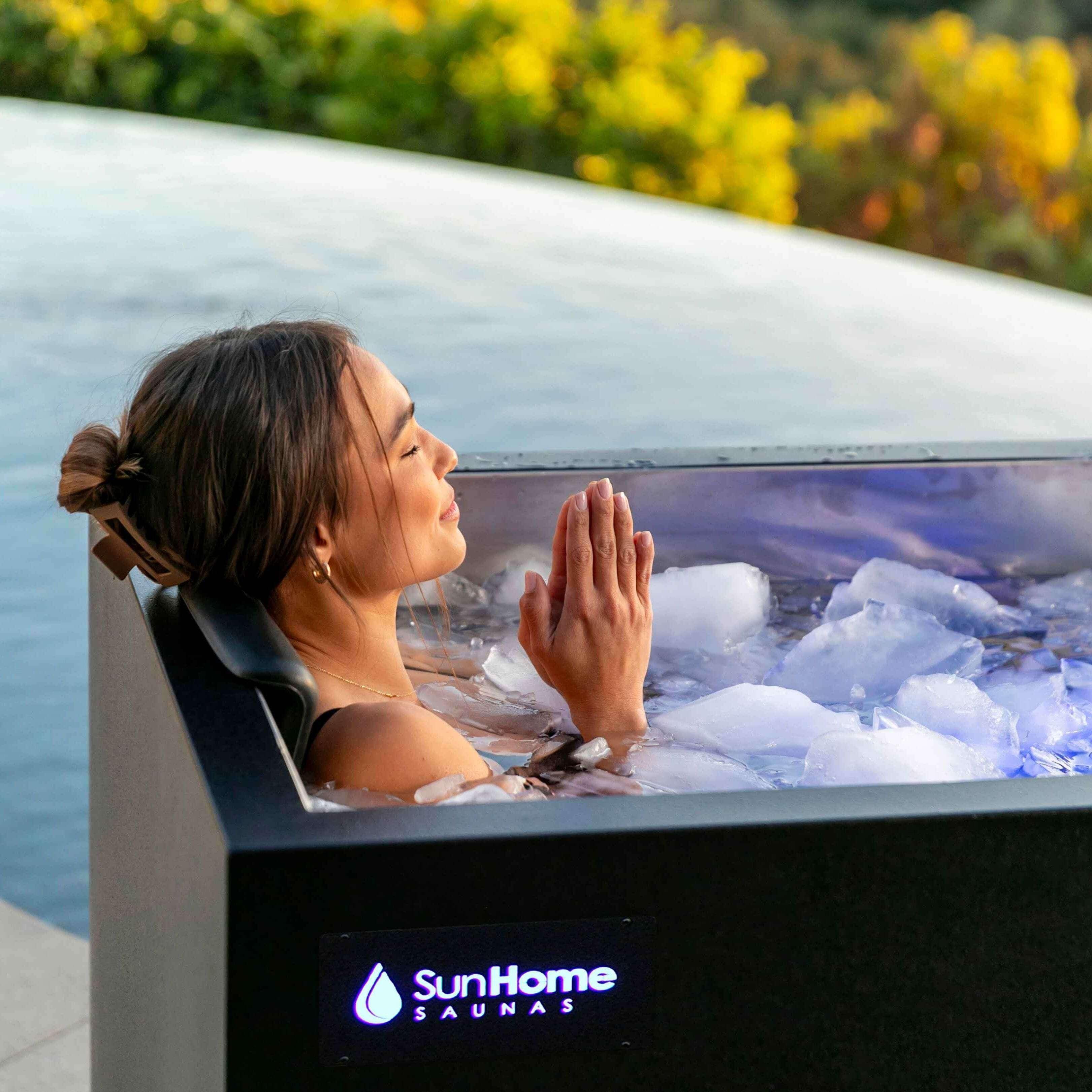

Imagine stepping into a crystal-clear, ice-cold sanctuary in the comfort of your own home. The morning air is still, and before you lies a pristine pool of water, shimmering with absolute purity. This is your personal recovery suite—a space dedicated to down-regulating your nervous system, triggering cold-shock proteins, and washing away the mental fatigue of a high-performance lifestyle. However, the mental peace of this daily ritual relies entirely on what you cannot see. Cold water is an excellent preservative for pathogens, skin oils, and organic debris. Without a highly advanced, automated sanitation system, your pristine sanctuary can quickly transform into a microbial breeding ground, slick with biofilm. Achieving medical-grade water purity without harsh, skin-irritating chemicals requires a sophisticated understanding of modern sanitation physics. The premier standard for residential recovery, exemplified by the Sun Home Cold Plunge Pro Apex, utilizes a sophisticated dual-stage sanitation protocol. To understand why this dual approach is mandatory for an elite home recovery setup, we must analyze the precise engineering, chemical, and biological forces at play when ozone and UV-C technologies confront organic contaminants in near-freezing water.
Ozone Generation: Corona Discharge vs UV-Based Systems
Ozone (O₃) is one of the most powerful oxidizers available for water treatment, boasting an oxidation-reduction potential (ORP) of 2.07 volts—significantly higher than chlorine (1.36 V). When introduced into cold plunge water, ozone performs a rapid, electrophilic attack on the unsaturated lipids within bacterial cell walls and viral envelopes, rupturing the protective membranes and lysing the cells within seconds. However, not all ozone generators are engineered equally.
There are two primary methods of generating ozone for residential water purification: Ultraviolet (UV) light exposure at 185 nm and Corona Discharge (CD). UV-based ozone systems pass air over a lamp emitting light at 185 nm, splitting oxygen molecules (O₂) to form ozone (O₃). While simple and inexpensive, UV-style ozonators yield extremely low ozone concentrations (typically 0.1% to 0.5% by weight) and degrade rapidly as the lamp ages.
Conversely, Corona Discharge systems pass dry air or concentrated oxygen through a high-voltage, high-frequency electrical field (a dielectric barrier discharge). This replicates lightning on a miniature scale, splitting O₂ molecules with immense energy efficiency. Corona discharge systems generate ozone concentrations between 1% and 3% by weight, producing up to ten times the oxidizing power of a UV lamp system. Sun Home Saunas
In cold plunge environments, temperature dynamics work to your advantage. The half-life of ozone in pure water at 20°C is approximately 20 to 30 minutes. However, as water temperature drops to 4°C, ozone's solubility increases dramatically, and its reaction rates slow down. This extends its therapeutic half-life in a cold plunge to over an hour, maintaining a persistent, self-cleaning residual within the tub basin that continuously targets organic loading from sweat, sebum, and environmental dust.
UV-C Reactor Design: Engineering the Photochemical Kill Zone
While ozone works through chemical oxidation, Ultraviolet-C (UV-C) light sanitizes through pure physics. Operating at a peak germicidal wavelength of 254 nm, UV-C radiation penetrates the cell membrane of microorganisms and is absorbed directly by the microbial DNA and RNA. This electromagnetic energy induces the formation of cyclobutane pyrimidine dimers (specifically thymine dimers) in the genetic sequence. These dimers distort the double-helix structure, rendering the pathogen incapable of replication. A microorganism that cannot replicate is biologically dead.
To achieve a highly reliable 4-log (99.99%) reduction of resilient pathogens like Pseudomonas aeruginosa, the UV-C reactor must deliver a precise UV dose, measured as fluence. Fluence is calculated as intensity multiplied by exposure time ($Dose (mJ/cm^2) = Intensity (mW/cm^2) \times Time (seconds)$). The NSF/ANSI 55 Class A standard mandates a minimum UV dose of 40 mJ/cm² to guarantee pathogen destruction.
Achieving this dose in a compact cold plunge filtration loop requires precise fluid dynamics. If the water velocity is too high, the contact time (exposure window) within the quartz sleeve chamber is too short, dropping the delivered dose below the therapeutic threshold. High-end systems utilize Computational Fluid Dynamics (CFD) modeling to design baffle plates and helical flow paths inside the stainless steel reactor sleeve. This ensures every drop of water is subjected to uniform UV-C exposure up to a depth of 5 mm from the quartz sleeve. Sun Home Saunas
However, UV-C has a major structural limitation: it offers zero residual sanitation. Once the water exits the stainless steel reactor chamber, the germicidal action stops. Any bacteria residing in plumbing dead legs, corners, or on the tub walls can continue to multiply, forming a defensive biofilm matrix that UV-C light cannot reach.
Byproduct Chemistry and Material Compatibility
Deploying these highly reactive forces inside a closed-loop plumbing system requires careful chemical and material engineering. Ozone, as a highly aggressive oxidizer, will rapidly degrade inferior plastics and rubbers. Standard silicone gaskets, nitrile seals, and low-grade plastics like PVC will embrittle, crack, and fail within months of continuous ozone exposure.
To prevent catastrophic leaks, premium cold plunges use high-durability fluoropolymers like Viton (FKM), Kynar (PVDF) ozone injectors, and EPDM seals. Furthermore, the structural frame and wet-components must be constructed from highly passivated AISI 316L stainless steel rather than standard AISI 304. The molybdenum content in 316L stainless steel provides superior resistance to pitting corrosion induced by dissolved ozone and halide salts.
Another critical chemical consideration is bromate formation. If your source water contains natural bromide ions, ozone can oxidize bromide into bromate ($BrO_3^-$), which is a regulated carcinogen in drinking water. While the risk in non-ingested bathing water is minimal, maintaining strict control over ozone concentration prevents excessive byproduct accumulation.
On the UV-C side, the primary chemical challenge is 'dark repair' or photoreactivation. Some bacterial species possess enzymes (such as photolyase) that can repair UV-damaged DNA when exposed to visible light. To prevent repaired pathogens from recolonizing, the water must either remain in darkness or be treated with a secondary sanitizer—which is why combining UV-C with a persistent oxidizer like ozone creates an incredibly robust, fail-safe barrier.
Operational Safety: Off-Gassing and Human Exposure Limits
Your home recovery space must remain a sanctuary of health, which means ambient air quality is just as critical as water purity. Ozone is a potent respiratory irritant. The US Environmental Protection Agency (EPA) and OSHA enforce strict exposure limits, restricting ambient ozone concentrations to no more than 0.10 ppm over an 8-hour shift, and even lower thresholds for continuous residential exposure.
Because ozone is constantly outgassing from the water surface, a high-performance cold plunge must feature a dedicated degassing system. This engineering component, known as an ozone destruct vessel or degas loop, uses a venturi injector to draw ozone into the water stream, followed by an air-separating chamber that routes excess gaseous ozone through a manganese dioxide or activated carbon catalyst. This catalyst instantly converts harmful $O_3$ gas back into safe, breathable $O_2$ before the air is vented into your room. Sun Home Saunas
For UV-C systems, safety is simpler but no less critical. Direct exposure to 254 nm light causes severe erythema (sunburn-like skin damage) and photokeratitis (painful eye inflammation). Therefore, the UV-C lamp must be housed inside an opaque, fully enclosed stainless steel reactor vessel. Integrated safety kill-switches should immediately cut power to the lamp if the chamber is opened or if the circulation pump loses prime, preventing localized thermal damage to the quartz sleeve.
The Hybrid Optimization Standard
If ozone and UV-C are both highly effective yet possess distinct engineering limitations, the ultimate solution is clear: a hybrid, sequential sanitation loop. This is the exact engineering standard utilized in industrial municipal water treatment and ultra-premium recovery vessels.
In a optimized hybrid loop, the water follows a precise sequence:
- Mechanical Filtration: A high-density sediment filter removes skin cells and debris, ensuring absolute optical clarity.
- Ozone Injection: A Corona Discharge ozonator injects highly concentrated $O_3$ via a PVDF Venturi injector. The ozone rapidly oxidizes dissolved organics, breaks down sweat oils, and begins lysing pathogens.
- Contact Chambers: The ozone-rich water travels through a tortuous path, allowing adequate contact time to destroy stubborn viruses.
- UV-C Polish: Finally, the water passes through the 254 nm UV-C reactor. The intense UV radiation instantly destroys any surviving pathogens and, crucially, photolyzes excess dissolved ozone, converting it back into pure dissolved oxygen ($O_2$).
This hybrid configuration delivers a powerful synergistic effect. The UV-C reactor acts as an environmental safeguard, wiping out any residual ozone before the water enters the tub basin, thereby eliminating ambient off-gassing. Concurrently, the microscopic residual of ozone that does bypass the UV chamber remains in the cold tub to provide continuous, long-term biofilm control on the interior walls. It is a perfect, self-sustaining loop of biological safety and material preservation.
Pros
- Medical-grade hybrid sanitation system delivers 99.99% pathogen reduction without harsh skin-irritating chemicals.
- Robust AISI 316L stainless steel and ozone-resistant fluoropolymer plumbing eliminate long-term material degradation.
- Advanced active ozone-destruct catalyst ensures indoor air safety meets strict EPA standards.
Cons
- Premium engineering demands a higher upfront investment compared to entry-level plastic plunges.
- Requires periodic (though simple) replacement of sediment filters and UV-C lamps to maintain peak optical performance.
Technical Verdict
The science is absolute: relying on a single method of sanitation leaves your cold plunge vulnerable to either toxic chemical buildup or localized biofilm growth. The Sun Home Cold Plunge Pro Apex solves this biological challenge by pairing high-concentration Corona Discharge ozone with a precision UV-C reactor. This creates a self-cleaning, chemical-free sanctuary that operates at the pinnacle of mechanical and biological engineering.
→ View Specs & Pricing