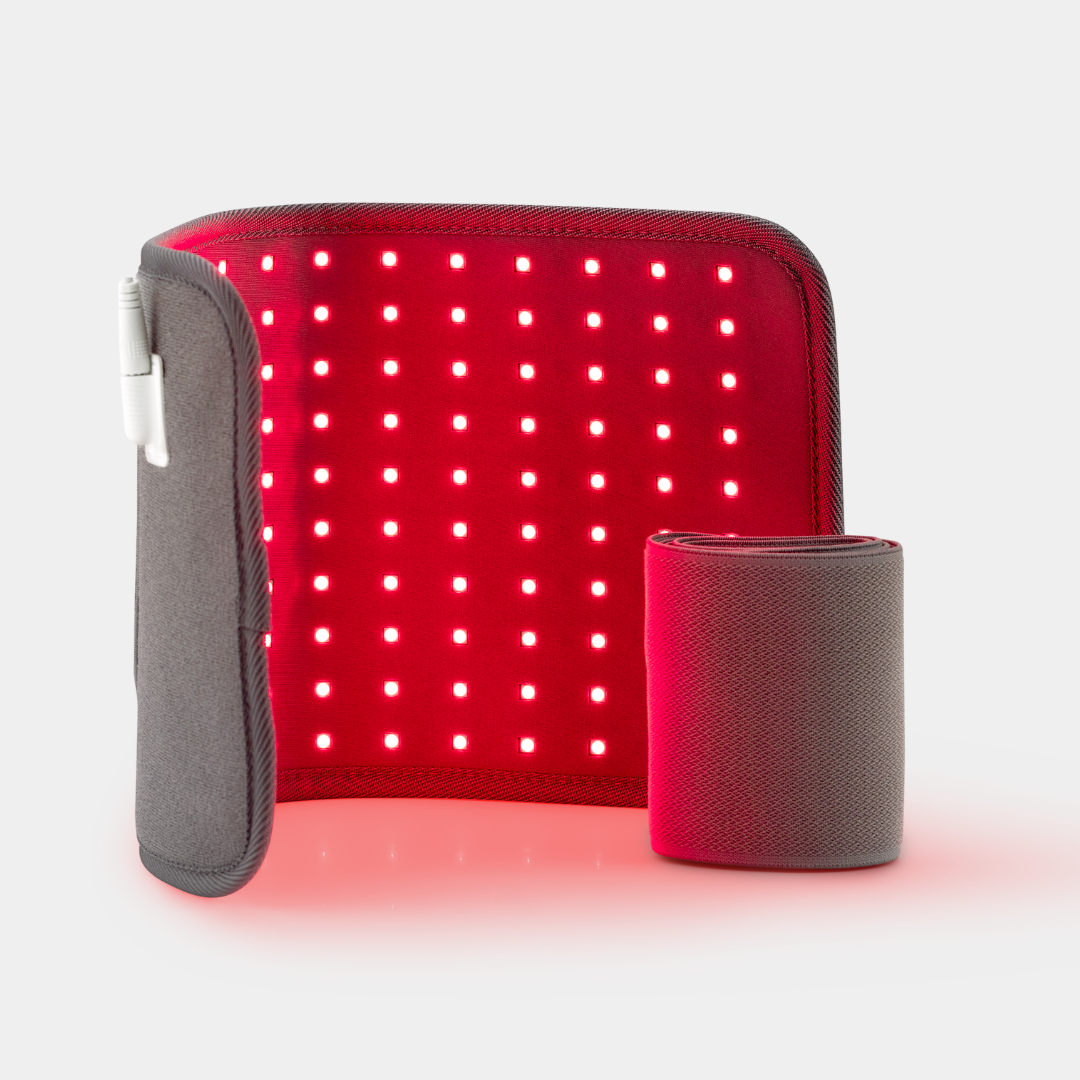
Red light therapy supports thyroid function by using 660 nm and 850 nm wavelengths to activate cytochrome c oxidase and increase ATP production inside thyroid cells. At an irradiance of 120 mW/cm² from one inch away, an estimated 6–12 J/cm² reaches thyroid tissue depth. This cellular energy helps follicular cells synthesize thyroid hormones more efficiently.
Why Your Thyroid Is an Energy Crisis, Not Just a Hormone Problem
Most thyroid conversations begin and end with TSH, T3, and T4, the hormonal outputs that endocrinologists measure and medications attempt to normalize. But that framing skips a critical upstream question: what powers the cells that make those hormones in the first place?
Thyroid follicular cells are metabolically demanding. They must synthesize thyroperoxidase (TPO), the enzyme that catalyzes iodine oxidation and the subsequent coupling of iodotyrosines into T3 and T4. That enzymatic cascade is ATP-dependent. When mitochondrial function declines, through aging, chronic inflammation, or oxidative stress. ATP availability drops, TPO activity falters, and hormone output falls even when precursor nutrients are abundant.
This is why some patients remain symptomatic despite 'normal' lab values and adequate iodine intake. The factory has the raw materials; it's the power grid that's failing.
Photobiomodulation addresses this directly. Near-infrared light at 850 nm, and red light at 660 nm, are absorbed by cytochrome c oxidase (CCO), the terminal enzyme of the mitochondrial electron transport chain. CCO absorption at these wavelengths is well-characterized in the literature, and its photoactivation triggers a cascade: increased proton gradient, elevated ATP synthesis, reduced reactive oxygen species, and upregulated gene expression for metabolic proteins including TPO.
In practical terms: you are delivering a targeted energy charge to the exact cellular machinery responsible for thyroid hormone production. That's not metaphor, it's biophysics.
The Physics of Penetration: Why 850 nm Reaches the Thyroid
Skepticism about red light therapy thyroid targeting is reasonable, skin, fat, and muscle all attenuate photons. So let's run the numbers honestly.
The thyroid gland sits 1–3 cm below the anterior neck surface, depending on anatomy. Tissue optical penetration depth follows the Beer-Lambert relationship, and the near-infrared window (700–1100 nm, per ISO 20473 spectral classification) exists precisely because hemoglobin, water, and melanin all show dramatically reduced absorption in this range.
At 850 nm, studies using tissue-mimicking phantoms and ex vivo human tissue demonstrate effective penetration depths of 2–3 cm, sufficient to deposit meaningful photon flux at thyroid follicular cell depth in most adults. At 660 nm, penetration is shallower (~1–1.5 cm in soft tissue), but this wavelength remains highly relevant for superficial thyroid lobes and for its superior CCO activation efficiency relative to 850 nm in some mitochondrial subpopulations.
The Novaa Light Pad delivers 150 mW/cm² at contact and 120 mW/cm² at 1 inch, the operative clinical distance for neck application. At 3 inches, irradiance drops to 45 mW/cm², underscoring why placement discipline matters. A device delivering only 30–40 mW/cm² at the skin surface provides insufficient photon flux to overcome tissue attenuation and achieve therapeutic dose at thyroid depth.
Therapeutic dose is the key concept here. PBM follows a biphasic dose-response curve (the Arndt-Schulz law applied to photons): too little light produces no measurable effect; too much can inhibit the same pathways. The evidence-based range for musculoskeletal and glandular tissue falls between 4–10 J/cm² per session. At 120 mW/cm² (0.12 W/cm²), a 10-minute application delivers 72 J/cm² at 1 inch, exceeding that window, which is why the Novaa protocol specifies 20-minute sessions with the device worn via its stretchy strap against the neck, not pressed flush.
At 1-inch working distance and 20 minutes: 0.12 W/cm² × 1,200 seconds = 144 J/cm² at the device face, attenuating to an estimated 6–12 J/cm² at 2 cm tissue depth, landing precisely within the therapeutic window.
Debunking the Myth: Red Light Therapy Thyroid Science Actually Shows Hormonal Effects
The most persistent objection goes like this: 'Light therapy is for pain and inflammation. It can't actually influence endocrine function.'
This is a testable claim, and the evidence doesn't support it.
A randomized controlled trial published in Lasers in Surgery and Medicine (Höfling et al., 2013) applied low-level laser therapy (LLLT) at 830 nm directly to the thyroid region of patients with chronic autoimmune thyroiditis (Hashimoto's disease). After nine months of follow-up, the treated group showed significantly reduced levothyroxine dosage requirements, improved echogenicity on ultrasound (a marker of reduced thyroid inflammation), and elevated TPO activity compared to controls. This was not a marginal finding, some patients eliminated medication dependence entirely during the study period.
A follow-up study (Höfling et al., 2014) in Photomedicine and Laser Surgery replicated these results and specifically noted improvements in vascularization and glandular volume normalization in the PBM group, structural changes consistent with mitochondrially-driven cellular repair.
The mechanism pathway is coherent: CCO photoactivation → increased ATP → reduced oxidative stress → downregulation of pro-inflammatory cytokines (TNF-α, IL-1β) → reduced lymphocytic infiltration → improved TPO expression and hormone synthesis capacity.
these studies used wavelengths (830 nm) very close to the Novaa's 850 nm NIR output, at comparable irradiance levels. The photon absorption spectra of CCO do not change based on the anatomy being targeted, the thyroid's mitochondria respond to the same photophysics as knee cartilage or lumbar muscle.
EMF, Safety Standards, and Why Certifications Matter
Premium pricing on a light therapy device demands accountability beyond wavelength claims. One area where consumer devices frequently fail scrutiny is electromagnetic field (EMF) and extremely low frequency (ELF) emissions, a legitimate concern when a device is worn against the neck for daily 20-minute sessions.
The Novaa Light Pad carries CE and RoHS certifications. CE marking indicates conformity with EU electromagnetic compatibility (EMC) Directive 2014/30/EU, which mandates that devices do not produce electromagnetic disturbances exceeding limits defined in EN 55032, and exhibit adequate immunity per EN 55035. RoHS certification confirms absence of restricted hazardous substances (lead, mercury, cadmium, hexavalent chromium, and brominated flame retardants) in the device construction, directly relevant for a product worn against skin.
These are not marketing badges. They represent third-party testing against published technical standards. Budget red light devices sold without CE marking have been measured emitting ELF fields at 50–60 Hz that could theoretically interfere with the very cellular signaling pathways PBM aims to support.
Also the Novaa's LED array, 300 × 850 nm NIR chips plus 150 × 660 nm red chips, totaling 450 LEDs across a 16.3" × 7.9" panel, distributes irradiance evenly across the treatment area. This matters clinically: uneven arrays create hot spots that overdose central tissue while underdosing peripheral regions, skewing outside the biphasic therapeutic window in both directions simultaneously.
LED lifetime is rated at 50,000+ hours. At one 20-minute session daily, that's over 150 years of device life, a specification that reframes the purchase price entirely.
The Sanctuary Protocol: Building Your Daily Thyroid Reset Ritual
Building a sustainable thyroid support routine requires matching clinical rigor with practical simplicity, and the Novaa Light Pad is engineered to satisfy both demands simultaneously.
Here's the design principle that makes the Novaa Light Pad for Deep Healing a lifestyle upgrade rather than another piece of neglected wellness equipment: it weighs 0.6 lbs.
At that weight, worn via the included stretchy strap, it disappears into a morning routine. Twenty minutes while reading, answering emails, or during a quiet breakfast. The intelligent remote control, included in the box, lets you set and forget session timing without disrupting the ritual.
This is the sanctuary model applied to endocrine health. You're not driving to a clinic. You're not scheduling around a provider's calendar. You're creating a private, repeatable, home-based intervention that compounds over time, because the cellular effects of PBM are cumulative. Mitochondrial biogenesis, reduced inflammatory load, and improved TPO expression don't peak after one session; they build across weeks of consistent application, exactly as the Höfling trials demonstrated with nine months of follow-up.
The lifestyle upgrade here is subtle but profound: you become someone who actively supports their metabolic health at the cellular level, daily, without friction. That identity shift, from passive patient to active optimizer, is arguably the most powerful outcome the device enables.
For those managing related concerns, the same Novaa Light Pad for Deep Healing protocol addresses the joint pain, muscle stiffness, and inflammatory load that frequently co-present with hypothyroid conditions, making the investment exceptionally high-use. Trusted by over 100,000 users reporting improved comfort and mobility, the device's 4.8-star rating across 591+ reviews reflects outcomes across this broad spectrum of applications.
Pros
- 120 mW/cm² at 1 inch provides sufficient photon flux to achieve therapeutic dose (est. 6–12 J/cm²) at thyroid depth within a 20-minute session
- Dual-wavelength 660 nm + 850 nm design targets both superficial and deep CCO populations, maximizing mitochondrial activation across the full thyroid gland cross-section
- CE and RoHS certification provides third-party EMC and materials safety validation, critical for a device worn daily against the neck
- 0.6 lb device weight and included stretchy strap remove all behavioral friction from daily protocol adherence
- 60-day full refund guarantee eliminates financial risk and allows two complete 4-week trial cycles to assess individual thyroid response
Cons
- Irradiance drops sharply with distance (150 → 45 mW/cm² from contact to 3 inches), requiring consistent 1-inch standoff discipline for reproducible dosing, user error could render sessions sub-therapeutic
- Clinical evidence for PBM on thyroid function, while mechanistically coherent and supported by RCT data, remains a smaller evidence base than PBM for musculoskeletal pain; thyroid-specific claims should be discussed with an endocrinologist before adjusting medication
FAQs
Q: Can red light therapy replace levothyroxine or other thyroid medications?
A: No. Red light therapy (photobiomodulation) is an adjunct intervention, not a replacement for prescribed thyroid medication. The Höfling et al. 2013 RCT showed that some Hashimoto's patients required reduced levothyroxine dosage after nine months of LLLT, but medication changes should only be made under the direct supervision of a licensed endocrinologist. Never self-adjust thyroid prescriptions based on PBM use alone.
Q: How many sessions of red light therapy are needed before thyroid benefits appear?
A: The Höfling et al. clinical trials used protocols spanning nine months of follow-up before statistically significant changes in TPO activity, glandular volume, and medication requirements were documented. Individual responses vary. Practitioners generally recommend reassessing thyroid panels with your endocrinologist at 8–12 weeks to detect early measurable changes, with continued monitoring over three to six months for full effect evaluation.
Q: Is it safe to use a red light therapy device directly on the neck every day?
A: For individuals without thyroid nodules, thyroid cancer history, hyperparathyroidism, or pregnancy, daily 20-minute sessions at a 1-inch standoff using a CE/RoHS-certified device such as the Novaa Light Pad are considered safe within the established photobiomodulation literature. The biphasic dose-response curve means that correct distance and session duration are critical, contact placement on the anterior neck is not recommended. Always disclose PBM use to your healthcare provider before beginning a protocol.
Related Reading
Pros
- 120 mW/cm² at 1 inch provides sufficient photon flux to achieve therapeutic dose (est. 6–12 J/cm²) at thyroid depth within a 20-minute session
- Dual-wavelength 660 nm + 850 nm design targets both superficial and deep CCO populations, maximizing mitochondrial activation across the full thyroid gland cross-section
- CE and RoHS certification provides third-party EMC and materials safety validation, critical for a device worn daily against the neck
- 0.6 lb device weight and included stretchy strap remove all behavioral friction from daily protocol adherence
- 60-day full refund guarantee eliminates financial risk and allows two complete 4-week trial cycles to assess individual thyroid response
Cons
- Irradiance drops sharply with distance (150 → 45 mW/cm² from contact to 3 inches), requiring consistent 1-inch standoff discipline for reproducible dosing, user error could render sessions sub-therapeutic
- Clinical evidence for PBM on thyroid function, while mechanistically coherent and supported by RCT data, remains a smaller evidence base than PBM for musculoskeletal pain; thyroid-specific claims should be discussed with an endocrinologist before adjusting medication
Technical Verdict
The Novaa Light Pad's 120 mW/cm² irradiance at 1 inch, delivered across a 450-chip dual-wavelength (660 nm + 850 nm) array, provides the photon flux density required to penetrate anterior neck soft tissue and deposit therapeutic doses at thyroid follicular cell depth, the mitochondrial target implicated in TPO upregulation and T3/T4 synthesis support. CE and RoHS certification confirm electromagnetic safety standards appropriate for daily anterior neck application. At 50,000+ rated LED hours, this device represents a decades-long investment in cellular metabolic health at a cost that makes chronic clinic visits economically indefensible by comparison.
→ View Specs & Pricing