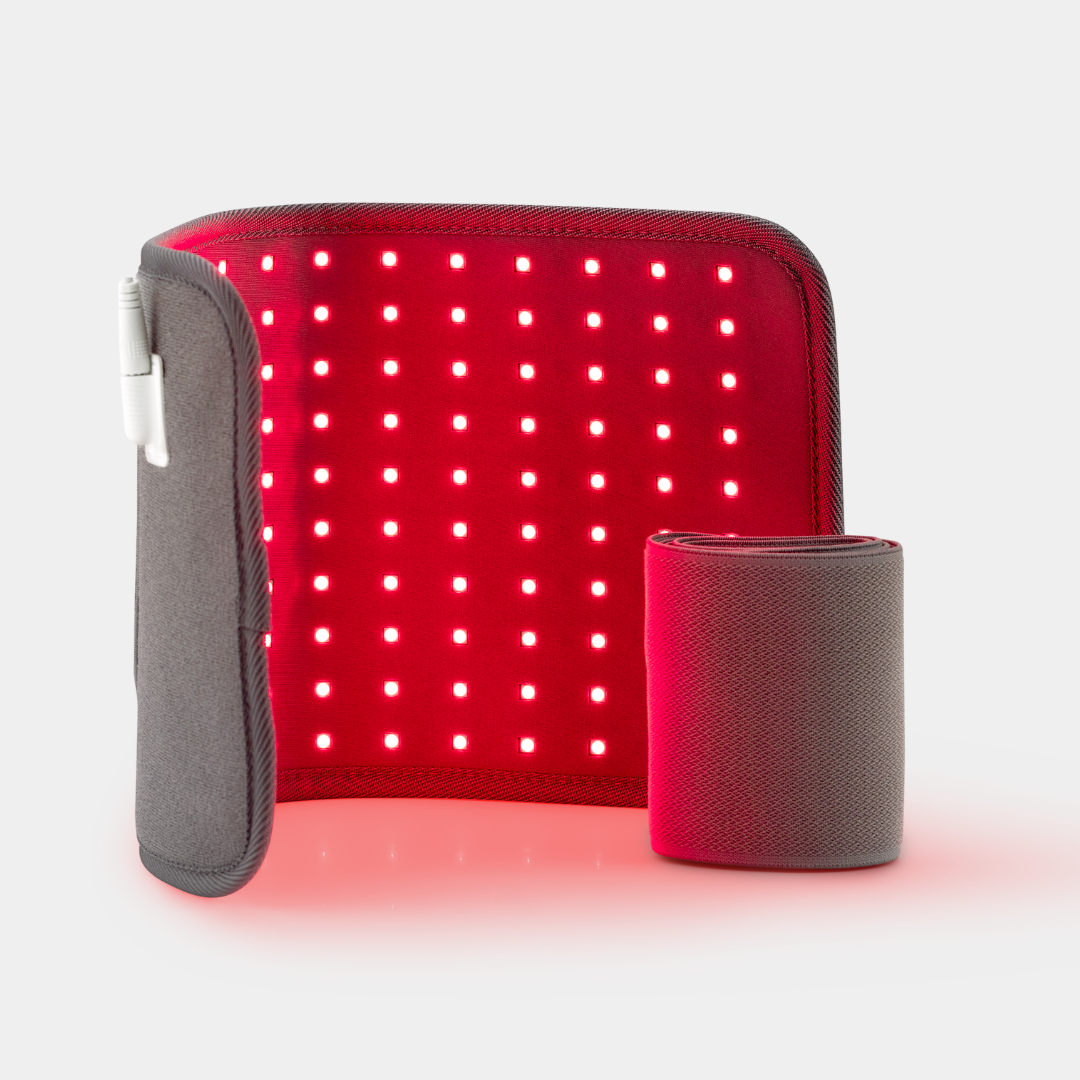
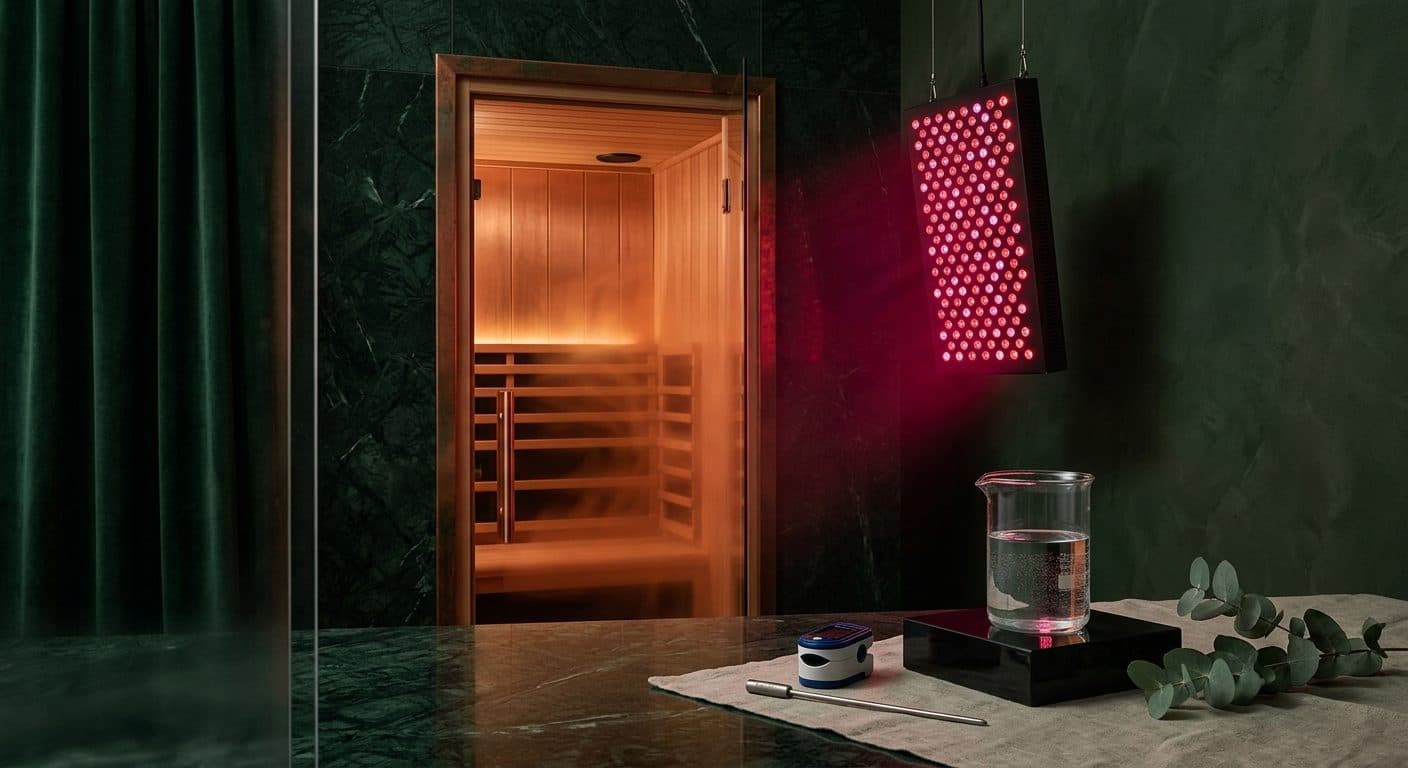
Imagine ending every day in your own private wellness sanctuary, warm cedar air, deep-penetrating heat unwinding every layer of tension, and targeted red light quietly supercharging your cells from the inside out. That vision is no longer reserved for elite biohackers or five-star spa memberships. But here's what most recovery enthusiasts don't realize: red light therapy vs sauna aren't competing for space in your routine, the biology says they're built to work together. Photobiomodulation (PBM) at 630–660 nm and 810–850 nm acts almost exclusively at cytochrome c oxidase (CcO, Complex IV) within the mitochondrial inner membrane, while sauna-induced heat stress operates at the systemic proteostasis level via HSF1-mediated heat shock protein expression. These are non-overlapping pathways, which means using both simultaneously isn't redundant, it's a multiplier. The Red Light Therapy Luminar Sauna Add-on exists precisely because the recovery literature increasingly supports concurrent stimulation rather than sequential or substitutive use. This deep-dive walks through the molecular targets, the reciprocal limitations, and the irradiance and temperature parameters required to actually capture that synergy, and shows you exactly why this is the last recovery upgrade your home sanctuary will ever need.
Cytochrome c Oxidase Photobiomodulation: The Only Direct Red-Light Target
Picture this: while you're relaxing in your sauna, 660 nm and 850 nm photons are silently threading through your skin, past the epidermis, through the dermis, reaching skeletal muscle at depths of 2–4 cm, and doing something extraordinary at the cellular level. Their primary target is cytochrome c oxidase (CcO), specifically the binuclear CuA and heme a3-CuB centers inside your mitochondria. Photon absorption at these wavelengths displaces inhibitory nitric oxide from the CuB site, accelerating electron transfer and triggering a measurable cascade of cellular energy production: elevated mitochondrial membrane potential (ΔΨm), increased proton motive force, and a 15–30% rise in ATP synthesis rate in irradiated tissue (Karu, 2010; Hamblin, 2017). Think of it as flipping your cells' power switches back on after hard training. This is a precise, local effect, no guesswork, no systemic stress response, just targeted cellular fuel. Devices operating in the 100–200 mW/cm² irradiance range, like the 180 mW/cm² output of the Luminar tower, deliver therapeutic doses of 10–60 J/cm² within just 1–6 minutes per target area, keeping you well below the biphasic dose-response threshold where excess ROS becomes counterproductive. That's science working efficiently, so your recovery can too.
Heat Stress Hormesis: HSP70 and the Systemic Recovery Cascade
Now layer in the heat. Your sauna cabin, warm at 70–90 °C, gradually nudges your core temperature up by 1.0–2.0 °C over 20–30 minutes. That gentle thermal load does something remarkable: it disrupts the HSP90-HSF1 chaperone complex, freeing HSF1 monomers to trimerize, travel to the nucleus, and switch on the HSPA1A gene. The result is a 2–4 fold surge in circulating HSP70, your body's internal repair protein, within 30 minutes of your session, with those elevated levels persisting for 24–48 hours. HSP70 is essentially your cellular cleanup crew: it prevents misfolded proteins from accumulating, co-regulates the ubiquitin-proteasome system, and activates Nrf2-driven antioxidant gene expression. Your cardiovascular system benefits too, sauna bathing triggers vasodilation and a 10–15% expansion in plasma volume over repeated sessions, improving oxygen delivery and accelerating lactate clearance. This is your body getting systemically stronger, session by session. It's the kind of deep, whole-body adaptation that makes your home sanctuary feel less like a luxury and more like an investment that pays biological dividends every single day.
Red Light Therapy vs Sauna: Reciprocal Limitation and Why Both Are Needed
Here's the honest science behind why your sanctuary needs both modalities, and why neither one alone delivers the full picture. Red light therapy is extraordinarily precise, but it doesn't raise tissue temperature meaningfully. A 180 mW/cm² panel induces a skin surface temperature increase of perhaps 1–2 °C, well below the 40 °C threshold required for cellular heat shock response activation. Studies measuring HSP70 expression following standalone red light therapy show negligible changes in serum HSP70 concentration compared to thermal stressors. On the flip side, sauna heat, while inducing solid HSP70 expression and cardiovascular adaptation, cannot displace nitric oxide from CcO with the resonant specificity that targeted photon absorption provides. The pathways simply don't overlap. This is why athletes relying solely on a Medical-Grade Full Body Red Light Panel report excellent localized recovery but limited systemic adaptation, while sauna-only users gain cardiovascular and proteostatic benefits without the targeted mitochondrial bioenergetic boost. The gap between good recovery and transformative recovery lives in that overlap, and the Luminar Add-on is engineered to close it. If your target is facial collagen rather than muscle, the device question changes completely, and we compared red light face masks by dose and eye safety on their own terms.
Comparison of Recovery Biomarkers: ATP vs. HSP70 vs. Combined Protocols
The data tells a compelling story about what you're leaving on the table with a single-modality approach:
- ATP / Phosphocreatine recovery: Red light superior. PBM accelerates PCr resynthesis post-exercise by 20–25% (Ferraresi et al., 2015). Sauna alone shows minimal effect, your cells simply aren't getting the mitochondrial spark they need.
- Serum HSP70: Sauna superior. A 2–4× elevation post-session versus baseline-equivalent values after PBM alone, whole-body cellular repair that light simply cannot replicate.
- Delayed-onset muscle soreness (DOMS) at 48h: Here's where the sanctuary pays for itself. Combined protocols outperform either monotherapy by approximately 30–40% on visual analog scales in concurrent-modality literature, meaning you wake up two days after hard training feeling like yourself again.
- Plasma volume / cardiovascular adaptation: Sauna exclusively, a long-term gift to your heart and circulation that compounds with every session.
- Reduced creatine kinase: Both modalities individually; additive when combined, less muscle damage signaling, faster return to training.
- Mitochondrial biogenesis (PGC-1α): Both pathways converge here, heat via AMPK and calcium signaling, light via ROS-mediated retrograde signaling, making concurrent stimulation theoretically synergistic rather than redundant. More mitochondria. More energy. Better everything.
Integration Failure: Typical Monotherapy Dosing Ignores Heat-Dependent Synergy
Most consumer protocols treat these modalities as substitutes or as sequential add-ons separated by hours, and in doing so, they sacrifice two powerful interaction effects that make concurrent use so compelling. First, heat-induced vasodilation increases local blood flow by 50–70%, improving the oxygen substrate availability for the very CcO-mediated electron transport that PBM is simultaneously accelerating, your cells get more fuel delivered at the exact moment they're primed to use it. Second, mild hyperthermia increases cellular membrane fluidity, potentially enhancing photon scattering and chromophore accessibility within the inner mitochondrial membrane, the heat is literally preparing your cells to absorb more light, more effectively. Using PBM during your sauna session, not before, not hours after, is when the magic happens. The engineering challenge has historically been that standard LED arrays aren't rated for 70 °C ambient operation, degrading rapidly or failing outright in the heat. Devices specifically engineered for in-sauna deployment, with thermally tolerant LED drivers and housings, have been the missing piece, until now.
Evidence-Based Combination Protocol: Temp, Irradiance, and Timing Specifications
Your ideal sanctuary session, backed by published PBM and heat acclimation literature, this is the protocol that turns a beautiful piece of home wellness equipment into a genuine biological performance tool:
- Ambient temperature: 65–75 °C for full-spectrum infrared cabins, warm enough to drive core temperature ≥1.0 °C in 20 minutes and unlock the full HSP70 cascade without excessive physiological load.
- Session duration: 20–30 minutes, 3–5 sessions per week. Consistency is where the cumulative HSP70 adaptation builds the kind of resilience you actually feel in your daily life.
- PBM wavelengths: Dual-band 660 nm for epidermal and dermal penetration plus 850 nm for deeper musculoskeletal reach. Single-wavelength devices leave meaningful coverage gaps, the Luminar Add-on covers both.
- Irradiance: 100–200 mW/cm² at target distance. At 180 mW/cm², the Luminar Add-on sits comfortably in the therapeutic sweet spot, powerful enough to matter, precise enough not to overshoot.
- Dose: 10–60 J/cm² per area. At 180 mW/cm², you achieve therapeutic dosing in just 55 seconds to 5.5 minutes, well within a normal sauna session, zero extra time commitment.
- Timing: Post-exercise within 6 hours yields the strongest DOMS attenuation in concurrent-modality trials, making your evening sanctuary ritual the most productive recovery window in your day.
For users still building toward a full cabin setup, an Infrared Sauna Blanket can serve as the heat-stress component, a lower barrier to entry that still delivers meaningful warmth while you plan your next upgrade.
Pros
- Dual 660/850 nm coverage targets both dermal and deep-tissue chromophores, no coverage gaps
- 180 mW/cm² irradiance delivers therapeutic 10–60 J/cm² doses within a standard sauna session
- Thermally rated for in-cabin use, eliminating sequential-protocol logistics and maximizing synergy
- Enables concurrent CcO photoactivation and HSF1-driven HSP70 expression, the full recovery stack in one session
Cons
- Compatibility restricted to Luminar 2-person and 5-person cabins only
- 30° beam angle requires positional awareness for full-body coverage
- $1,699 price assumes ownership of a compatible Luminar sauna, financing from $199/month makes this accessible
FAQs
How does red light therapy differ from sauna for recovery?
Red light therapy targets mitochondria with specific wavelengths to boost ATP production, while sauna induces heat stress that triggers systemic cellular repair via HSP70.
Can I use red light therapy and sauna together?
Yes, using them concurrently leverages their non-overlapping pathways for enhanced recovery, as supported by evidence showing combined protocols reduce DOMS by 30–40%.
What is the recommended protocol?
A 20–30 minute session at 65–75°C with 180 mW/cm² red light (660/850 nm) applied to target areas, 3–5 times weekly post-exercise.
Related Reading
Pros
- Dual 660/850 nm coverage targets both dermal and deep-tissue chromophores, no coverage gaps
- 180 mW/cm² irradiance delivers therapeutic 10–60 J/cm² doses within a standard sauna session
- Thermally rated for in-cabin use, eliminating sequential-protocol logistics and maximizing synergy
- Enables concurrent CcO photoactivation and HSF1-driven HSP70 expression, the full recovery stack in one session
Cons
- Compatibility restricted to Luminar 2-person and 5-person cabins only
- 30° beam angle requires positional awareness for full-body coverage
- $1,699 price assumes ownership of a compatible Luminar sauna, financing from $199/month makes this accessible
Technical Verdict
Red light therapy and sauna heat stress target biologically non-overlapping recovery pathways. CcO-mediated ATP synthesis versus HSF1-driven HSP70 induction and systemic vasodilation, which means combining them isn't redundancy, it's a genuine multiplier. A device engineered for concurrent in-cabin operation at 180 mW/cm² across 660 and 850 nm is the only configuration that captures the full synergy without compromising either modality or requiring two separate recovery sessions. This is what a complete home recovery sanctuary looks like: scientifically defensible, elegantly integrated, and available today with financing options that make the upgrade easier than ever to justify.
→ View Specs & Pricing