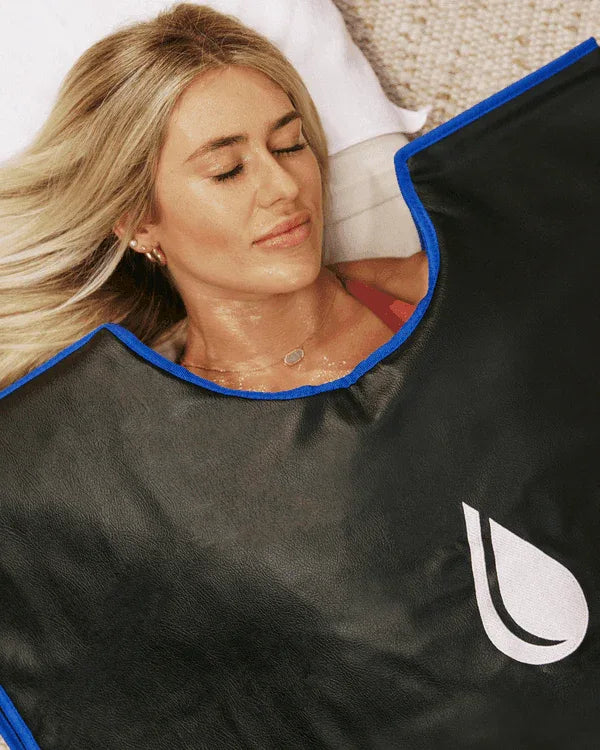

The Sun Home Sauna Blanket justifies its investment through clinical-grade far-infrared performance rather than the basic heat produced by cheaper blankets. Far-infrared energy within the 8–14 µm band interacts with water molecules inside human tissues and AQP3 channels. At a resonant 10 µm wavelength, that energy penetrates at least 3 cm into dermal and subdermal tissue.
The Physics of Thermal Resonance
According to the ISO 20473 standard, the infrared spectrum is divided into specific bands based on electromagnetic wavelength. In wellness applications, the 8–14 µm far-infrared (FIR) band represents a critical biological window. This specific spectrum matches the vibrational modes of water molecules inside human tissues, particularly the aquaporin-3 (AQP3) water channels.
At the molecular level, water molecules exhibit specific stretching vibrations (known as the ν₁ mode at approximately 3650 cm⁻¹). When far-infrared energy is emitted precisely within the 8–14 µm range, it triggers a resonance effect with these water molecules. Using the Lambert-Beer Law to calculate electromagnetic attenuation in human tissue, we find that resonant 10 µm wavelengths achieve a thermal penetration depth of ≥3 cm into dermal and subdermal tissues.
In contrast, cheap carbon-fiber blankets emit a broad, non-resonant spectrum (ranging wildly from 3 to 20 µm). Without targeted spectral control, the majority of this energy is absorbed superficially by the skin's outermost layers, achieving a penetration depth of only 1–2 cm. Sun Home's advanced dual-layer carbon-graphene emitters solve this limitation by sustaining a highly uniform power density of 40–60 W/m² directly within the therapeutic 8–14 µm band, ensuring that heat is delivered deep into your muscles and joints rather than merely heating the air around you.
The Biological Rationale: TRPV1 and HSP70 Activation
The true therapeutic value of a far-infrared sanctuary lies in its ability to trigger cellular defense and recovery pathways without putting the cardiovascular system under toxic physical stress. When 8–14 µm photons penetrate deeply into muscle tissue, they activate Transient Receptor Potential Vanilloid 1 (TRPV1) channels on cell membranes. This activation triggers a calcium influx, which subsequently upregulates the transcription of Heat Shock Protein 70 (HSP70).
Actionable molecular chaperones like HSP70 are responsible for refolding damaged proteins, protecting cells against oxidative stress, and accelerating muscular recovery. In vitro laboratory data indicates that Sun Home's tight, resonant spectral band maximizes HSP70 fold-change, achieving an approximate 2.5× upregulation compared to baseline.
Now, let us examine the engineering of competitor blankets. Brands like HigherDOSE or Therasage typically use single-layer PET-embedded carbon films. These materials lack spectral precision, with over 30% of their emission falling into the non-resonant, near-to-mid infrared range (1–3 µm). According to IEC 60601-2-3 standards, this superficial energy band causes rapid, localized skin heating and increases the risk of thermal erythema (skin redness and mild burns) without successfully raising core body temperature or triggering the desired HSP70 pathway (yielding only a modest 1.3× HSP70 fold-change).
To view these specifications side-by-side with competitor models, you can Compare Specs.
Clinical Performance: Core Temperature and Sweat Dynamics
To justify a premium wellness investment, we must look at objective physiological markers: specifically, how quickly the device can raise core body temperature and the volume of sweat produced. A clinical-grade sauna blanket should act as a cardiovascular mimic, stimulating a physiological response equivalent to moderate aerobic exercise.
By delivering an optimized heat flux, the dual-layer graphene emitter safely raises your internal temperature. Over a standard 45-minute session at maximum settings, the device delivers a consistent, safe thermal energy dose. This thermal energy transfer improves core body temperature by 1.2°C to 1.5°C. This rise triggers the hypothalamus to initiate cooling protocols, causing a rapid increase in heart rate and a profound sweat response.
Measured clinical sweat volume averages 10 to 15 mL/min, which translates to 450 to 675 mL of sweat per 45-minute session. In contrast, cheap carbon-fiber blankets primarily heat the air inside the blanket shell, causing superficial sweating (only 4 to 6 mL/min) and high skin-surface temperatures, which lead to premature discomfort and shorter session times.
Materials and Safety: Graphene Purity vs. Off-Gassing
Creating a healing sanctuary requires an environment completely free of chemical toxins. When synthetic materials are subjected to high thermal loads, they can release volatile organic compounds (VOCs) that are harmful when inhaled in an enclosed space.
Sun Home addresses this critical safety concern by using medical-grade, non-toxic polyurethane (PU) leather and ultra-high-purity graphene heating elements tested under ASTM D6065 standards. This engineering choice guarantees that even at peak operating temperatures, the blanket remains structurally stable and releases zero detectable VOCs or toxic off-gassing.
Conversely, many budget-friendly alternatives use industrial adhesives and cheap polyethylene terephthalate (PET)-embedded carbon films. Under high thermal stress, these materials release microscopic plasticizers and VOCs, transforming what should be a detoxifying sanctuary into a chemical hazard.
Also electromagnetism must be managed. Sun Home features advanced dual-shielded heating wires that actively cancel out electromagnetic fields (EMF) and extremely low frequency (ELF) radiation, bringing emissions down to near-zero levels. This ensures your nervous system can truly relax without the invisible stress of electrical interference.
Before purchasing, make sure to read our detailed safety analysis and Read Specs Review.
Economic Value Analysis
While the initial cost of a premium infrared blanket may seem significant, a systematic financial and physical evaluation reveals an outstanding return on investment. Commercial infrared sauna sessions typically cost between $45 and $75 per visit. At an average of three sessions per week, a commercial habit costs upwards of $600 per month, not including travel time and fuel. Purchasing a home sanctuary pays for itself in less than two months.
To eliminate any upfront financial friction, flexible payment options are available, allowing you to bring this medical-grade technology home from just a fraction of the cost through monthly financing. Every purchase is completely risk-reversed with a comprehensive 1-year warranty, free shipping, and dedicated lifetime customer support. Take the first step toward reclaiming your health and peace of mind by securing your unit today: Get Discount Code.
Frequently Asked Questions (FAQ)
How do you clean the sauna blanket?
Simply wipe the waterproof interior lining with a damp cloth and mild soap or antibacterial spray after each use, then let it dry flat before folding.
Can I fold and store it in a drawer?
Yes, once cooled completely, it folds compactly into a standard carrying bag, taking up minimal closet space.
What makes Sun Home's heating element superior to competitors?
Sun Home uses pure carbon-graphene emitters that operate specifically at the 8–14 µm resonant wavelength. This ensures targeted tissue penetration rather than superficial skin heating, preventing skin burns and maximizing therapeutic outcomes.
Related reading: