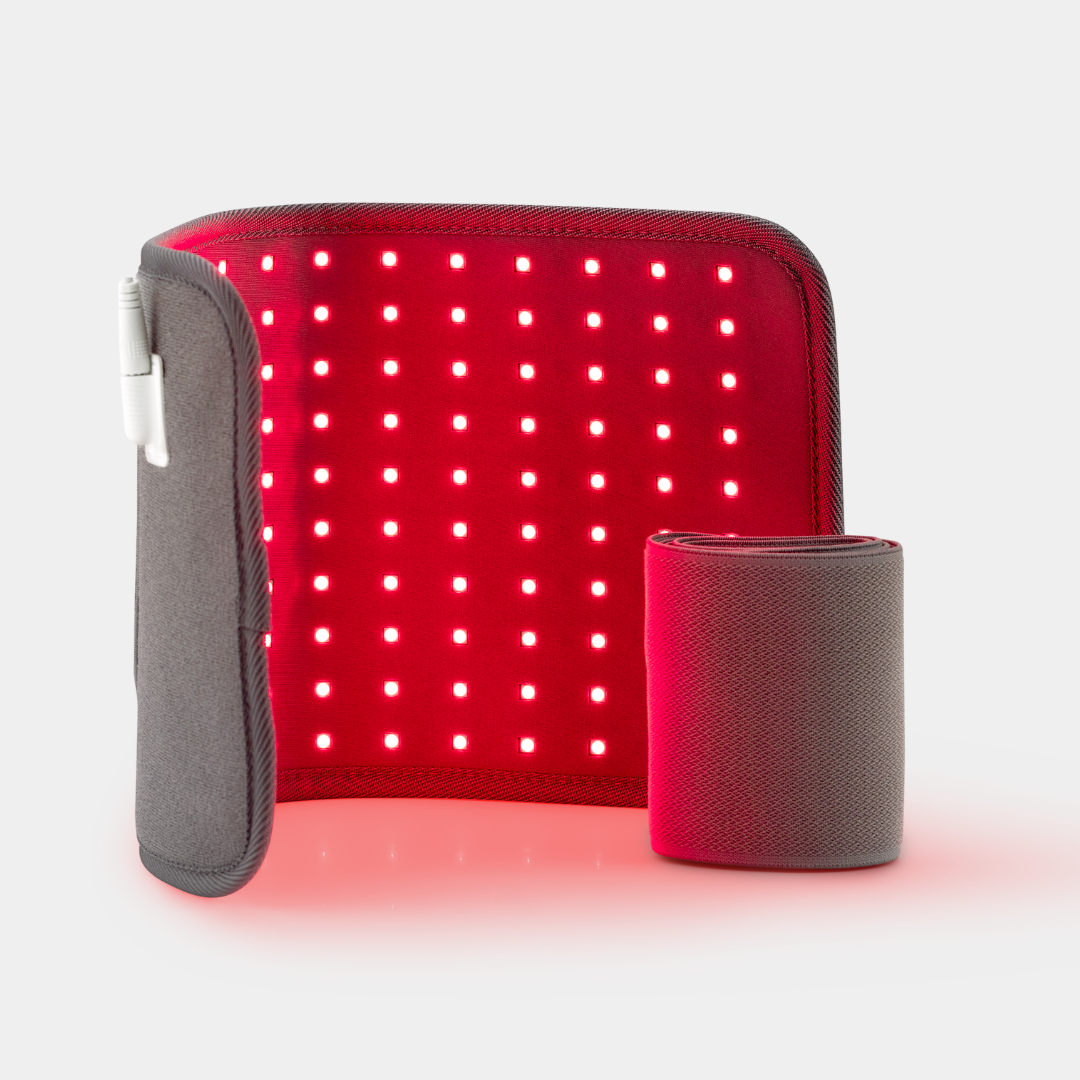

An 810 nm Class 4 laser repairs peripheral nerves without surgery by activating cytochrome c oxidase and triggering BDNF-driven regeneration. Its collimated 5-watt beam reaches about 3 cm deep, allowing it to target peripheral nerve trunks and dorsal root ganglia. The resulting cascade increases ATP, phosphorylates CREB, and supports the regrowth and remyelination of damaged nerve fibers.
The Myth of Permanent Nerve Damage
Surgical dogma has long drawn a hard line: beyond mild nerve compression, meaningful recovery requires operative intervention, nerve grafting, decompression, or neurolysis. The implicit message delivered to patients is that their nervous system is essentially inert after injury, a broken electrical cable awaiting a technician with tools no clinic can offer without anesthesia.
This framing is outdated. Peripheral nerves, unlike central nervous system tissue, retain a measurable capacity for axonal regeneration. The rate is slow, approximately 1–3 mm per day under ideal biological conditions, but the machinery exists. The bottleneck is not structural; it is biochemical. Specifically, it is the availability of Brain-Derived Neurotrophic Factor (BDNF), the signaling protein that guides axonal growth cones, promotes Schwann cell myelination activity, and suppresses apoptotic signaling in injured neurons.
What if that biochemical bottleneck could be addressed non-invasively, through a precise wavelength of light? The evidence, while still maturing, particularly for severe injuries, is increasingly compelling for mild to moderate neuropathies. Photobiomodulation at 810 nm does not merely warm tissue. It initiates a documented intracellular signaling sequence that upregulates BDNF at the transcriptional level, providing the molecular scaffold nerve regeneration actually requires.
The 810 nm Window: Why This Wavelength Reaches Deep Tissue
Light interacts with biological tissue through a competition between absorption and scattering. Hemoglobin absorbs strongly below ~600 nm; water absorbs strongly above ~950 nm. Between roughly 650 nm and 950 nm lies what researchers call the optical window, the spectral corridor where photons can travel deepest into tissue before being attenuated.
Within that window, 810 nm occupies a particularly important position. It sits near the absorption peak of cytochrome c oxidase (CCO), the terminal enzyme of the mitochondrial electron transport chain located in Complex IV. CCO contains two copper centers (Cu_A and Cu_B) and two heme iron centers (heme a and heme a3) that exhibit distinct absorption bands in the near-infrared. Experimental spectroscopy has confirmed CCO absorption at approximately 800–830 nm, making 810 nm an effective activation wavelength.
Penetration depth is the second variable. According to ICNIRP tissue-penetration modeling frameworks for near-infrared radiation, a collimated 810 nm beam at 5 W achieves meaningful irradiance at approximately 3 cm below the skin surface, sufficient to reach superficial dorsal root ganglia (DRG) in the lumbar and cervical spine, as well as peripheral nerve trunks in the extremities. A lower-power, divergent LED panel at the same wavelength will not achieve this. Collimation, the maintenance of beam coherence, is what separates a Class 4 therapeutic laser from consumer-grade infrared panels for deep tissue applications.
The Molecular Cascade: From Photon to BDNF Transcription
Understanding why 810 nm light stimulates nerve repair requires following the signal from the moment a photon enters the cell to the moment a growth cone extends along a damaged axon. The sequence is mechanistically specific and worth tracing precisely.
Step 1. CCO Activation and ATP Synthesis: When 810 nm photons are absorbed by CCO's metal centers, the enzyme's electron transfer efficiency increases. This reduces mitochondrial membrane potential transiently, accelerating the proton gradient that drives ATP synthase. The net result is a measurable increase in intracellular ATP production. Multiple peer-reviewed investigations, including work by Hamblin and colleagues at the Wellman Center for Photomedicine, have documented this ATP upregulation in neuronal cell cultures exposed to near-infrared PBM.
Step 2. Calcium Signaling and Kinase Activation: Elevated ATP and the associated shift in reactive oxygen species (ROS) signaling, at low, non-cytotoxic levels, activate calcium release from the endoplasmic reticulum. Free intracellular Ca²⁺ activates Ca²⁺/calmodulin-dependent protein kinase II (CaMKII), a well-characterized kinase central to neuronal plasticity and survival signaling.
Step 3. CREB Phosphorylation: CaMKII (and converging PKA signaling via the cAMP pathway, also amplified by ATP availability) phosphorylates CREB (cAMP response element-binding protein) at Serine 133. Phosphorylated CREB is the transcriptionally active form, it recruits the co-activator CBP and binds CRE sequences in gene promoters.
Step 4. BDNF Promoter Activation: One of the most robustly responsive targets of pCREB is BDNF promoter IV, which drives BDNF expression particularly in neurons and Schwann cells. Elevated BDNF in the DRG and peripheral nerve microenvironment does three things: it guides axonal growth cone chemotaxis toward target tissue, it upregulates myelin basic protein (MBP) expression in Schwann cells to facilitate remyelination, and it suppresses pro-apoptotic signaling in injured neurons that would otherwise undergo programmed death.
This is not a theoretical chain. Each link. CCO photon absorption, ATP upregulation, Ca²⁺/CaMKII activation, CREB Ser133 phosphorylation, BDNF promoter IV transactivation, has been documented in peer-reviewed neurobiological literature. The clinical translation to human neuropathy outcomes, however, is still accumulating solid randomized trial data, and results should be framed as promising rather than definitively proven at this stage of the research literature.
Photobiomodulation Nerve Repair: Class 4 vs. Consumer Devices
The photobiomodulation nerve repair market is crowded with LED panels, low-level laser therapy (LLLT) wands, and infrared wraps. Understanding why the Novaa Extra-Strength Healing Laser occupies a categorically different tier requires clarity on three engineering variables: power density (irradiance), beam coherence (collimation), and wavelength specificity.
Consumer LED panels emit divergent, broadband near-infrared light. A 300 W panel sounds impressive, but its output is distributed across a large surface area, and LEDs emit across a spectral bandwidth of 20–40 nm, diluting the dose at any single wavelength. By the time that energy reaches 3 cm of tissue depth, irradiance at 810 nm specifically is a small fraction of the surface value.
A Class 4 laser (defined by IEC 60825-1 as emitting >500 mW of coherent radiation) delivers collimated, spectrally pure output. The Novaa Extra-Strength Healing Laser deploys 16 laser emitters at 810 nm, achieving the irradiance and penetration depth required to activate CCO at clinically relevant depths. Its built-in rechargeable battery makes it portable, a feature that matters for consistent, daily protocol adherence, which the research suggests is necessary for cumulative biological effect.
The device has logged over 124 user reviews averaging 4.7 out of 5 stars, with users reporting meaningful relief from neck pain, shoulder pain, lower back pain, knee pain, and neuropathic symptoms in the extremities, all anatomical targets where the DRG-to-peripheral-nerve pathway is relevant.
Who This Technology Is Actually For
Photobiomodulation nerve repair technology is designed for a specific clinical population, not as a universal neurological remedy, and responsible positioning matters.
Well-suited candidates include: individuals with diabetic peripheral neuropathy experiencing burning, numbness, or tingling in the extremities; patients with post-surgical nerve sensitivity following orthopedic procedures; those with cervical or lumbar radiculopathy (nerve root compression from disc pathology causing radiating pain or paresthesia); and athletes recovering from peripheral nerve trauma associated with impact or overuse injuries.
Less appropriate candidates: those with complete nerve transection requiring surgical re-anastomosis; patients with active infection overlying the treatment site; and individuals with implanted electronic devices (pacemakers, neurostimulators) in or near the treatment field, for whom high-power laser therapy is contraindicated.
For the appropriate population, the value proposition is compelling: a portable, battery-powered Class 4 laser delivering protocol-adherent therapy at home, at a fraction of the per-session cost of clinical laser therapy. Independent clinical laser therapy sessions with equivalent equipment can cost $75–$150 per visit; a multi-week protocol represents a $1,500–$3,000+ investment in clinical fees alone. The Novaa Extra-Strength Healing Laser represents a fundamentally different cost structure, a one-time investment in a clinical-caliber device you own.
Pros
- 810 nm wavelength targets a documented CCO absorption band, making the mechanistic chain from photon to BDNF transcription biologically plausible and grounded in peer-reviewed neurophysiology.
- 16-emitter, 5 W collimated output achieves the irradiance and penetration depth necessary to reach dorsal root ganglia and peripheral nerve trunks, a meaningful engineering differentiation from consumer LED panels.
- Built-in rechargeable battery enables consistent home protocol adherence, which the literature identifies as essential for cumulative biological effect.
- Cost per session is dramatically lower than equivalent clinical laser therapy, making a multi-week protocol economically feasible for the first time for most patients.
Cons
- Large-scale, multi-site randomized controlled trial evidence specifically for 810 nm Class 4 PBM in human peripheral nerve regeneration is still accumulating; the mechanistic evidence is stronger than the current clinical outcomes database.
- Class 4 laser classification introduces legitimate ocular safety requirements, direct or reflected beam exposure to unprotected eyes is a real risk that demands protocol discipline.
- Tissue penetration at ~3 cm is adequate for superficial DRG and peripheral nerve trunks but insufficient for deep spinal cord or central nervous system targets; this technology addresses peripheral, not central, neuropathology.
- Individual response variability is real, factors including tissue composition, severity of nerve injury, and protocol consistency will produce meaningfully different outcomes across users.
FAQs
Q: How many sessions of photobiomodulation nerve repair therapy are needed before results appear?
A: Clinical PBM protocols typically involve multiple sessions over days to weeks. Some users report initial relief as early as 3 days with consistent use, but meaningful nerve regeneration, given the biological rate of approximately 1–3 mm of axonal regrowth per day, requires sustained, protocol-adherent application over a longer period. Individual results vary based on injury severity, tissue composition, and consistency of use.
Q: Is the Novaa Extra-Strength Healing Laser safe to use at home without clinical supervision?
A: The device is designed for home use, but as a Class 4 laser it carries real ocular hazard, never aim the beam directly at eyes, and follow all provided safety protocols. People with implanted electronic devices (pacemakers, neurostimulators), active infection at the treatment site, suspected malignancies, or photosensitizing medications should consult a physician before use. Discussing use with a neurologist or physiatrist is recommended, especially for moderate-to-severe neuropathy.
Q: How does an 810 nm Class 4 laser differ from consumer infrared LED panels for nerve repair?
A: Consumer LED panels emit divergent, broadband light across a 20–40 nm spectral bandwidth, significantly diluting irradiance at the specific 810 nm wavelength needed for cytochrome c oxidase activation. A Class 4 laser (defined by IEC 60825-1 as emitting >500 mW of coherent radiation) delivers collimated, spectrally pure 810 nm output that, at 5 W, achieves meaningful irradiance at approximately 3 cm of tissue depth, sufficient to reach peripheral nerve trunks and superficial dorsal root ganglia where consumer devices cannot.
Related Reading
Pros
- 810 nm wavelength targets a documented CCO absorption band, making the mechanistic chain from photon to BDNF transcription biologically plausible and grounded in peer-reviewed neurophysiology.
- 16-emitter, 5 W collimated output achieves the irradiance and penetration depth necessary to reach dorsal root ganglia and peripheral nerve trunks, a meaningful engineering differentiation from consumer LED panels.
- Built-in rechargeable battery enables consistent home protocol adherence, which the literature identifies as essential for cumulative biological effect.
- Cost per session is dramatically lower than equivalent clinical laser therapy, making a multi-week protocol economically feasible for the first time for most patients.
Cons
- Large-scale, multi-site randomized controlled trial evidence specifically for 810 nm Class 4 PBM in human peripheral nerve regeneration is still accumulating; the mechanistic evidence is stronger than the current clinical outcomes database.
- Class 4 laser classification introduces legitimate ocular safety requirements, direct or reflected beam exposure to unprotected eyes is a real risk that demands protocol discipline.
- Tissue penetration at ~3 cm is adequate for superficial DRG and peripheral nerve trunks but insufficient for deep spinal cord or central nervous system targets; this technology addresses peripheral, not central, neuropathology.
- Individual response variability is real, factors including tissue composition, severity of nerve injury, and protocol consistency will produce meaningfully different outcomes across users.
Technical Verdict
The Novaa Extra-Strength Healing Laser's 810 nm collimated output engages a mechanistically coherent pathway. CCO photon absorption, ATP-driven Ca²⁺/CaMKII signaling, CREB Ser133 phosphorylation, and BDNF promoter IV transactivation, that the peer-reviewed literature identifies as a viable non-surgical driver of axonal sprouting and Schwann cell remyelination in mild to moderate peripheral neuropathy. The device's 5 W, 16-emitter architecture achieves the irradiance necessary to deliver meaningful photon dose at clinically relevant tissue depths, distinguishing it from lower-power consumer alternatives. For appropriate candidates, it represents the most mechanistically credible and cost-efficient home-use nerve recovery platform currently available.
→ View Specs & Pricing