A single light source cannot effectively address both surface-level joint inflammation and deep nerve pain because wavelength controls tissue penetration. A 630 nm red light works at depths under 1 cm, whereas an 810 nm near-infrared laser can reach 3 to 5 cm. Clinical benefit also depends on using the correct fluence three to five times each week.
The Dose–Response Problem Every Photobiomodulation Pain Treatment Buyer Ignores
Photobiomodulation works by driving photons into tissue until they are absorbed by chromophores, primarily cytochrome c oxidase (CCO) in the mitochondrial respiratory chain. But the dose that triggers a therapeutic response is not a single number; it is a product of wavelength, irradiance (mW/cm²), exposure duration, and critically, tissue depth. The peer-reviewed consensus framework published by Hamblin & Huang (2013, Photobiomodulation, Photomedicine, and Laser Surgery) established that fluence thresholds are tissue- and wavelength-specific, and that under-dosing produces no effect while over-dosing can paradoxically suppress cellular activity, a phenomenon known as the biphasic dose response (Arndt, Schulz principle applied to PBM).
For superficial inflammatory conditions, think tendonitis, rheumatoid flare-ups of small joints, or plantar fasciitis, the target tissue sits at depths of less than 1 cm beneath the skin surface. Red light in the 630–660 nm range penetrates this zone effectively. The relevant chromophore, COX (cytochrome c oxidase), absorbs strongly in this band, and published PBM literature consistently reports that fluences at or above 20 J/cm² in this spectral window are associated with downregulation of the inflammatory mediators COX-2 and prostaglandin E2 (PGE2) in superficial tissue models. Below this threshold, the photochemical signal is simply too weak to shift the inflammatory cascade.
For deep neuropathic pain, dorsal root ganglia, deep joint cartilage, perineural tissue sitting 3–7 cm below the skin, 630 nm light is absorbed almost entirely in the epidermis and dermis. By 1 cm depth, tissue optical properties reduce 630 nm intensity by roughly 50–80%, depending on tissue type. Asking a red LED to stimulate mitochondrial biogenesis in a lumbar facet joint is the optical equivalent of trying to illuminate a basement with a desk lamp placed outside the building.
Why 810 nm Changes the Physics Entirely
Near-infrared (NIR) light in the 800–830 nm range occupies what researchers informally call the 'optical window' of biological tissue, a spectral zone where absorption by both oxyhaemoglobin and water is at a relative minimum, allowing photons to scatter deeper before being fully attenuated. At 810 nm specifically, the absorption cross-section of cytochrome c oxidase remains high (it has absorption peaks in both the visible red and the NIR), meaning the photons that do survive to deeper tissue still have a relevant chromophore waiting for them.
But wavelength alone is not enough. Delivery geometry matters profoundly. A collimated 810 nm laser beam maintains its intensity over distance in a way that a divergent LED array cannot. An LED emitting 100 mW/cm² at the aperture may deliver fewer than 5 mW/cm² at 5 cm depth after beam divergence and tissue attenuation are combined.
A 5 W collimated 810 nm laser, by contrast, maintains a concentrated beam profile, sustaining a therapeutically relevant fluence rate deep into the tissue. Published pre-clinical and clinical PBM research (Chung et al., 2012, Annals of Biomedical Engineering) suggests that NIR wavelengths in the 800–830 nm range, delivered at sufficient fluence, are associated with mitochondrial biogenesis and neuroprotective effects in deeper neural structures, findings that are promising but still emerging in human clinical trials for chronic pain applications.
This is the engineering argument for a dual-modality system. No single-wavelength, single-geometry device can satisfy both treatment requirements without compromising one of them.
The Engineering Case for Interchangeable Heads
The modular architecture of the Novaa Light Switch + Extra-Strength Laser Head is not a marketing gimmick, it is the correct engineering response to the dose, response problem described above. The system ships with two distinct emission modules, each optimized for a specific therapeutic target:
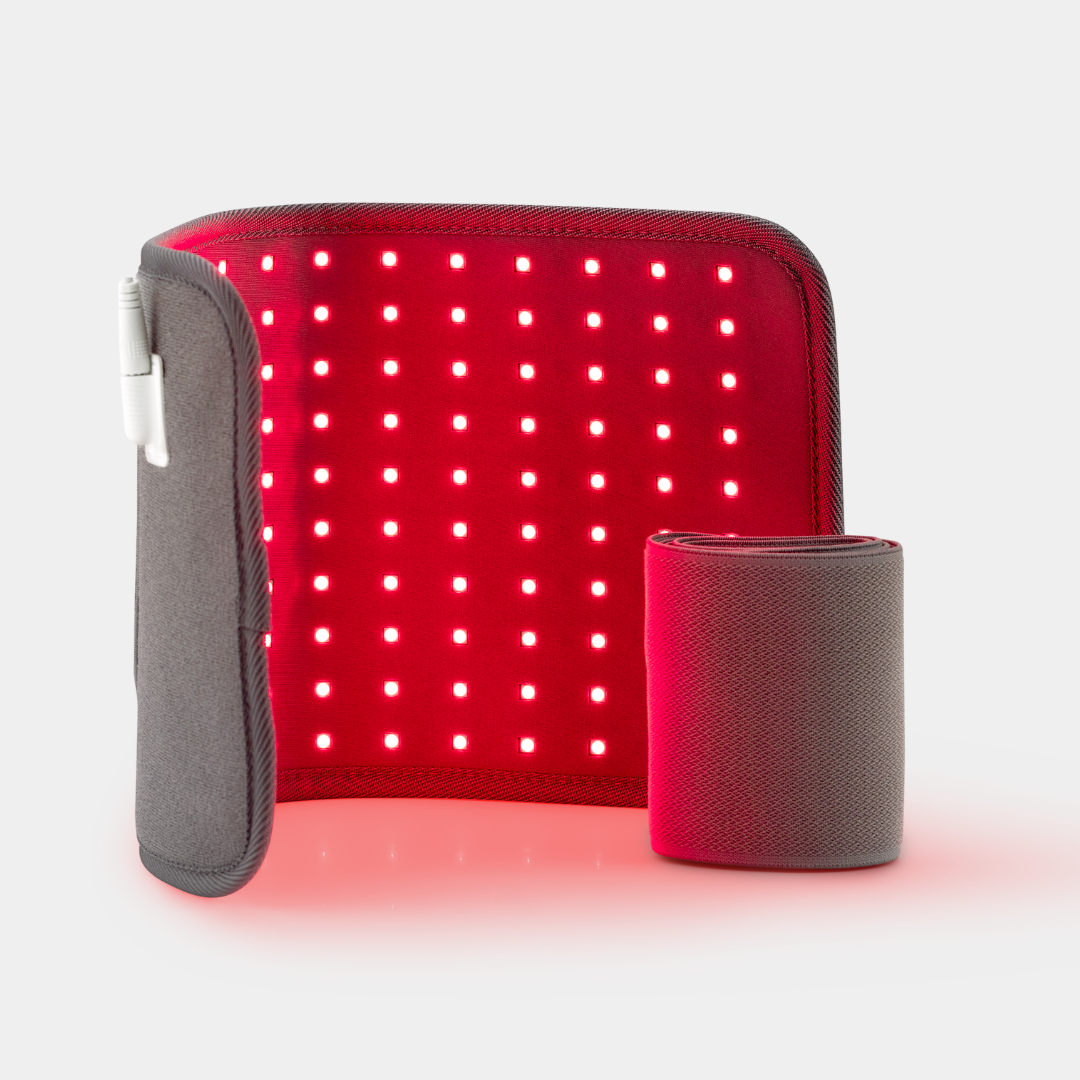
Pain Relief LED Head, 630 nm, 100 mW/cm²: This head is engineered for superficial inflammatory targets. At 100 mW/cm² irradiance, reaching the minimum efficacious fluence of 20 J/cm² requires a session of approximately 3.3 minutes over a given treatment area. This is fast, controllable, and within the parameters that published PBM research associates with COX-2 and PGE2 modulation in shallow tissue. The LED format provides broad-area coverage, making it suitable for lateral ankle tendonitis, small-joint arthritis in the hands, or superficial soft-tissue injuries.
Extra-Strength Laser Head, 810 nm, 5 W collimated: This is where the system separates itself from every LED panel on the market. A 5 W collimated 810 nm laser delivers sustained irradiance at therapeutic tissue depths that a divergent LED physically cannot reach. For deep lumbar joint pain, hip joint inflammation, or suspected neuropathic contributions from dorsal root involvement, this head provides the photon fluence at depth that the therapeutic mechanism requires. Session durations and treatment parameters should follow guidance from a qualified PBM clinician, as deep-tissue protocols are more sensitive to beam placement and duration than superficial LED applications.
The interchangeable design means a single control unit and power supply supports both modalities. You are not buying two devices, you are buying one intelligent platform that does not ask physics to make exceptions.
The Sanctuary Argument: Why Home Ownership Changes Outcomes
Clinical PBM research consistently highlights one underappreciated variable: treatment frequency. Single-session PBM produces modest acute effects; the cumulative benefit that appears in longer-duration studies comes from repeated, consistent dosing, often 3–5 sessions per week across several weeks. For patients relying on clinic-based laser therapy, the cost-per-session model and scheduling friction make this frequency practically impossible to sustain.
Owning a clinical-grade dual-modality device converts your living room, home office, or bedroom into a recovery environment available every day, on your schedule, at zero marginal cost per session. This is the lifestyle upgrade argument rendered in clinical logic: the transformation from reactive pain management (ibuprofen after the fact, a physio appointment once a fortnight) to proactive, daily photobiomodulation integrated into your sleep and recovery routine.
Sleep quality deserves specific mention here. Emerging research (preliminary, not yet definitive for NIR specifically) suggests that PBM applied in the evening may support parasympathetic nervous system activity and reduce circulating inflammatory markers that interfere with deep sleep architecture. While we will not overstate what the evidence currently supports, the mechanistic plausibility, reduced systemic inflammation, attenuated pain signalling, improved mitochondrial efficiency, is consistent with the clinical reports of improved sleep quality among regular PBM users.
The home sanctuary is not a luxury positioning device. It is the delivery infrastructure that allows the science to work the way the science requires: frequently, consistently, and without the friction that breaks every good therapeutic habit.
Risk Reversal: The Investment Logic
A clinical-grade dual-modality PBM system at this specification level represents a meaningful purchase, and Novaalab supports that decision with a risk structure that shifts the burden of proof onto the device, not the buyer. The Novaa Light Switch + Extra-Strength Laser Head is backed by a 60-day risk-free trial, long enough to complete a meaningful multi-week PBM protocol and assess your own response before any financial commitment is locked in. Over 70,000 customers in the US and more than 1,000 five-star reviews provide an independent signal of real-world satisfaction that no manufacturer's copy can substitute.
The warranty structure includes a 1-year base warranty with an optional 2-year extension, covering a device you may rely on daily for years. Shipping for US customers is fulfilled within 2–5 business days, meaning your protocol can begin within a single week of ordering.
When you amortise the cost against clinic-equivalent treatment sessions, a single clinical laser therapy session typically costs $75–$150 in the US, even a modestly consistent home protocol generates positive ROI within the first few months of use. This is not rationalisation; it is arithmetic.
Pros
- Dual-modality architecture (630 nm LED + 810 nm laser) correctly addresses the wavelength- and depth-specificity of the PBM dose, response curve, something no single-wavelength device can achieve
- 60-day risk-free trial period is long enough to complete a meaningful multi-week protocol and evaluate personal response before financial commitment is finalised
- 5 W collimated 810 nm laser delivers therapeutically relevant fluence at tissue depths (3–5 cm) that divergent LED arrays physically cannot reach
- Strong real-world trust signals: 70,000+ US customers, 4.86/5 customer rating, and 1,000+ five-star reviews reduce purchase uncertainty
Cons
- Class 3B laser designation requires strict eye-safety discipline and appropriate eyewear, the Extra-Strength Laser Head is not a casual, unsupervised wellness accessory
- Deep-tissue laser protocols are sensitive to beam placement, duration, and individual anatomy; without guidance from a PBM-trained clinician, users may under-dose or misplace treatment and see suboptimal results
- The clinical evidence base for NIR PBM in chronic neuropathic pain, while mechanistically plausible and promising, is still emerging, buyers with complex or severe pain conditions should treat this as a complementary tool alongside professional medical care, not a standalone cure
FAQs
Q: What is the difference between red light therapy and near-infrared laser therapy for pain? A: Red light therapy (typically 630–660 nm) targets superficial tissue within the first 1 cm beneath the skin and is most effective for inflammatory conditions such as tendonitis or small-joint arthritis. Near-infrared laser therapy at 810 nm penetrates significantly deeper, up to 3–5 cm in muscle tissue under collimated delivery conditions, making it appropriate for deep joint pain, neuropathic pain, and structures such as the dorsal root ganglia that red LEDs simply cannot reach.
Q: How many sessions per week are needed for photobiomodulation pain treatment to work? A: Published PBM clinical research consistently points to 3–5 sessions per week across multiple weeks as the dosing frequency required to produce cumulative therapeutic benefit. Single-session PBM produces modest acute effects; the meaningful outcomes documented in longer-duration studies depend on repeated, consistent dosing, which is why home ownership of a device is a structural advantage over clinic-based schedules.
Q: Is the Novaa Light Switch Extra-Strength Laser Head safe to use at home? A: The 810 nm Extra-Strength Laser Head is a Class 3B laser device under IEC 60825-1 classification. It is safe for home use provided users follow the safety documentation included with the device, always wear appropriate laser-safety eyewear during sessions, and keep the device away from children. For deep-tissue protocols, consulting a PBM-trained clinician for guidance on beam placement and session duration is strongly recommended.
Related Reading
Pros
- Dual-modality architecture (630 nm LED + 810 nm laser) correctly addresses the wavelength- and depth-specificity of the PBM dose, response curve, something no single-wavelength device can achieve
- 60-day risk-free trial period is long enough to complete a meaningful multi-week protocol and evaluate personal response before financial commitment is finalised
- 5 W collimated 810 nm laser delivers therapeutically relevant fluence at tissue depths (3–5 cm) that divergent LED arrays physically cannot reach
- Strong real-world trust signals: 70,000+ US customers, 4.86/5 customer rating, and 1,000+ five-star reviews reduce purchase uncertainty
Cons
- Class 3B laser designation requires strict eye-safety discipline and appropriate eyewear, the Extra-Strength Laser Head is not a casual, unsupervised wellness accessory
- Deep-tissue laser protocols are sensitive to beam placement, duration, and individual anatomy; without guidance from a PBM-trained clinician, users may under-dose or misplace treatment and see suboptimal results
- The clinical evidence base for NIR PBM in chronic neuropathic pain, while mechanistically plausible and promising, is still emerging, buyers with complex or severe pain conditions should treat this as a complementary tool alongside professional medical care, not a standalone cure
Technical Verdict
The PBM dose, response curve is not negotiable: superficial inflammatory tissue requires 630 nm red light at ≥20 J/cm² fluence, while deep neuropathic or joint targets require a collimated NIR laser at 810 nm to survive tissue attenuation and reach the relevant chromophore at depth. The Novaa Light Switch + Extra-Strength Laser Head is the only consumer device that addresses both requirements without asking physics to make exceptions, a 100 mW/cm² LED head for surface inflammation and a 5 W collimated laser for tissue depths beyond the reach of any LED panel. For anyone serious about building a home PBM protocol grounded in mechanism rather than marketing, this is the architecture the science demands.
→ View Specs & Pricing