Traditional Finnish saunas outperform most infrared cabins for detox because their 80–100°C heat sustains higher skin temperatures and produces more sweat. Lipophilic toxin excretion depends on sweat volume and total thermal dose, not how deeply infrared wavelengths penetrate tissue. Near-infrared energy reaches deeper than convective heat, but that depth does not replace the higher heat exposure of a Finnish sauna.
The Infrared Detox Myth Biohackers Rarely Question
Infrared sauna marketing rests on a compelling narrative: near- and mid-infrared wavelengths penetrate several centimetres into subcutaneous tissue, heating the body 'from the inside out' and, the claim goes, releasing toxins that a conventional sauna simply cannot reach. The physics of this is partially correct. Near-infrared (0.76–1.4 μm per ISO 20473) does penetrate deeper than convective air heat, which primarily loads the skin surface. But deeper penetration is not the same as greater mobilization of lipophilic toxins, and this is where the narrative breaks down.
Lipophilic compounds, substances that dissolve preferentially in fat rather than water, include bisphenol A (BPA), phthalate metabolites, polychlorinated biphenyls (PCBs), and a range of organochlorine pesticides. Because they concentrate in adipose tissue, excreting them requires lipolysis: the breakdown of fat cells that releases these sequestered compounds into circulation, where they can subsequently reach eccrine sweat glands. Lipolysis rate is strongly temperature-dependent. Elevated skin surface temperature above approximately 40°C is consistently associated in the dermal physiology literature with increased eccrine sweat rate and upregulated cutaneous blood flow, both prerequisites for meaningful lipophilic excretion. The critical question is therefore not which modality penetrates deepest, but which modality sustains skin surface temperature above that functional threshold for longer.
Traditional Finnish Sauna Detox: What the Physiology Shows About Temperature, Skin, and Lipophilic Excretion
Sweat is not a passive filtration fluid. Eccrine glands produce a secretion whose composition is influenced by dermal blood flow, core temperature, and local skin temperature simultaneously. A 2011 review by Genuis et al. published in ISRN Toxicology examined sweat as a route for excretion of heavy metals, BPA, and phthalates, concluding that sweat was a meaningful excretory pathway for these compounds, and noting that sweat volume and composition varied substantially with thermal load. While that paper did not directly compare infrared to traditional sauna modalities, it established the mechanism: higher thermal load → higher sweat volume and rate → greater mass excretion per session.
More directly relevant is the physics of skin temperature under the two paradigms. In a traditional sauna at 90°C, convective and radiative heat transfer from the surrounding air rapidly drives skin surface temperature toward 40–42°C within 8–12 minutes of entry for a resting adult. Infrared cabin ambient temperatures of 45–55°C produce slower and often lower steady-state skin temperatures, particularly in lower-output panels, unless session duration is extended substantially. Critically, traditional saunas allow the user to throw water on the kiuas (the stone heater), producing a burst of steam that temporarily spikes convective heat transfer and skin temperature further, a technique with no equivalent in an infrared cabin.
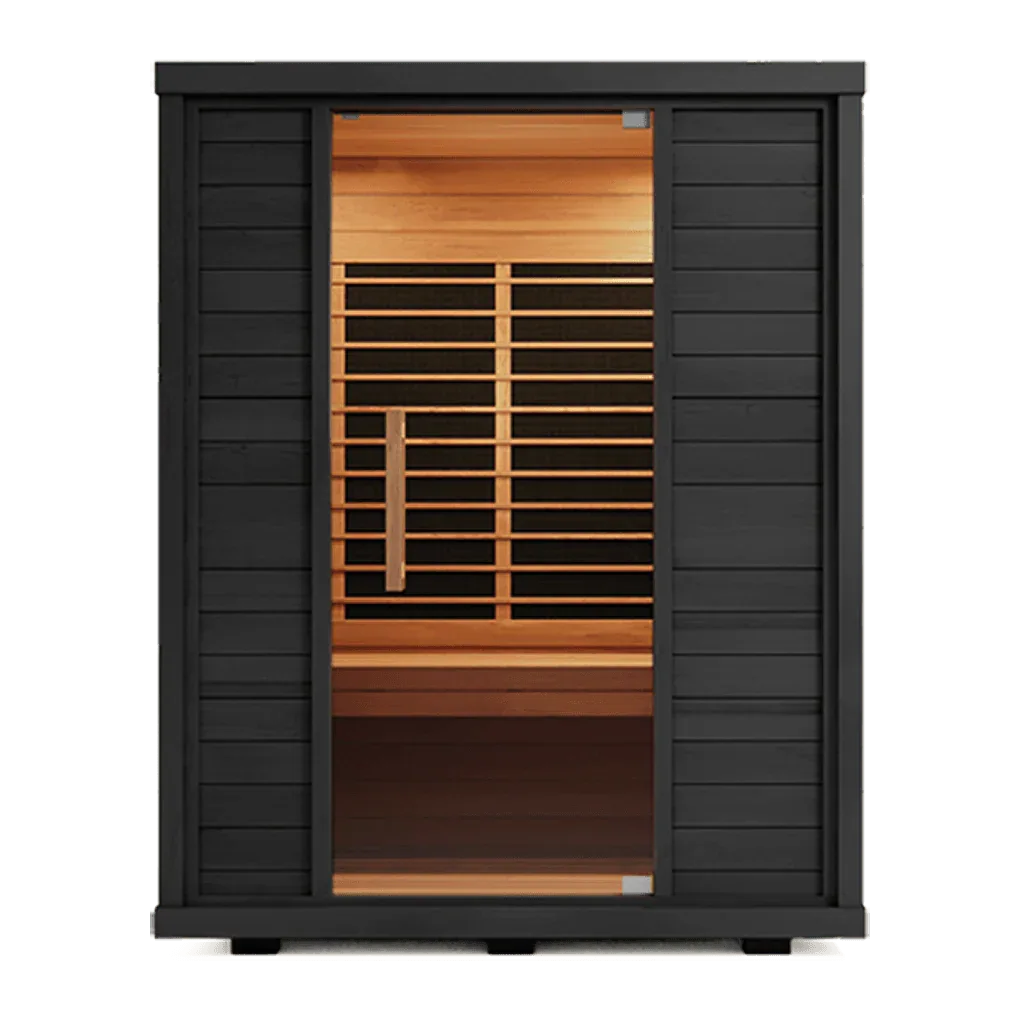
This does not mean infrared saunas have no value, the preliminary evidence for near-infrared's role in photobiomodulation and mitochondrial stimulation is genuinely interesting, and devices like the Novaa Pro are worth considering for targeted therapeutic applications. But for the specific goal of maximizing lipophilic toxin excretion through sustained high-volume sweating, the thermodynamic superiority of a high-ambient-temperature traditional sauna is not a matter of debate: it is a consequence of basic heat transfer physics.
The Engineering Argument: Why Insulation and Heater Mass Matter
A sauna's ability to maintain skin surface temperatures above 40°C throughout a session is a function of three interacting engineering variables: heater output (kW), cabin thermal mass (the ability of walls, ceiling, and floor to absorb and re-radiate heat), and insulation R-value (resistance to heat loss to the exterior environment). A cabin that loses heat faster than the heater can replace it will never stabilize at 90°C, it will reach thermal equilibrium at a lower temperature that depends on the delta between interior and exterior ambient and the insulation's effectiveness.
The Sweat Cabin is built from premium western red cedar, a species with a thermal conductivity of approximately 0.10–0.12 W/m·K, roughly half that of pine and a fraction of most synthetic panel materials. Cedar's low conductivity is a passive insulation asset, meaning the cabin walls themselves resist heat loss without requiring additional foam or fiberglass batt insulation that can off-gas at elevated temperatures. The result is a cabin that reaches its target temperature band of 170–200°F (77–93°C) rapidly and, critically, sustains it with less heater cycling, delivering a more consistent thermal environment across the full session duration.
The heater options available for The Sweat Cabin (4 Person) underscore this thermal engineering approach. The flagship Homecraft Revive 9kW with WiFi controls and the HUUM Drop 9kW (also WiFi-enabled) both operate at outputs appropriate for a 4-person cabin volume, while the entry-level Harvia 8kW KIP with built-in controls provides a proven baseline. Stone-loaded kiuas-style heaters like these store thermal energy in the rock mass, which acts as a heat battery: it moderates temperature fluctuations and allows the iconic löyly (steam burst) that temporarily spikes convective transfer and skin temperature, the single most effective short-duration detox stimulus available in any residential sauna format.
Red Cedar, Picture Windows, and the Psychology of Sanctuary
Engineering explains why the Sweat Cabin works. Aesthetics explain why you will actually use it. The single most reliable predictor of long-term health behaviour adoption is frictionlessness, the degree to which the healthy choice is also the easy, pleasant choice. A sauna hidden in a dark corner of a garage, assembled from plywood and foil-faced insulation, will be used infrequently. A cedar-panelled cabin with a large picture window flooding the interior with natural light, positioned where it can be accessed within 90 seconds of deciding to sweat, will become a daily ritual.
The Sweat Cabin's picture window is not a concession to aesthetics at the expense of thermal performance, it is a recognition that the sanctuary experience is itself therapeutic. There is solid evidence (notably from Scandinavian epidemiological cohorts tracking Finnish sauna users) that regular sauna use, defined as 4–7 sessions per week, is associated with substantially reduced cardiovascular mortality risk. The mechanism is almost certainly a combination of the hemodynamic stress response (cardiac output during a 15-minute 90°C session can approach that of moderate aerobic exercise) and the parasympathetic recovery that follows. Neither mechanism requires the user to be miserable. The cedar smell, the quality of light through the window, the ritual of heating the stones, these are not luxury add-ons; they are compliance infrastructure.
The available wall height options (6' for lower-clearance spaces, 7' for a more spacious feel) reflect the same philosophy: a sauna that fits your actual home, rather than requiring you to build around it. Both indoor and outdoor installation are supported, and the 5-week lead time for a USA-made product is a reasonable trade for a cabin built to this specification.
Debunking the 'Infrared Penetrates Deeper Therefore Detoxes Better' Claim
Infrared sauna marketing's core detox claim rests on a physics misunderstanding that is worth correcting precisely. To be precise about the physics: mid- and far-infrared radiation (3–14 μm) is absorbed almost entirely within the epidermis and superficial dermis, optical penetration at these wavelengths is measured in hundreds of micrometres, not centimetres. Near-infrared (0.76–1.4 μm) does penetrate to several millimetres in biological tissue, and some wavelengths approach 1–2 cm under optimal conditions. Neither reaches adipose tissue depots directly. The detox mechanism in both sauna modalities is therefore indirect and identical in principle: surface and core heating → systemic circulation increase → lipolysis → mobilization of lipophilic compounds → excretion via eccrine sweat.
The variable that determines which modality drives more of this cascade is thermal dose, the product of temperature elevation and duration. A traditional Finnish sauna at 90°C for 20 minutes delivers a substantially higher thermal dose to the skin surface than a typical infrared cabin at 50°C for the same duration, even accounting for the modest depth advantage of near-infrared. Also traditional sauna users can tolerate higher ambient temperatures because the low relative humidity (10–20% RH) allows evaporative cooling to partially offset the heat load on cardiovascular regulation, whereas many infrared users find sessions physically demanding at far lower ambient temperatures due to the direct radiative load on the body.
The conclusion for detox-focused sauna users is counterintuitive but thermodynamically sound: if maximizing lipophilic toxin excretion per session is your goal, a well-insulated traditional sauna running at 170–200°F is a more effective tool than most residential infrared cabins, and The Sweat Cabin (4 Person) is engineered to hit and hold exactly that range.
Pros
- Traditional 80–100°C ambient heat sustains skin surface temperatures above 40°C more reliably than most residential infrared cabins, maximizing sweat volume and lipophilic toxin excretion per session on thermodynamic grounds.
- Western red cedar's low thermal conductivity (~0.10–0.12 W/m·K) passively insulates the cabin, allowing the 8–9kW heater to reach and hold target temperature with less cycling and no synthetic insulation off-gassing risk.
- Two wall height options (6' and 7'), indoor/outdoor compatibility, and a large picture window make this a genuinely flexible home installation rather than a compromise product.
- 30-day trial, 3-year warranty, free consultation, and financing options collectively remove the primary friction points for a premium purchase at this price point.
Cons
- At $8,195 with a 5-week lead time, this is a considered purchase requiring space planning, electrical preparation (240V circuit for 8–9kW heaters), and some assembly, not a plug-and-play product.
- The detox evidence base, while mechanistically plausible and directionally supported by the sweat excretion literature, remains preliminary at the clinical-trial level; buyers expecting quantified BPA reduction data from controlled studies will not find it for this specific product or the sauna category broadly.
FAQs
Does a traditional Finnish sauna detox better than an infrared sauna? For lipophilic toxin excretion specifically, yes, on thermodynamic grounds. A traditional Finnish sauna operating at 80–100°C delivers a substantially higher thermal dose to the skin surface than a typical infrared cabin at 45–55°C, driving greater eccrine sweat volume and therefore greater mass excretion of fat-soluble compounds such as BPA, phthalates, and PCBs per session. The detox mechanism in both modalities is indirect and identical in principle (heating → lipolysis → eccrine excretion); the difference is in the magnitude of the thermal stimulus.
How often should I use a traditional Finnish sauna for detox and cardiovascular benefit? The Laukkanen et al. (2018, Mayo Clinic Proceedings) prospective cohort study of 2,315 Finnish men found that 4–7 sessions per week was associated with a 40% lower risk of all-cause mortality compared to once-weekly use. Most physiology-based protocols for lipophilic toxin excretion suggest sessions of 15–20 minutes at 80–100°C, repeated regularly, with adequate rehydration. Always consult a physician before beginning high-temperature sauna protocols if you have cardiovascular, renal, or dermatological conditions.
What temperature should a traditional Finnish sauna reach for effective detox? Skin surface temperature needs to exceed approximately 40°C to meaningfully upregulate eccrine sweat rate and cutaneous blood flow, the two prerequisites for lipophilic toxin excretion. In practice, a cabin ambient temperature of 80–100°C (176–212°F) drives skin surface temperatures into the 40–42°C range within 8–12 minutes for a resting adult. Infrared cabins typically operating at 45–55°C ambient produce slower and often lower steady-state skin temperatures, making the traditional Finnish range the more reliable target for detox-focused sessions.
Related Reading
Pros
- Traditional 80–100°C ambient heat sustains skin surface temperatures above 40°C more reliably than most residential infrared cabins, maximizing sweat volume and lipophilic toxin excretion per session on thermodynamic grounds.
- Western red cedar's low thermal conductivity (~0.10–0.12 W/m·K) passively insulates the cabin, allowing the 8–9kW heater to reach and hold target temperature with less cycling and no synthetic insulation off-gassing risk.
- Two wall height options (6' and 7'), indoor/outdoor compatibility, and a large picture window make this a genuinely flexible home installation rather than a compromise product.
- 30-day trial, 3-year warranty, free consultation, and financing options collectively remove the primary friction points for a premium purchase at this price point.
Cons
- At $8,195 with a 5-week lead time, this is a considered purchase requiring space planning, electrical preparation (240V circuit for 8–9kW heaters), and some assembly, not a plug-and-play product.
- The detox evidence base, while mechanistically plausible and directionally supported by the sweat excretion literature, remains preliminary at the clinical-trial level; buyers expecting quantified BPA reduction data from controlled studies will not find it for this specific product or the sauna category broadly.
Technical Verdict
The physics of lipophilic toxin excretion via sweat favours the modality that delivers the highest sustained skin surface temperature, and that is a well-insulated traditional Finnish sauna running at 80–100°C, not a typical infrared cabin at 45–55°C. The Sweat Cabin's western red cedar construction, properly specified 8–9kW kiuas-style heater, and 170–200°F operating range make it a credible detox tool on thermodynamic grounds that most infrared panels cannot match. The 30-day trial and 3-year warranty ensure this is a low-risk entry into a high-benefit daily practice.
→ View Specs & Pricing