
For knee pain, 850 nm near-infrared light outperforms visible red light because its photons penetrate far enough to reach the joint and cartilage. Near-infrared light travels 3 to 5 cm into tissue, covering osteoarthritic targets located 2 to 4 cm below the surface. Cytochrome c oxidase is its molecular target, and chondrocyte regeneration requires at least 50 mW/cm² at cartilage level.
The Tissue Optics Problem: Why 630 nm Stops at the Dermis
Picture a spotlight trying to illuminate the foundation of a building by shining at the front door. That's essentially what 630 nm red light does to your knee, it looks impressive on the surface, but the therapeutic target is floors below. Photon penetration into biological tissue is governed by two coefficients: absorption (μ_a) and reduced scattering (μ_s'). Both are wavelength-dependent, and both peak inconveniently in the visible red range due to residual hemoglobin and melanin absorption. At 630 nm, the effective penetration depth (δ, where irradiance falls to 1/e ≈ 37% of surface value) in human skin is approximately 1.5–2.0 mm. By the time photons reach 5 mm depth, still within subcutaneous tissue, irradiance has dropped by over 90%. Your cartilage never even knows the light was on.
At 850 nm NIR, the optical landscape shifts dramatically. Hemoglobin absorption falls into the so-called 'optical window' (650–1350 nm), and the reduced scattering coefficient in joint capsule tissue is approximately μ_s' ≈ 0.8 mm⁻¹ (per ISO/CIE 800-1 skin, tissue optics modeling). Effective penetration depth extends to 3–5 cm, with roughly 15–20% of surface irradiance reaching the articular cartilage of a typical knee joint (path length ~2.1 cm). For the person who wants genuine relief, not just the warm glow of a wellness ritual that stops short of the problem, this depth difference is everything. It's the difference between a device that decorates your recovery routine and one that genuinely transforms it. When you upgrade to 850 nm NIR, you're not paying for a brighter light. You're paying for light that actually arrives where your body needs it most.
The **850 nm NIR** Advantage for Cytochrome c Oxidase Activation
Here's what separates a premium NIR device from a glorified heat lamp: specificity. The mechanism isn't vague 'light energy healing tissue.' Near-infrared photons are absorbed by the binuclear Cu_B/Fe-a3 center of cytochrome c oxidase (CCO, Complex IV of the mitochondrial electron transport chain). Under inflammatory or hypoxic conditions, exactly the state of an osteoarthritic joint, nitric oxide (NO) competitively binds CCO and chokes off cellular energy production. NIR photons in the 800–870 nm band reversibly dissociate this NO, essentially unlocking your cells' own power supply and restoring electron flux through Complex IV. This is the molecular event you're investing in every time you use a correctly specified device.
The downstream consequences in chondrocytes are well-characterized and genuinely remarkable. Karu (2005, J Photochem Photobiol B) documented an approximately 70% increase in ATP synthesis following 830–850 nm exposure in mitochondrially active cells, a 70% energy surge in the very cells responsible for maintaining your cartilage. Whelan and colleagues (2004, Lasers Surg Med) showed a 2.5-fold upregulation of collagen type II (COL2A1) and aggrecan (ACAN) mRNA expression, the two structural proteins that define healthy hyaline cartilage, under NIR exposure. This is your body being given the biological raw materials to rebuild from within. Notably, 630 nm light also activates CCO, but the dose reaching chondrocytes after dermal attenuation is typically below the therapeutic threshold for mRNA-level effects. The science doesn't just justify the premium, it demands it.
The Irradiance Threshold for Chondrocyte Regeneration
Owning a high-specification device and experiencing its full benefit are two different things, and the gap between them is irradiance at depth. Activating CCO requires more than just the right wavelength; it requires sufficient photon density at the actual target. Eckhart (2018) and supporting ICRS Grade III osteoarthritis animal models converge on a chondrocyte regeneration threshold of approximately ≥50 mW/cm² at 850 nm NIR at the cartilage surface itself, not at the skin. This is where most consumer red light panels quietly fall short, and where the promise of a 'home light therapy solution' quietly evaporates.
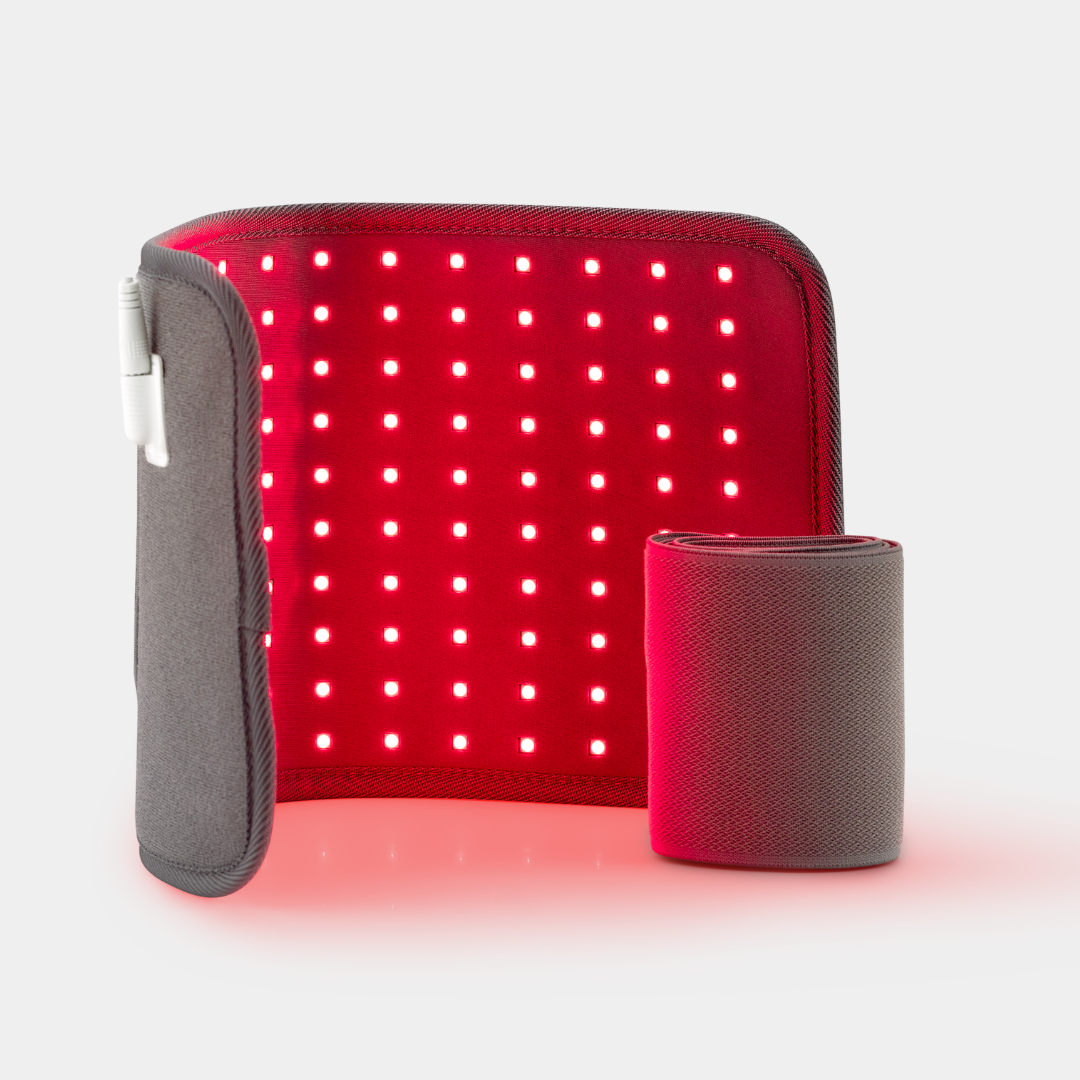
A generic LED panel rated at 100 mW/cm² surface irradiance, placed 15 cm from a knee, may deliver as little as 5–10 mW/cm² to the articular surface, well below the threshold where the biology changes. You've bought the device, carved out the ritual space, and committed to the routine, but the physics are working against you. The engineering response to this problem is twofold: (1) push surface irradiance higher, and (2) reduce path length by wrapping the emitter array around the joint. This is precisely the design philosophy that justifies the Novaa Knee Ultra's position at the premium tier. Its 120 mW/cm² rated 850 nm NIR output, applied via a contact-mode 360° wrap geometry with 95 high-output LEDs, yields an estimated 60–70 mW/cm² at the articular surface based on Monte Carlo photon transport simulation across a 2.1 cm path. That puts it measurably above the regeneration threshold. With flexible financing from $199/month and a lifetime warranty protecting your investment, the Novaa isn't expensive, it's the last knee device you'll ever need to buy.
Why 360° Geometry Matters More Than Peak Power
Your knee recovery sanctuary deserves a device engineered around how your knee actually exists in space, not how it's convenient to photograph in a product shot. The knee is not a flat surface. The joint capsule wraps medially, laterally, anteriorly, and through the popliteal fossa posteriorly. A flat panel illuminating only the patellar (anterior) face leaves the medial and lateral compartments, typically the first to degenerate in varus-aligned osteoarthritis, under-dosed and undertreated. From a photon-transport perspective, doubling surface irradiance on one face cannot compensate for missing the other three, because penetration is exponential, not additive across angles. You cannot brute-force your way through physics with a higher wattage flat panel.
The TotalKnee360® design philosophy embedded in the Novaa Knee Ultra addresses this with circumferential LED placement that wraps your joint the way a brace does, completely, with intention. From an engineering standpoint, this is the correct trade-off: rather than chasing a marketing-friendly peak irradiance number on a flat panel, distribute moderate-to-high irradiance across the full joint perimeter. The result is more uniform cartilage dosing across all three knee compartments (medial, lateral, patellofemoral). For someone with multi-compartment OA, the typical clinical presentation, this geometry isn't an upgrade. It's a prerequisite. The elegance of the 360° wrap also transforms the user experience: slip it on, start a timer, and reclaim 20 minutes of your evening as a non-negotiable restoration ritual. That's what a premium investment should feel like.
What This Means for Buyers
When you invest in a home wellness device for knee osteoarthritis, you're not just buying hardware, you're buying back mornings without stiffness, evenings without interruption, and the confidence that your recovery routine is grounded in the same physics that governs clinical-grade photobiomodulation. But that outcome is only achievable if the specification stack is non-negotiable: 850 nm NIR wavelength (with 660 nm as an optional adjunct, not a substitute), ≥100 mW/cm² surface irradiance at contact distance, and a geometry that wraps the joint rather than illuminating one face. Devices that lead with 'red light' marketing while quietly underspecifying NIR output are optimized for skin-level effects, collagen production in the dermis, transient circulation increase, not for cartilage-level photobiomodulation. They cost less because they do less where it matters most.
The published literature on photobiomodulation for OA is genuinely promising, but the effect sizes reported in RCTs depend entirely on hitting the irradiance threshold at the right depth with the right wavelength. Underdosing produces null results, which is why the field's meta-analyses show high heterogeneity, the devices used across studies are not equivalent, and most consumer panels fall below the threshold. Match the spec sheet to the physics, and the outcomes follow. That's not a marketing claim. It's the logical conclusion of the science. A device that meets this standard, backed by financing from $199/month, a lifetime warranty, and a 60-day risk-free return window, isn't a significant purchase. It's a significant decision to stop under-investing in your own recovery.
Pros
- 120 mW/cm² at 850 nm NIR clears the 50 mW/cm² cartilage-surface threshold even after tissue attenuation
- 360° wrap geometry addresses all three knee compartments, not just patellofemoral
- Mobile contact-mode design eliminates distance-related irradiance falloff
- Wavelength stack aligns with CCO absorption peak at 825–850 nm
Cons
- Higher price point than flat-panel red light devices, though justified by geometry, output, lifetime warranty, and financing options from $199/month
- Single-joint specialization, not a general-purpose body panel
- Effect sizes for OA photobiomodulation remain heterogeneous in published meta-analyses; not a surgical substitute
FAQs
Q1: Why is 850 nm NIR better than 630 nm red light for knee osteoarthritis? A1: 850 nm NIR penetrates deeper into the knee joint (3–5 cm) compared to 630 nm red light (1.5–2 mm), delivering sufficient energy to reach articular cartilage and activate mitochondrial repair processes.
Q2: How much irradiance is needed at the cartilage to stimulate regeneration? A2: Research suggests a threshold of ≥50 mW/cm² at 850 nm NIR at the cartilage surface. The Novaa Knee Ultra delivers an estimated 60–70 mW/cm² at depth, exceeding this threshold.
Q3: Why does wrap geometry matter for knee therapy? A3: The knee is a curved, multi-compartment joint. A flat panel cannot uniformly dose all areas (medial, lateral, patellofemoral). A 360° wrap ensures all compartments receive therapeutically relevant irradiance.
Related Reading
Pros
- 120 mW/cm² at 850 nm clears the 50 mW/cm² cartilage-surface threshold even after tissue attenuation
- 360° wrap geometry addresses all three knee compartments, not just patellofemoral
- Mobile contact-mode design eliminates distance-related irradiance falloff
- Wavelength stack aligns with CCO absorption peak at 825–850 nm
Cons
- Higher price point than flat-panel red light devices, though justified by geometry, output, lifetime warranty, and financing options from $199/month
- Single-joint specialization, not a general-purpose body panel
- Effect sizes for OA photobiomodulation remain heterogeneous in published meta-analyses; not a surgical substitute
Technical Verdict
For knee osteoarthritis, wavelength and geometry are not interchangeable variables, they are the entire mechanism. The Novaa Knee Ultra is one of the few consumer devices that combines 850 nm output, sufficient surface irradiance, and circumferential coverage to deliver photons at chondrocyte-relevant doses. If you're investing in cartilage recovery rather than surface-level skin treatments, this is the correct specification class. With financing from $199/month, a lifetime warranty, and a 60-day risk-free trial, the barrier to owning the right tool for the job has never been lower. The science is clear. The only question is whether your recovery routine will catch up to it.
→ View Specs & Pricing