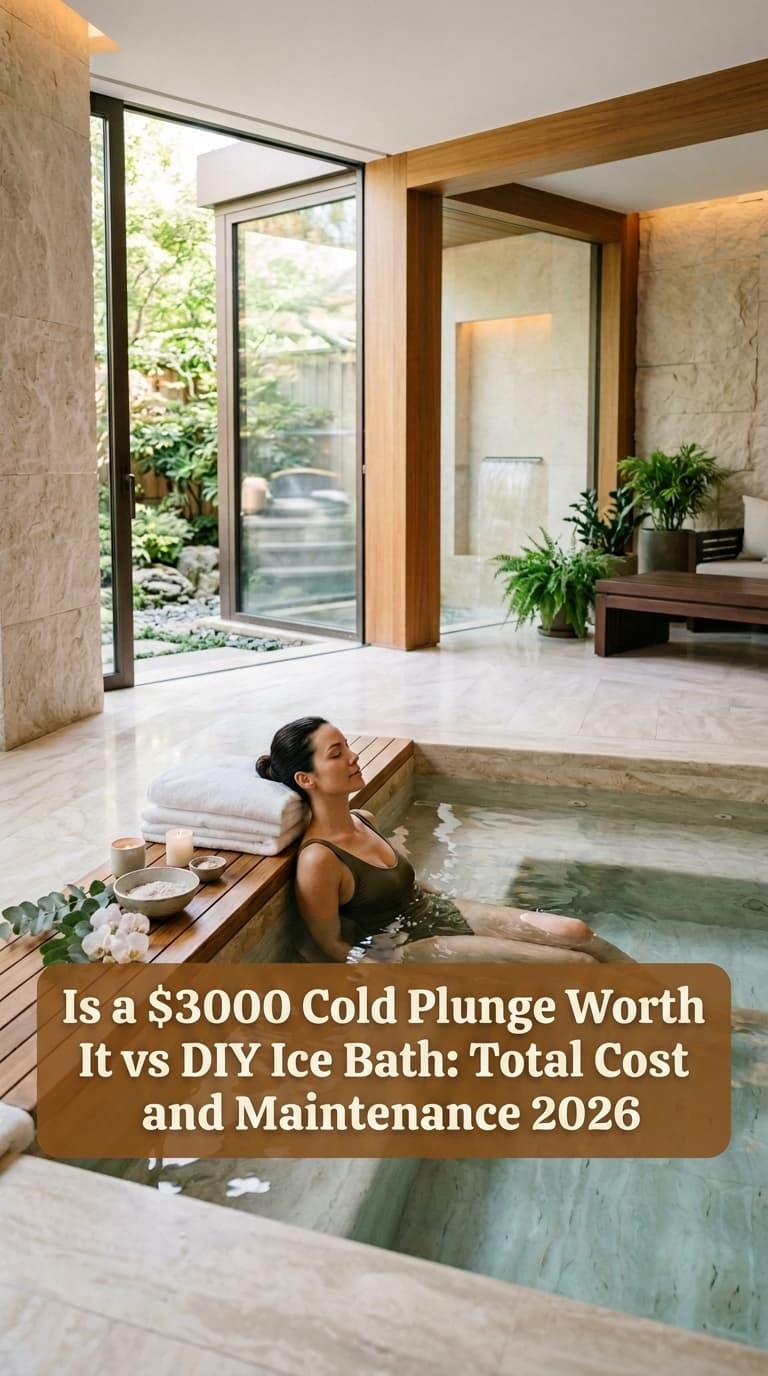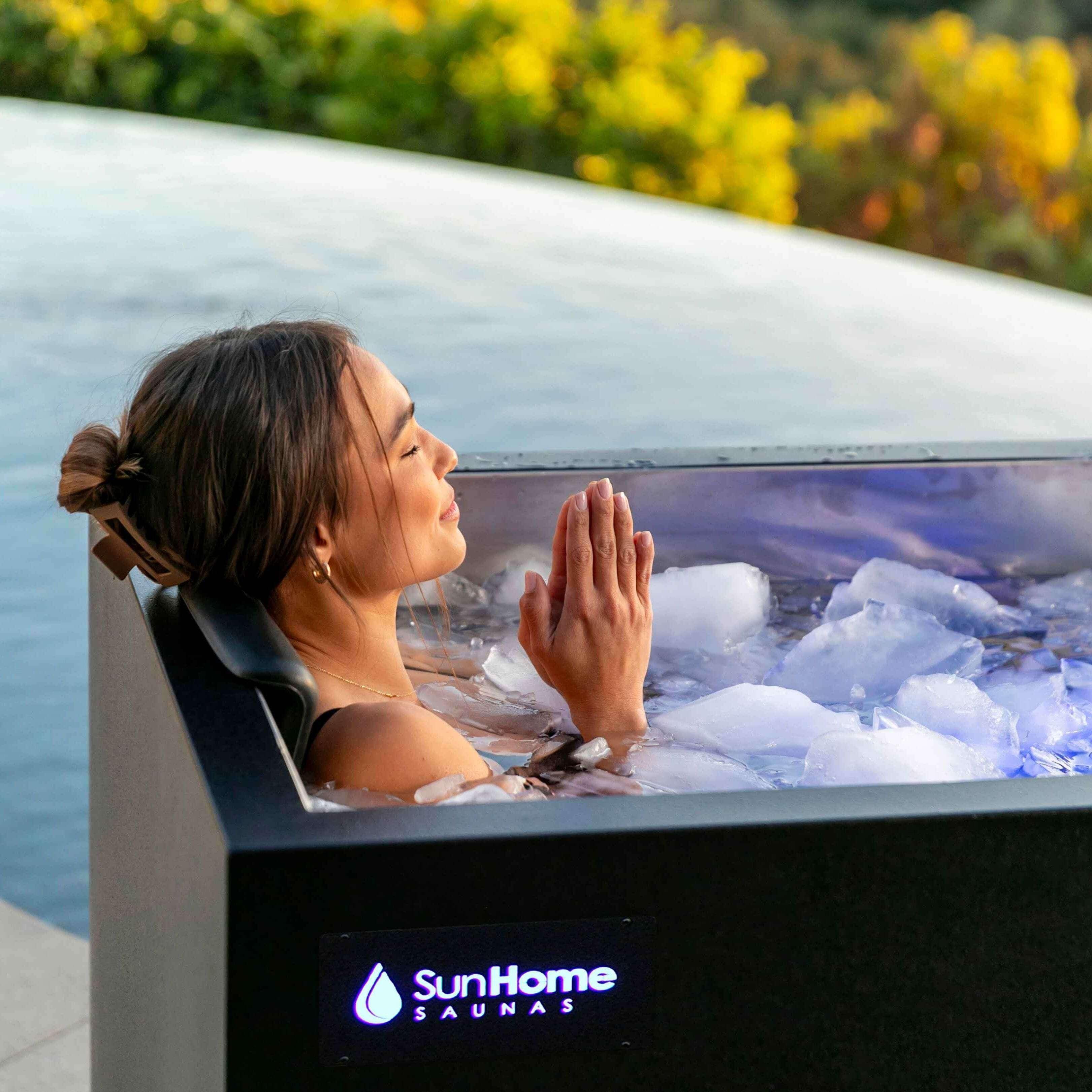

Imagine stepping into a crisp, personal recovery sanctuary right in your home, a pristine cold plunge that washes away the mental fatigue of the day, resets your nervous system, and guarantees deep, restorative sleep. Building this daily sanctuary requires choosing between the convenience of an active refrigeration unit and the traditional manual ice bath. The Sun Home Cold Plunge Smart-Chiller Sun Home Saunas promises to automate this ritual. But behind the promise of effortless, icy restoration lies a battle of thermal physics, operational fluid dynamics, and thermodynamic efficiency. To make an informed premium investment, we must look beyond marketing promises and evaluate the underlying science of cold-water immersion.
The Sanctuary of Cold: Stress, Sleep, and Systemic Recovery
Daily stress triggers a cascade of elevated cortisol levels, disrupting your natural circadian rhythm and degrading sleep quality. Cold water immersion serves as a profound neurological reset. Immersing the body triggers an immediate activation of the sympathetic nervous system, followed by a sustained parasympathetic rebound. This physiological shift stimulates vagus nerve pathway activity, significantly lowering your heart rate variability (HRV) baseline and driving down systemic cortisol levels.
But to achieve these biological outcomes, temperature precision is paramount. If the water is too warm, the hormetic shock is insufficient; if it is dangerously cold or unhygienic, the body enters a state of panic rather than recovery. Establishing a premium cold sanctuary requires a system that delivers reliable, clinical-grade temperatures on demand, without the friction of constantly hauling ice.
Energy Economics: Carnot Efficiency and the Real Cost of Ice
The thermodynamic physics governing heat transfer in traditional ice baths versus chiller-plunge systems reveal fundamental cost and stability trade-offs. Ice's latent heat of fusion (334 kJ/kg at 0°C) provides passive thermal buffering, but creating or buying this thermal mass is highly inefficient. To cool a standard 300-liter reservoir from a tap temperature of 18°C down to a therapeutic 5°C, you must remove approximately 16,300 kJ of thermal energy. Doing this with ice requires over 48 kg of ice per session.
From a financial perspective, purchasing 48 kg of commercial ice averages $30 per session. For a dedicated user plunging four times a week, the operating cost quickly balloons to over $480 per month. Conversely, active chiller units use a compressor-driven vapor-compression cycle, frequently charged with eco-friendly R-290 or R-134a refrigerant. Although these small-scale refrigeration units operate with a Carnot efficiency of roughly 10% to 15%, their continuous electrical draw is minor. Cooling the same reservoir with a high-efficiency Sun Home Cold Plunge Smart-Chiller Sun Home Saunas uses about 0.8 kWh of electricity, costing less than $0.15 per run under average utility rates.
Temperature Stability: Latent Plateau vs. Active PID Regulation
When a human body enters a cold plunge, convective heat transfer dynamics immediately shift. The body-to-water convective heat transfer coefficient ranges from 50 to 100 W/m²·K, meaning a single human expels 80 to 150 Watts of metabolic heat directly into the water. In a static, non-circulated ice bath, this thermal release forms a warm 'thermal barrier' layer of water directly against your skin, artificially insulating you from the cold and reducing the therapeutic effect.
Also as ice melts, it transitions along its latent plateau, resulting in highly unpredictable temperature gradients throughout the tub. Active chiller systems resolve this through continuous pump circulation and PID (Proportional-Integral-Derivative) temperature control loops. By continuously moving the water, the chiller disrupts the thermal boundary layer via forced convection, exposing your skin to a constant, unyielding cold shock. Modern insulated hulls prevent thermal leakage, maintaining your precise target temperature within ±0.5°C throughout your entire session.
Sanitation Science: Overcoming Biofilm and Scaling
Maintaining a pristine sanctuary requires strict biological management. Static ice baths are highly susceptible to stagnation. Standing water above 5°C accelerates the growth of mesophilic bacteria and pathogens like Pseudomonas aeruginosa. According to the Arrhenius equation (Q10 temperature coefficient), bacterial metabolic rates double or triple for every 10°C increase in temperature.
While keeping water below 5°C suppresses this growth, any temperature fluctuations allow biofilms to establish on the reservoir walls. Active chiller units combat this by using constant circulation through multi-stage filtration networks. But the warmer condenser and degassing zones of active chillers (30°C to 50°C) can accelerate calcium carbonate (CaCO₃) scaling. High-performance systems mitigate this by integrating continuous ozone (0.5 to 1.0 ppm) or UV-C sanitation (operating at the germicidal 254 nm wavelength) directly into the water loop, ensuring sterile, crystal-clear water without harsh chemical odors. Ensure your recovery sanctuary is protected with low-stress financing options starting under $200 per month, free shipping, and comprehensive multi-year warranties.
Frequently Asked Questions
How much ice is needed for a manual ice bath session, and how much does it cost?
To cool a standard 300-liter reservoir from a tap temperature of 18°C down to a therapeutic 5°C, you need over 48 kg of ice per session. Buying this amount of commercial ice averages about $30 per session. For a dedicated user plunging four times a week, the cost of ice quickly climbs to over $480 per month.
How does the operating cost of an active cold plunge chiller compare to buying ice?
While using manual ice can cost over $480 per month, active chiller units are highly efficient and cost-effective. Cooling the same reservoir with a high-efficiency smart-chiller uses approximately 0.8 kWh of electricity. This translates to less than $0.15 per run under average utility rates.
Why does a manual ice bath feel less cold over time compared to an active chiller?
In a static, non-circulated ice bath, your body expels 80 to 150 Watts of metabolic heat, which forms a warm thermal barrier layer of water against your skin and insulates you from the cold. Active chiller systems resolve this by continuously circulating the water using a pump. This circulation disrupts the thermal boundary layer via forced convection, exposing your skin to a constant cold shock.
How do active cold plunge chillers keep the water clean and prevent bacterial growth?
Active chiller units prevent stagnation and bacterial growth by continuously circulating water through multi-stage filtration networks. High-performance systems also integrate continuous ozone at 0.5 to 1.0 ppm or UV-C sanitation operating at a germicidal 254 nm wavelength. This keeps the water sterile and crystal-clear without the need for harsh chemical odors.
What physiological recovery benefits does cold-water immersion provide?
Cold water immersion triggers an immediate activation of the sympathetic nervous system, followed by a sustained parasympathetic rebound. This physiological shift stimulates the vagus nerve pathway, which significantly lowers your heart rate variability baseline. As a result, it drives down systemic cortisol levels, resets your nervous system, and promotes deep, restorative sleep.
Related Reading
Pros
- Extremely low per-session operating cost compared to commercial ice
- Active water circulation eliminates the warm thermal boundary layer
- Integrated UV-C and Ozone keep water sterile and clear for weeks
Cons
- Higher initial upfront hardware investment
- Requires dedicated electrical outlet and occasional filter cleanings
Technical Verdict
While ice baths offer low initial setup costs, they fail to provide temperature stability, clean water circulation, or long-term financial viability. An active chiller using PID temperature control and continuous sanitation represents the gold standard for reliable, daily cold therapy.
→ View Specs & Pricing