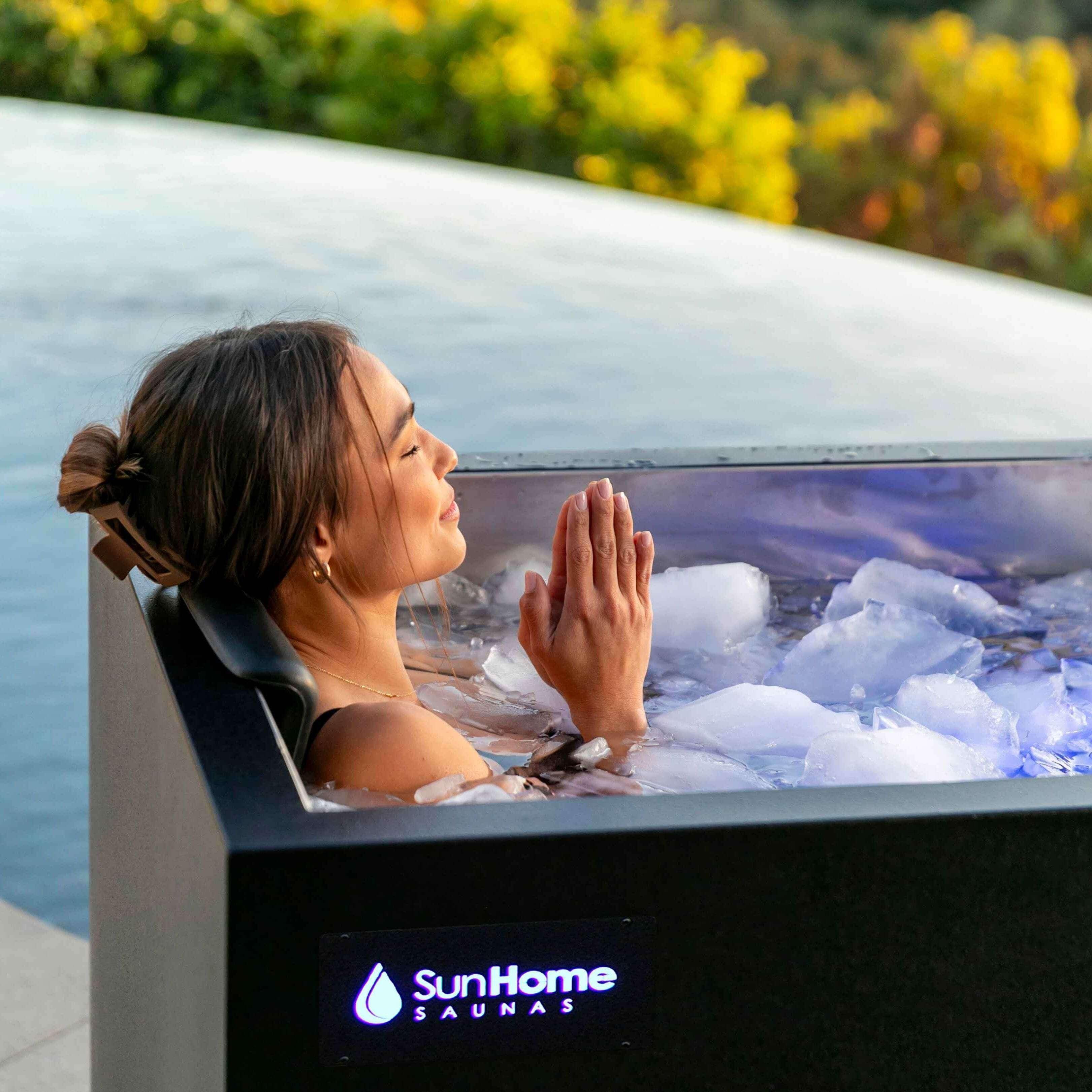

An effective cold plunge supports recovery by holding water between 10°C and 15°C and continuously circulating it around the body. This range maximally stimulates TRPM8 and TRPA1 thermoreceptors and can raise circulating norepinephrine by up to 300%. Active pumps and refrigeration also prevent the warm boundary layer that reduces heat extraction in passive water.
Thermal Regulation Fidelity: Active vs. Passive Cooling Systems
True physiological adaptation requires precise control over water temperature, typically between 10°C and 15°C (50°F to 59°F). At this range, cutaneous thermoreceptors (specifically TRPM8 and TRPA1 channels) are maximally stimulated, initiating a downstream cascade that increases circulating norepinephrine levels by up to 300%. But achieving this physiological threshold is impossible with passive ice-bucket systems.
When a human body enters a static, passive pool of cold water, it immediately begins transferring thermal energy to the surrounding liquid. This creates a warm thermal boundary layer of water directly adjacent to the skin, which insulates the body and drastically reduces the heat extraction rate. Active cooling systems use high-flow circulation pumps paired with vapor-compression refrigeration chillers. This continuous flow disrupts the boundary layer, ensuring that the water directly touching your skin remains at the exact target temperature. High-performance models, such as the Plunge All-In , maintain a spatial temperature uniformity of less than 1°C, guaranteeing that every square inch of your body experiences the exact same therapeutic stimulus.
Hydrostatic Pressure Profile and Ergonomics for Full Immersion
The benefits of cold water immersion are not solely temperature-dependent; they are also highly dependent on physics. When you submerge your body in water, it is subjected to hydrostatic pressure, which increases by approximately 0.073 mmHg per millimeter of depth. To optimize this effect, a cold plunge must be deep enough to allow full immersion up to the clavicle while sitting in an upright or semi-reclined position.
This depth subjects the lower extremities and torso to an environmental pressure gradient of approximately 1.07 to 1.10 atmospheres. This pressure forces interstitial fluids back into venous circulation, significantly increasing cardiac stroke volume and triggering arterial baroreceptors. The downstream result is a powerful stimulation of the vagus nerve, which upregulates parasympathetic activity and accelerates systemic recovery. Tubs that are too shallow force you to lie flat or keep your torso exposed, completely missing this vital hydro-vagal pressure benefit.
Filtration and Sanitation Chemistry for Microbiome Stability
Your home sanctuary should support your health, not introduce new biological stressors. Because cold plunges are designed for daily, multi-user immersion, maintaining pristine water quality without relying on toxic concentrations of chlorine or bromine is a critical engineering challenge. Harsh chemicals can disrupt the delicate skin microbiome, dry out your lipid barrier, and release volatile organic compounds (VOCs) that irritate your respiratory tract.
Premium modern systems solve this by using a multi-stage sanitation loop. First, a high-density pleated sediment filter removes physical particulate matter down to 5 microns. Next, the water passes through an inline Ultra-Violet (UV-C) sterilizer, which damages the DNA of bacteria, viruses, and algae at a wavelength of 254 nm. Finally, integrated ozone ($O_3$) micro-cavitation oxidizes organic impurities without leaving chemical residues. This closed-loop sanitation process keeps the water crystal clear, biologically inert, and soft on your skin, allowing you to focus entirely on the mental transition of the plunge.
Material Thermal Conductivity and Insulation Efficacy
Operating efficiency determines whether your cold plunge is a smooth daily luxury or an expensive, noisy utility burden. The key metric here is the material's thermal conductivity ($k$-value) and the system's overall R-value. Cheap, single-wall plastic or uninsulated acrylic tubs act like heat sinks, constantly absorbing ambient heat from the surrounding environment and forcing the chiller to run continuously.
To prevent this thermal bleed, premium cold plunge tubs are built with multi-layered composite walls. An inner sanitary acrylic shell is backed by high-density closed-cell polyurethane foam insulation, all encased in an impact-resistant, weather-proof outer cabinet. Polyurethane foam has an exceptionally low thermal conductivity ($k \approx 0.022 \text{ W/m·K}$), which creates a powerful thermal barrier. This insulation ensures that once the water reaches your target temperature, it stays there with minimal energy input, keeping your operating costs low and extending the lifespan of your chiller .
Real-World Temperature Recovery Rate Under Load
Every time an adult steps into a cold plunge, they introduce a significant thermal load. An average 80 kg human body at a core temperature of 37°C holds roughly 3,000 to 5,000 kJ of thermal energy. When you submerge, this heat is rapidly transferred into the cold water. If your system has an underpowered chiller, the water temperature will spike instantly, and the system may take hours to recover.
This is where cooling capacity, measured in Horsepower (HP) or BTUs, becomes vital. A standard 1/4 HP chiller is often insufficient for rapid recovery, especially in back-to-back sessions with multiple family members. Upgrading to a 1/2 HP or 1 HP active cooling system ensures that the unit can rapidly extract this newly introduced thermal load. High-power systems can recover the target temperature at a rate of up to 4°C per hour, ensuring that your sanctuary is always ready, perfectly calibrated, and thermodynamically consistent .
Verification Protocol: Calibrated Thermocouple Array and Flow Meter Testing
At SaunaLogic, we do not believe in marketing claims; we believe in empirical data. To verify the performance of any cold plunge, we use a standardized verification protocol. This involves placing a calibrated, NIST-traceable thermocouple array at three distinct depths within the tub: 10 cm below the surface, mid-depth, and 10 cm above the floor.
We then monitor the water temperature before, during, and after a standard 3-minute immersion of an 80 kg subject. A high-performance tub must demonstrate less than a 1.2°C temperature delta across all three sensors during active circulation, proving that the flow dynamics are successfully preventing thermal layering. Also we use inline flow meters to verify that the circulation pump is maintaining a minimum of 15 GPM, which is the baseline flow required to actively strip the thermal boundary layer from your skin. Investing in a system that meets these rigorous engineering standards ensures you are getting true, uncompromised physiological benefits every time you plunge.
Frequently Asked Questions
Why are active cooling systems better than passive ice-bucket systems for cold plunges?
When you enter a static, passive pool of cold water, your body creates a warm thermal boundary layer of water adjacent to your skin that acts as insulation and slows heat extraction. Active cooling systems use high-flow circulation pumps and chillers to continuously disrupt this boundary layer. This ensures the water directly touching your skin stays at the exact target temperature needed to trigger therapeutic physiological benefits.
What temperature should a cold plunge be to trigger a physiological recovery response?
To trigger physiological adaptation, the water temperature should be precisely controlled between 10°C and 15°C (50°F to 59°F). At this specific range, cutaneous thermoreceptors are maximally stimulated. This stimulation initiates a process that can increase circulating norepinephrine levels by up to 300%.
How deep does a cold plunge tub need to be to get the benefits of hydrostatic pressure?
A cold plunge must be deep enough to allow full immersion up to your clavicle while you sit in an upright or semi-reclined position. This depth subjects your torso and lower extremities to an environmental pressure gradient of approximately 1.07 to 1.10 atmospheres. This pressure forces interstitial fluids back into venous circulation, boosting cardiac stroke volume and stimulating the vagus nerve to accelerate recovery.
How do premium cold plunge tubs sanitize water without using harsh chemicals like chlorine?
Premium systems use
Related Reading
- Cold Plunge Tubs Reviews: Vetting Inflatable vs Stainless Steel Ice Baths
- Top Cold Plunge Tub Reviews: The Best Ice Baths of 2026 Compared
- Commercial Cold Plunge Guide: Sun Home Pro Commercial Sanitation & Chilling
- Cold Plunge Chiller Enclosure Guide: Outdoor Airflow, Noise, Weather, and Service Access
Pros
- Powerful 1 HP chiller maintains precise, uniform cold temperatures even under heavy thermal loads.
- Dual ozone and UV-C filtration ensures crystal-clear water with minimal chemical dependency.
- Deep, ergonomic design provides optimal hydrostatic pressure for superior vagal nerve stimulation.
Cons
- Higher initial investment compared to passive tubs or budget ice chests.
- Requires a dedicated electrical outlet and occasional filter replacements.
Technical Verdict
From an engineering perspective, the Plunge All-In sets the industry standard for thermal regulation and fluid dynamics. By combining powerful active cooling, deep structural ergonomics, and an advanced chemical-free sanitation loop, it delivers the precise physiological trigger needed for authentic cold-shock adaptation.
→ View Specs & Pricing