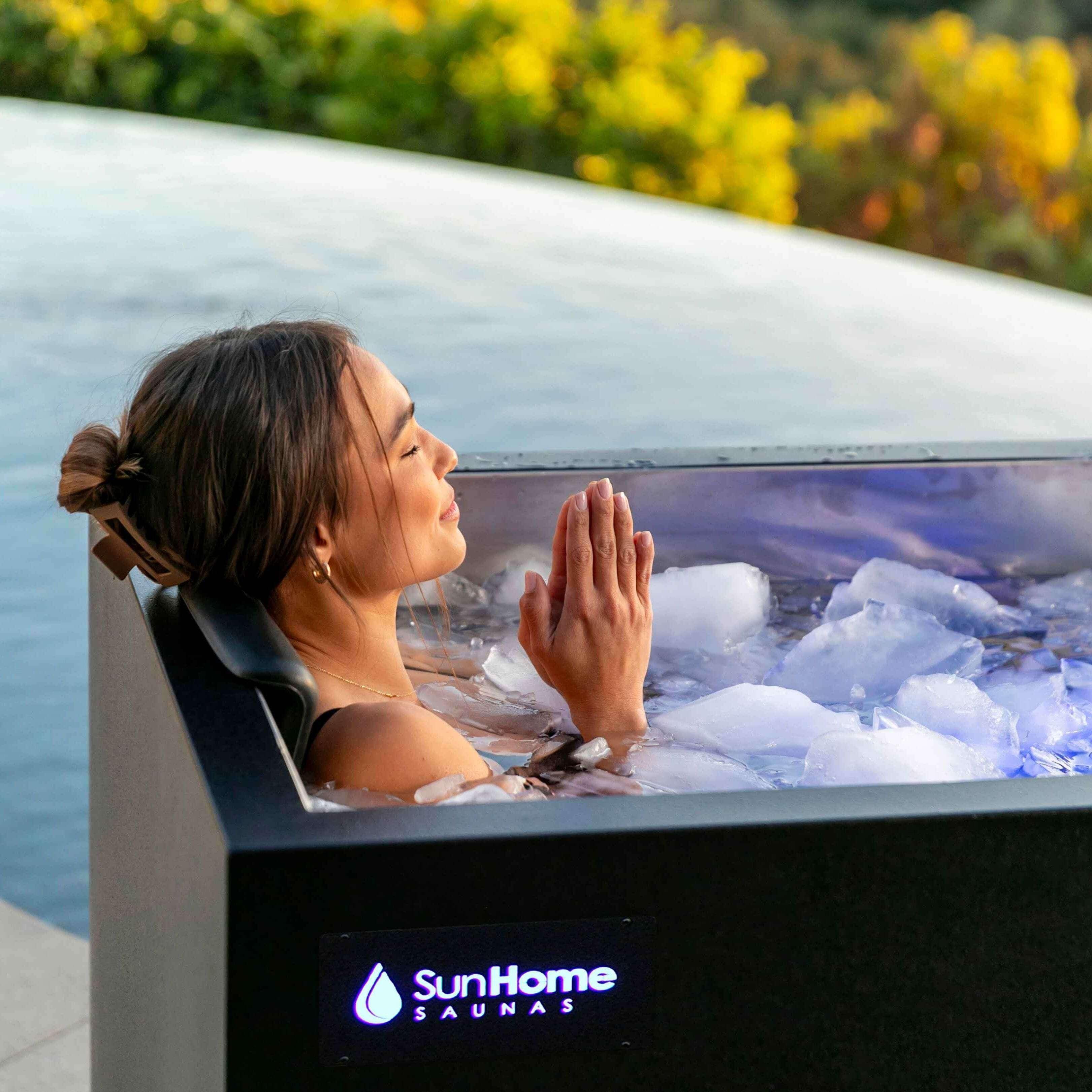

Imagine stepping into a private sanctuary of absolute clarity, right in your own home. The morning light is still soft, the world is quiet, and before you lies a pristine, chilled pool of water waiting to forge your daily resilience. This is more than a recovery routine; it is an immediate cognitive and physiological upgrade. In less than three minutes, the sympathetic nervous system activates, triggering a profound release of neurotransmitters that sweep away mental fatigue, leaving you sharp, deeply grounded, and entirely present. It is the ultimate investment in your daily performance, physical vitality, and mental fortitude.
However, the best cold plunge systems of 2026 do not merely cool water; they actively manipulate the physics of thermal energy extraction. To experience the true therapeutic depth of cold exposure, your equipment must overcome the body's natural defenses, bypass sensory adaptation, and maintain strict thermal stability. While basic ice baths fail to maintain a true thermal gradient, high-performance systems like the Sun Home Cold Plunge Pro leverage advanced fluid dynamics and industrial-grade thermodynamics to deliver a flawless, self-sanitizing cold-exposure sanctuary. To justify this premium addition to your home wellness suite, we must look beyond the marketing fluff and examine the precise science of cryogenic heat transfer. Sun Home Saunas
Convective Dynamics: Destroying the Thermal Boundary Layer
When you submerge your body into stagnant water, an immediate micro-climatic defense mechanism occurs. Conductive heat transfer naturally scales with body-to-tub contact area—which typically represents 60% to 70% of your total torso and limb surface area. As your skin releases heat (~100 Watts of basal thermal energy output at rest, which spikes upon cold immersion), it warms the immediate surrounding water molecules. In a stagnant, non-recirculating tub, this creates an insulative, warm boundary layer of water directly against your skin.
This boundary layer acts as a thermal barrier, drastically slowing down the rate of conductive heat flux. To maintain an optimal core cooling rate, the water must remain in motion. According to the international ergonomic standard ISO 13732-2 (which covers human thermal responses to contact with cold surfaces), establishing a water velocity of at least 0.3 meters per second (m/s) over the skin is critical to continuously strip away this boundary layer. Continuous water movement ensures that the thermal gradient between your skin and the water remains at its absolute maximum, forcing your thermoreceptors to register the true target temperature instead of a false, warmed micro-climate. Tubs equipped with high-flow rate, active recirculation jet manifolds continuously renew the water interface, preventing localized warming and maximizing the efficiency of every second spent inside the sanctuary.
Neurological and Metabolic Tuning: Suppressing TRPM8 Adaptation
The physiological benefits of cold plunging—ranging from accelerated muscle recovery to elevated focus—are governed by neurological and metabolic pathways. Transient Receptor Potential Melastatin 8 (TRPM8) is the primary cold-sensing ion channel located within your sensory neurons. When exposed to cold, TRPM8 channels open, allowing calcium ions to influx and triggering a robust signaling cascade to the central nervous system. This cascade initiates the 'cold shock response.'
However, TRPM8 receptors are highly prone to rapid desensitization and adaptation, a process that typically occurs within 90 to 120 seconds of static cold exposure. Once these channels acclimate, the acute neurological signaling diminishes. To prolong this beneficial stress phase and maximize shivering thermogenesis, high-performance plunges maintain an active circulation path that keeps the skin-to-water thermal gradient above 10 °C. This constant thermal challenge stimulates uncoupling protein 1 (UCP1) upregulation within brown adipose tissue (BAT). UCP1 uncouples mitochondrial respiration from ATP synthesis, causing the body to burn stored lipids to generate pure heat (non-shivering thermogenesis).
Furthermore, scientific literature demonstrates that continuous, active cold immersion yields a 30% to 60% sustained increase in circulating dopamine and norepinephrine (noradrenaline) levels. To prevent a compensatory spike in circulating cortisol, the immersion environment must be strictly controlled. Localized warming of the water by more than 3 °C due to user heat output signals a unstable thermal environment to the brain, which can induce stress-induced anxiety rather than systematic nervous system regulation.
Thermodynamic Load Management: Chiller Engineering and Sizing
To understand the engineering required for a premium home cold plunge, we must analyze the thermodynamic load. A standard adult human body (weighing approximately 80 kg, with a high specific heat capacity roughly equal to water, 4.184 kJ/kg·°C) contains a massive thermal reservoir. Upon immersion, your body dumps an acute thermal load of approximately 1,000 to 1,500 kilojoules (kJ) of heat energy into the pool during a standard 10-minute session.
For a cold plunge to maintain its target temperature of 3 °C to 5 °C, the chiller unit must possess the thermodynamic capacity to rapidly absorb and dissipate this heat. A standard, low-cost 1/4 horsepower (HP) chiller is fundamentally incapable of managing this sudden spike, often allowing the water temperature to climb by 3 °C to 5 °C during a single session, which ruins the therapeutic consistency. High-end systems utilize commercial-grade 1.0 HP to 1.5 HP chillers. These robust compressors, paired with high-efficiency titanium heat exchangers, can handle high flow rates and continuous heat extraction, ensuring that the water temperature fluctuates by less than 0.5 °C even during back-to-back sessions with multiple users.
Structural Physics: Insulation Integrity vs. Thermal Bridging
An efficient chiller is only half the equation; the tub’s structural engineering must prevent heat gain from the external environment. This requires high R-value insulation and the elimination of thermal bridging. High-end cold plunge tubs are constructed using Extruded Polystyrene (XPS) insulation panels wrapped in multi-layer composites, or double-walled military-grade drop-stitch PVC. XPS boasts a high thermal resistance rating (typically R-5 per inch of thickness), preventing radiant and convective heat transfer from ambient air.
Conversely, inferior tubs often utilize simple rotomolded plastic or uninsulated acrylic sheets. Without proper insulation, the ambient air continuously warms the water, forcing the chiller to run cycle after cycle, degrading the system’s lifespan. Furthermore, any metal fittings, frame structures, or drainage ports that penetrate the insulated barrier must be thermally isolated. Stainless steel possesses high thermal conductivity; if a stainless steel inner tub is directly connected to an external metal frame without a non-conductive thermal break, thermal bridging will rapidly pull heat from the room directly into your water, rendering even the most powerful chiller inefficient.
Fluid Sanitization: The Synergy of Ozone and UV-C Photolysis
A private sanctuary must, above all, be perfectly hygienic. In a closed-loop cold plunge system, continuous water renovation is mandatory to prevent the accumulation of organic matter, skin cells, and microscopic pathogens. Traditional chemical sanitizers like chlorine and bromine can off-gas in confined spaces and degrade the skin's natural barrier. Therefore, premium systems rely on a dual-stage physical and chemical sanitization loop: Ozone (O3) generation and ultraviolet-C (UV-C) light photolysis.
UV-C light operating at a precise wavelength of 254 nanometers (nm) penetrates the cellular walls of microorganisms, permanently disrupting their DNA and RNA structures to prevent replication. Concurrently, an integrated corona-discharge ozone generator injects highly reactive O3 gas into the water line. Ozone acts as an incredibly powerful oxidizer, immediately breaking down cellular membranes, oils, and organic particulates on contact. When combined with a high-density 5-micron sediment filter, this continuous dual-action loop ensures your water remains crystal clear, pathogen-free, and biologically safe without the need for harsh, skin-irritating chemicals. Sun Home Saunas
Pros
- Commercial-grade 1.0 HP chiller maintains target temperatures with zero thermal drift during active use.
- Dual-action Ozone and UV-C sanitization ensures chemical-free, crystal-clear water 24/7.
- Extremely robust structural insulation eliminates thermal bridging and reduces operational electricity costs.
Cons
- Premium pricing requires an upfront investment, though easily justified by long-term durability and monthly financing options.
- Larger physical footprint due to high-power chiller and thick insulation barriers.
Technical Verdict
To build a true, uncompromising physical and mental sanctuary, your equipment must be engineered to respect the laws of thermodynamics and biological adaptation. The Sun Home Cold Plunge Pro delivers unmatched performance by pairing an industrial-grade 1.0 HP chiller with high-efficiency boundary-layer disrupting circulation and professional-grade sanitization.
→ View Specs & Pricing