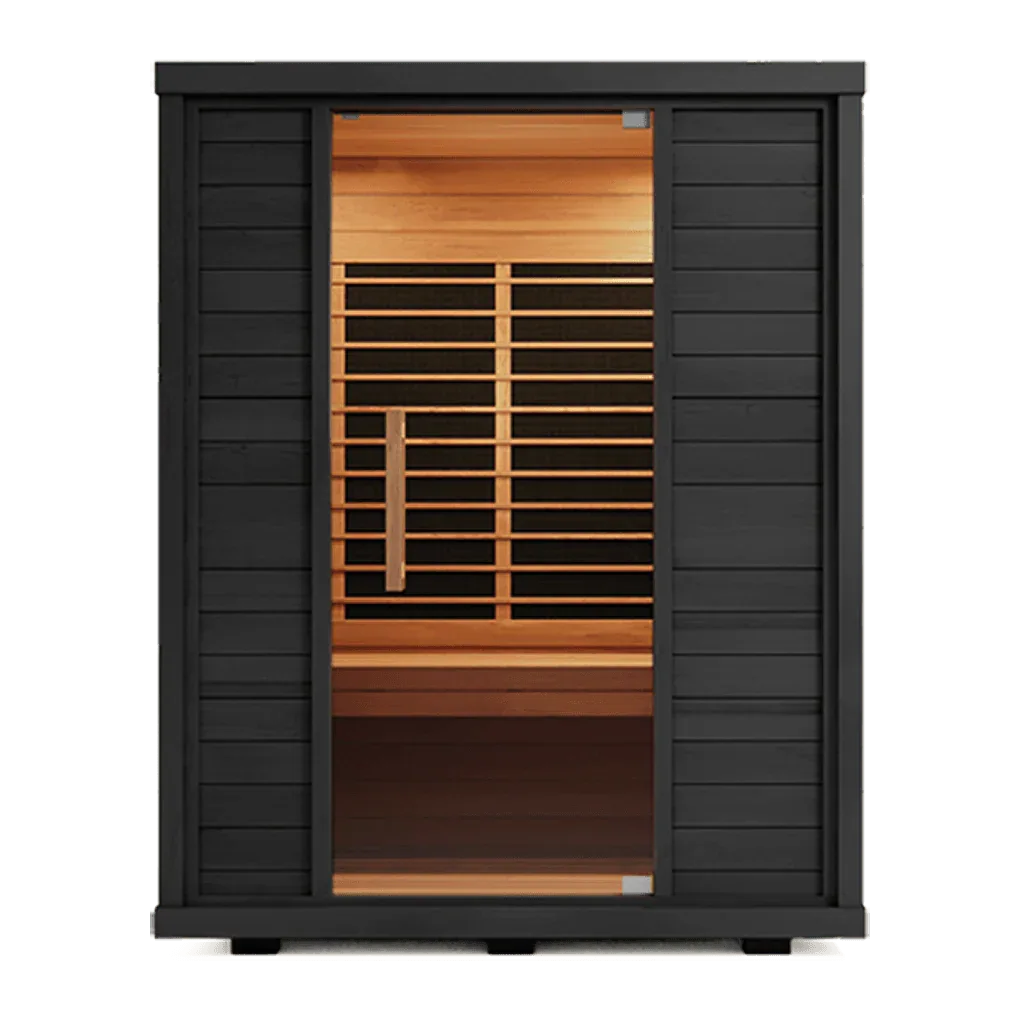

Imagine stepping into a quiet, warm sanctuary at the end of a demanding day, a private retreat where the noise of the world instantly fades, replaced by a gentle, deep-penetrating warmth that envelops your entire body. This is the promise of a premium home infrared sauna. It is not merely an appliance; it is a profound lifestyle upgrade designed to melt away chronic stress, soothe aching muscles, and prepare your nervous system for the deepest sleep of your life. Yet, to truly unlock these restorative benefits, we must look beyond aesthetic wood paneling and evaluate the core engine of the sanctuary: the heating technology. While older ceramic heaters dominate the low-end market, modern engineering points to carbon-fiber heating elements as the gold standard for therapeutic efficacy. By understanding the physics of light and human biology, we can make an informed, science-backed investment in our long-term health.
Spectral Overlap with Endogenous Chromophores
The human body is highly selective about the wavelengths of light it absorbs. Under the international standard ISO 20473, the infrared spectrum is divided into Near-Infrared (IR-A: 0.78–1.4 µm), Mid-Infrared (IR-B: 1.4–3.0 µm), and Far-Infrared (IR-C: 3.0–1000 µm). Traditional ceramic heaters, which operate at high localized temperatures exceeding 300°C, emit short-wavelength IR-C that is absorbed almost entirely in the outermost layers of the stratum corneum, often causing a burning sensation without deep tissue penetration.
In contrast, advanced carbon-fiber heaters are engineered to operate at lower, more stable temperatures (150°C to 180°C). This lower operational temperature shifts the peak spectral irradiance into the 5.0–10.0 µm band. This range is of immense biological significance because it perfectly overlaps with the vibrational modes of water molecules and the collagen amide I band (centered around 6.0 µm).
Also for systems that integrate full-spectrum carbon elements, such as the Sun Home Equinox, the inclusion of near-infrared light targets mitochondrial Cytochrome c Oxidase (COX) in the 800–850 nm spectral window. When these photons are absorbed by COX, they trigger the photodissociation of nitric oxide, restoring the efficiency of the electron transport chain and increasing cellular ATP synthesis. To experience these therapeutic wavelengths in your own home, consider exploring options through the marketplace.
Thermal Flux Dynamics and Surface Area Coverage
The primary drawback of ceramic heaters is their limited surface area. Because they consist of narrow rods, they must run incredibly hot to warm a sauna cabin. This creates severe 'hot spots' where the user is exposed to intense, uncomfortable heat in one area while the rest of the cabin remains cold. This uneven heat distribution triggers convective air currents, warming the air inside the cabin to stifling levels and inducing a sense of respiratory discomfort.
Carbon-fiber heaters solve this engineering challenge through geometric distribution. By printing micro-crystallized carbon pathways across expansive, flexible panels, they cover up to four times more surface area than ceramic rods. This massive emissive surface area allows the heaters to deliver a uniform, low-intensity radiative heat flux ($W/m^2$) across your entire body.
Let's examine the radiative thermodynamics. The net radiative heat transfer ($q$) from a carbon panel at 150°C (423 K) to a cabin environment at 40°C (313 K) can be modeled using the Stefan-Boltzmann equation:
$$q = \epsilon \sigma (T_{\text{heater}}^4 - T_{\text{cabin}}^4)$$
Assuming an emissivity ($\epsilon$) of 0.95 and a Stefan-Boltzmann constant ($\sigma$) of $5.67 \times 10^{-8} \text{ W/m}^2\text{K}^4$, the net heat flux is approximately $1,205 \text{ W/m}^2$. This gentle, uniform flux warms your body directly through radiation rather than heating the surrounding air. This prevents the 'stifling' feeling of traditional saunas, allowing you to relax comfortably for longer sessions. To compare different carbon panel layouts and find the right model for your space, consult the guide.
Biophysical Optimization: Vasodilation and Sweating
To achieve true cardiovascular and detoxification benefits, a sauna must raise your core body temperature. Under the ASTM F3190-19 standard for human heat-stress testing, the efficacy of a thermal therapy device is measured by its ability to safely elevate core temperature and induce a productive sweat rate without overloading the cardiopulmonary system.
When your skin is exposed to the uniform radiative flux of carbon heaters, the deep-penetrating infrared waves stimulate endothelial nitric oxide synthase (eNOS). This enzyme catalyzes the production of nitric oxide (NO) in the blood vessels, causing them to dilate. This vasodilation reduces peripheral resistance, increases blood flow, and prompts the heart to pump more efficiently, mimicking the cardiovascular effects of moderate aerobic exercise.
Because carbon saunas do not scorch the skin, they do not trigger defensive compensatory shivering or early fatigue. You can sustain a 30-minute session comfortably, allowing your core temperature to rise by 1.2°C to 1.8°C. This deep thermal load activates the eccrine sweat glands, producing a highly fluid, deep sweat that carries away metabolic waste, leaving you feeling profoundly refreshed and physically restored.
Material Energetics and Low EMF Safety
Investing in a home sauna requires a focus on structural longevity and environmental safety. Carbon-fiber heating elements boast exceptional material durability. Constructed by laminating micro-carbon fibers between high-grade fiberglass sheets, they resist the thermal cycling stresses that cause ceramic rods to become brittle and crack over time. With a thermal conductivity of 0.8–1.2 W/m·K, carbon panels heat up rapidly and distribute thermal energy with absolute precision.
Another critical engineering consideration is Electromagnetic Field (EMF) mitigation. Because carbon heaters cover a large surface area, standard single-conductor designs can act as large loop antennas, emitting high levels of magnetic EMF. To combat this, premium manufacturers employ advanced double-conductor layouts. By routing the positive and negative current paths directly parallel to one another, the magnetic fields generated by the opposing currents phase-cancel each other out. This reduces EMF emissions to near-zero levels (typically under 2 mG at the point of contact), ensuring that your physical sanctuary remains entirely safe and non-toxic. For a high-performance, low-EMF option, you can explore premium carbon heaters on to find the perfect match for your home sanctuary.
Frequently Asked Questions
What is the difference between carbon-fiber heaters and ceramic heaters in infrared saunas?
Carbon-fiber heaters operate at lower, more stable temperatures of 150°C to 180°C and cover up to four times more surface area than ceramic heaters. This allows them to deliver a uniform, gentle radiative heat directly to your body rather than creating stifling hot spots. In contrast, traditional ceramic heaters operate at temperatures exceeding 300°C, emitting short-wavelength heat that is mostly absorbed in the outer skin layers and can cause a burning sensation.
How do carbon infrared heaters affect my core body temperature and sweating?
The uniform radiative flux from carbon heaters penetrates deeply to stimulate endothelial nitric oxide synthase, which dilates blood vessels and increases blood flow. Because these heaters do not scorch the skin, you can comfortably sustain a 30-minute session, safely raising your core temperature by 1.2°C to 1.8°C. This deep thermal load activates your eccrine sweat glands to produce a highly fluid sweat that carries away metabolic waste.
Are carbon-fiber infrared saunas safe from high EMF levels?
Yes, premium carbon-fiber saunas are designed to be safe because manufacturers employ advanced double-conductor layouts to mitigate Electromagnetic Fields (EMFs). By routing positive and negative current paths directly parallel to each other, the opposing magnetic fields phase-cancel. This engineering reduces EMF emissions to near-zero levels, typically under 2 mG at the point of contact.
What are the material durability benefits of carbon-fiber sauna heaters?
Carbon-fiber heating elements boast exceptional structural longevity because they are constructed by laminating micro-carbon fibers between high-grade fiberglass sheets. This design allows them to easily resist the thermal cycling stresses that cause traditional ceramic rods to become brittle and crack over time. Also with a thermal conductivity of 0.8–1.2 W/m·K, these carbon panels heat up rapidly and distribute thermal energy with absolute precision.
Why is the specific wavelength emitted by carbon heaters biologically significant?
Carbon-fiber heaters operate at temperatures that shift peak spectral irradiance into the 5.0–10.0 µm band, which perfectly overlaps with the vibrational modes of water molecules and the collagen amide I band in the human body. Also some full-spectrum carbon systems include near-infrared light targeting mitochondrial Cytochrome c Oxidase in the 800–850 nm window. This absorption triggers the photodissociation of nitric oxide, restoring efficiency to the electron transport chain and increasing cellular ATP synthesis.
Related Reading
Pros
- Broad heating panels provide uniform, comfortable warmth with zero painful hot spots
- Lower operating temperatures prevent suffocating cabin air for longer, more relaxing sessions
- Advanced double-conductor wiring cancels out harmful EMF radiation
- Extremely durable carbon panels are backed by lifetime warranties
Cons
- Higher initial investment compared to cheap, generic ceramic saunas
- Heats the cabin air slower than traditional steam saunas (though it warms the body faster)
Technical Verdict
Carbon-fiber infrared saunas represent a masterclass in biophysical engineering. By prioritizing large-surface-area radiation and matching the natural absorption frequencies of human tissue, they deliver a highly therapeutic, low-stress thermal dose that ceramic alternatives simply cannot match. If you are ready to invest in your physical recovery, mental clarity, and sleep quality, a premium carbon-heater sauna is the definitive choice.