Cold plunges activate the vagus nerve by triggering the mammalian diving reflex at water temperatures of 4°C (39°F) or below. This brainstem-controlled response improves parasympathetic tone and engages the cholinergic anti-inflammatory pathway in splenic macrophages. The pathway suppresses TNF-α by more than 70% through α7 nicotinic acetylcholine receptors.
The Mammalian Diving Reflex: Mechanistic Trigger for Vagal Tone
Picture this: you lower yourself into your home plunge, the chill of precisely tempered water meets your skin, your heart rate drops, and a wave of preternatural calm washes over you within seconds. That's not a placebo, that's the mammalian diving reflex (MDR) reshaping your autonomic nervous system in real time. This phylogenetically conserved response is triggered by simultaneous trigeminal nerve cooling (specifically the V1 ophthalmic branch innervating the forehead and periorbital region) and apnea. The reflex arc routes through the trigeminal sensory nuclei to the nucleus ambiguus and dorsal motor nucleus of the vagus, producing three coordinated outputs: bradycardia (heart rate reduction of 10–25% in trained subjects), peripheral vasoconstriction sparing core organs, and a measurable spike in vagal efferent firing.
This is the neurological foundation of that post-plunge serenity your whole morning is built around, but it is exquisitely temperature-dependent. Research by Schagatay and colleagues demonstrates that bradycardia magnitude scales inversely with water temperature, with the steepest physiological gradient between 10°C and 4°C. Above 5°C, the parasympathetic surge is blunted, HRV measurements post-exposure fail to show the characteristic increase in RMSSD that signals vagal dominance, and the sanctuary feeling you invested in simply doesn't materialize. This is not a soft preference, it is a thermoreceptor activation curve governed by TRPM8 channel kinetics in trigeminal afferents. Your equipment either holds the threshold or it doesn't.
Cholinergic Anti-Inflammatory Pathway: α7nAChR-Mediated TNF-α Suppression
The full-body calm you feel after a proper cold plunge session, the kind that carries you through a high-pressure workday without the usual afternoon tension, has a precise molecular address. Once vagal efferent firing is established, the signal propagates via the celiac ganglion to the splenic nerve. The terminal mechanism, elucidated in the landmark Rosas-Ballina et al. paper (Nature, 2008, and subsequent 2011 Science work), involves a non-canonical relay: splenic nerve catecholaminergic fibers stimulate a subset of memory T cells expressing choline acetyltransferase (ChAT⁺ T cells), which release acetylcholine locally. This acetylcholine binds α7 nicotinic acetylcholine receptors (α7nAChR) on splenic macrophages.
α7nAChR activation triggers a JAK2/STAT3 signaling cascade that suppresses NF-κB nuclear translocation, inhibiting transcription of pro-inflammatory cytokines. The reported suppression of macrophage TNF-α production exceeds 70% in endotoxemia models. This is the cholinergic anti-inflammatory pathway (CAP), and it is the biochemical explanation for why people who commit to a consistent cold plunge practice describe feeling not just recovered, but resilient. The CAP operates independently of any musculoskeletal recovery mechanism, does not require exercise to have occurred, and cannot be replicated by a lukewarm bath or a budget chiller that can't hold temperature under load. This is the science that justifies building a genuine sanctuary in your home.
Distinguishing Neuroimmune Modulation from Post-Exercise Analgesia
Not all cold water is created equal, and understanding the difference determines whether you're investing in a genuine nervous-system upgrade or simply a very expensive sore-muscle treatment. Post-exercise analgesia from cold water is largely a peripheral effect: reduced nerve conduction velocity (Aδ and C fibers slow approximately 2 m/s per °C drop), local vasoconstriction limiting edema, and reduced inflammatory cytokine flux at the muscle interstitium. These effects occur even at 10–15°C and do not require facial immersion or sustained bradycardia. A chest freezer conversion can get you here.
Neuroimmune modulation via the CAP is categorically different, and categorically more valuable. It requires (1) trigeminal cooling, (2) sustained bradycardia indicating vagal engagement, and (3) sufficient exposure duration, typically 2 to 5 minutes, for the splenic relay to produce measurable cytokine suppression. Heart rate variability metrics post-plunge serve as the cleanest biomarker: a sustained increase in high-frequency power and RMSSD lasting 30–90 minutes post-exposure indicates successful vagal recruitment. Subjects who plunge at 12°C may report soreness reduction but show no meaningful HRV shift. That diagnostic fingerprint, elevated RMSSD carrying you calmly through your morning, is what separates a cold bath from a neuromodulatory ritual, and it's the standard your home sanctuary should be engineered to reliably deliver.
Temperature Precision as a Design Constraint: 39°F ± 0.5°F Tolerances
Here is the honest engineering reality that most cold plunge marketing glosses over: if the target outcome is vagal recruitment and the lifestyle benefits it unlocks, the equipment specification follows directly from the physiology. Water temperature must hold at ≤4°C with minimal drift across the entire exposure duration, not just at startup, not just on paper. Most consumer 'cold plunges' use single-stage chillers rated to ambient minus 30°F, which in a 75°F garage environment yields a floor of roughly 45°F, well above the threshold for reliable MDR activation. Worse, undersized compressors cannot maintain setpoint once a 180-pound human enters the tub; thermal mass transfer can drive water temperature up 3–5°F within the first 60 seconds, silently collapsing the stimulus and leaving you with none of the neuroimmune benefits you built this routine for.
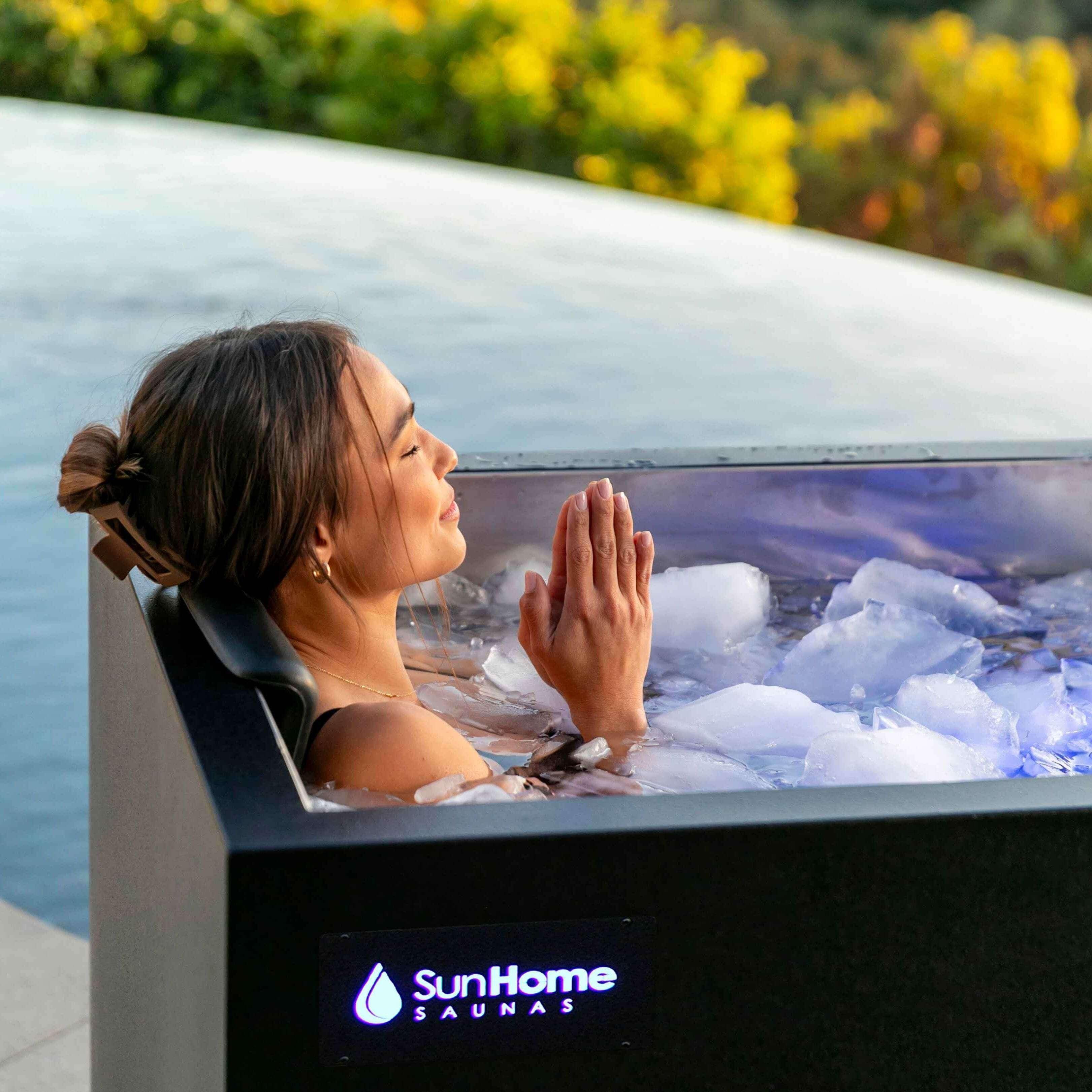
The Sun Home Cold Plunge™ Pro is engineered to a different standard. Its 1HP chiller reaches 28°F, cold enough to generate floating ice, which means 39°F is not the floor but the comfortable operating midpoint, maintained reliably under body-load. The 316-grade stainless steel tub with injected foam insulation slashes parasitic heat gain, and the integrated double-pump Polar Jet Mode eliminates thermal stratification. Without active circulation, the boundary layer around your body warms several degrees locally, defeating the trigeminal stimulus regardless of what the thermostat reads. Holding 39°F ± 0.5°F across a full 3-minute exposure is the actual specification that makes your morning ritual physiologically real, and this system is built to hit that mark, session after session, year after year.
Protocol Design for Autonomic Rewiring and the **Cold Plunge Vagus Nerve** Connection
When you design your cold plunge ritual around CAP activation rather than soreness reduction, every variable shifts, and the lifestyle transformation that follows is proportionally deeper. Frequency shifts from 'after hard training sessions' to a consistent 3–5 sessions per week, since vagal tone adaptation appears to follow a training-like response curve: show up regularly, and your baseline calm, stress resilience, and sleep architecture all trend upward over weeks and months. Duration targets 2–4 minutes at 39°F (≤4°C), long enough to establish bradycardia and engage the splenic relay, short enough to avoid sympathetic rebound from cold pain. Facial immersion or controlled splashing of the V1 dermatome should be incorporated explicitly, this is not optional if you want the full reflex.
Breathing technique is the free variable that determines whether you arrive in the water as a calm nervous system or a stressed one. Forced hyperventilation pre-plunge (Wim Hof-style) improves sympathetic tone and can blunt the very parasympathetic shift you're trying to build. Slow nasal breathing with extended exhales, targeting a 4-second inhale, 8-second exhale, reinforces vagal engagement during exposure and deepens the sanctuary experience. Post-plunge, passive rewarming (no hot shower, no sauna for 20–30 minutes) preserves the HRV elevation that signals successful CAP recruitment and extends the calm into your morning. Track RMSSD with a chest-strap HRV monitor to confirm the protocol is working; if HRV does not rise post-exposure, the stimulus magnitude or timing is the variable to adjust, not your willpower.
Conclusion: Cold Plunges as Neuromodulatory Devices
The most important reframe in cold plunge purchasing is this: you are not buying a recovery accessory. You are investing in neuromodulatory infrastructure for your home, a tool that, used correctly with precision-controlled temperature, reshapes your autonomic baseline, dials down systemic inflammation, and makes calmer, sharper, more resilient days structurally available to you every morning. The relevant question is never 'how cold can it get' but 'how reliably can it hold ≤4°C under load with adequate circulation?' Equipment that cannot maintain the diving reflex threshold cannot reliably engage the cholinergic anti-inflammatory pathway, and the user is left with peripheral analgesia, genuinely useful, but a fraction of the available physiology. When you evaluate the Sun Home Cold Plunge™ Pro against its price point, especially with available financing options starting from $199/month, a lifetime warranty, and a risk-reversal guarantee, you are evaluating it against the cost of not having this daily neurological reset in your home. Precise temperature control is the entire mechanism, and this system is built to deliver it.
Pros
- Sub-32°F capability ensures the 39°F setpoint is held under thermal load from body immersion
- 316 stainless tub plus foam injection minimizes parasitic heat gain and temperature drift
- Polar Jet circulation prevents boundary-layer warming that would defeat trigeminal stimulus
- Ozone + UV + filtration eliminates the bacterial load issues that plague open-tub DIY plunges
Cons
- 1HP chiller and 345 lb tub weight require dedicated 120V circuit and rigid floor placement
- Premium pricing tier reflects engineering, but DOMS-only users can achieve analgesia with cheaper systems
FAQs
How does a cold plunge affect the vagus nerve?
Cold plunges trigger the mammalian diving reflex, which increases vagal efferent firing and activates the cholinergic anti-inflammatory pathway, reducing inflammation and promoting relaxation.
What temperature is optimal for vagus nerve activation?
Water temperature must be ≤4°C (39°F) with minimal drift to reliably engage the diving reflex and achieve neuroimmune benefits.
Can I achieve vagal benefits with a cheap cold plunge?
Budget chillers often cannot maintain ≤4°C under body load, resulting in blunted parasympathetic response. Precision equipment like the Sun Home Cold Plunge™ Pro is required for consistent results.
Related Reading
Pros
- Sub-32°F capability ensures the 39°F setpoint is held under thermal load from body immersion
- 316 stainless tub plus foam injection minimizes parasitic heat gain and temperature drift
- Polar Jet circulation prevents boundary-layer warming that would defeat trigeminal stimulus
- Ozone + UV + filtration eliminates the bacterial load issues that plague open-tub DIY plunges
Cons
- 1HP chiller and 345 lb tub weight require dedicated 120V circuit and rigid floor placement
- Premium pricing tier reflects engineering, but DOMS-only users can achieve analgesia with cheaper systems
Technical Verdict
Cold plunges should be evaluated as neuromodulatory devices, home infrastructure for a calmer, more resilient life, not recovery accessories. The Sun Home Cold Plunge™ Pro's chiller capacity, insulation, and circulation are the specifications that determine whether the mammalian diving reflex actually engages and the cholinergic anti-inflammatory pathway activates. Financing from $199/month, a lifetime warranty, and a satisfaction guarantee make this the rare premium purchase where the science, the engineering, and the long-term value case all point in the same direction.
→ View Specs & Pricing