Debunking the myth that LED red light therapy provides equivalent deep-tissue penetration to Class 4 laser therapy for tendon repair requires understanding why laser's coherence and collimation allow 810 nm photons to reach depths >5 cm, activating mitochondrial cytochrome c oxidase and upregulating PGC-1α for mitochondrial biogenesis in fibroblasts, while LED's diffuse beam scatters in superficial layers. This skeptical auditor angle cuts through the marketing noise with physics and biology. The consumer photobiomodulation market is flooded with LED pads that promise deep healing but can't deliver it. The biology is real, cytochrome c oxidase does absorb in the 630–850 nm spectral window, and PGC-1α-driven mitochondrial biogenesis in tenocytes is a documented downstream effect, but the physics of light delivery determines whether any of that healing biology actually occurs where you need it most. For a structure like the Achilles tendon or the supraspinatus, sitting 4–7 cm below the skin surface, the difference between a coherent 810 nm Class 4 laser and a diffuse LED array isn't a matter of degree. It is a categorical physics mismatch. The Novaa Extra-Strength Healing Laser is engineered specifically around this constraint, built for people who are done settling for surface-level solutions and are ready to invest in recovery that reaches the root of the problem. This deep-dive explains exactly why beam coherence, collimation, and power density, not just wavelength, are the variables that determine real therapeutic outcomes for chronic tendinopathy.
The Scattering Problem: Why Tissue Depth Matters for Laser vs LED Deep Tissue Penetration
Laser vs LED deep tissue penetration differences begin with a fundamental physics problem: human soft tissue scatters light aggressively, and only a collimated, high-radiance source survives to therapeutic depths. Think of your body's soft tissue as a dense fog. Light entering it doesn't travel in a straight line, it scatters, absorbs, and fades long before it reaches the structures that need it most. This isn't a marketing story; it's physics, and understanding it is what separates a device that genuinely transforms your recovery from one that delivers nothing more than a warm glow.
Human soft tissue is an optically turbid medium. When a photon enters the skin, it encounters three primary scattering and absorption regimes: the epidermis and dermis (0–2 mm), the subcutaneous fat layer (2 mm–2 cm, highly variable), and the underlying muscle and tendon structures. Scattering in biological tissue is dominated by two mechanisms: Rayleigh scattering, which is inversely proportional to the fourth power of wavelength and dominates at shorter visible wavelengths (<600 nm), and Mie scattering, which governs interactions with organelles, collagen fibers, and cell membranes in the 600–1000 nm near-infrared window.
For 810 nm photons, the wavelength the Novaa Extra-Strength Healing Laser is built around, the reduced scattering coefficient (μs′) in muscle tissue is approximately 0.8–1.2 mm⁻¹, and the absorption coefficient (μa) is roughly 0.002–0.004 mm⁻¹, giving an effective attenuation coefficient (μeff) in the range of 0.05–0.1 mm⁻¹. Using Beer-Lambert law approximations for a homogeneous medium, fluence rate drops to roughly 37% at ~10–20 mm depth and falls below therapeutic thresholds (<4 J/cm²) well before 30 mm for a diffuse source.
The math is unambiguous: a source with low radiance, no collimation, and high angular divergence exhausts its usable photon density within the first centimeter of tissue, nowhere near the Achilles, the rotator cuff, or the plantar fascia where chronic pain actually lives.
Coherence and Collimation: The Physics Advantage That Debunks LED Deep-Tissue Claims
Debunking the claim that LED arrays match laser performance at depth requires examining two specific optical properties that Class 4 lasers possess and LEDs fundamentally lack: spatial coherence and beam collimation. The Novaa Extra-Strength Healing Laser stops being just another wellness device and starts being a genuinely different category of tool, one that justifies its place in a serious recovery sanctuary at home.
A Class 4 diode laser operating at 810 nm with an output power of 5 W and beam divergence of <0.5 mrad is a fundamentally different optical instrument from an LED panel. The distinction rests on two properties:
Spatial coherence means all photons are emitted in phase across the wavefront. In tissue, coherence length is rapidly destroyed by scattering, but this is not the relevant advantage for deep penetration. The advantage is radiance (power per unit area per unit solid angle, W/cm²/sr). A 5 W laser focused to a 1 cm² spot delivers radiance orders of magnitude higher than a 100 W LED panel spread over 300 cm².
Collimation means the beam maintains a defined cross-sectional area over distance. A 0.5 mrad divergence beam expands by only 0.5 mm per meter of propagation in free space. In tissue, scattering redistributes photons angularly, but the high initial radiance means the forward-directed photon flux remains above therapeutic fluence thresholds at depths where an LED source has been completely extinguished by scatter losses. Peer-reviewed models (Tuchin, Tissue Optics, 3rd ed., SPIE Press) confirm that high-radiance collimated sources in the 800–850 nm window can deliver >4 J/cm² at 5 cm depth in muscle tissue within clinically practical irradiation times of 60–120 seconds at 5 W.
The Novaa Extra-Strength Healing Laser uses an array of 16 individual laser diodes, each contributing to the coherent output. This architecture increases areal coverage without sacrificing the per-diode radiance that enables deep photon penetration. The built-in rechargeable battery removes tethering constraints entirely, meaning you can use this device wherever your recovery demands it, with consistent contact pressure during irradiation, a variable that directly affects photon coupling efficiency into tissue. No power cord. No compromise.
Mitochondrial Target: Cytochrome c Oxidase Activation at Depth
The biological case for Class 4 laser therapy in tendon repair centers on a specific chromophore that LED arrays cannot reliably stimulate at depth: cytochrome c oxidase (CCO), Complex IV of the mitochondrial electron transport chain. CCO has absorption peaks near 620 nm (oxidized form) and 825–830 nm (reduced form), making 810 nm an efficient driver of CCO photostimulation. Upon photon absorption, CCO undergoes conformational changes that increase its catalytic rate, elevating the mitochondrial membrane potential (ΔΨm), increasing ATP synthesis, and generating a transient reactive oxygen species (ROS) signal.
This ROS pulse acts as a second messenger, activating NF-κB and PGC-1α transcriptional pathways. PGC-1α is the master regulator of mitochondrial biogenesis. In tenocytes, the fibroblast-lineage cells responsible for collagen synthesis and tendon repair, upregulation of PGC-1α increases mitochondrial density, improves oxidative phosphorylation capacity, and accelerates collagen I and III synthesis. Chronic tendinopathy is characterized by a hypoxic, hypovascular pathology that places extraordinary metabolic demands on tenocytes; mitochondrial biogenesis is a mechanistically plausible and well-supported therapeutic target, and it's the mechanism the Novaa laser is built to activate.
The critical constraint is fluence delivery: the literature suggests a biphasic dose-response (Arndt-Schulz principle), with optimal fluence for deep tissue fibroblast stimulation in the range of 4–20 J/cm² at the target depth. To deliver 10 J/cm² at 5 cm depth, assuming 1–2% transmission at that depth for a collimated 810 nm beam in muscle, the surface fluence must be 500–1000 J/cm², achievable with a 5 W Class 4 laser in 100–200 seconds of daily home use, but entirely unachievable with a consumer LED pad operating at 50–100 mW/cm² in any safe treatment duration. This is the physics gap that no amount of marketing can close.
Superficial vs Deep Treatment: Where LEDs Are Valid
A complete analysis of laser vs LED deep tissue penetration must acknowledge where LED photobiomodulation is entirely appropriate, and often preferable, for superficial applications where target chromophores reside in the epidermis, dermis, or superficial fascia (0–10 mm depth). Wound healing, skin rejuvenation, superficial myofascial trigger points, and periosteal stimulation in thin anatomical areas (dorsum of the hand, shin) are all within the physics envelope of LED therapy.
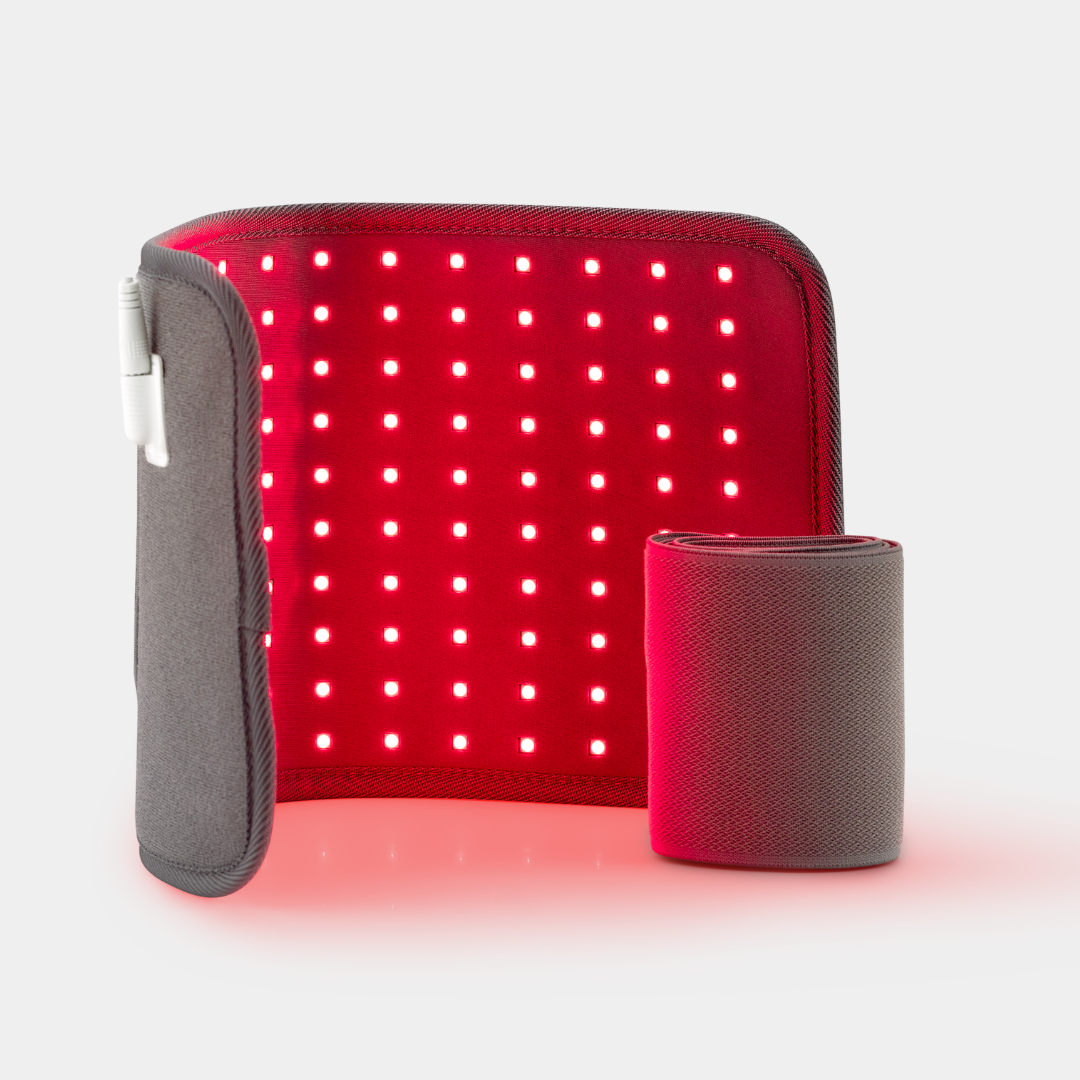
For these indications, the Novaa Light Pad for Deep Healing represents a refined, purposefully engineered choice. Its wide-area LED array maximizes irradiation coverage for surface targets, and the lower power density reduces thermal risk for prolonged contact sessions. For treating post-inflammatory hyperpigmentation, surgical incision recovery, or superficial dermal fibrosis, the diffuse emission profile of an LED pad is not a limitation, it is exactly the right tool for the target depth. Think of it as the complement to the laser in a complete home recovery setup.
The costly mistake occurs when the same device and marketing language is applied to Achilles tendinopathy, rotator cuff degeneration, patellar tendinosis, or plantar fasciitis in a well-developed foot. These are 3–7 cm targets. The physics gap between LED and Class 4 laser at these depths is not marginal; it spans multiple orders of magnitude in delivered fluence. If deep-tissue recovery is your goal, there is only one physics-valid tool for the job.
EMF and ELF Considerations in Laser Devices
Beyond photon delivery, electromagnetic field (EMF) and extremely low frequency (ELF) emission from drive electronics is a topic frequently overlooked in photobiomodulation device reviews, and it's one area where the Novaa Extra-Strength Healing Laser has a meaningful, engineering-backed advantage. Consumer infrared devices, whether LED or laser, contain switched-mode power supplies, PWM (pulse-width modulation) dimming circuits, and DC-DC converters that generate ELF fields in the 50–100 kHz range and harmonics thereof.
For a battery-powered device like the Novaa Extra-Strength Healing Laser, this risk profile is materially reduced. Without a direct mains connection and a transformer in proximity to the treatment surface, the ELF emission at the tissue interface is dominated by the low-voltage DC circuit driving the laser diodes, not a switched-mode converter operating off 120/240 V AC. ICNIRP 2010 guidelines establish reference levels for general public ELF exposure; battery-operated handheld devices operating at 3.7–7.4 V Li-ion voltages are comfortably below these reference levels at typical treatment distances of 0–2 cm skin contact.
For comparison, mains-powered LED panels with large transformer assemblies and high-current PWM circuits have measurable ELF fields at 30–60 cm distances, though most remain below ICNIRP reference levels. This battery-powered design philosophy isn't just about cord-free convenience, it's a considered engineering choice that makes the Novaa laser a cleaner, lower-EMF addition to your recovery environment. Users with implanted electronic devices (pacemakers, spinal cord stimulators) should consult their device manufacturer regardless of the photobiomodulation platform used.
Comparison Matrix: Novaa Laser vs LED Pad
The following side-by-side comparison isolates the engineering variables relevant to deep tendon therapy, so you can see exactly what you're getting and why it matters for your recovery goals.
| Parameter | Novaa Extra-Strength Laser | LED Pad (e.g., Novaa Light Pad) |
|---|---|---|
| Source type | Coherent diode laser | Incoherent LED |
| Peak wavelength | 810 nm | Typically 630–850 nm (multi-chip) |
| Beam divergence | <0.5 mrad (collimated) | >40° (Lambertian) |
| Output power | 5 W (16-diode array) | Variable; typically 10–50 W total over large area |
| Surface irradiance | ~500 mW/cm² (focused) | ~50–100 mW/cm² |
| Estimated fluence at 5 cm | ~1–2 J/cm² per 120-s session | <0.01 J/cm² per session |
| Primary use case | Deep tendon / musculoskeletal | Superficial skin / fascia |
| EMF profile | Low (battery-powered) | Moderate (mains-powered variants) |
| Portability | High (integrated battery) | Moderate, Low (power cord) |
| Safety class | Class 4 (IEC 60825-1) | Class 1 / exempt |
The table makes the engineering tradeoff explicit. The Novaa Light Pad for Deep Healing is not an inferior product, it is a correctly engineered tool for its intended target depth, and a worthy addition to a complete home recovery setup. But the Novaa Extra-Strength Healing Laser is the only instrument in this comparison physically capable of delivering therapeutic photon fluence to structures deeper than 3 cm. For deep tendinopathy, that isn't a preference, it's a physics requirement.
Pros
- Coherent, collimated 810 nm output maintains sufficient photon flux density at depths >5 cm where LED sources are physically exhausted by Mie and Rayleigh scattering, delivering real therapeutic fluence where chronic tendinopathy actually lives
- 16-diode array increases treatment area without sacrificing per-diode radiance, balancing whole-site coverage with the deep penetration that makes this device worth the investment
- Battery-powered architecture eliminates mains-frequency ELF fields at the treatment surface, creating a cleaner recovery environment, a meaningful, engineering-backed advantage over plug-in LED panels
- 810 nm wavelength aligns with the reduced-form absorption peak of cytochrome c oxidase (~825–830 nm near-overlap), maximizing CCO photostimulation efficiency and activating the mitochondrial biogenesis cascade your tendons need to heal
Cons
- Class 4 laser classification requires mandatory OD5+ wavelength-specific eye protection, an operational step absent with LED devices, though the included safety eyewear addresses this for most users
- Small beam footprint relative to large LED pads means longer total treatment time for multi-site or large-area conditions; best suited for targeted, focused recovery sessions
- At ~1–2 J/cm² per 120-second session at 5 cm depth, multiple daily sessions may be required to accumulate doses in the 4–20 J/cm² efficacy range; consistency is key, build it into your daily recovery ritual for best results
- No peer-reviewed randomized controlled trial data was cited by the manufacturer at the time of this review; efficacy claims for tendinopathy are extrapolated from Class 4 laser therapy literature broadly, not device-specific trials
FAQs
Q: Can an LED red light therapy device provide the same deep-tissue penetration as a Class 4 laser for tendon repair?
A: No. LED devices have a Lambertian (diffuse) emission profile with beam divergence exceeding 40°, which limits therapeutic fluence delivery to approximately 1–2 cm of tissue depth. A Class 4 laser operating at 810 nm with <0.5 mrad beam divergence maintains sufficient photon flux density at depths greater than 5 cm, where structures like the Achilles tendon, rotator cuff, and plantar fascia actually reside. The estimated fluence at 5 cm depth from a 5 W Class 4 laser (~1–2 J/cm² per 120-second session) exceeds what any consumer LED pad can deliver at that depth by multiple orders of magnitude.
Q: What wavelength is most effective for activating cytochrome c oxidase in deep tendons, and why does it matter?
A: The 810 nm near-infrared wavelength is highly effective because it closely overlaps with the reduced-form absorption peak of cytochrome c oxidase (CCO) at approximately 825–830 nm. CCO is the primary chromophore in photobiomodulation: photon absorption triggers conformational changes that increase ATP synthesis, generate a transient ROS signal, and activate PGC-1α transcriptional pathways driving mitochondrial biogenesis in tenocytes. But wavelength alone is insufficient, the photons must actually reach the target tissue at therapeutic fluence levels (4–20 J/cm²), which requires the collimation and radiance that only a Class 4 laser can provide at depths beyond 3 cm.
Q: Is it safe to use a Class 4 laser device at home for tendon therapy?
A: A Class 4 laser device can be used safely at home when the required precautions are strictly followed. Under IEC 60825-1 and ANSI Z136.1, Class 4 lasers pose an immediate ocular hazard from direct and specularly reflected beams. Users must always wear wavelength-appropriate optical density ≥5 (OD5) safety eyewear during operation. The device should never be directed at the eyes, thyroid gland, or any site of active malignancy. Users with implanted electronic devices such as pacemakers or spinal cord stimulators should consult their device manufacturer before use.
Related Reading
Pros
- Coherent, collimated 810 nm output maintains sufficient photon flux density at depths >5 cm where LED sources are physically exhausted by Mie and Rayleigh scattering, delivering real therapeutic fluence where chronic tendinopathy actually lives
- 16-diode array increases treatment area without sacrificing per-diode radiance, balancing whole-site coverage with the deep penetration that makes this device worth the investment
- Battery-powered architecture eliminates mains-frequency ELF fields at the treatment surface, creating a cleaner recovery environment, a meaningful, engineering-backed advantage over plug-in LED panels
- 810 nm wavelength aligns with the reduced-form absorption peak of cytochrome c oxidase (~825–830 nm near-overlap), maximizing CCO photostimulation efficiency and activating the mitochondrial biogenesis cascade your tendons need to heal
Cons
- Class 4 laser classification requires mandatory OD5+ wavelength-specific eye protection, an operational step absent with LED devices, though the included safety eyewear addresses this for most users
- Small beam footprint relative to large LED pads means longer total treatment time for multi-site or large-area conditions; best suited for targeted, focused recovery sessions
- At ~1–2 J/cm² per 120-second session at 5 cm depth, multiple daily sessions may be required to accumulate doses in the 4–20 J/cm² efficacy range; consistency is key, build it into your daily recovery ritual for best results
- No peer-reviewed randomized controlled trial data was cited by the manufacturer at the time of this review; efficacy claims for tendinopathy are extrapolated from Class 4 laser therapy literature broadly, not device-specific trials
Technical Verdict
The physics of Mie and Rayleigh scattering in biological tissue creates a hard depth ceiling for LED photobiomodulation at approximately 1–2 cm, making LED pads categorically unsuitable for deep tendon targets regardless of total power output, no matter how compelling the marketing. A 5 W, 810 nm Class 4 laser with <0.5 mrad divergence, as in the Novaa Extra-Strength Healing Laser, delivers an estimated 1–2 J/cm² per session at 5 cm depth, placing cumulative multi-session dosing within the established therapeutic window for cytochrome c oxidase activation and PGC-1α-mediated mitochondrial biogenesis in tenocytes. For deep-tissue recovery, this isn't a luxury upgrade, it's the only physics-valid tool available for home use. For superficial applications, a wide-area LED pad remains the more practical, lower-risk complement in a complete home recovery setup. With flexible financing available and the confidence of thousands of verified users, the Novaa Extra-Strength Healing Laser is the cornerstone investment your recovery sanctuary has been waiting for.
→ View Specs & Pricing