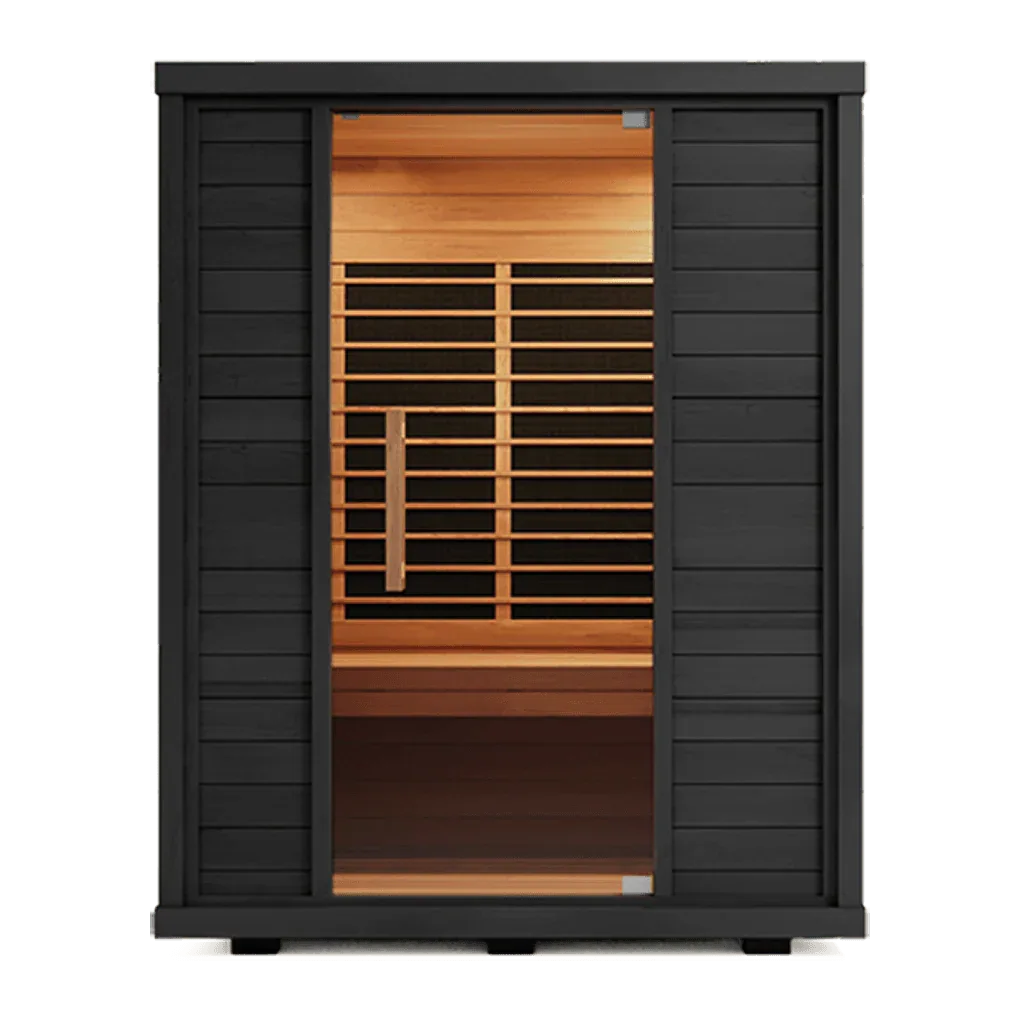

Imagine ending every evening in a warm cedar-scented sanctuary, tension dissolving from your shoulders, sleep arriving deeper than it has in years, your heart quietly growing stronger while you simply sit still. That is the promise of a home infrared sauna done right. But this is not a spa fantasy; it is vascular physiology. Far-infrared wavelengths in the 8–14 μm band, well within the ISO 20473 IR-C definition, penetrate 3–5 cm into subcutaneous tissue, triggering a cascade of nitric oxide-dependent endothelial responses that rival the cardiovascular benefits of a moderate-intensity aerobic workout. The engineering details, heater wattage, EMF shielding, emissivity coatings, determine whether you receive a genuine therapeutic dose or merely expensive warm air. When you invest in a precision instrument like the Sun Home Equinox™ 2-Person Full-Spectrum Infrared Sauna, you are not buying a luxury amenity; you are installing a clinically calibrated cardiovascular conditioning tool that pays dividends every single morning you wake up with lower blood pressure, softer arteries, and a body that recovered overnight. The science, and the sanctuary, are both real.
The False Dichotomy: Relaxation vs. Physiological Stress Adaptation
Here is the lifestyle reframe that changes everything: the deep calm you feel after an infrared sauna session is the reward, not the mechanism. During the session itself, your body is working hard. At a cabin temperature of 60–75°C, heart rate climbs to 100–150 bpm, cardiac output surges 60–70%, and skin blood flow rises from a baseline ~5% of cardiac output to as much as 50–70%. This is controlled hormetic stress, the same adaptive signal your cardiovascular system responds to during a brisk run, delivered while you recline in the comfort of your own home, perhaps with a podcast playing and a glass of cold water in hand. The Kuopio Ischemic Heart Disease cohort (Laukkanen et al., 2015, JAMA Internal Medicine) tracked 2,315 men over 20 years and found 4–7 weekly sessions correlated with a 50% reduction in fatal cardiovascular events versus single-session users. Think about that return on investment: a dedicated corner of your home, a ritual that takes 30 minutes, and a cardiovascular risk profile cut in half over time. The question is not whether you can afford a premium infrared sauna. It is whether you can afford to keep skipping this adaptation.
Infrared Penetration Depth and Selective Vascular Heating
Not all heat is the same, and this is where the sanctuary upgrade truly separates itself from a standard steam room or a cheap sauna blanket. Per ISO 20473, the infrared spectrum spans IR-A (0.78–3 μm), IR-B (3–50 μm), and IR-C (50 μm–1 mm). Far-infrared sauna therapy targets the 8–14 μm window, and Wien's Displacement Law explains precisely why this matters. A heater surface at 35°C (308 K) emits peak radiation at ~9.4 μm, which sits directly at the resonance absorption peak of liquid water in human tissue. This is not a marketing talking point; it is thermodynamics. A heater with emissivity ε ≥ 0.95 in this band delivers usable photonic energy deep into your body, reaching the dermal vascular plexus and superficial arterioles at 3–5 cm depth, while the ambient cabin temperature stays at a comfortable 60–70°C rather than the scorching 80–100°C of a traditional Finnish sauna. The practical result: you can sit peacefully, breathe easily, read or meditate, while your microvasculature receives a precision cardiovascular stimulus. That is the engineering story behind every minute you spend in a properly spec'd infrared cabin.
TRPV1 Activation, HSP70/90 Expression, and eNOS Phosphorylation
Every evening you step into your infrared sanctuary, a precise molecular sequence unfolds. Once local tissue temperature rises above approximately 39°C, TRPV1 cation channels open in your endothelial cells, allowing Ca²⁺ influx. That calcium signal kicks off two parallel life-extension pathways. First, calmodulin binding activates endothelial nitric oxide synthase (eNOS) via Ser1177 phosphorylation, flooding your vasculature with nitric oxide, the molecule responsible for arterial flexibility and healthy blood pressure. Second, as your core temperature sustains above 38.5°C for 15+ minutes, heat shock factor 1 (HSF1) drives production of HSP70 and HSP90. HSP90 then acts as a molecular bodyguard for eNOS, keeping it in its productive, NO-generating conformation rather than the dysfunctional state that produces harmful superoxide. Studies measuring serum HSP70 post-sauna show 2–3 fold elevations sustained 24–48 hours (Iguchi et al., 2012). The net result, a 3–5 fold increase in NO bioavailability as measured by flow-mediated dilation of the brachial artery, is your body rebuilding its vascular infrastructure while you unwind. Your home sanctuary is doing clinical-grade work with every session.
NO Bioavailability and Arterial Compliance: FMD and PWV Metrics
The structural improvements infrared conditioning produces are measurable with gold-standard clinical tools, and the numbers are compelling enough to justify a premium investment. Flow-mediated dilation (FMD), healthy values 7–10%, endothelial dysfunction below 5%, improved from 4.0% to 5.8% in chronic heart failure patients after just two weeks of daily 15-minute far-infrared sessions (Imamura et al., 2001, JACC). Pulse wave velocity (PWV), the direct measure of arterial stiffness, values above 10 m/s predict cardiovascular events, falls 12–15% with regular sauna use, alongside systolic blood pressure reductions of 6–8 mmHg. These are the numbers your cardiologist tracks. Critically, these adaptations require consistent dosing: 4+ sessions per week produce structural remodeling of the vascular wall, including a reduced collagen-to-elastin ratio in the tunica media. This is precisely why owning your own infrared cabin, available from the Equinox for accessible monthly financing options, is categorically different from an occasional gym sauna visit. Consistency is the compound interest of cardiovascular health, and your home sanctuary makes that consistency frictionless.
Comparative Analysis: FIR Sauna vs. Aerobic Exercise on Vascular Function
Here is the data point that reframes the value conversation entirely. At 50–60% VO₂max, 30 minutes of cycling produces approximately 4–6% acute FMD improvement and a sustained 8–12% PWV reduction over 8 weeks of training. A 30-minute infrared sauna session at 65°C produces 3–5% acute FMD improvement and 10–15% PWV reduction over a comparable period. The mechanisms partially overlap, shear stress-mediated eNOS activation occurs in both, but the pathways diverge in a clinically important way: exercise primarily drives mechanotransduction via laminar shear, while infrared primarily drives thermal TRPV1/HSP-mediated eNOS stabilization. For populations who cannot tolerate aerobic load, post-MI patients, severe osteoarthritis, advanced CHF, a home infrared sauna is not an indulgence; it is a medically relevant cardiovascular conditioning modality. For healthy individuals, it is an additive stimulus that stacks on top of your existing fitness routine, accelerating vascular adaptation without a single extra hour at the gym. When you frame the Equinox's price against the compounding returns of arterial health, the conversation about cost transforms into a conversation about long-term value.
Summary: Integrating Sauna Protocols into Cardiovascular Conditioning
The evidence-based protocol is simpler than it sounds, and owning the right hardware makes it effortless to maintain: 4–7 sessions weekly, 20–45 minutes per session, cabin temperature 60–75°C, sufficient to elevate core temperature 1.5–2.5°C. The hardware must earn its place: heaters operating in the 8–14 μm band with emissivity ≥0.93, total heater output ≥3,000W for a 2-person cabin to reach therapeutic temperature within 15 minutes, and verified EMF readings below 1 mG at occupant position. Wood selection matters for both the experience and the chemistry: kiln-dried eucalyptus and Western red cedar offer the warm, aromatic sanctuary aesthetic alongside low VOC outgassing at sustained 70°C, unlike pine or pressure-treated lumber. The Sun Home Equinox™ 2-Person Full-Spectrum Infrared Sauna specifies 0.5 mG EMF/ELF, 500W heater output, and reaches 165°F (74°C), every parameter consistent with the FMD and PWV literature's therapeutic dose thresholds. It assembles tool-free via Magne-Seal technology and carries a lifetime warranty, turning a premium one-time investment into a permanent fixture of your home wellness sanctuary. With financing options starting as low as $199/month, the daily cost of clinical-grade cardiovascular conditioning is less than a cup of coffee.
Pros
- 0.5 mG EMF reading is below the 1 mG threshold associated with eNOS coupling integrity, protecting the very pathway you are trying to enhance
- 165°F max enables the full hyperthermic dose within a comfortable 30-minute protocol window, making daily consistency realistic
- Full-spectrum heaters cover the 8–14 μm therapeutic band directly linked to TRPV1/HSP induction and NO bioavailability gains
- Kiln-dried eucalyptus minimizes VOC outgassing at sustained 70°C, keeping your sanctuary air clean and your lungs protected
Cons
- 520 lbs and 50.9″ width require a dedicated installation footprint and potentially reinforced flooring, plan your sanctuary space carefully before ordering
- Premium price point delivers best lifetime value at 4–7 sessions weekly; occasional users should explore financing to reduce per-session cost
- Full-spectrum complexity introduces more components than single-band far-IR-only units, lifetime warranty coverage makes this a manageable long-term risk
FAQs
How often should I use an infrared sauna for cardiovascular benefits? Aim for 4–7 sessions per week, each lasting 20–45 minutes at 60–75°C, to achieve structural vascular remodeling and significant reductions in cardiovascular risk.
Can infrared sauna use replace exercise? No, but it provides comparable vascular benefits and can be an effective alternative for those unable to perform aerobic exercise due to injury or chronic conditions.
Is the Equinox sauna safe regarding EMF exposure? Yes, it is independently verified at 0.5 mG at the bench position, well below the 1 mG threshold associated with potential endothelial dysfunction.
Related Reading
Pros
- 0.5 mG EMF reading is below the 1 mG threshold associated with eNOS coupling integrity, protecting the very pathway you are trying to enhance
- 165°F max enables the full hyperthermic dose within a comfortable 30-minute protocol window, making daily consistency realistic
- Full-spectrum heaters cover the 8–14 μm therapeutic band directly linked to TRPV1/HSP induction and NO bioavailability gains
- Kiln-dried eucalyptus minimizes VOC outgassing at sustained 70°C, keeping your sanctuary air clean and your lungs protected
Cons
- 520 lbs and 50.9″ width require a dedicated installation footprint and potentially reinforced flooring, plan your sanctuary space carefully before ordering
- Premium price point delivers best lifetime value at 4–7 sessions weekly; occasional users should explore financing to reduce per-session cost
- Full-spectrum complexity introduces more components than single-band far-IR-only units, lifetime warranty coverage makes this a manageable long-term risk
Technical Verdict
Infrared sauna use is cardiovascular conditioning delivered inside a home sanctuary, it drives clinically measurable improvements in FMD and PWV via TRPV1, HSP70/90, and eNOS pathways that parallel moderate aerobic exercise. Hardware specifications (emissivity, wattage, EMF) are not marketing details; they determine whether each session delivers a genuine therapeutic dose. The Equinox meets every engineering threshold the literature implies, wraps it in a lifetime warranty, and makes it accessible from $199/month, transforming a premium wellness aspiration into a defensible, evidence-backed investment in long-term cardiovascular health.
→ View Specs & Pricing