
Imagine crossing the threshold of your home at the end of a high-pressure day, leaving the noise of the world behind as you step into a personal sanctuary of deep, enveloping warmth. This is more than home improvement; it is a lifestyle transformation designed to melt chronic stress, restore metabolic health, and usher in the deepest, most restorative sleep of your life. Yet, as you evaluate premium home saunas, it is easy to get lost in the aesthetics of exterior woodwork. The true value of a luxury thermal sanctuary is not found in superficial styling, but in the rigorous engineering of thermodynamic efficiency, wavelength precision, and structural longevity. By understanding the underlying physics, you can transform a simple purchase into a mathematically sound investment in your long-term vitality.
Thermal Economics of Timber Selection
When assessing the cost of a luxury cabin, the wood species is often marketed purely on visual and aromatic appeal. However, from an engineering perspective, the species dictates the thermal mass and energy retention of the envelope. Western Red Cedar and Canadian Hemlock are chosen not just for luxury, but because of their physical properties. Cedar has an exceptionally low density (approximately 320 to 380 kg/m³) and a specific heat capacity ($c_p$) of roughly 1.65 to 1.70 kJ/kg·K. This low density combined with high specific heat results in a material that resists absorbing excess heat energy, keeping the surface comfortable to the touch while reflecting thermal radiation back into the cabin.
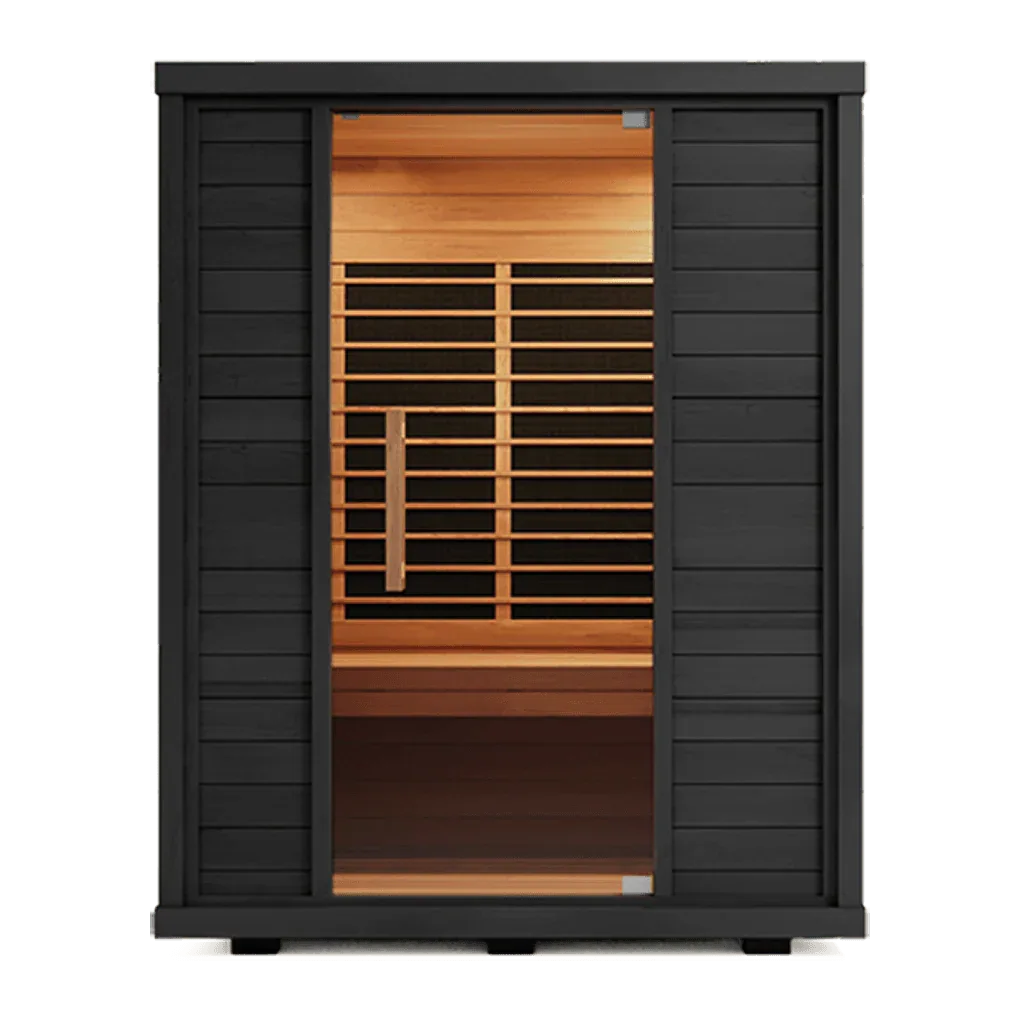
Conversely, cheaper alternatives like generic pine or composite boards have densities exceeding 500 kg/m³. A higher density timber acts as a massive heat sink. Instead of rapidly heating the air and radiating energy toward your body, the cabin walls absorb the kilowatt-hour input of the heaters. This increases the pre-heating phase from a standard 15 minutes to upwards of 45 minutes, directly inflating your operational costs. Investing in premium, low-density timbers like those featured in the Sun Home Equinox ensures that the thermal energy is directed precisely where it belongs: into your biological tissue. Sun Home Saunas
Infrared Wavelength Efficiency and the 9.4 Micron Constraint
The core therapeutic mechanism of an infrared sauna relies on radiative heat transfer. According to ISO 20473, the infrared spectrum is divided into near, mid, and far-infrared bands. To trigger deep cellular detoxification and cardiovascular conditioning, the emitters must target the biological resonance window of human tissue. Water molecules, which make up over 70% of the human body, exhibit a key vibrational resonance peak at a wavelength of exactly 9.4 μm. When infrared emitters operate at this peak, the energy is absorbed efficiently by water molecules in the skin, facilitating deep subdermal heating and stimulating aquaporin-3 channels in sweat glands.
Cheap infrared heaters often use low-grade ceramic or thin carbon panels that fail to maintain a stable surface temperature, causing their emission peak to drift into shorter wavelengths (near-IR) or longer, less effective wavelengths. This drift increases convective air temperatures while failing to deliver deep tissue penetration. Premium carbon-based heating panels engineered for high emissivity ($ge 0.95$) keep the wavelength emission locked in the 8 to 14 μm range, ensuring maximum therapeutic yield. For targeted localized recovery, advanced tools like the Novaa Pro use precise wavelengths to deliver light energy directly to compromised muscle tissues. NovaaLab
Convective Loss Budget and Thermal Bridging
A premium sauna cabin must behave as a sealed thermodynamic envelope. Thermal bridging occurs when highly conductive materials bypass the thermal insulation layers, creating an easy pathway for heat to escape. In poorly engineered saunas, frame joints, metallic fasteners, and single-pane glass doors act as thermal bridges, bleeding energy to the ambient room air. This convective loss forces the heating elements to run continuously at maximum capacity, reducing their lifespan and drastically increasing energy consumption.
To prevent this, high-end saunas undergo rigorous testing under ASTM C518 (Standard Test Method for Steady-State Thermal Transmission Properties). Premium designs incorporate double-walled tongue-and-groove construction with an insulating air gap or non-toxic reflective barriers. This achieves a superior thermal resistance (R-value) compared to entry-level single-walled models. Properly sealed joints prevent drafts, maintain stable internal relative humidity, and ensure that your sanctuary remains draft-free and incredibly energy efficient.
The Kilowatt-Hour Per Session Metric
When calculating the total cost of ownership, operational efficiency is paramount. To model this, we look at the kilowatt-hour (kWh) per session metric. A standard session consists of a 15-minute pre-heat cycle followed by a 30-minute active session. In a poorly insulated cabin with low-emissivity heaters, the heaters must pull a continuous 3.5 kW to maintain a target temperature of 60°C. Over a single 45-minute cycle, this translates to 2.625 kWh of electrical energy.
In contrast, an engineered high-efficiency cabin utilizes the high specific heat of its interior timber and superior R-value to reach temperature in 10 minutes, subsequently cycling the heaters on a 50% duty cycle. This reduces the energy consumption to just 1.1 kWh per session. Over a year of daily use, this simple thermodynamic difference saves hundreds of dollars in utility bills, easily justifying the initial capital investment of a premium system. For those with limited space or a lower initial budget, a premium Infrared Sauna Blanket offers an exceptionally efficient, low-draw alternative that concentrates infrared energy directly around the body with minimal ambient heat loss.
Structural Integration and Vapor Barrier Engineering
Installing a luxury cabin inside your home requires careful planning around structural dead loads and moisture management. A multi-person solid wood cabin can weigh between 300 to 600 pounds. This dead load must be distributed properly across your flooring system. Standard residential floors are designed for a uniform live load of 30 to 40 pounds per square foot (psf). A premium sauna's footprint must be engineered to stay well within these limits, avoiding the need for expensive structural joist reinforcement.
Equally important is vapor transmission. When you sweat, moisture is released into the cabin air. Without proper ventilation and vapor barrier engineering under ASHRAE 160P (Criteria for Moisture-Control Design Analysis in Buildings), this warm, humid air can migrate into the cooler wall cavities of your home, condensing into liquid water and creating mold hazards. High-end saunas integrate specialized ventilation slots and non-permeable vapor barriers that channel humid air safely away from your home's structure, preserving building integrity over decades of daily operations.
Two-Decade Amortization and Ownership
The true cost of a home sauna is best analyzed over a 20-year horizon. Entry-level saunas use cheap heaters that degrade rapidly, losing up to 30% of their infrared output within the first three years of operation. Also cheap wood panels warp, splitting open joints and compounding convective heat losses. Within five to seven years, these units often require complete replacement or expensive heater retrofits.
Premium systems are engineered to last a lifetime. They feature solid brass or high-grade stainless steel hardware, commercial-grade carbon heaters with verified 20,000-hour lifespans, and thick, double-walled timber panels that resist warping. When amortized over 20 years, a premium $8,000 sauna costs less than $1.10 per day, substantially less than a commercial wellness membership, and infinitely more convenient. Backed by industry-leading lifetime warranties and flexible financing options starting at just $199/month, investing in a high-end personal retreat is a financially prudent, low-risk commitment to a healthier, stress-free life.
Pros
- Optimized 9.4 μm wavelength maximizes deep-tissue biological heating.
- Ultra-low density premium timber ensures rapid heat-up and minimal operational cost.
- Excellent R-value and ASTM-compliant design prevent expensive thermal bridging losses.
Cons
- Higher initial capital expenditure compared to entry-level budget saunas.
- Requires a dedicated electrical circuit for optimal heater efficiency and safety.
Technical Verdict
From an engineering perspective, the performance of a home sauna is dictated entirely by its thermodynamic efficiency and spectral output. By utilizing low-density timbers, highly emissive heaters, and structurally isolated construction, premium saunas minimize convective losses and maximize therapeutic yield.
→ View Specs & Pricing