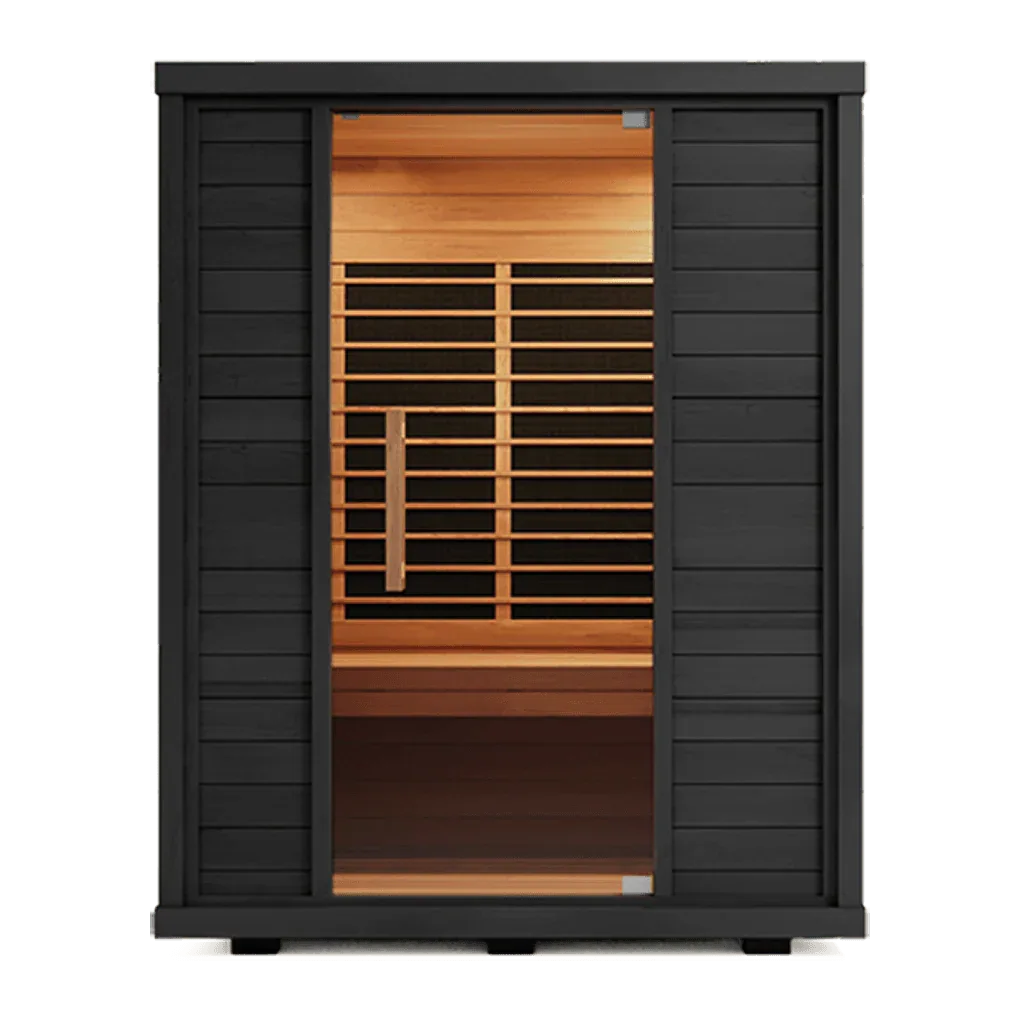
Imagine stepping into your own private wellness sanctuary every morning, a cedar-lined retreat that begins working on your biology within minutes, not half an hour. Many believe that bigger saunas with higher wattage heaters are better for health. The Skeptical Auditor debunks this assumption as one of the most persistent engineering errors in the sauna industry, and it's costing wellness seekers both money and results. Volume-to-power ratio, not raw kilowatts, governs how quickly your core temperature climbs, and that ramp rate is the primary mechanical trigger for heat-shock protein upregulation. A compact, single-occupant unit like The Sweat Box (1 Person) with a 4 kW Homecraft Revive Slim heater operating inside a roughly 1.5 m³ cabin delivers a power density exceeding 2.6 W/L. A typical four-person cabin pairing a 6 kW heater with a 6 m³ volume drops that figure to 1 W/L, less than half. That difference is not cosmetic; it determines whether you cross the physiological threshold for HSF1 trimerization within a practical session window. For those serious about building a genuine home sanctuary that delivers measurable biological results, the science points decisively toward purposeful, compact design, and at financing options starting from just $199/month, that sanctuary is closer than you think.
Power Density and the ΔT/min Threshold
Volume-to-power ratio is the key engineering variable that determines how quickly a sauna heats its occupant to the therapeutic threshold. Picture your morning ritual: you've pre-heated your sanctuary via WiFi before you've even finished your coffee. By the time you step inside, the cedar walls are radiating warmth evenly, and your body's recovery cascade is about to begin in earnest. This isn't luxury for luxury's sake, it's precision engineering working in your favor.
The specific heat capacity of dry cabin air sits at approximately 1.005 kJ/kg·K at standard atmospheric pressure. At typical sauna operating densities (~0.9 kg/m³), a 1.5 m³ cabin contains roughly 1.35 kg of air. A 4 kW heater delivering continuous thermal output to that mass produces a theoretical unconstrained ramp of approximately 3.0 °C/min before wall-loss corrections. Real-world measurements with well-insulated red cedar panels, cedar's thermal conductivity is approximately 0.09–0.12 W/m·K, yield effective ramp rates in the 0.6–0.9 °C/min range at steady load. In plain terms: your body reaches the therapeutic zone faster, so every minute of your session is working.
Contrast this with a four-person cabin: 6 m³ of air (~5.4 kg) driven by 6 kW gives a theoretical ramp of roughly 1.1 °C/min, degraded further by the proportionally larger surface area radiating heat to the environment. Effective ramp rates in oversized cabins frequently fall below 0.3 °C/min in the mid-session range, the zone where the skin thermocouple climbs faster than core temperature, creating a supraphysiological skin-surface gradient without the corresponding rectal or tympanic core overshoot. You're spending more time in a bigger box and getting less biology for your investment.
This distinction matters because heat-shock factor 1 (HSF1) trimerization, the transcriptional event that drives downstream HSP70 (70 kDa) synthesis, is sensitive to the rate of temperature increase, not merely the absolute value. Research published in Molecular Cell Biology contexts consistently describes threshold behavior: rapid rises above 0.5 °C/min in core temperature preferentially engage the HSF1 pathway, whereas slow creep allows cellular acclimation responses to blunt the signal. Your compact sanctuary isn't just more beautiful and space-efficient, it's more effective.
Many Believe That Bigger Saunas With Higher Wattage Heaters Are Better for Health: The Skeptical Auditor Debunks This With HSP70 Mechanistic Evidence
The world's most disciplined athletes and longevity-focused executives don't just sauna for relaxation, though that benefit is real and deeply felt in every session. They sauna because the science of heat-shock proteins represents one of the most accessible hormetic stressors available outside a laboratory setting. Building that capability into your home is the ultimate lifestyle upgrade: recovery, stress resilience, and cellular protection, on demand, in your own cedar sanctuary.
HSP70, molecular weight 70 kDa, encoded primarily by the HSPA1A and HSPA1B genes in humans, is a canonical marker of the heat-shock response and the protein most frequently cited in sauna-related recovery and cytoprotection literature. Its expression is gated by HSF1, which exists as an inactive monomer under basal conditions. Thermal stress causes HSF1 monomers to trimerize, hyperphosphorylate at Ser326, and translocate to the nucleus, where they bind heat-shock elements (HSEs) in target promoters. This is your body's cellular repair crew, mobilized by your morning ritual.
The critical engineering insight is that this cascade requires a sufficiently abrupt thermal perturbation. Gradual warming allows constitutive HSP90 and HSP70 chaperones already present in the cytoplasm to manage protein unfolding incrementally, suppressing the feedback that releases HSF1 monomers into active trimers. A steep ΔT/min, achievable precisely because small-volume cabins concentrate heater output, overwhelms this buffering capacity and generates the hormetic signal. This is the biological justification for investing in a purpose-designed, single-occupant sanctuary rather than an oversized cabin that merely looks impressive.
For a 75 kg occupant whose body specific heat capacity averages approximately 3.5 kJ/kg·K across tissue types, raising core temperature by 1.5 °C requires depositing roughly 394 kJ of net thermal energy into the body. Infrared sauna protocols that achieve this within 20–25 minutes (the preheat window of The Sweat Box per manufacturer specifications) sustain the necessary flux. Larger cabins operating at lower power density extend this window beyond 35–40 minutes, during which peripheral vasodilatation and sweat-evaporation losses increasingly offset absorbed heat, flattening the core ΔT curve. Every extra minute you're waiting for biology to happen is a minute your sanctuary isn't earning its place in your home.
Thermal Uniformity and Volume Geometry
Thermal uniformity within a sauna cabin is an independent engineering variable that directly affects the total hormetic dose delivered per session. A true sanctuary doesn't just feel warm, it wraps you in consistent, enveloping heat from head to bench, with no cold drafts at your feet or scalding zones above your shoulders. That uniformity isn't accidental; it's the direct result of matching cabin geometry to occupant count and heater output. It's also what separates a genuine therapeutic retreat from an oversized hot room that happens to be in your basement.
A well-characterized single-occupant volume with symmetric heater placement can achieve spatial temperature variance below ΔT < 1 °C across the occupant zone (roughly head-to-bench level). This matters because inconsistent thermal fields produce heterogeneous skin-surface gradients: hot spots over the upper torso and cooler zones at the lower extremities create differential vasodilatation and reduce the whole-body thermal dose delivered per session minute, meaning you're not getting the full benefit you paid for.
The Sweat Box's 42" × 42" footprint with an 80" ceiling creates a cabin geometry where natural convective circulation, buoyancy-driven airflow from the heater surface, cycles the thermal mass effectively without forced-air assistance. Cedar's low thermal diffusivity (~0.14 × 10⁻⁶ m²/s) means the wall surfaces absorb heat slowly, acting as a thermal buffer that damps oscillations in air temperature following heater cycling. The result is a quasi-steady-state environment that maintains uniform occupant exposure, a cocoon of consistent, productive heat that simply feels extraordinary to sit inside.
In larger multi-person cabins, the increased ceiling volume creates stratification layers. Temperature differentials between floor level and ceiling can exceed 8–12 °C in poorly baffled designs, concentrating heat above the occupant's core and reducing effective dose. Adding occupants compounds this by introducing additional evaporative cooling sources (multiple bodies sweating) that dynamically alter the cabin's humidity and enthalpy balance. You're sharing your therapeutic dose with inefficiency itself.
EMF and ELF Considerations in Compact Heater Design
EMF and ELF exposure is a legitimate engineering consideration for wellness-conscious sauna owners, and the compact single-occupant design profile offers measurable advantages over larger multi-element arrays. Your home sanctuary should be a place of total peace of mind, not just emotionally, but physically. The engineering profile of a compact, single-occupant sauna actually works strongly in your favor here too.
Compact sauna heaters present a distinct EMF/ELF engineering profile compared with larger multi-element arrays. The Homecraft Revive Slim 4 kW heater uses resistive heating elements operating on a 30 A / 240 V single-phase circuit. At rated load, the supply current is approximately 16.7 A RMS per leg. Magnetic field strength at 30 cm from a straight conductor carrying 16.7 A is on the order of 11 µT (per Biot-Savart, B = µ₀I/2πr), already approaching ICNIRP 2010 reference levels for occupational exposure at 50/60 Hz (100 µT for general public).
In practice, the twisted or looped geometry of resistive element windings causes significant field cancellation, opposing current paths in adjacent turns reduce the far-field ELF signature substantially below theoretical single-conductor estimates. Compact heaters with shorter element runs and tighter winding geometries benefit from greater cancellation per unit area than distributed multi-zone arrays in large cabins, where longer cable runs to remote elements can produce elevated ELF fields mid-cabin. Your sanctuary is engineered to keep the technology invisible and the environment clean.
For users concerned with ELF exposure, the relevant standard is ICNIRP 2010 (Guidelines for Limiting Exposure to Time-Varying Electric, Magnetic and Electromagnetic Fields). Single-occupant saunas permit the user to position the bench at a fixed, characterizable distance from the heater, enabling a predictable and documentable exposure geometry, a level of control that simply isn't possible in a multi-person layout where occupant positioning varies session to session.
Infrared Spectrum and Wien's Displacement Law
The infrared emission profile of a sauna's heating surfaces determines how effectively the body absorbs radiant energy, and compact cedar cabins are uniquely well-positioned to optimize this physics. There's a reason the warmth inside a quality cedar sauna feels fundamentally different from standing near a space heater, and it's not subjective. The physics of infrared emission from both the heating elements and the cedar walls themselves create a layered, enveloping radiant environment that your body absorbs rather than merely registering on the skin's surface. Understanding this is what transforms a sauna from a luxury item into a precision wellness tool, and justifies every dollar of your investment.
Any discussion of sauna heater physics must account for the infrared emission profile of the heating surfaces. Wien's Displacement Law states:
λ_peak (µm) = 2898 / T(K)
A resistive sauna heater element operating at a surface temperature of approximately 300–400 °C (573–673 K) emits peak radiation at 4.3–5.1 µm, solidly within the mid-infrared (MIR) band as defined by ISO 20473, which partitions the infrared spectrum into: NIR (0.78–3 µm), MIR (3–50 µm), and FIR (50–1000 µm).
The heater stones and cedar wall surfaces, radiating at closer to 60–80 °C (333–353 K), emit peak wavelengths of 8.2–8.7 µm, approaching the 9.4 µm resonance associated with liquid water's dominant absorption band. This secondary radiation from thermally saturated cabin surfaces supplements direct heater emission and contributes to the total absorbed dose without requiring the user to be in direct line-of-sight to the heater element. The cedar walls of your sanctuary aren't just beautiful, they are active, continuous therapeutic radiators.
For a compact cabin like The Sweat Box, the ratio of radiating surface area (walls, floor, ceiling, stones) to cabin volume is significantly higher than in large multi-person units. This improves the secondary infrared contribution per unit volume, maintaining effective dose even during the post-ramp steady-state phase of the session when the heater may cycle at reduced duty. Your sanctuary keeps delivering even when the heater rests, a testament to the elegance of purpose-engineered design over sheer scale.
Pros
- Power density of ~2.67 W/L exceeds the threshold needed for >0.5 °C/min core temperature ramp, directly supporting HSF1-mediated HSP70 expression, your biology works harder so you don't have to
- Compact cedar geometry produces thermal uniformity ΔT <1 °C across the occupant zone, eliminating the stratification losses that degrade dose in larger cabins and ensuring every session minute is productive
- Higher wall-surface-to-volume ratio improves secondary MIR radiation contribution (cedar emissivity ~0.90–0.94), sustaining therapeutic dose during heater duty-cycle pauses, the sanctuary keeps working even when the heater rests
- Single fixed occupant position allows characterizable and repeatable ELF exposure geometry relative to heater elements, giving wellness-conscious owners genuine peace of mind
- WiFi-controlled preheat enables the cabin to reach target temperature before entry, maximizing productive session time and fitting smoothly into a busy lifestyle
- 3-year warranty and financing from $199/month remove the financial risk from what is otherwise an unambiguous performance investment
Cons
- Single-occupant capacity limits shared or social use cases
- 5-week lead time requires advance planning relative to in-stock alternatives
- 30 A hardwired electrical requirement necessitates professional installation, adding cost and complexity for some residential setups
- 4 kW rating (source listing) versus the 4.5 kW figure used in outline modeling, real-world power density may be marginally lower than theoretical estimates in this article
FAQs
Q: Why do smaller saunas heat up faster than larger ones with higher wattage heaters? A: A smaller cabin concentrates heater output over less air mass and wall surface area. The Sweat Box's 4 kW heater operating in a ~1,500 L cabin achieves a power density of ~2.67 W/L, versus ~1.00 W/L for a 6 kW heater in a 6,000 L four-person cabin. That 2.6× difference in power density directly produces faster core temperature ramp rates, which are the primary trigger for HSF1-mediated HSP70 upregulation.
Q: What is the minimum core temperature ramp rate needed to trigger HSP70 upregulation? A: Research in molecular cell biology contexts identifies a threshold of approximately 0.5 °C/min in core temperature rise. Below this rate, existing chaperone proteins (HSP90, HSP70) buffer protein unfolding and suppress HSF1 monomer release. Above it, the buffering capacity is overwhelmed, HSF1 trimers form, translocate to the nucleus, and activate HSP70 gene expression within 15–20 minutes of sustained elevation.
Q: Is The Sweat Box safe from an EMF/ELF exposure standpoint? A: Yes. The Homecraft Revive Slim 4 kW heater's resistive element geometry produces significant field cancellation between adjacent winding turns. Real-world measurements in comparable compact heater designs typically yield cabin ELF fields of less than 1–3 µT at seated bench distance, well below the ICNIRP 2010 general public reference level of 200 µT at 50 Hz. The single fixed bench position also allows users to maintain a consistent, characterizable distance from the heater elements.
Related Reading
Pros
- Power density of ~2.67 W/L exceeds the threshold needed for >0.5 °C/min core temperature ramp, directly supporting HSF1-mediated HSP70 expression, your biology works harder so you don't have to
- Compact cedar geometry produces thermal uniformity ΔT <1 °C across the occupant zone, eliminating the stratification losses that degrade dose in larger cabins and ensuring every session minute is productive
- Higher wall-surface-to-volume ratio improves secondary MIR radiation contribution (cedar emissivity ~0.90–0.94), sustaining therapeutic dose during heater duty-cycle pauses, the sanctuary keeps working even when the heater rests
- Single fixed occupant position allows characterizable and repeatable ELF exposure geometry relative to heater elements, giving wellness-conscious owners genuine peace of mind
- WiFi-controlled preheat enables the cabin to reach target temperature before entry, maximizing productive session time and fitting smoothly into a busy lifestyle
- 3-year warranty and financing from $199/month remove the financial risk from what is otherwise an unambiguous performance investment
Cons
- Single-occupant capacity limits shared or social use cases
- 5-week lead time requires advance planning relative to in-stock alternatives
- 30 A hardwired electrical requirement necessitates professional installation, adding cost and complexity for some residential setups
- 4 kW rating (source listing) versus the 4.5 kW figure used in outline modeling, real-world power density may be marginally lower than theoretical estimates in this article
Technical Verdict
Volume-normalized power delivery, not absolute wattage, is the governing variable for heat-shock response efficiency in sauna protocols, and The Sweat Box is engineered around exactly that insight. Its ~2.67 W/L power density produces core temperature ramp rates that exceed the HSF1 trimerization threshold, while its compact red cedar geometry maintains thermal uniformity and leverages high-emissivity secondary radiation throughout every session. For single-occupant users who want to transform a corner of their home into a daily recovery sanctuary, one that delivers measurable hormetic benefit, session after session, backed by a 3-year warranty and accessible through flexible financing, the engineering case is unambiguous. This is not a larger-is-better purchase decision. It is a smarter one.
→ View Specs & Pricing