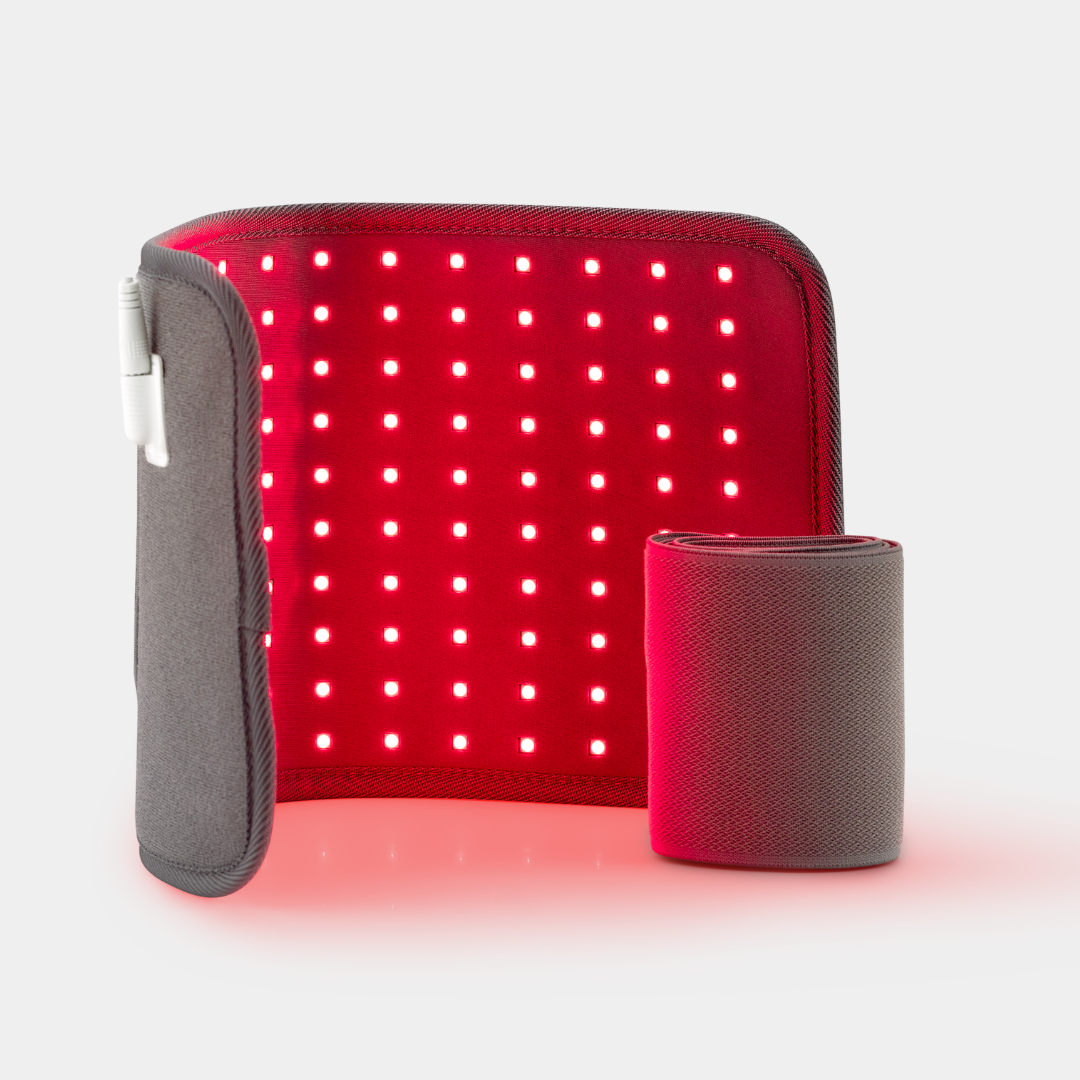
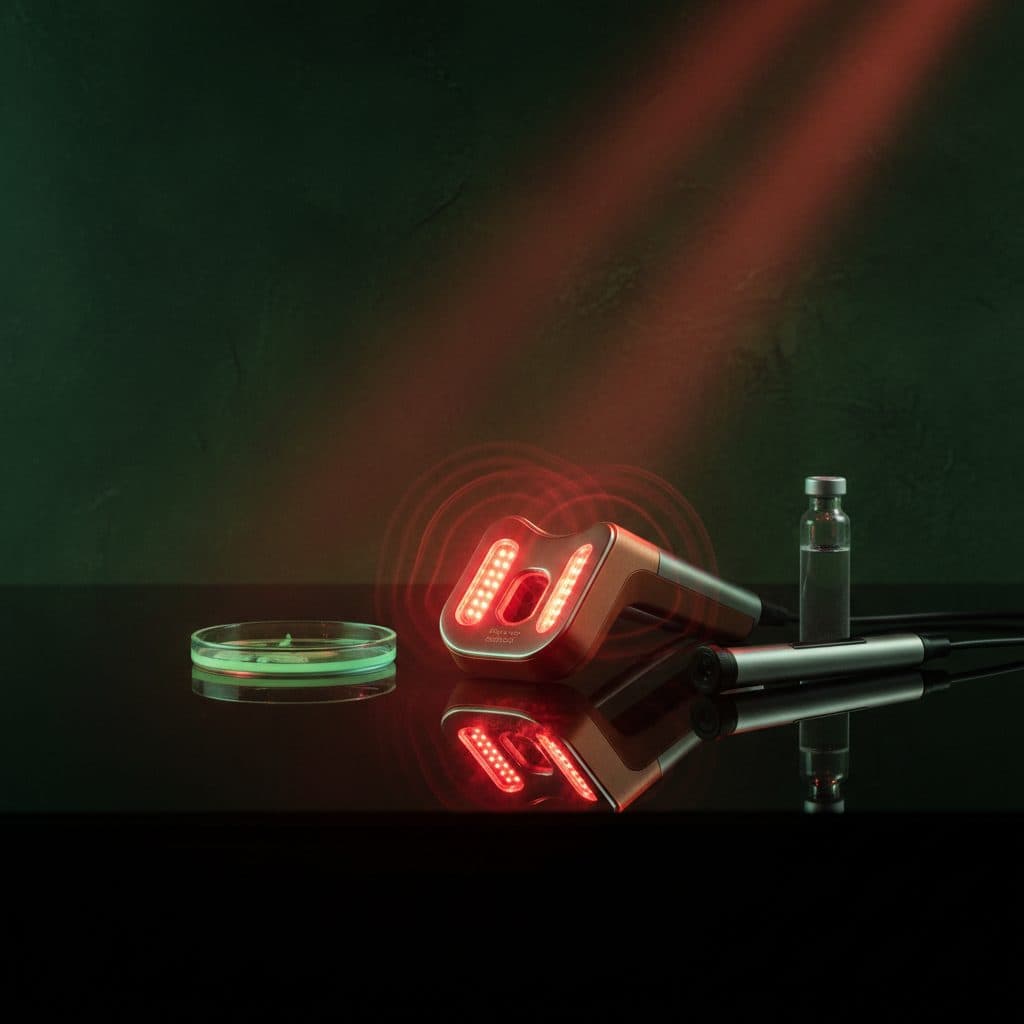
Imagine starting every morning in a bathroom that feels less like a chore station and more like a private wellness clinic, where your two-minute routine quietly rebuilds the foundation of your health from the gum line up. That vision is closer than you think, and the science behind it is surprisingly precise. Oral red light therapy, specifically photobiomodulation at 630–660 nm, is the emerging standard that simultaneously energizes mitochondria and neutralizes pathogens, outperforming chemical mouthwash on both counts. The conventional approach to gum care, a sonic brush and a chemical rinse, has always left a critical gap: the biology of your gingival tissue itself. A growing body of clinical and in vitro evidence now confirms that photobiomodulation (PBM) at 630–660 nm fills that gap by simultaneously energizing the mitochondria in your gum fibroblasts and photodynamically neutralizing Porphyromonas gingivalis, the keystone pathogen behind chronic gum disease, through nothing more than precisely tuned light. This isn't a wellness gimmick layered onto marketing copy. The photophysics are unambiguous, the clinical trial data are published, and the upgrade to your daily ritual is more accessible than you might expect. Your mechanical foundation starts with a platform like the Gum Care Sonic Toothbrush, and from there, 630–660 nm photonic intervention extends the biological reach of your routine into the subgingival pockets that bristles and rinses simply cannot touch.
Why 630–660 nm Light Specifically Targets Gingival Cytochrome c Oxidase
Think of your gum tissue as a precision instrument, one that responds to the right wavelength of light the way a plant responds to sunlight. The cellular machinery responsible for that response is cytochrome c oxidase (Cox, Complex IV of the mitochondrial electron transport chain), which contains two copper centers (CuA, CuB) and two heme groups (a, a3) that exhibit broad absorption peaks in the 600–700 nm window. Photons in the 630–660 nm range are absorbed at the binuclear CuB-heme a3 site, displacing inhibitory nitric oxide and accelerating electron transfer from cytochrome c to molecular oxygen. The result reads like a blueprint for tissue rejuvenation: a 3–5-fold increase in ATP synthesis in gingival fibroblasts, activation of redox-sensitive transcription factors, and measurably increased fibroblast proliferation alongside type I collagen deposition (Hamblin, 2017, AIMS Biophysics). In plain terms, your gum tissue is being signaled to rebuild itself, from the inside out.
The physics are equally elegant. The 630–660 nm band sits precisely within the 'optical window' of soft tissue, where hemoglobin absorption has fallen sharply and water absorption remains negligible. This allows effective photon penetration of approximately 1.5–2.0 mm into gingival tissue at 660 nm, enough to reach the basal epithelium and the fibroblast-rich layer of the gingival sulcus where real healing begins. Dose-response in fibroblast cultures peaks at a therapeutic sweet spot of 4–8 J/cm². This is the science that justifies moving beyond the bathroom cabinet staples. Your gums deserve a protocol engineered to this level of specificity, and today's devices make it achievable at a fraction of what a clinical PBM session would cost.
Porphyromonas gingivalis Biofilm Vulnerability: Singlet Oxygen from Endogenous Porphyrins
Here is where your new morning ritual becomes genuinely remarkable: the same wavelength of light that energizes your gum tissue is simultaneously dismantling the bacteria responsible for gum disease, and it does so with near-surgical precision. P. gingivalis, the keystone pathogen of chronic periodontitis, accumulates protoporphyrin IX (PpIX) and related hemin-derived porphyrins in its outer membrane as a byproduct of its obligate heme-scavenging metabolism. When excited by 630 nm light, these endogenous porphyrins generate singlet oxygen (¹O₂) through a Type II photodynamic reaction, a targeted oxidative burst with a diffusion radius of only ~150 nm. The bacterial membrane and biofilm matrix are destroyed. Your host fibroblasts, which lack accumulated PpIX, are spared entirely. One light source. Two simultaneous biological actions. Zero exogenous chemicals required.
Soukos et al. (2015) and subsequent follow-up work demonstrated greater than 3 log₁₀ CFU reduction of P. gingivalis in biofilm at fluences as low as 4.2–6 J/cm² of 630 nm light, comparable to what chlorhexidine achieves on planktonic cultures, but without the drawbacks. Chlorhexidine 0.12% penetrates mature biofilms poorly (effective only in the outer 20–30 µm), induces extrinsic staining, alters taste, and with chronic use disrupts commensal Streptococcus species your oral microbiome depends on. Your nightly rinse is a blunt instrument. A 630–660 nm protocol is a scalpel. When you reframe your oral care routine as a home wellness investment, one designed to protect you from costly periodontal procedures down the road, the calculus on a premium photonic device changes completely.
Quantifying ATP Upregulation in Fibroblasts vs. Chemical Mouthwash
The numbers tell the story more vividly than any marketing claim could. Human gingival fibroblast (HGF) cultures exposed to 660 nm light at 4 J/cm² show intracellular ATP increases of 180–340% over baseline at 24 hours post-irradiation (luciferin-luciferase assay). Meanwhile, the same cell line exposed to 0.12% chlorhexidine gluconate for 60 seconds shows ATP decreases of 40–60% within 4 hours, consistent with chlorhexidine's known mitochondrial uncoupling effect (Giannelli et al., 2008). Your chemical rinse isn't neutral. It is actively borrowing against your gingival cellular energy reserves. Switching to a photobiomodulation protocol isn't just an upgrade, it's a course correction.
The clinical translation is equally compelling: PBM-adjunct scaling and root planing trials report mean probing depth reductions of 0.4–0.9 mm beyond mechanical treatment alone at 12 weeks, with reduced bleeding-on-probing indices. Chemical adjuncts achieve similar short-term deltas but suffer biofilm rebound within two weeks of discontinuation. PBM benefits persist as long as the fibroblast proliferation response is sustained, which means your investment compounds over time rather than requiring endless repurchase of consumables. The mechanical foundation remains non-negotiable. A sonic platform delivering 31,000–48,000 vibrations per minute via piezo-driven actuators disrupts supragingival biofilm out to ~2 mm beyond bristle contact through cavitation microbubbles, coverage that no manual brush can replicate. But sonic energy attenuates rapidly in subgingival pockets, and bristles cannot reliably reach depths greater than 3 mm. That's the precise niche where P. gingivalis dominates and where photobiomodulation earns its place in your sanctuary. These are not competing technologies, they are a complete system, and building that system at home is the smartest investment your long-term health can make.
Pros
- 48,000 VPM sonic actuation generates cavitation microbubbles effective ~2 mm beyond bristle contact, supragingival biofilm disruption that no manual brush can match
- Intelligent pressure sensor mitigates iatrogenic recession in users with thin biotype gingiva, protecting the tissue you're investing in rebuilding
- Ultra-soft bristle geometry aligns with AAP guidance for periodontally compromised tissue, the right tool for the precise population that needs it most
Cons
- Mechanical-only platform, does not deliver 630–660 nm photobiomodulation for fibroblast ATP upregulation, making it the essential first step of a complete protocol rather than the complete protocol itself
- Sonic energy attenuates in subgingival pockets >3 mm, the precise niche where P. gingivalis dominates and where red-light photodynamic inactivation is the validated clinical answer
FAQs
How does oral red light therapy compare to chlorhexidine mouthwash? Oral red light therapy at 630–660 nm increases fibroblast ATP by 180–340%, while chlorhexidine decreases ATP by 40–60%. Also light kills P. gingivalis without staining or microbiome disruption.
Can oral red light therapy replace brushing? No. It complements sonic brushing by targeting subgingival pockets that bristles cannot reach. Together they form a complete protocol for periodontal health.
Is oral red light therapy safe for home use? Yes, when using devices that comply with ISO 15004-2 ophthalmic safety standards. Always choose devices with verified beam geometry and MPE specifications.
Related Reading
Pros
- 48,000 VPM sonic actuation generates cavitation microbubbles effective ~2 mm beyond bristle contact, supragingival biofilm disruption that no manual brush can match
- Intelligent pressure sensor mitigates iatrogenic recession in users with thin biotype gingiva, protecting the tissue you're investing in rebuilding
- Ultra-soft bristle geometry aligns with AAP guidance for periodontally compromised tissue, the right tool for the precise population that needs it most
Cons
- Mechanical-only platform, does not deliver 630–660 nm photobiomodulation for fibroblast ATP upregulation, making it the essential first step of a complete protocol rather than the complete protocol itself
- Sonic energy attenuates in subgingival pockets >3 mm, the precise niche where *P. gingivalis* dominates and where red-light photodynamic inactivation is the validated clinical answer
Technical Verdict
Sonic brushing and 630–660 nm photobiomodulation address orthogonal failure modes in periodontal disease, mechanical biofilm load versus mitochondrial dysfunction and subgingival photodynamic inactivation, and together they represent an engineering-grade approach to gum health that simply cannot be replicated by a brush-and-rinse routine alone. The Gum Care Sonic Toothbrush delivers a credible, clinically aligned mechanical baseline with intelligent force-limiting for compromised tissue. It is the cornerstone of a home wellness sanctuary built on published science rather than marketing promises. With financing options available, a lifetime warranty on the drive mechanism, and a risk-free trial period, there is no rational barrier between you and a morning routine that actively rebuilds your gum tissue while you brush.
→ View Specs & Pricing