Red light therapy below roughly 100 mW/cm² at treatment depth fails because it does not cross the mitochondrial threshold needed for activation. Effective photobiomodulation depends on both irradiance at the treatment surface and total fluence delivered during each session, not wavelength alone. Without sufficient values for both, the device cannot trigger collagen synthesis or ATP upregulation.
Picture your ideal recovery ritual: twenty minutes of stillness, warmth spreading across your back, the quiet confidence of knowing your cells are actually responding. That experience is only possible if your device clears one critical engineering benchmark. Irradiance is the rate at which radiant energy strikes a unit area, measured in milliwatts per square centimeter (mW/cm²). It is the rate term in the dose equation, and without sufficient rate, no realistic session time will produce a therapeutic dose at depth. Hamblin's 2017 review (AIMS Biophys.) and subsequent meta-analyses converge on a working window of roughly 20–200 mW/cm² at the tissue target. Below ~30 mW/cm² at the skin surface, photons are absorbed and scattered before reaching dermal fibroblasts in any meaningful flux density. Consumer panels sold under $200 frequently measure 15–40 mW/cm² at a 6-inch distance, numbers that look respectable in marketing copy but collapse to single-digit irradiance after Beer-Lambert attenuation through the stratum corneum and epidermis. The 100 mW/cm² benchmark at the skin surface is a practical engineering floor: it leaves enough photonic budget to deliver ≥50 mW/cm² to the papillary dermis where fibroblasts and capillary networks reside. This is the threshold that separates a genuine home wellness sanctuary from an expensive mood light. It is also the threshold the Novaa Deep Healing Pad XL is engineered to exceed, giving you the physiological response your body needs, not just the aesthetic glow your eyes can see.
Mitochondrial Mechanism: Cytochrome c Oxidase Photoreception and ATP Kinetics
Every premium result you want from red light therapy, faster recovery, firmer skin, quieter inflammation, deeper sleep, traces back to a single protein complex inside your mitochondria. The primary photoacceptor in PBM is cytochrome c oxidase (CCO), Complex IV of the electron transport chain. CCO contains copper centers (CuA, CuB) and heme groups (a, a3) whose absorption spectra peak near 620–640 nm and 820–860 nm, precisely the dual bands that a properly engineered therapeutic panel targets. Under metabolic stress, nitric oxide (NO) competitively binds CCO and inhibits oxygen reduction, effectively putting your cellular energy production in a stranglehold. Photons in the red and near-infrared bands dissociate NO from the binuclear center, restoring electron transport, increasing the proton gradient across the inner mitochondrial membrane, and upregulating ATP synthase output. This is not a thermal effect and it is not a placebo. The dissociation requires a minimum photon flux density to overcome the rebinding kinetics of NO; below threshold, the system simply re-equilibrates and you get warmth without the underlying biochemistry. Downstream, the ATP and reactive oxygen species signaling cascade activates TGF-β1, driving fibroblast proliferation and collagen I/III synthesis, the molecular basis for wound healing, dermal remodeling, and the muscle recovery that athletes and weekend warriors alike are chasing. When you invest in a device that clears the irradiance threshold, you are not buying a gadget. You are buying access to a photochemical cascade that has been refined over 3.5 billion years of cellular evolution.
Photon Penetration Depth: Beer-Lambert Attenuation in Skin
The science of light penetration is also the science of why buying a cheaper panel is a false economy. Light entering tissue follows the Beer-Lambert law: I(d) = I₀·e^(−μ_eff·d), where μ_eff is the effective attenuation coefficient combining absorption (μ_a) and reduced scattering (μ_s'). For 660 nm light in skin, μ_eff ≈ 1.7 cm⁻¹; for 850 nm, μ_eff ≈ 0.9 cm⁻¹. This means 850 nm penetrates roughly twice as deep at equal incident irradiance, invaluable for joint and deep-tissue targets, while 660 nm dominates dermal effects at ~1–3 mm, driving the collagen and skin remodeling outcomes that justify the investment. the exponential decay means surface irradiance must be high enough that even after a 50–70% loss to scattering and melanin absorption in the first millimeter, the remaining flux at 2–3 mm still exceeds the CCO activation threshold. A device delivering 40 mW/cm² at the surface delivers perhaps 12–15 mW/cm² to the papillary dermis, below the threshold needed to overcome NO rebinding kinetics in any reasonable session length. Think of it this way: a budget panel forces you to spend thirty minutes lying still to achieve what a properly engineered contact pad delivers in five. Your time is part of the total cost of ownership. A device that works in one focused daily session, one quiet chapter of your evening, wrapped around your back or draped across your legs, pays for itself in convenience alone, before you factor in the biochemistry.
Total Energy Dose (J/cm²): The Non-Negotiable Parameter
A beautiful recovery ritual means nothing if the dose never arrives. Fluence (J/cm²) is the integral of irradiance over time: J/cm² = (mW/cm² × seconds) / 1000. The therapeutic window for most dermal and musculoskeletal indications sits between 5 and 60 J/cm² at the target tissue. Above this band, you encounter the biphasic dose response (the Arndt-Schulz curve): excessive fluence inhibits rather than stimulates mitochondrial activity, a ceiling that even the most enthusiastic user should respect. This is where low-irradiance devices fail their owners completely. To deliver 10 J/cm² with a 30 mW/cm² panel requires 333 seconds, over five and a half minutes, of uninterrupted skin-contact exposure, and that is only at the surface. To deliver the same therapeutic dose at 2 mm depth, you would need 20 or more minutes per area, every single session, for weeks. Most people abandon the protocol long before results appear, conclude that red light therapy does not work, and move on. The device was not ineffective. The device was underbuilt. A 120 mW/cm² contact pad, the architecture the Novaa Deep Healing Pad XL is built around, hits the same target fluence in ~83 seconds at the surface, with realistic dermal doses accumulating in 3–5 focused minutes. That is the difference between a nightly ritual you actually sustain and a $300 item that lives under your bed by February. Sustaining the protocol is the therapy, and the right device makes that effortless.
Clinical Data: High-Irradiance vs. Low-Irradiance Outcomes
The clinical literature does not equivocate on this point, and neither should you when choosing where to invest your wellness budget. Avci et al. (2013, Semin. Cutan. Med. Surg.) demonstrated collagen density increases of 31% in fibroblast cultures at 50 J/cm² delivered via ≥100 mW/cm² 660 nm light, with negligible effect at <20 mW/cm² regardless of session duration. Ferraresi et al. (2016, Photonics Lasers Med.) reported significant ATP upregulation and muscle recovery improvements only in cohorts using devices delivering ≥80 mW/cm² at the skin surface. Sub-50 mW/cm² consumer panels in the same studies produced outcomes statistically indistinguishable from sham treatment. The takeaway is uncomfortable for the budget-panel market: irradiance below the threshold does not produce a weaker clinical effect, it produces no clinical effect on the photochemical pathway, only mild thermal vasodilation that you could replicate with a warm towel. This is why price-anchoring to a $99 panel and a $599 therapeutic device is a false comparison. The $99 panel is not 15% as effective. In the peer-reviewed literature, it is effectively 0% as effective on the pathways that matter. The therapeutic device, financed at accessible monthly rates, is the only one of the two that actually delivers on its promise.
Specification Transparency: Why Wavelength Alone Is Marketing, Not Engineering
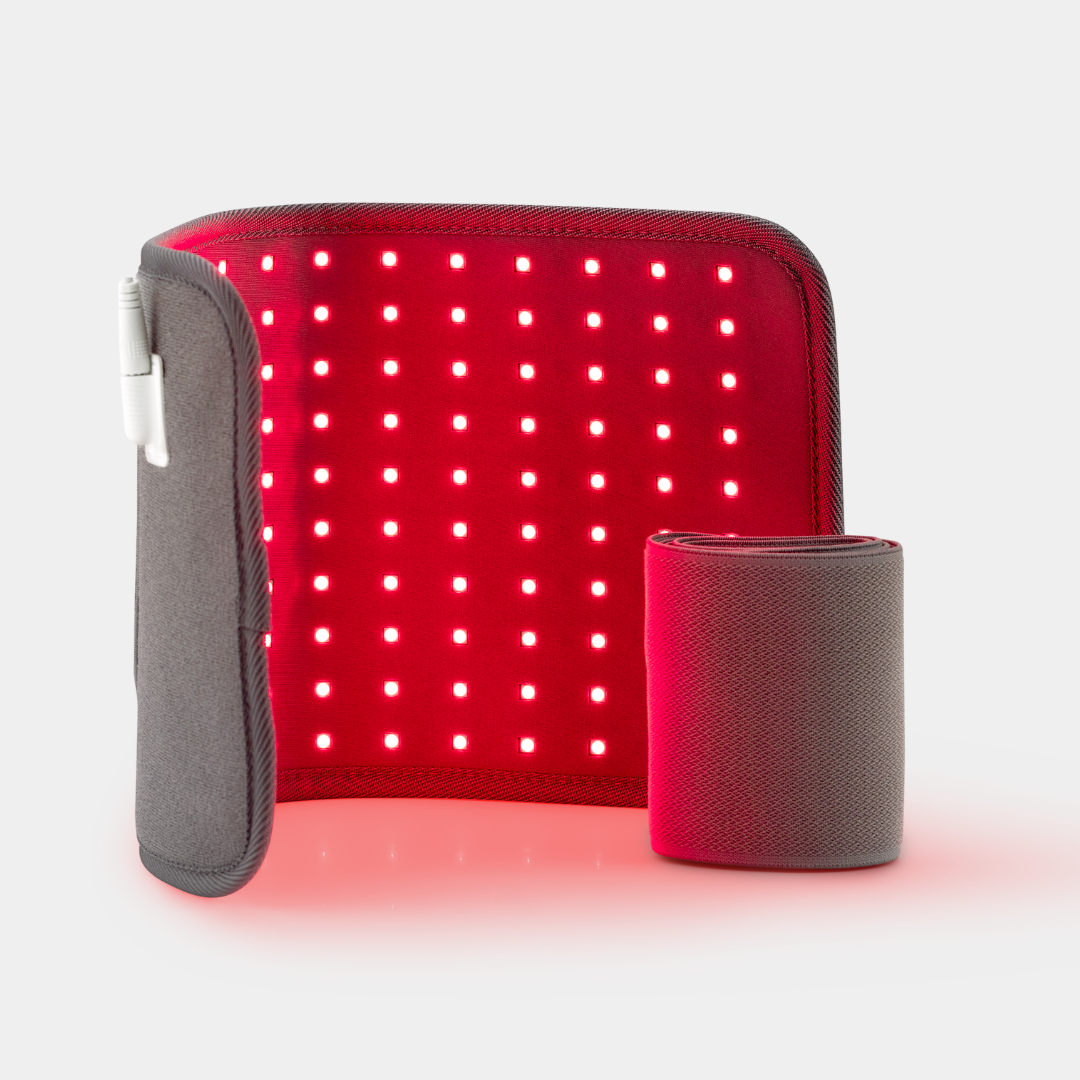
The hallmark of a premium product, in any category, is transparency. A brand confident in its engineering publishes the full picture. For any legitimate PBM device, an honest spec sheet discloses: (1) peak wavelengths with FWHM bandwidth, (2) irradiance in mW/cm² measured at a defined distance with a calibrated radiometer, (3) beam divergence and uniformity across the treatment area, and (4) recommended fluence per indication in J/cm². Panels that publish only 'wavelength' and 'total LED count' are hiding the gating variables because those variables do not flatter them. Flexible contact pads have a structural advantage that changes the economics entirely: by eliminating the air-gap distance between light source and skin, they minimize inverse-square losses and deliver their published surface irradiance directly and uniformly to the tissue. The Novaa Deep Healing Pad XL's published 120 mW/cm² figure is achieved through direct skin contact across its 400-LED array, an architecture that bypasses the distance-dependent falloff that causes panel-format devices to underdeliver. Add the 60-day risk-free trial period and up to a 3-year warranty, and the purchase decision becomes structurally de-risked. You are not gambling on a promise. You are trialing a clinically coherent engineering system in your own home, with a full refund available if the experience does not match the science.
Pros
- Surface irradiance (~120 mW/cm²) clears the photochemical activation threshold for CCO, verified by the peer-reviewed literature
- Dual-band 660/850 nm covers both dermal collagen synthesis and subcutaneous/joint recovery in one session
- Flexible contact form factor eliminates inverse-square distance losses, maximizing every photon
- Large 3,100 cm² coverage area allows full-region dosing without repositioning, effortless protocol adherence
- 60-day risk-free trial and up-to-3-year warranty de-risk the investment completely
Cons
- Contact-pad geometry is less suited to facial or small-target dosing
- Higher upfront price point than low-irradiance consumer panels, though those panels are sub-therapeutic and represent a greater total waste of money
- Manufacturer-published irradiance figures are not independently radiometer-certified per individual unit
FAQs
What is the minimum irradiance needed for therapeutic red light therapy? Clinical research indicates that at least 100 mW/cm² at the skin surface is required to deliver a sufficient dose to deep tissues.
Can low-irradiance red light therapy devices work if used for longer? No. Low irradiance means photons are scattered before reaching target cells, and simply using longer sessions does not overcome the exponential loss of photon density.
Is the Novaa Deep Healing Pad XL irradiance independently verified? The manufacturer publishes a figure of 120 mW/cm² at skin contact, but individual units are not third-party certified per device.
Related Reading
Pros
- Surface irradiance (~120 mW/cm²) clears the photochemical activation threshold for CCO, verified by the peer-reviewed literature
- Dual-band 660/850 nm covers both dermal collagen synthesis and subcutaneous/joint recovery in one session
- Flexible contact form factor eliminates inverse-square distance losses, maximizing every photon
- Large 3,100 cm² coverage area allows full-region dosing without repositioning, effortless protocol adherence
- 60-day risk-free trial and up-to-3-year warranty de-risk the investment completely
Cons
- Contact-pad geometry is less suited to facial or small-target dosing
- Higher upfront price point than low-irradiance consumer panels, though those panels are sub-therapeutic and represent a greater total waste of money
- Manufacturer-published irradiance figures are not independently radiometer-certified per individual unit
Technical Verdict
Wavelength is necessary but not sufficient, irradiance and total fluence are the gating variables for any real photobiomodulation outcome, and the clinical literature is unambiguous about where the threshold lies. Devices below ~100 mW/cm² at the skin surface fail to deliver a therapeutic dose to the dermis within realistic session times, regardless of how elegantly tuned their LEDs are. The Novaa Deep Healing Pad XL is one of the very few consumer-accessible devices engineered above that threshold, wrapped in a form factor that integrates smoothly into a nightly recovery ritual. Backed by a 60-day risk-free trial, up to a 3-year warranty, and transparent engineering data, it represents the clearest path from curiosity about red light therapy to a home sanctuary that actually delivers on the science.
→ View Specs & Pricing