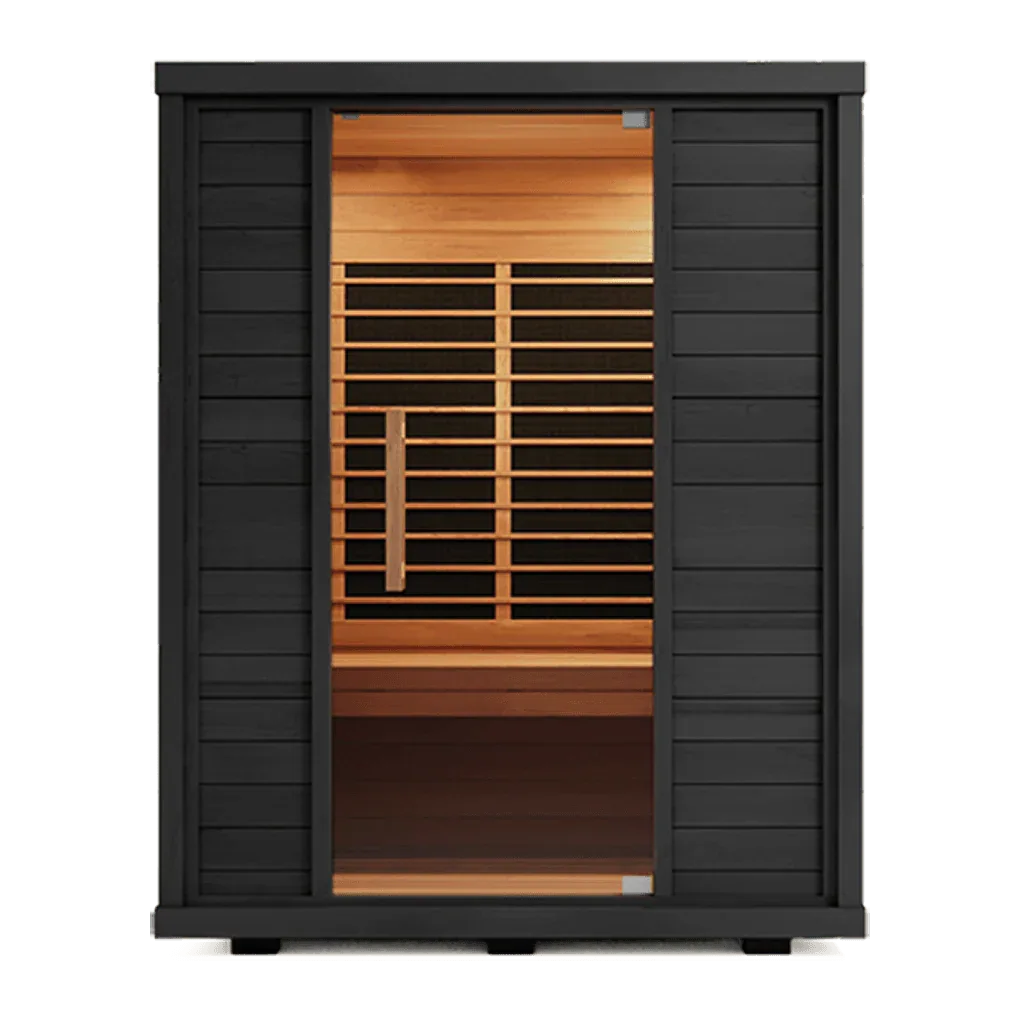
Imagine finishing a grueling week and retreating, not to your couch, not to a scroll session, but to a cedar-lined cabin in your own backyard. The air is dry and alive at 185°F. Your shoulders drop. Your breathing slows. Within minutes, your body is doing something extraordinary that no meditation app can replicate: it is flooding your bloodstream with sauna growth hormone at levels that rival a moderate-intensity workout. This is not passive relaxation. This is deliberate, measurable physiology, and it's exactly what The Sweat Cabin (4 Person) is engineered to trigger, session after session, in the privacy of your own sanctuary.
The Myth That Needs to Die
Ask most people what a sauna does, and they'll say, 'It makes you sweat and relax.' Both true. Both wildly incomplete. The cultural perception of sauna use as a passive, feel-good luxury has obscured decades of peer-reviewed research demonstrating that acute heat stress is a potent, dose-dependent endocrine stimulus. The relaxation you feel afterward is real, but it is a downstream consequence of a hormonal cascade, not the mechanism itself.
The central player in this story is growth hormone (GH): an anabolic, lipolytic, and tissue-repair peptide secreted by the anterior pituitary. At baseline, healthy adults produce GH in small, rhythmic pulses throughout the day. Elevate core body temperature by more than 1.0°C in a sustained fashion, however, and you trigger a fundamentally different response. Published data, including a landmark protocol studied at Turku University Central Hospital, documents 2–5× basal GH surges following a single traditional sauna session of approximately 15–20 minutes at temperatures between 80°C and 100°C (176–212°F).
This is the biohack hidden inside your neighbor's backyard shed. And most people have no idea it's happening.
The Exact Mechanism: GHRH, Somatostatin, and Your Hypothalamus
Understanding why your sauna unit's maximum temperature matters more than its aesthetics requires a brief tour of the hypothalamic-pituitary axis.
Step 1. GHRH Release: As core body temperature climbs past the 1.0°C threshold above baseline (typically pushing your internal temperature from ~37.0°C toward 38.0–38.5°C), thermosensitive neurons in the hypothalamus increase secretion of Growth Hormone-Releasing Hormone (GHRH). This peptide travels via the hypothalamo-hypophyseal portal circulation to the anterior pituitary and directly stimulates somatotroph cells to synthesize and release GH.
Step 2. Somatostatin Withdrawal: Simultaneously, heat stress suppresses the co-secretion of somatostatin (also called Growth Hormone-Inhibiting Hormone, GHIH). Somatostatin is the brake pedal on GH release. Remove the brake while pressing the accelerator (GHRH), and the GH pulse is amplified dramatically. This dual mechanism, stimulation plus disinhibition, explains why the magnitude of the response (2–5×) is so outsized relative to most pharmacological interventions that only target one pathway.
Step 3. Downstream Metabolic Effects: Once in systemic circulation, the GH pulse activates receptors in adipose tissue to accelerate lipolysis (fat mobilization), signals skeletal muscle to upregulate protein synthesis via IGF-1 intermediaries, and promotes cellular repair including collagen turnover and immune modulation.
The critical engineering implication: this cascade requires a sustained, sufficient thermal load. A unit that heats slowly, loses heat rapidly through poor insulation, or plateaus below 80°C (176°F) will not reliably push core temperature past the 1.0°C threshold in the window required to produce a clinically meaningful GH response. Ambient heat is not the goal, core temperature elevation is.
Sauna Growth Hormone Response: Why Engineering Is the Intervention
The sauna growth hormone response depends as much on the equipment as on the protocol. The romantic image of a cedar cabin glowing in your backyard is real, but the reason it works as a physiological tool comes down to four engineering variables that most buyers never interrogate.
1. Maximum Operating Temperature The Sweat Cabin (4 Person) reaches 170–200°F (77–93°C) with its Harvia 8kW KIP or optional Homecraft Revive 9kW heater. This range consistently sits above the 80°C threshold identified in the thermal physiology literature as the lower bound for reliable GH stimulation protocols. Budget infrared units operating at 50–60°C produce insufficient thermal load for the same response, they deliver a different (and lesser) stimulus.
2. Heater Mass and Thermal Inertia The Harvia KIP and HUUM Drop options in the Sweat Cabin are rock-bearing heaters. Sauna rocks act as a thermal capacitor: they absorb energy during the preheat cycle and release it steadily during the session, buffering temperature fluctuations when the door opens or when löyly (steam) is added. This thermal inertia is essential for maintaining the sustained heat load that keeps core temperature elevated past the critical threshold for the full 15–20 minute protocol window.
3. Insulation and Envelope Integrity The cabin is constructed from premium red cedar, a tonewood chosen not only for aesthetics but for its naturally low thermal conductivity (~0.10 W/m·K) and resistance to humidity-driven dimensional change. A well-sealed cedar envelope retains heat efficiently, meaning the heater spends more energy elevating the air mass and less compensating for envelope losses. This directly translates to a faster ramp-to-temperature and a more stable thermal environment.
4. Spatial Geometry and Convective Efficiency The 4-person format of the Sweat Cabin creates a meaningful volume of hot air that envelops the body uniformly. Tight, 1-person box units create convective dead zones. The Sweat Cabin's interior geometry, combined with a large picture window for psychological openness (without the thermal loss of poorly sealed glazing), ensures the thermal environment is both physiologically effective and experientially transformative.
Session Design: How to Actually Trigger the GH Spike
Owning the right unit is necessary but not sufficient. The protocol matters. Research suggests the following session structure maximizes the GH response:
- Preheat to ≥80°C (176°F): Use the WiFi controls on the Homecraft Revive or HUUM Drop variants to preheat remotely so the cabin is at operating temperature when you enter. Starting a session in a cold or warming cabin wastes the optimal exposure window.
- Session Duration: 15–20 minutes per bout: This is the minimum duration documented to push core temperature past the 1.0°C threshold in most adults. Shorter sessions at high temperatures are less reliable.
- Multiple Bouts with Cooling Intervals: The Turku protocol used two bouts separated by 30 minutes of cooling. The rebound effect, rapid reheating after cooling, appears to amplify the subsequent GH pulse. A cold shower or outdoor cooling between bouts is not optional luxury; it is part of the mechanism.
- Timing Relative to Meals: GH release is blunted by elevated insulin. Sauna sessions in a fasted state or >2 hours post-meal produce larger GH responses. Morning sessions before breakfast or evening sessions 2+ hours after dinner are optimal windows.
- Hydration: Core temperature elevation requires adequate plasma volume. Dehydration reduces heat tolerance and limits your ability to sustain the session. 500–750mL of water before entry is standard practice.
The Sweat Cabin's WiFi smart controls (available with the Homecraft Revive 9kW and HUUM Drop 9kW heater options) allow you to set a precise preheat schedule from your phone, eliminating the friction between intention and execution that kills most wellness protocols.
From Backyard Cabin to Physiological Asset
The Sweat Cabin (4 Person) is not furniture, it is a precision thermal instrument that, used correctly, delivers a hormonal stimulus documented in the peer-reviewed literature to enhance body composition, accelerate recovery, and support longevity biomarkers. It is housed inside an heirloom-quality cedar structure that adds genuine real estate value and transforms your outdoor or indoor space into a private wellness destination.
Compare the cost to alternatives:
- A single IV therapy session with GH secretagogues: $150–$400 per visit
- A premium gym membership with sauna access: $100–$300/month, shared, scheduled around strangers
- An annual commitment to a wellness spa: $2,000–$5,000+, still not private, still not on your timeline
At from $199/month with financing, the Sweat Cabin's cost per session over a 10-year lifespan, assuming modest use of 3 sessions per week, calculates to under $2.00 per session for a private, on-demand, clinically-grounded GH stimulus.
The 3-year warranty, 30-day trial period, Made in USA construction, and free shipping mean the financial risk is structurally low relative to the physiological upside. This is not a luxury purchase rationalized after the fact. It is a capital allocation to a durable wellness infrastructure with a measurable return.
Pros
- Reaches and sustains 170–200°F, reliably crossing the >80°C threshold required for peer-reviewed GH-stimulation protocols
- Rock-bearing heaters (Harvia, HUUM) provide thermal inertia that stabilizes temperature during multi-bout sessions, critical for sustained core temperature elevation
- Premium red cedar construction delivers low thermal conductivity (~0.10 W/m·K), reducing heat loss and improving ramp-to-temperature efficiency
- WiFi smart controls on select heater variants enable fasted-state morning or pre-sleep session scheduling, aligning protocol timing with peak GH sensitivity
- 4-person geometry creates uniform convective heat distribution, eliminating the dead zones that reduce thermal dose in compact single-person units
- 30-day trial, 3-year warranty, and financing from $199/month structurally reduce investment risk
Cons
- 5-week lead time requires advance planning, not suitable for buyers seeking immediate delivery
- Traditional sauna at 170–200°F is contraindicated for individuals with certain cardiovascular conditions; medical clearance is advisable before initiating high-temperature protocols
- The GH-stimulation benefit documented in literature is protocol-dependent, casual, short, or low-temperature sessions will not replicate the studied response
- Outdoor installation requires a level pad, dedicated electrical circuit (240V for 8–9kW heaters), and weatherproofing consideration that adds to total setup cost
FAQs
Q: How much does sauna use actually increase growth hormone? A: Research published from Turku University Central Hospital, including work by Leppäluoto et al., documents mean GH elevations of approximately 2–5× basal levels following two 20-minute traditional sauna sessions separated by a 30-minute cooling interval at temperatures between 80°C and 100°C (176–212°F).
Q: Does an infrared sauna produce the same growth hormone response as a traditional sauna? A: No. The peer-reviewed GH-stimulation literature is based on traditional convective heat at 80–100°C. Far-infrared (FIR) units typically operate at 45–65°C (113–149°F), which is generally insufficient to elevate core body temperature past the >1.0°C threshold required to trigger a meaningful GHRH-mediated GH pulse. These are distinct thermal interventions with distinct physiological profiles.
Q: How often should I sauna to maximize the growth hormone benefit? A: The studied protocol uses two 15–20 minute bouts per session with a 30-minute cooling interval. Frequency research suggests that consistent use, 3 or more sessions per week, compounds the recovery, body composition, and hormonal benefits over time. Sessions are most effective in a fasted state or more than 2 hours after a meal, when insulin levels are low and GH release is uninhibited.
Related Reading
Pros
- Reaches and sustains 170–200°F, reliably crossing the >80°C threshold required for peer-reviewed GH-stimulation protocols
- Rock-bearing heaters (Harvia, HUUM) provide thermal inertia that stabilizes temperature during multi-bout sessions, critical for sustained core temperature elevation
- Premium red cedar construction delivers low thermal conductivity (~0.10 W/m·K), reducing heat loss and improving ramp-to-temperature efficiency
- WiFi smart controls on select heater variants enable fasted-state morning or pre-sleep session scheduling, aligning protocol timing with peak GH sensitivity
- 4-person geometry creates uniform convective heat distribution, eliminating the dead zones that reduce thermal dose in compact single-person units
- 30-day trial, 3-year warranty, and financing from $199/month structurally reduce investment risk
Cons
- 5-week lead time requires advance planning, not suitable for buyers seeking immediate delivery
- Traditional sauna at 170–200°F is contraindicated for individuals with certain cardiovascular conditions; medical clearance is advisable before initiating high-temperature protocols
- The GH-stimulation benefit documented in literature is protocol-dependent, casual, short, or low-temperature sessions will not replicate the studied response
- Outdoor installation requires a level pad, dedicated electrical circuit (240V for 8–9kW heaters), and weatherproofing consideration that adds to total setup cost
Technical Verdict
The growth hormone response to sauna is not a wellness myth, it is a thermally-gated endocrine event that requires a sustained ambient temperature of ≥80°C to reliably elevate core body temperature past the 1.0°C GHRH-stimulation threshold. The Sweat Cabin (4 Person) is engineered to meet that specification: its 8–9kW heaters, rock-bearing thermal mass, and premium cedar insulation envelope combine to produce a stable, high-temperature environment that amateur and budget units cannot replicate. Buyers who follow the documented two-bout protocol in a fasted state will be using a physiologically credible tool, not a luxury appliance.
→ View Specs & Pricing