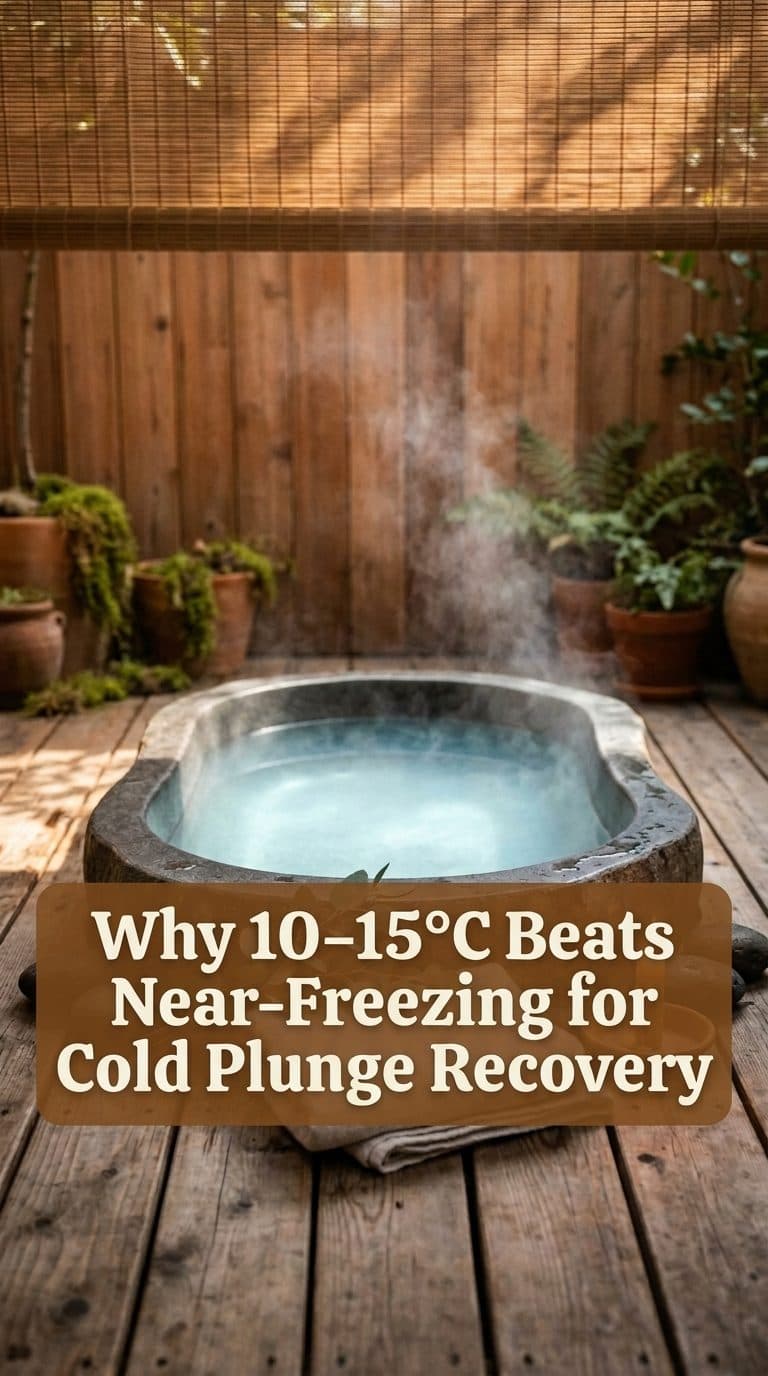
Cold plunge water between 10°C and 15°C supports recovery better than near-freezing temperatures because it provides a controlled physiological stressor without pushing the body toward a survival response. When core skin temperature falls below roughly 10°C, the HPA axis interprets the cold as a threat. Cortisol and norepinephrine then rise sharply.
The Mythology of Maximum Cold
Walk into any functional fitness gym and you will hear a consistent refrain: the colder the plunge, the better the benefit. Ice baths at 2–4°C are worn as badges of honor, and social media has amplified the spectacle of gasping, white-knuckled athletes emerging from near-frozen water as proof of superior resilience. The problem is that this narrative has outpaced the physiology.
When core skin temperature drops below roughly 10°C, the hypothalamic-pituitary-adrenal (HPA) axis interprets the stimulus not as a controlled hormetic stressor but as a potential survival threat. The result is a significant spike in cortisol and norepinephrine that is disproportionate to the anti-inflammatory benefit being sought. Research published in PLOS ONE and replicated in sports medicine literature consistently shows that extreme cold immersion (≤4°C) improves cortisol to levels that blunt the parasympathetic nervous system response, the very response most athletes and stressed professionals are trying to activate.
In plain terms: if you plunge too cold, your body spends its hormonal budget on a stress reaction rather than on recovery. You feel the adrenaline rush and mistake it for therapeutic benefit. The cortisol spike is real, but the downstream anti-inflammatory cascade you wanted? Significantly diminished.
The Optimal Window: 10–15°C and the Vagus Nerve
The vagus nerve is the longest cranial nerve in the human body and serves as the primary highway of the parasympathetic nervous system. It governs heart rate variability (HRV), gut motility, immune modulation, and the subjective sense of calm that follows genuine relaxation. Activating it deliberately, a practice called vagal tone training, is one of the most evidence-backed interventions for chronic stress, anxiety, and inflammatory disease.
Cold water immersion in the 10–15°C range triggers a well-characterized sequence: initial thermoreceptor activation in the skin sends afferent signals via the trigeminal nerve and superficial cold receptors, which converge on the brainstem and produce reliable diving reflex engagement. This mammalian diving reflex, a phylogenetically ancient response, immediately lowers heart rate by 10–25% and redistributes cardiac output toward core organs. this response is vagally mediated: it requires an intact, responsive parasympathetic pathway to execute.
At temperatures below 10°C, the same reflex is present, but it is overwhelmed by the sympathetic surge. The cortisol and catecholamine response dominates the neuroendocrine picture, and the clean parasympathetic signal is buried in hormonal noise.
The immunological corollary is equally compelling. Interleukin-10 (IL-10), the body's primary anti-inflammatory cytokine, shows peak upregulation in cold immersion studies conducted at 10–15°C. IL-10 counteracts pro-inflammatory cytokines like TNF-α and IL-6, making it central to post-exercise muscle recovery and systemic inflammation reduction. Studies examining colder protocols show attenuated IL-10 responses, likely because the exaggerated stress-hormone environment creates competing immunological signals.
The therapeutic window is not wide. A deviation of even 3–5°C in either direction meaningfully alters the neuroendocrine outcome. This is not a spec-sheet footnote, it is the entire clinical argument for precision temperature control.
Why ±0.5°C Precision Is an Engineering Requirement
Understanding the biology makes the engineering argument self-evident. If the therapeutic window is 10–15°C, a 5°C band, and your recovery goals depend on staying reliably inside it, then your chiller's temperature variance is not an aesthetic feature. It is a clinical variable.
Most budget chillers and basic ice-bath setups operate with temperature variance of ±2–4°C. In practical terms, a unit "set" to 12°C could be delivering water anywhere from 8°C to 16°C depending on ambient temperature fluctuations, pump cycling, and thermal load from the user's body entering the water. That variance alone can push the immersion experience outside the optimal IL-10 and vagal activation window on any given session.
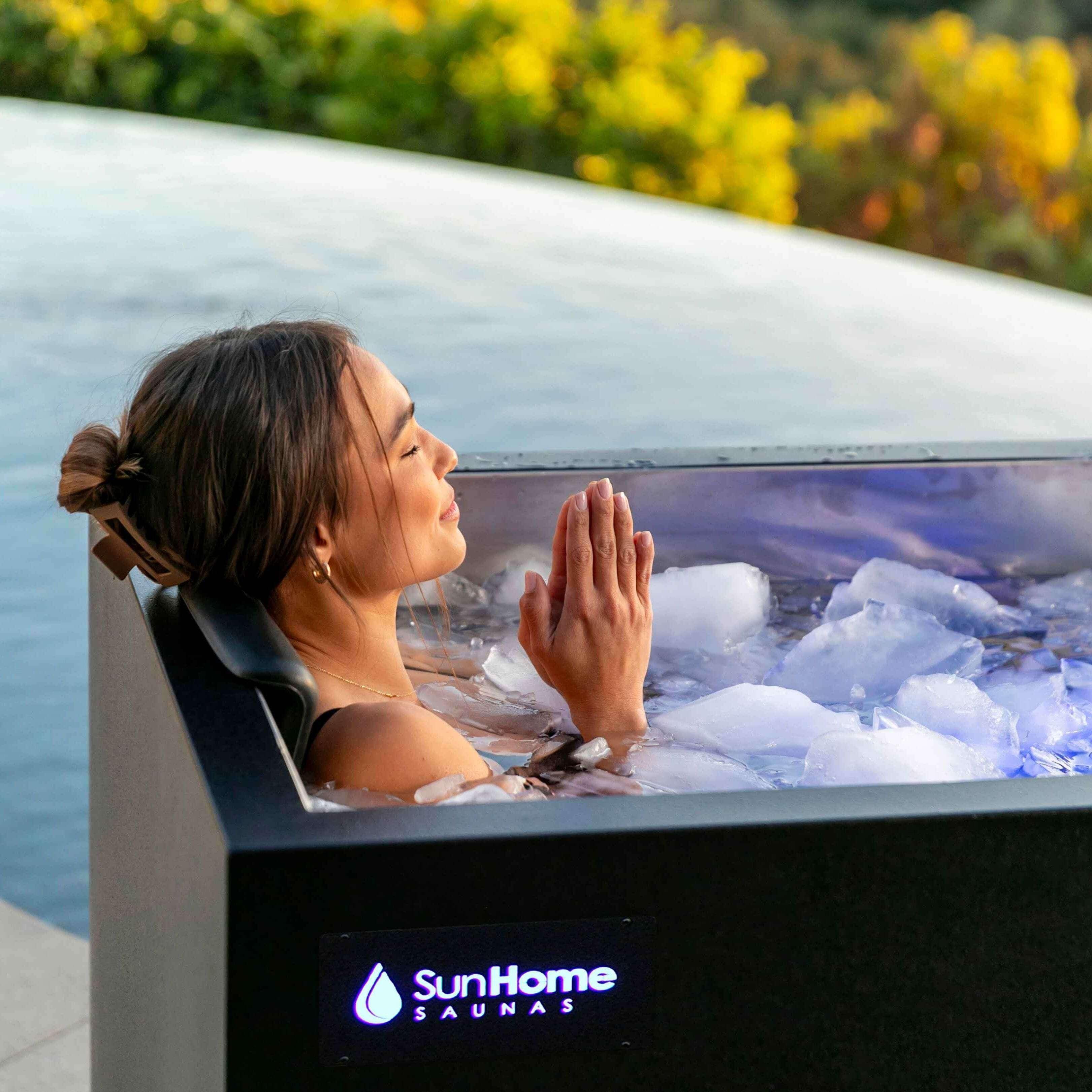
The Sun Home Cold Plunge™ Smart-Chiller operates at ±0.5°C precision, maintained by a 1HP smart-chiller that the manufacturer states operates 2x faster than comparable competitors at this price point. The engineering rationale behind this claim centers on the motor's thermal mass management and the closed-loop PID (Proportional-Integral-Derivative) control logic embedded in the system, a control architecture borrowed from industrial refrigeration that continuously samples water temperature and adjusts compressor output in real time rather than cycling on simple high/low thermostatic triggers.
This means when you pre-set your session at 12°C using the mobile app or the intuitive LED touchscreen, the unit is not approximating 12°C. It is holding 12°C ± half a degree for the entire duration of your immersion. Session after session. That is the difference between a lifestyle tool and a lifestyle decoration.
Sanitation Engineering: The Hidden Performance Variable
Temperature precision is the headline specification, but a cold plunge's long-term performance, and your health safety, depends equally on water quality management. Stagnant, poorly sanitized water is a bacterial culture medium. The stress response from skin-contact pathogens, even subclinical ones, creates a low-grade inflammatory load that directly counters the anti-inflammatory goals of the therapy itself.
The Sun Home Cold Plunge™ addresses this with a dual-modality sanitation system that combines UV disinfection and ozone injection. These are not redundant; they are complementary. UV-C light (typically 254nm, within the germicidal range defined by ISO standards for UV water treatment) disrupts pathogen DNA replication at the cellular level, effective against bacteria, viruses, and protozoa. Ozone (O₃), injected at controlled concentrations, is a powerful oxidant that eliminates organic contaminants and biofilm that UV alone cannot fully address.
Backing this up is a 20-micron filtration stage that mechanically removes particulate debris, skin cells, dust, environmental contaminants, before they reach the sanitation stages. This matters because particulate load reduces UV transmittance and consumes ozone, degrading both systems' effectiveness if filtration is absent or insufficient. The integrated built-in circulation pump ensures consistent water turnover, preventing thermal stratification (where colder water pools at the bottom, creating false temperature readings) and distributing sanitized water uniformly throughout the tub.
The result is a closed-loop water management system that requires no plumbing installation, just plug and plunge, while maintaining water quality standards comparable to commercial hydrotherapy equipment.
From Science to Sanctuary: The Daily Ritual That Compounds
The highest-performing cold plunge protocols in the clinical literature share one characteristic that has nothing to do with temperature or duration: consistency. The IL-10 upregulation, the HRV improvements from vagal tone training, the dopamine baseline elevation documented in neuroendocrine research, these are chronic adaptations. They accumulate across weeks and months of regular sessions, not single heroic dips.
This is where the lifestyle architecture of the Sun Home Cold Plunge™ ecosystem becomes the decisive variable. The 24-hour reservation mode allows you to pre-program your session, waking up to a tub already holding exactly 12°C at 6:00 AM is a fundamentally different behavioral trigger than dragging ice bags to a stock tank at midnight. The mobile app control means you can initiate pre-cooling from bed, adjusting the setpoint in response to how your body feels that day, perhaps 13°C after a heavy training block, 11°C on a routine recovery day.
This degree of control transforms cold plunge therapy from a sporadic, willpower-dependent act into a frictionless daily ritual. And frictionless daily rituals are the ones that actually produce the long-term physiological adaptations that justify the investment. The sanctuary does not need to be dramatic. It needs to be reliable.
At $3,599 with free shipping included and Affirm financing available from approximately $199/month, the Sun Home Cold Plunge™ Smart-Chiller enters a price-per-session calculation that competes directly with boutique cold plunge studios charging $30–$75 per session, with none of the scheduling friction, shared water concerns, or commute. The unit is backed by a 1-year warranty, with the manufacturer's support line (1-844-728-6200) available for any technical questions. For a recovery modality this well-supported by the science, the remaining question is not whether the investment is justified, it is whether you can afford the compounding cost of not recovering optimally.
Frequently Asked Questions
What is the best temperature range for a cold plunge?
The optimal temperature range for real recovery is 10–15°C (50–59°F). Science shows this specific window triggers the body's anti-inflammatory response and parasympathetic nervous system activation. Temperatures outside of this narrow 5°C band can significantly alter your neuroendocrine outcomes.
Why is plunging in near-freezing water bad for recovery?
When skin temperature drops below 10°C, your body interprets the extreme cold as a survival threat rather than a controlled stressor. This causes a major spike in cortisol and norepinephrine, which blunts the parasympathetic nervous system. your body spends its hormonal budget on a stress reaction instead of recovering.
How does cold plunging help with stress and the vagus nerve?
Immersing yourself in water between 10–15°C activates
Related Reading
- Commercial Cold Plunge Guide: Sun Home Pro Commercial Sanitation & Chilling
- Cold Plunge Chiller Enclosure Guide: Outdoor Airflow, Noise, Weather, and Service Access
- How Cold Plunge Temperature Stability Impacts Benefits
- Cold Plunge Chiller vs Ice Bath: Operating Cost, Cleaning, and Temperature Stability
Pros
- ±0.5°C precision directly targets the 10–15°C therapeutic window validated for vagal activation and IL-10 upregulation, a meaningful engineering advantage over ±2–4°C budget chillers
- Dual UV + ozone sanitation with 20-micron prefiltration creates a closed-loop water quality system that protects long-term health and maintains consistent session conditions
- 1HP motor with 2× faster cooling speed (per manufacturer) and 24-hour reservation mode removes behavioral friction, the primary reason most home recovery investments fail to produce consistent results
- No plumbing, standard 110V power, and portable design eliminate installation cost and delay, reducing the true total cost of ownership significantly
- Forbes, TIME, Variety, and Billboard recognition (2025) provides third-party editorial validation beyond manufacturer claims
Cons
- The 1-year warranty is shorter than the 2–3 year coverage offered by some competing premium chillers at this price point, buyers should confirm extended warranty availability directly with Sun Home
- The "ambient-dependent" lower temperature limit (33°F) means performance in very hot climates (ambient >35°C) may not reliably reach the coldest end of the range without additional thermal management
- At 88 lbs, the chiller unit is portable in principle but requires two people for safe relocation, solo users should factor this into their setup planning
Technical Verdict
The clinical case for cold plunge therapy hinges not on maximum cold but on **temperature precision within the 10–15°C therapeutic window**, the range where vagally mediated diving reflex engagement and IL-10 anti-inflammatory cytokine release are reliably produced without cortisol interference. The Sun Home Cold Plunge™ Smart-Chiller's ±0.5°C closed-loop control, dual-modality UV/ozone sanitation, and 20-micron filtration deliver the engineering infrastructure required to make that science reproducible in a home setting. For anyone serious about cold immersion as a long-term recovery and stress-management protocol, precision temperature control is not a luxury specification, it is the entire mechanism of action.
→ View Specs & Pricing