Cold plunge temperature stability drives results by keeping the water below 15°C long enough to sustain vagus nerve activation. If the temperature rises above 15°C during a session, the cholinergic anti-inflammatory IL-10 signal stops. Double-wall insulation with at least two inches of high-density foam can hold the water within 0.5°C of its target.
The Diving Reflex Is Not a Light Switch
The mammalian diving reflex is widely misunderstood as a binary response, but cold plunge temperature stability determines whether that reflex is sustained or silently attenuated mid-session.
The diving reflex is initiated by cold-water contact with trigeminal nerve receptors, particularly those innervating the perinasal and periorbital skin, as well as receptors in the nasopharyngeal mucosa. These afferent signals travel via the trigeminal nerve to the nucleus tractus solitarius (NTS) in the brainstem, where they recruit parasympathetic (vagal) efferents. The downstream effect is a well-characterized triad: bradycardia, peripheral vasoconstriction, and increased parasympathetic tone.
The critical point, the one that transforms this from a biology lecture into a purchasing decision, is that this reflex requires sustained cold stimulus to maintain its parasympathetic output. Research into cold-water immersion consistently demonstrates that the thermal stimulus must remain below approximately 15°C to keep vagal efferents continuously recruited. When water temperature drifts upward during a session, the trigeminal thermal load decreases, the NTS reduces its vagal output, and the bradycardic response attenuates. The session doesn't stop feeling cold. But the biology has already started walking away.
α7nAChR Signaling and Why Cold Plunge Temperature Stability Drives It
Elevated vagal tone is not merely a relaxation metric, it is a direct driver of anti-inflammatory cytokine activity through what immunologists call the cholinergic anti-inflammatory pathway (CAP).
Here is the mechanism: vagal efferents release acetylcholine (ACh) in the spleen, where ACh binds to α7 nicotinic acetylcholine receptors (α7nAChR) expressed on splenic macrophages. Activation of α7nAChR suppresses the NF-κB transcription pathway, which in turn shifts macrophage cytokine output, reducing pro-inflammatory TNF-α and upregulating interleukin-10 (IL-10), a potent anti-inflammatory cytokine associated with post-exercise recovery, reduced systemic inflammation, and improved immune regulation. This pathway, first characterized by Kevin Tracey's lab and subsequently explored in vagal stimulation research, is now considered a foundational mechanism by which the nervous system regulates peripheral inflammation.
The implication for cold plunge design is direct and unambiguous: you cannot sustain IL-10 upregulation if your tub cannot sustain vagal recruitment, and you cannot sustain vagal recruitment if your water temperature drifts above 15°C mid-session.
A plunge tub that starts at 12°C and climbs to 15.5°C in 15 minutes, well within the performance envelope of a poorly insulated barrel filled with ice, has effectively terminated the cholinergic anti-inflammatory signal before most users exit the water. The user feels cold. Their body is generating body heat. The tub is losing the battle.
The Engineering Case for Double-Wall Insulation
Double-wall insulation is the direct engineering answer to the temperature-drift failure mode described above, and understanding the biology makes the specifications read very differently.
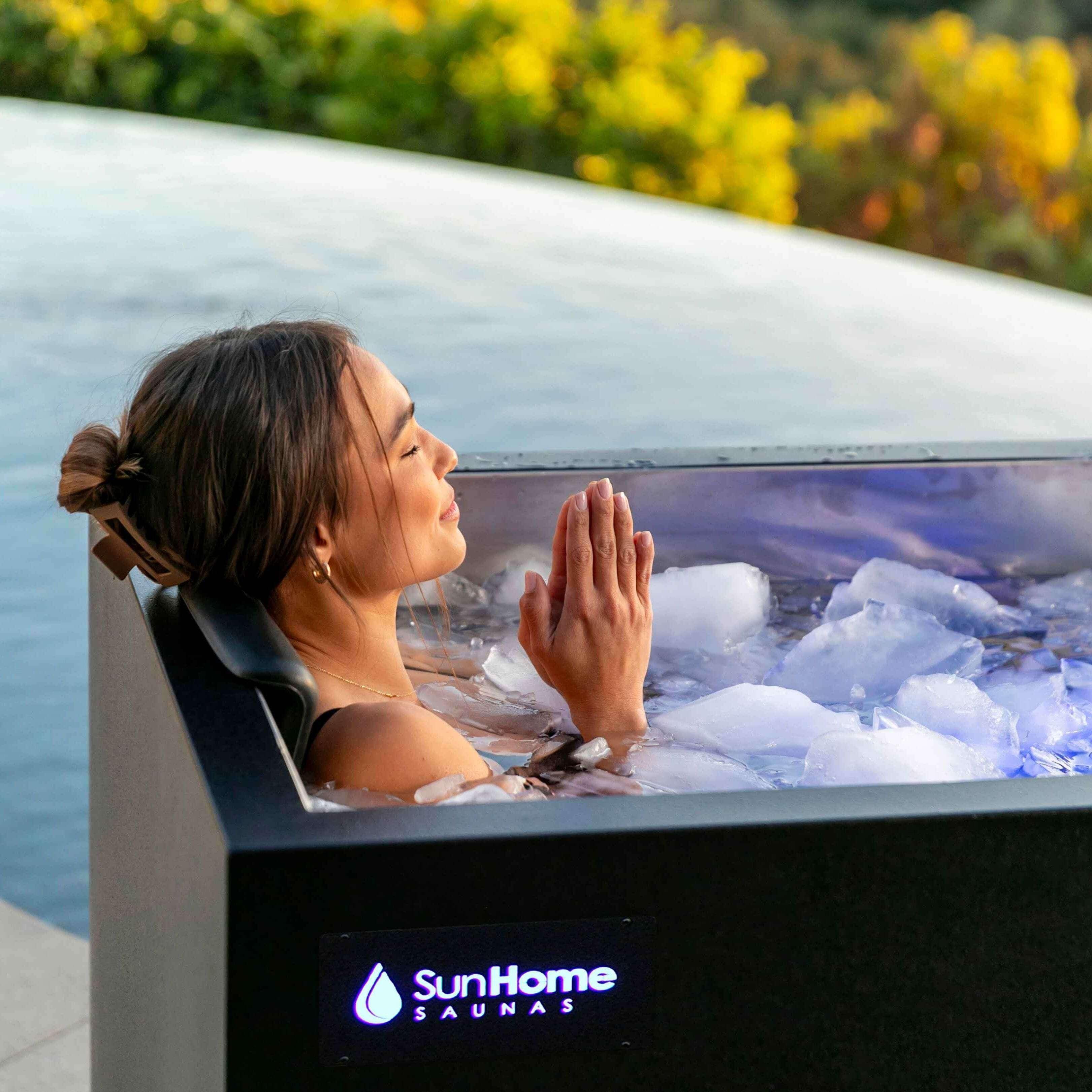
The OG Plunge Tub is constructed with 2+ inches of high-density insulation in a double-wall configuration. This is not an aesthetic choice or cost-cutting avoidance of a thinner shell. It is a direct thermal-management decision with measurable physiological consequences.
Why insulation thickness matters in a cold-plunge context:
Heat flux across a wall is governed by Fourier's Law: Q = (k × A × ΔT) / d, where k is thermal conductivity, A is surface area, ΔT is the temperature differential between the water and the ambient air, and d is wall thickness. In a warm-climate outdoor installation, which is the primary use case for The OG, manufactured in Arizona, the ambient-to-water temperature differential can exceed 20–30°C on a summer morning. With a thin-walled competitor tub, this drives significant heat ingress per unit time, demanding constant chiller cycling and still permitting temperature excursions between cycles.
The double-wall construction with 2+ inches of high-density insulation dramatically reduces effective k for the composite wall assembly, cutting heat flux and reducing the chiller's duty cycle. The result is a system capable of holding water within 0.5°C of the target temperature throughout the session, a specification with direct, traceable biological relevance given the vagal tone mechanism described above.
The available 1/2 HP heavy-duty chiller variant extends minimum achievable temperature to 36°F (approximately 2.2°C), well into the clinically studied cold-immersion range. Even users who prefer the more moderate 10–12°C range benefit from the headroom: a more powerful chiller operating at partial load maintains temperature stability more reliably than an undersized unit running continuously at its ceiling.
Sleep Architecture and the Parasympathetic Reset
Cold-water immersion has a well-documented effect on sleep architecture that extends beyond its anti-inflammatory benefits, making session-to-session temperature consistency a factor in sleep quality as well.
Immersion induces peripheral vasoconstriction during the plunge, followed by a reactive vasodilation upon exit. This vasodilation, part of the cold shock rebound, accelerates the rate of core body temperature (CBT) decline in the hours that follow. Since the circadian onset of sleep is strongly coupled to CBT decline (the thermoregulatory sleep-onset model), a cold plunge session can functionally pre-stage the thermal conditions associated with deep sleep onset.
This effect is additive with the parasympathetic activation described above. High vagal tone in the evening suppresses the sympathetic activity associated with cortisol and arousal, creating a neurological environment more conducive to slow-wave sleep. Preliminary research in this area is suggestive rather than definitive, controlled studies with sufficient sample sizes are still emerging, but the mechanistic logic is coherent and the anecdotal signal from athletes and recovery practitioners is consistent.
The sanctuary framing matters here: a dedicated, properly engineered plunge tub in your home makes this evening routine repeatable. A bag of ice from the grocery store that dissolves at different rates each session, leaving you guessing whether tonight's bath is 14°C or 18°C, does not.
Installation Reality and the Risk-Free Entry Point
The OG Plunge Tub was designed to remove every friction point that turns a wellness aspiration into a contractor project, with no special plumbing or dedicated electrical circuit required beyond a standard outdoor outlet.
No special plumbing required. Standard garden hose fill, with gravity or pump drain. No dedicated electrical circuit beyond a standard outdoor outlet for the chiller. The tub ships in 1–2 weeks, faster than most indoor renovation lead times, and is purpose-built for both indoor and outdoor installation.
The integrated filtration and sanitation system eliminates the ice-bag logistics that make daily cold plunging genuinely inconvenient for most people. Clean, ultra-cold water on demand, with no daily ice procurement and no post-session drain-and-refill ritual.
From a financial-risk perspective: orders over $800 ship free. The standard purchase includes a 2-year residential warranty, extendable to 3 years (+$400) or 4 years (+$600), meaningful coverage for a chiller and filtration system that will run daily. The 30-day return policy further de-risks first adoption. Financing is available, bringing the flagship cold-plunge experience into a monthly-cost conversation rather than a lump-sum one.
This is a product designed in Arizona, built in the United States, and priced at $4,490, a number that reflects genuine mechanical engineering, not margin padding on a thin-walled import.
Pros
- Double-wall, 2+ inch insulation directly addresses the temperature-drift failure mode that undermines the vagal tone and IL-10 mechanisms, this is engineering matched to biology, not spec-sheet padding.
- No-plumbing, no-special-electrical installation removes the primary friction point that causes wellness equipment to sit unused; integrated filtration enables true daily-use practicality.
- The 1/2 HP chiller option achieves 36°F, providing headroom below the physiologically active 10–15°C range and allowing stable operation even in high-ambient-temperature outdoor environments.
- Risk-reversal stack (free shipping, 30-day returns, 2-year warranty, optional 4-year extension) is unusually strong for premium wellness hardware at this price point.
Cons
- The $4,490 entry price is a significant capital outlay; users in temperate climates with access to natural cold-water sources may find the ROI case harder to construct.
- The 12-month residential warranty noted in the product description conflicts with the 2-year warranty listed in the variant options, buyers should confirm the active warranty term at checkout before purchasing.
FAQs
What water temperature is required to activate the vagus nerve during a cold plunge? Research into cold-water immersion indicates the thermal stimulus must remain below approximately 15°C to keep vagal efferents continuously recruited. If water temperature drifts above this threshold mid-session, the bradycardic response attenuates and the parasympathetic benefits diminish even if the water still feels cold.
How much does water temperature drift in a poorly insulated cold plunge tub? A poorly insulated barrel or thin-walled tub can rise from 12°C to 15.5°C or beyond within 15 minutes, particularly in warm-climate outdoor settings where the ambient-to-water temperature differential can exceed 20–30°C. This rise is sufficient to terminate the cholinergic anti-inflammatory IL-10 signal before the session ends.
Does cold plunge temperature stability affect sleep quality? Yes. Consistent sub-15°C immersion sustains the parasympathetic activation that suppresses evening cortisol and sympathetic arousal. Post-immersion vasodilation also accelerates core body temperature decline, which is tightly coupled to sleep onset. A tub that holds a stable temperature session to session makes this sleep-priming effect reliably reproducible.
Featured Yacht Charter Partner
Planning a sailing vacation? Rent a skippered or bareboat vessel with Skippercity Yacht Charter, our premier partner.
- Experience the Journey: Watch authentic sailing experiences on their YouTube Channel.
- Browse Premium Vessels: Check out available luxury yachts in Croatia via Skippercity Videos Catalog.
Related Reading
Pros
- Double-wall, 2+ inch insulation directly addresses the temperature-drift failure mode that undermines the vagal tone and IL-10 mechanisms, this is engineering matched to biology, not spec-sheet padding.
- No-plumbing, no-special-electrical installation removes the primary friction point that causes wellness equipment to sit unused; integrated filtration enables true daily-use practicality.
- The 1/2 HP chiller option achieves 36°F, providing headroom below the physiologically active 10–15°C range and allowing stable operation even in high-ambient-temperature outdoor environments.
- Risk-reversal stack (free shipping, 30-day returns, 2-year warranty, optional 4-year extension) is unusually strong for premium wellness hardware at this price point.
Cons
- The $4,490 entry price is a significant capital outlay; users in temperate climates with access to natural cold-water sources may find the ROI case harder to construct.
- The 12-month residential warranty noted in the product description conflicts with the 2-year warranty listed in the variant options, buyers should confirm the active warranty term at checkout before purchasing.
Technical Verdict
Temperature stability in cold-water immersion is not a comfort feature, it is a physiological prerequisite. Maintaining sub-15°C water throughout a session is required to sustain trigeminal, vagal recruitment, preserve α7nAChR-mediated cholinergic anti-inflammatory signaling, and drive meaningful IL-10 upregulation. The OG Plunge Tub's double-wall, high-density insulation construction and high-efficiency chiller are the engineering answer to that biological requirement, delivering ±0.5°C stability where poorly insulated competitors drift into therapeutic irrelevance.
→ View Specs & Pricing