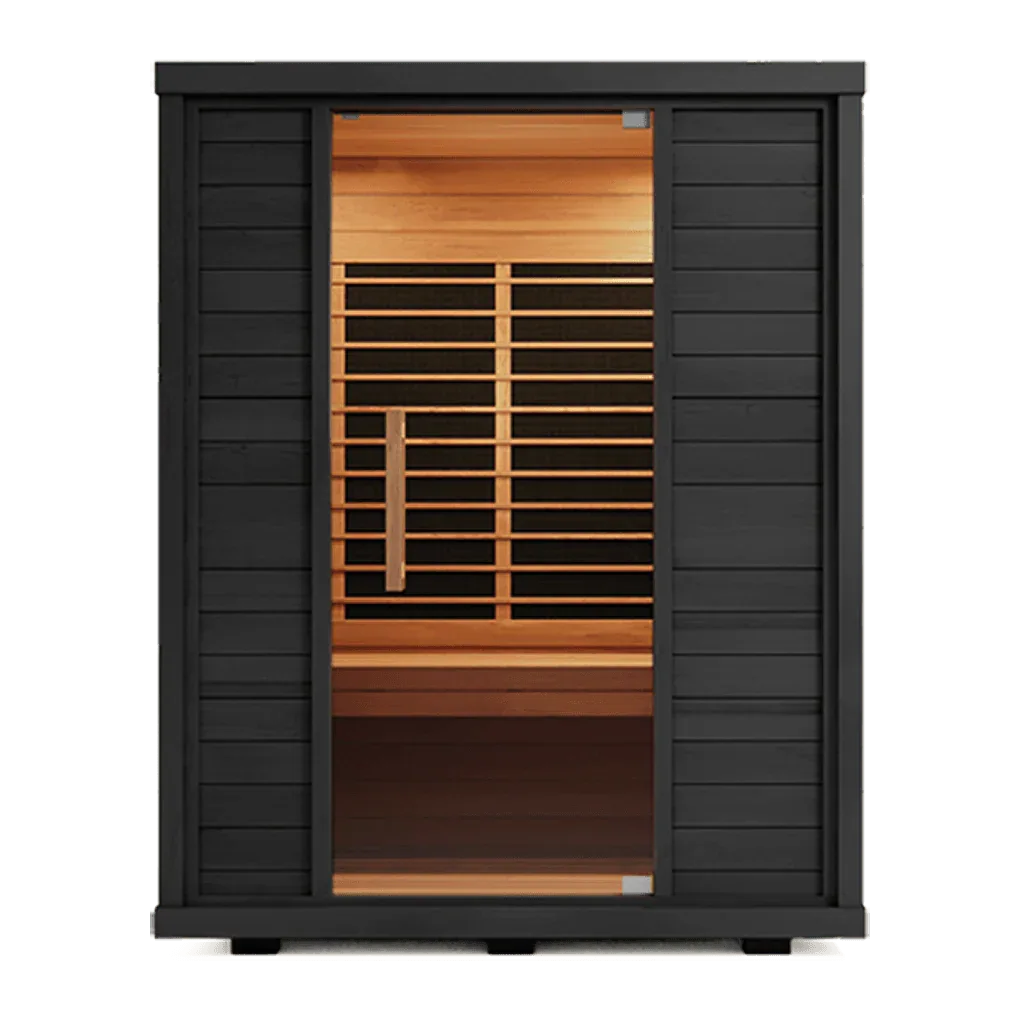

The modern home is often a storm of sensory overload, high-cortisol stress, and interrupted sleep. To counter this chronic sympathetic dominance, a dedicated sanctuary is no longer a luxury; it is a metabolic necessity. Imagine stepping into a spacious, three-person private retreat crafted from rich Canadian cedar, where a gentle, enveloping warmth instantly halts the mental chatter and relaxes tense musculature. This is the promise of the ultimate home recovery cabin: a shared space for deep, restorative connection or a spacious solo retreat to stretch, meditate, and let the day's stress evaporate.
Yet, to successfully transform your physical and mental baseline, this sanctuary cannot rely on simple convective hot air. True cellular rejuvenation demands an engineered thermal environment where optical physics meets human physiology. To justify this premium investment, we must look past marketing promises and examine the precise biophysics of infrared energy. We must explore how targeted wavelengths penetrate human tissue, trigger cellular healing mechanisms, and why the spatial layout of a three-person enclosure dictates the efficiency of your recovery.
FIR Spectral Tuning: Why 9.4 µm Outperforms Generic Far-Infrared
The biological efficacy of an infrared cabin is entirely dependent on spectral alignment. Under the international standard ISO 20473, the infrared spectrum is divided into Near-Infrared (0.78 to 3.0 µm), Mid-Infrared (3.0 to 50 µm), and Far-Infrared (50 to 1000 µm). However, in thermal biology and clinical literature, the 3.0 to 15.0 µm range, often colloquially termed 'far-infrared' (FIR) within the wellness industry, holds the highest biological relevance. Within this range, the 8–12 µm window is the golden corridor for human tissue interaction.
Specifically, the 9.4 µm wavelength represents the absolute peak resonance frequency for water molecules ($H_2O$), which make up approximately 70% of human soft tissue. When an emitter is tuned precisely to 9.4 µm, it triggers rotational and vibrational stretching modes in the target water molecules, converting radiative energy directly into internal kinetic energy without raising skin temperature to painful thresholds. Generic, poorly calibrated heaters often emit at shorter wavelengths (5–8 µm) that are either reflected by the epidermis or absorbed too superficially, leading to wasted energy and a less therapeutic experience. High-end cabins, such as the Sun Home Equinox, employ carbon-crystal elements calibrated specifically to prioritize this 9.4 µm sweet spot, maximizing absorption efficiency. Sun Home Saunas
Human Tissue Absorption Profiles: Wavelength-Dependent Depth Penetration
Unlike traditional steam rooms that heat the air to force sweat via external thermal conduction, tuned infrared energy penetrates deep into the subcutaneous layers of the body. The 8–12 µm waveband is capable of penetrating the dermis to a depth of 3 to 5 mm, directly targeting the microvascular network and the dense collagen matrix.
As this radiative energy is absorbed by water molecules and the amide bonds in collagen and keratin, it induces localized hyperthermia (up to 42°C at the cellular level). This localized thermal gradient triggers the activation of Transient Receptor Potential Vanilloid 1 (TRPV1) ion channels in sensory neurons. TRPV1 activation initiates a cascade of systemic benefits: it stimulates the release of nitric oxide, which dilates blood vessels, reduces peripheral vascular resistance, and rapidly lowers blood pressure. Simultaneously, this deep thermal energy triggers the synthesis of Heat Shock Protein 70 (Hsp70) and Heat Shock Protein 90 (Hsp90). These molecular chaperones act as cellular repair crews, refolding damaged proteins, mitigating oxidative stress, and speeding up muscular recovery after intense physical exertion.
Heat Shock Protein Induction Kinetics Under Radiative vs. Convective Loads
To understand why infrared saunas deliver superior cardiovascular and cellular benefits compared to traditional Finnish saunas, we must compare radiative and convective thermal dynamics. A traditional sauna relies on convective heat transfer, raising air temperatures to 80°C–100°C. This extreme heat creates a steep thermal gradient at the epidermis, which can cause respiratory discomfort, rapid dehydration, and a spike in heart rate before core temperatures can deeply rise.
Conversely, an engineered infrared cabin operates at a much safer, highly tolerable air temperature of 45°C–55°C. By keeping convective heat stress low, users can easily sustain sessions of 30 to 45 minutes. Meanwhile, the cabin maintains a powerful radiative heat flux of $\ge 600 \text{ W/m}^2$, satisfying professional heating and ventilation standards (such as ASHRAE guidelines for radiant heating systems). This continuous, deep-penetrating radiative flux improves the core body temperature by 1.5°C to 2.0°C. This prolonged, comfortable core temperature elevation maximizes the expression kinetics of Hsp70, providing solid cardiovascular training and neuroprotective benefits without the suffocating sensation of boiling air.
Emitter Material Physics: Ceramic, Quartz, and Carbon Fiber Emission Spectra
The heart of any infrared sanctuary is its emitter material. Emitter performance is governed by Wien's Displacement Law ($T \cdot \lambda_{\text{max}} = b$) and Kirchhoff's Law of Thermal Radiation, which dictates that a good absorber is a good emitter. Emitters must operate at a temperature that projects their peak spectral output into the 9.4 µm target zone.
Ceramic and quartz emitters operate at high surface temperatures (often over 250°C). According to Wien's Law, as temperature increases, the peak wavelength shifts shorter (towards 3–5 µm). While these emitters feel intensely hot, their energy is absorbed superficially at the skin's surface, often causing a burning sensation. In contrast, advanced carbon fiber heaters distribute electrical energy across a vast surface area. This allows them to operate at a lower, safer surface temperature (around 65°C to 80°C), which shifts their peak emissivity precisely into the 8–12 µm spectrum. Also premium carbon fiber sheets achieve a blackbody emissivity coefficient of 0.95 to 0.98, ensuring that almost all consumed electrical energy is converted into biologically active, therapeutic infrared waves. Sun Home Saunas