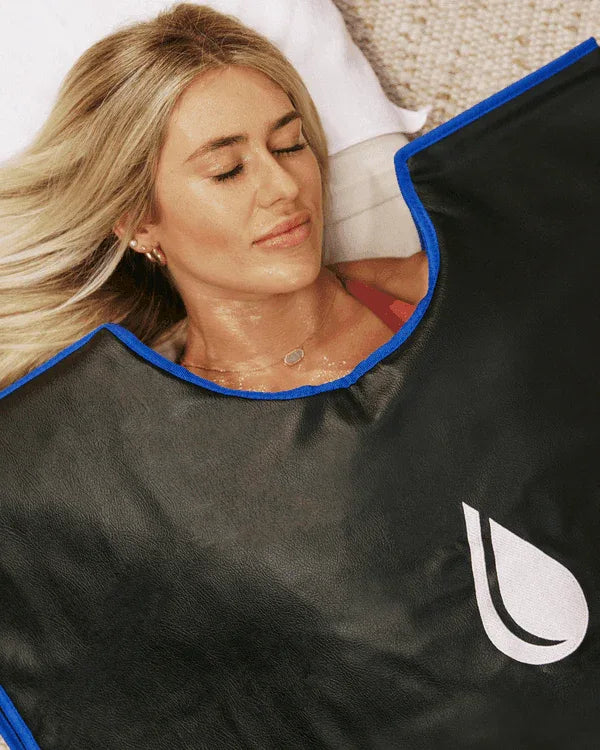

Imagine crossing the threshold of your home after a relentless day, leaving the noise of the outside world behind as you slide into a deeply warming, private sanctuary of restorative heat. The promise of an infrared sauna blanket under $600 is a lifestyle transformation within reach: a personal retreat that melts stress, rejuvenates fatigued muscles, and deepens your nightly sleep cycle. However, choosing the right system requires looking past marketing claims. To find a true medical-grade sanctuary, we must evaluate the underlying thermodynamics and physiological mechanisms that govern how infrared energy interacts with human tissue.
Emitter Chemistry: Carbon Fiber vs. Ceramic Spectral Emission Profiles
The foundation of any high-quality infrared blanket lies in its heating elements. In the sub-$600 market, manufacturers primarily deploy either carbon fiber or ceramic emitters. Carbon-fiber heaters emit broad-band infrared peaking in the longer wavelength regions of 5 to 15 μm, aligning closely with the body's natural emission profile. Conversely, ceramic emitters generate a more concentrated, shorter wavelength profile, typically peaking between 3 and 8 μm.
While consumer literature often labels everything above 3 μm as 'far-infrared,' ISO 20473 strictly defines the Mid-Infrared (MIR) spectrum as 3.0 to 50 μm and Far-Infrared (FIR) as 50 to 1000 μm. This distinction is critical because carbon-fiber emitters use lower surface temperatures over a larger surface area to distribute a gentle, enveloping warmth. This matches the biological resonance of water molecules, facilitating a deeply relaxing experience. To experience this premium thermal distribution firsthand, options like the Infrared Sauna Blanket use engineered carbon-fiber networks to maximize human-body coupling.
Attenuation Physics: Depth of Penetration Across Wavelengths
To understand how infrared radiation delivers its therapeutic benefits, we must apply the Beer-Lambert law of attenuation, which describes how light intensity decreases as it travels through biological tissue. Water, the primary constituent of human tissue, exhibits highly wavelength-dependent absorption.
Mid-infrared wavelengths (3–5 μm) penetrate slightly deeper into the skin's dermal layers (approximately 1 to 2 mm) before being absorbed by cellular water. This localized energy absorption induces an efficient rise in subcutaneous temperature, stimulating superficial blood flow. Longer far-infrared wavelengths (above 5 μm) are rapidly absorbed by water molecules in the outermost stratum corneum, creating a highly effective thermal barrier that triggers systemic vasodilation through autonomic pathways.
Thermally Regulated Bioenergetics: HSP72 and the Core-Skin Gradient
The true magic of a home sanctuary is its ability to trigger profound biological recovery. When your body is enveloped in a precise infrared field, it responds to the thermal stress by synthesizing Heat Shock Proteins (specifically HSP72). These molecular chaperones repair damaged proteins, accelerate muscle recovery, and defend against oxidative stress.
Simultaneously, the higher core temperature activates mitochondrial Uncoupling Protein 1 (UCP1) within brown adipose tissue (BAT), promoting non-shivering thermogenesis. To optimize this cellular response safely, look for systems that allow precise temperature adjustments up to 170°F, shifting Planck's emission curve to match your body's therapeutic needs. You can explore high-performance systems designed to improve cellular biogenesis using specialized carbon heating zones. V3 sauna blanket
Materials Science: Heat Distribution Uniformity and Contact Conductance
Because an infrared blanket wraps directly around your body, materials science plays a key role in both comfort and safety. Inferior blankets often suffer from 'hot spots' due to poorly spaced carbon wiring, which can cause local skin irritation or uneven sweating. Premium blankets under $600 solve this by integrating highly conductive layers of non-toxic PU leather, fireproof cotton, and specialized thermal distribution membranes. This ensures that the energy dose (measured in Joules absorbed per gram of tissue) is perfectly uniform across your entire body, letting you relax fully into your private sanctuary.
Safety Specifications: EMF/ELF Compliance and Skin Burn Thresholds
A sanctuary must be a place of absolute safety and peace of mind. When selecting an infrared sauna blanket, it is essential to ensure that the heating elements comply with strict safety standards, specifically those limiting Electromagnetic Fields (EMF) and Extremely Low Frequency (ELF) radiation.
Look for blankets engineered to limit magnetic field exposure to under 3 milligauss, aligning with IEEE Std C95.1-2019 guidelines. Also advanced digital control units feature auto-shutoff timers and precise thermal sensors to prevent the blanket from exceeding safe skin burn thresholds, ensuring your relaxation remains entirely worry-free. V3 sauna blanket
Pros
- Excellent, uniform far-infrared heat distribution with zero hot spots.
- Engineered with thick, non-toxic PU leather and medical-grade layers.
- Low EMF/ELF emissions for absolute safety during long sessions.
Cons
- Slightly heavier than entry-level models due to solid multi-layer shielding.
- Requires a few minutes longer to preheat compared to thin, unshielded blankets.
Technical Verdict
For those seeking a true home sanctuary under $600, carbon-fiber infrared blankets provide the most biologically compatible, low-EMF thermal therapy. By emitting uniform far-infrared wavelengths that resonance-couple with cellular water, these systems deliver optimal cellular recovery and deep stress relief.
→ View Specs & Pricing