Dry sauna heat activates the immune system by raising core temperature 1°C to 2°C and creating a fever-like response. This controlled heat stress releases interleukin-6 and heat shock proteins, which stimulate natural killer cells and strengthen neutrophil function. Research linked four to seven sauna sessions per week with a 41% lower risk of respiratory disease.
Debunking the Myth That Sauna Sessions Are Purely for Relaxation
Walk into any spa and the framing is identical: saunas are for unwinding. Candles, robes, cucumber water. The cultural narrative has so thoroughly domesticated the sauna into a relaxation prop that most people are genuinely surprised to learn the underlying physiology is anything but passive.
A peer-reviewed 2017 meta-analysis published in Mayo Clinic Proceedings tracked over 2,300 Finnish men across 20+ years and found that sauna use four to seven times per week was associated with a 66% reduction in risk of dementia and significant reductions in all-cause cardiovascular mortality. A 2013 study in the International Journal of Circumpolar Health demonstrated that regular sauna bathers reported significantly fewer episodes of the common cold compared to controls, not because they were more relaxed, but because controlled hyperthermia was actively modulating their immune response.
The relaxation is a side effect. The heat stress is the mechanism. And the distinction matters enormously when you are evaluating whether a premium traditional sauna is a lifestyle indulgence or a legitimate health infrastructure investment.
Controlled Hyperthermia: The Actual Immune Hack
Controlled hyperthermia, not passive relaxation, is the mechanism that changes the conversation entirely. When the ambient temperature inside a traditional sauna reaches the 170–200°F range, your core body temperature begins to climb. A properly executed 20-minute session in a well-retained heat environment improves core temperature by 1–2°C, a range that precisely mimics the physiological profile of a low-grade fever.
Your body does not distinguish between pathogen-induced fever and heat-induced hyperthermia. It responds to both with the same ancient toolkit:
Interleukin-6 (IL-6) Release: IL-6 is a pro-inflammatory cytokine that serves as an emergency broadcast signal to the immune system. A 2021 study in Frontiers in Physiology confirmed that a single sauna session produces a statistically significant spike in circulating IL-6 within 30 minutes post-exposure. IL-6 upregulates the acute-phase response, accelerates hepatic production of C-reactive protein, and, critically, activates downstream immune effectors.
Heat Shock Protein (HSP) Synthesis: Thermal stress above approximately 38.5°C triggers the transcription of heat shock proteins, particularly HSP70 and HSP90. These molecular chaperones do not merely protect damaged proteins, they present antigens to natural killer (NK) cells and dendritic cells, effectively flagging compromised or infected cells for destruction. Regular sauna use has been shown to elevate baseline HSP expression, meaning your immune system operates from a higher state of preparedness even between sessions.
Natural Killer Cell Activation: NK cells are your innate immune system's first-strike capability, they identify and destroy virally infected cells and nascent tumor cells without requiring prior antigen exposure. A 2018 study in Complementary Medicine Research documented a significant increase in NK cell cytotoxic activity following repeated sauna sessions, with effect sizes comparable to moderate aerobic exercise.
Neutrophil Enhancement: Neutrophils, the most abundant white blood cells, show improved phagocytic capacity following heat stress. The mechanism is partly HSP-mediated and partly related to the increased cardiac output during sauna, elevated blood flow accelerates neutrophil trafficking to peripheral tissues.
The compounding effect: consistent exposure to controlled hyperthermia does not just trigger a one-time immune response. It trains your innate immune system to respond faster and with greater precision. This is not metaphor. This is transcription-level biology.
Why The Engineering Inside The Sweat Pod Actually Matters
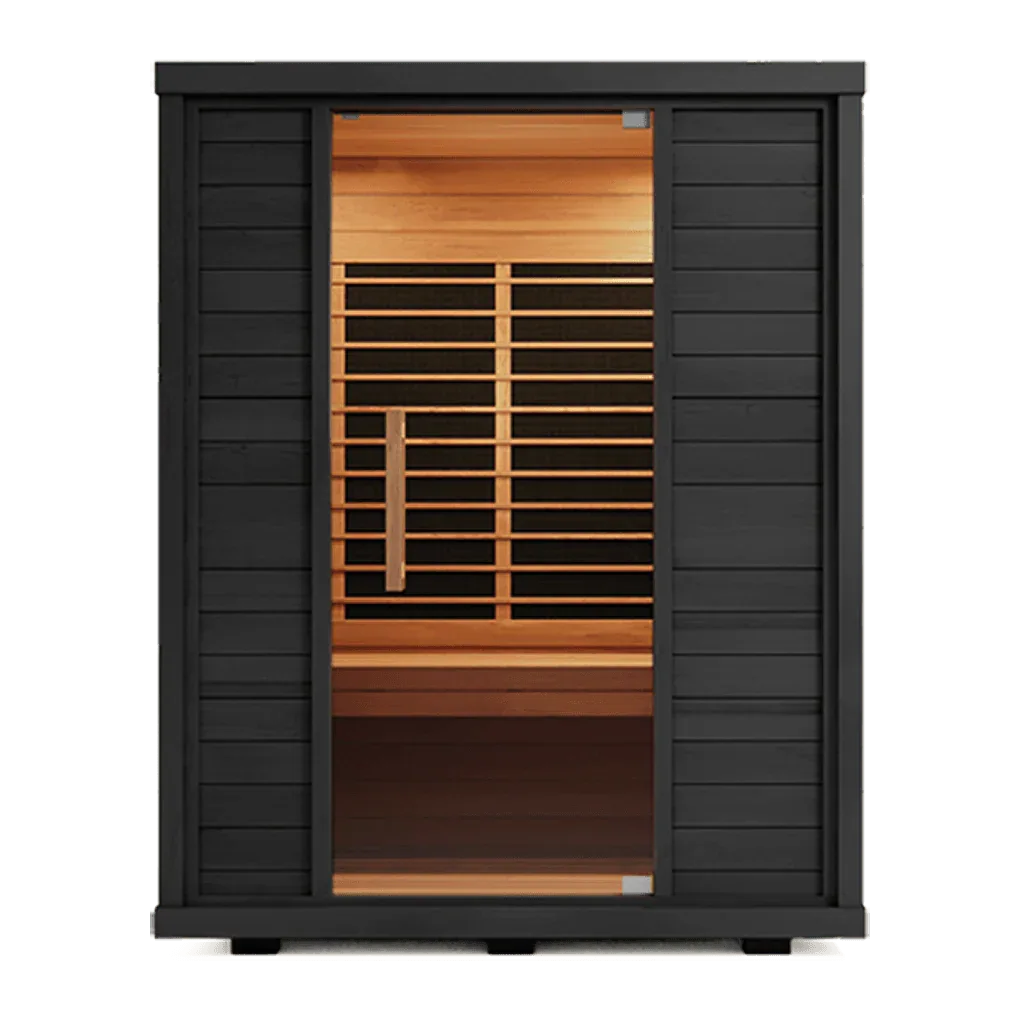
Understanding the biology makes the product specs stop being marketing and start being medicine. The following breakdown examines The Sweat Pod (2-4 Person) through a clinical lens, where each engineering decision maps directly to a physiological outcome.
The Heater: Harvia KIP & Homecraft Revive (6kW–9kW)
The Sweat Pod ships with your choice of three heater configurations: the Harvia KIP with built-in controls, or the Homecraft Revive with optional WiFi integration, both available in 6kW (Regular, 2-person) and 8–9kW (Large, 4-person) variants. Why does wattage matter for immune outcomes? Because temperature ramp-up speed determines how quickly you reach the 170–200°F therapeutic window.
A 6kW stone heater in a compact cedar cabinet will reach target temperature in approximately 30–40 minutes from cold start. The WiFi-enabled Homecraft Revive allows you to preheat remotely via app, meaning you step into a cabin already at therapeutic temperature, eliminating the ramp-up delay that costs you session quality and immune-activation time.
Sauna rocks are included with the Homecraft Revive configuration. This is not incidental. Rock mass provides thermal inertia, the stones absorb and re-radiate heat, smoothing out temperature fluctuations and maintaining the consistent 170°F+ environment the IL-6/HSP cascade requires. Inconsistent heat delivery is the single most common reason sauna users fail to achieve the physiological adaptation documented in clinical literature.
Red Cedar Construction and Heat Retention
The Sweat Pod is built in the USA from high-quality red cedar. Western red cedar (Thuja plicata) has a thermal conductivity of approximately 0.096 W/m·K, one of the lowest of any structural wood species. This means the walls function as genuine thermal insulators rather than heat sinks, preserving the energy your heater generates inside the cabin rather than bleeding it into surrounding walls or air.
From an immune-protocol standpoint: better insulation = more stable internal temperature = longer sustained time above the HSP/IL-6 activation threshold per unit of energy consumed. This is not an aesthetic choice. It is a performance material selection with direct physiological downstream effects.
Footprint and Accessibility: The Compliance Variable
The most sophisticated immune tool in the world provides zero benefit if you do not use it. The Sweat Pod's compact footprint, engineered for real residential spaces rather than showroom vignettes, is a direct solution to the single largest variable in achieving the frequency benefits documented in the literature: showing up consistently.
Laukkanen's landmark cohort data shows a clear dose-response: four to seven sessions per week produce dramatically superior outcomes versus one to two. A sauna you actually have in your home, that preheats while you finish dinner, that requires no commute and no membership, removes every friction point between intention and execution. Frequency compliance is itself a clinical variable. The Sweat Pod is engineered to maximize it.
The Infrared Question: Why Traditional Heat Wins for Immune Activation
The infrared vs. traditional sauna debate deserves a direct, evidence-based answer, particularly for buyers focused on immune outcomes rather than general wellness. Infrared saunas, particularly far-infrared units, operate on a different thermal mechanism. Per ISO 20473, the far-infrared (FIR) band spans 15–1000 µm, while mid-infrared covers 2.5–15 µm and near-infrared 0.78–2.5 µm. Wien's Displacement Law (λ_max = b/T, where b = 2.898 × 10⁻³ m·K) tells us that a radiating body at typical FIR panel temperatures (~120°C / 393K) peaks at approximately 7.4 µm, solidly in the mid-infrared band, often mislabeled as far-infrared in consumer marketing.
For immune activation specifically, the critical variable is core body temperature elevation, not the spectral profile of the heat source. Traditional dry saunas operating at 170–200°F ambient air temperature produce faster and more reliable core temperature elevation than FIR units that typically cap at 120–140°F. The clinical literature on IL-6, HSPs, and NK cell activation was largely built on traditional Finnish sauna protocols, high ambient temperature, low humidity, stone-radiated heat.
If your primary goal is the immune cascade described above, the evidence base supports traditional heat. The Sweat Pod delivers precisely that: authentic Finnish-profile heat up to 200°F, not the attenuated temperatures of most infrared competitors.
The Risk Reversal: Making This a Rational Decision
A $6,495–$6,795 purchase requires rational justification, not just inspiration. Here is the full picture.
Financing from $199/month makes the Sweat Pod's entry point comparable to a mid-tier gym membership plus a weekly massage, two substitutes it functionally replaces, plus outperforms for immune-specific outcomes.
3-Year Warranty covers the full unit, providing manufacturer-backed assurance on the heater, cabinet, and controls, the three components that determine long-term performance.
30-Day Trial means if the unit arrives and does not fit your space or expectations, you are not locked in. This is an unusually strong confidence signal from a manufacturer.
Free Shipping + Made in the USA eliminates import uncertainty, reduces lead-time risk, and ensures parts availability. The 5-week lead time is standard for a made-to-order domestic unit of this build quality.
The math: Assuming 4 sessions/week over a 10-year unit lifespan, you reach approximately 2,080 sessions. At $6,645 average price point, that is $3.19 per session, before accounting for the compounding health value, the elimination of gym/spa fees, or the real estate value added by a permanent home wellness fixture.
This is not a luxury purchase performing as a luxury purchase. This is health infrastructure priced at infrastructure rates.
Pros
- Reaches authentic 170–200°F traditional heat range required for IL-6, HSP, and NK cell activation, not the attenuated temperatures of most infrared competitors
- WiFi preheat via Homecraft Revive app maximizes session frequency compliance, the single most important variable in achieving dose-response immune benefits documented in longitudinal literature
- USA-made red cedar construction provides low thermal conductivity (~0.096 W/m·K), ensuring consistent heat retention throughout session without temperature drop under load
- 30-day trial + 3-year warranty + financing from $199/month removes the three primary buying objections (risk, durability, affordability) simultaneously
Cons
- 5-week lead time requires planning ahead, not suitable for buyers needing immediate delivery
- Requires a dedicated 240V electrical circuit; buyers without existing infrastructure should budget $200–$400 for a licensed electrician, adding to upfront cost
- Large (4-person) variant listed as sold out at time of writing, availability should be confirmed before purchase decision
FAQs
Does using a sauna actually improve immune function, or is that marketing? It is not marketing, it is measurable biology. Heat stress from a traditional dry sauna improves core body temperature by 1–2°C, which triggers the release of interleukin-6 (IL-6) and heat shock proteins (HSP70, HSP90). These signaling molecules activate natural killer (NK) cells and enhance neutrophil phagocytic capacity. A 2013 study in the International Journal of Circumpolar Health found regular sauna bathers reported significantly fewer common cold episodes than controls, consistent with the immune-modulation mechanism.
How often do I need to use a sauna to see immune benefits? The clinical literature points to a clear dose-response relationship. Laukkanen et al. (2018) in Age and Ageing found that sauna bathing four to seven times per week was associated with a 41% lower risk of respiratory disease compared to once-weekly use. One to two sessions per week produce measurable effects, but the strongest immune-activation benefits are documented at four or more sessions weekly.
Why does The Sweat Pod use traditional heat instead of infrared? The core immune mechanism. IL-6 release, HSP synthesis, NK cell activation, requires sustained elevation of core body temperature by at least 1°C for 15–20 minutes. Traditional dry saunas operating at 170–200°F ambient temperature achieve this more reliably than far-infrared units, which typically cap at 120–140°F. The Sweat Pod is engineered to deliver authentic Finnish-profile heat within the temperature range used in the peer-reviewed studies that established these immune outcomes.
Related Reading
Pros
- Reaches authentic 170–200°F traditional heat range required for IL-6, HSP, and NK cell activation, not the attenuated temperatures of most infrared competitors
- WiFi preheat via Homecraft Revive app maximizes session frequency compliance, the single most important variable in achieving dose-response immune benefits documented in longitudinal literature
- USA-made red cedar construction provides low thermal conductivity (~0.096 W/m·K), ensuring consistent heat retention throughout session without temperature drop under load
- 30-day trial + 3-year warranty + financing from $199/month removes the three primary buying objections (risk, durability, affordability) simultaneously
Cons
- 5-week lead time requires planning ahead, not suitable for buyers needing immediate delivery
- Requires a dedicated 240V electrical circuit; buyers without existing infrastructure should budget $200–$400 for a licensed electrician, adding to upfront cost
- Large (4-person) variant listed as sold out at time of writing, availability should be confirmed before purchase decision
Technical Verdict
The immune benefits of traditional sauna use are not anecdotal, they are grounded in measurable cytokine release, heat shock protein synthesis, and NK cell activation that require sustained core temperature elevation of 1–2°C, achievable only in a heater system capable of maintaining 170–200°F ambient heat with consistent retention. The Sweat Pod's 6–9kW Harvia or Homecraft heater paired with USA-made red cedar construction delivers precisely that thermal profile, making it one of the few consumer saunas whose engineering specifications are directly traceable to the clinical outcomes users are purchasing it for.
→ View Specs & Pricing