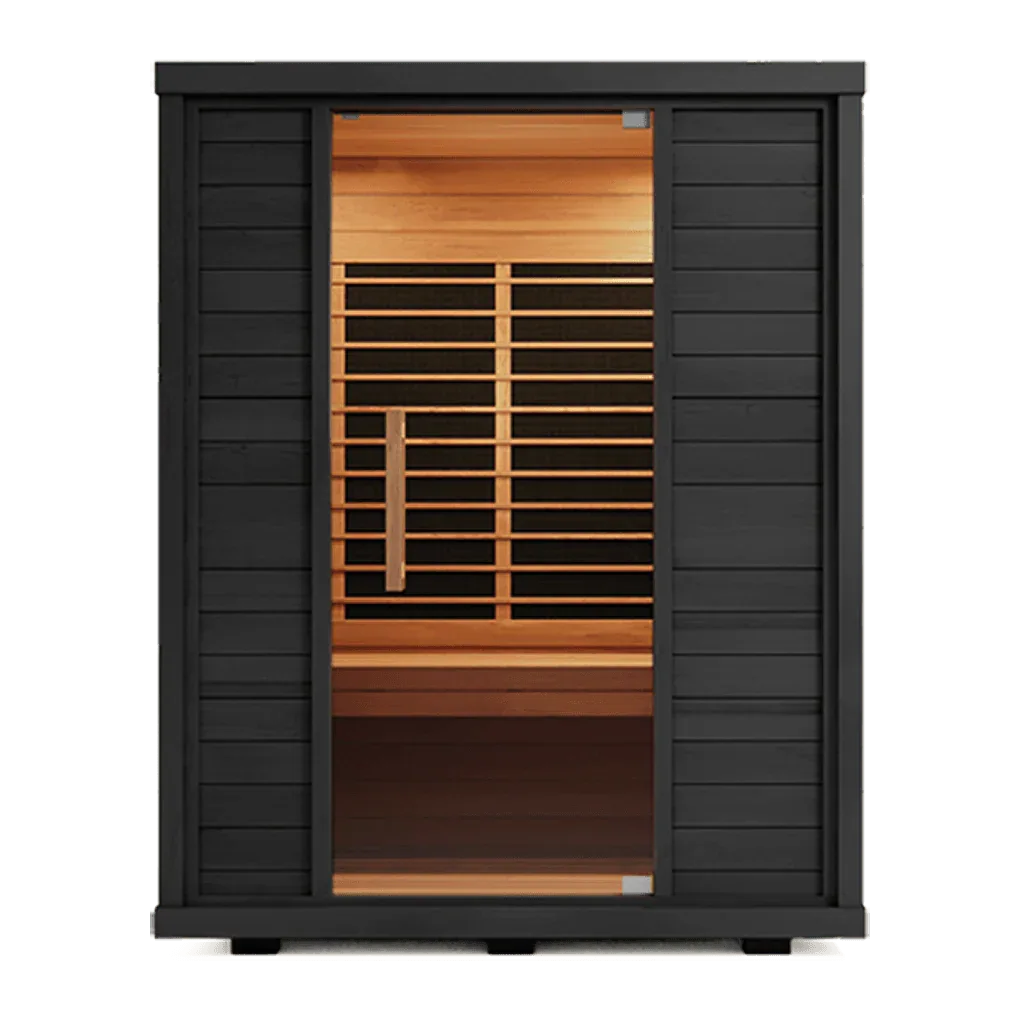

Plug-and-play infrared saunas deliver therapeutic heat from a standard household outlet by warming body tissue directly instead of superheating the air. Traditional Finnish saunas use convection to raise air temperatures to 80°C to 100°C before heating the skin. Infrared cabins use radiant energy, keeping the surrounding air more comfortable while producing a deep sweat.
Radiative Transfer: Spectral Requirements for Deep Penetration
To understand the efficiency of a plug-and-play infrared cabin, we must first examine how heat is transferred to the human body. Traditional Finnish saunas rely on convective heating, warming the air to extreme temperatures between 80°C and 100°C. The air then heats the skin's surface. This process requires significant energy and can feel oppressive to breathe, often limiting session times. Infrared saunas bypass convective heat transfer entirely, using radiative heat transfer to directly excite molecules within the body's tissues without needing to superheat the surrounding air.
According to ISO 20473, the infrared spectrum is divided into Near-Infrared (IR-A: 780 to 1400 nm), Mid-Infrared (IR-B: 1.4 to 3.0 μm), and Far-Infrared (IR-C: 3.0 to 1000 μm). Within this spectrum, far-infrared radiation (specifically wavelengths peaking near 9.4 μm) matches the resonant frequency of water molecules, which constitute roughly 60% of the human body. Because these electromagnetic waves match the vibrational frequencies of O, H and N, H bonds in water and cellular proteins, they cause these molecules to vibrate, producing volumetric heating. This allows the radiant energy to penetrate 3 to 5 mm into the dermal and hypodermal layers, inducing a deep core thermal response at comfortable ambient temperatures of only 45°C to 55°C. For those seeking premium full-body integration, cabin systems like the Sun Home Equinox optimize this precise wavelength distribution to maximize cellular absorption. Sun Home Saunas
Carbon vs Ceramic Emitters: Emissivity and Power Density
The performance of a plug-and-play infrared sauna depends heavily on the engineering of its heating elements. The two primary technologies utilized are carbon fiber and ceramic emitters. Ceramic heaters possess high power density and can reach high temperatures quickly, but their small surface area leads to uneven heat distribution and concentrated hot spots. This high intensity often shifts their peak emission wavelength away from the optimal far-infrared range.
In contrast, carbon fiber heaters use large, flat panels that cover a much greater surface area. Because the heat is distributed across a larger plane, these panels operate at lower surface temperatures, aligning their output perfectly with the 9.4 μm far-infrared peak. This large surface area ensures uniform radiant flux density, wrapping the user in a consistent field of therapeutic energy across a custom size cabin. For targeted recovery outside a full cabin, high-quality alternatives like the Infrared Sauna Blanket use flexible carbon heating elements to deliver direct, restorative warmth in a portable format. Selecting carbon-based systems ensures that you receive a balanced, low-intensity thermal field that maximizes cellular absorption over extended recovery sessions.
The Biological Response: Heat Shock Proteins and Vasodilation
When far-infrared waves penetrate the skin, they trigger a cascade of beneficial physiological responses. As your core temperature rises by 0.5°C to 1.5°C, thermosensitive transient receptor potential (TRPV1) channels are activated. This triggers the upregulation of Heat Shock Proteins (specifically HSP70 and HSP90). These specialized proteins act as cellular chaperones, repairing damaged, misfolded proteins and protecting cells against oxidative stress. This cellular repair mechanism is a key factor in long-term health span and systemic recovery.
Simultaneously, the mild thermal stress stimulates endothelial nitric oxide synthase (eNOS), accelerating the production of nitric oxide (NO) within blood vessels. Nitric oxide acts as a potent vasodilator, relaxing the smooth muscle walls of your vasculature. Laser Doppler flowmetry studies demonstrate that this vasodilation can increase cutaneous blood flow by 2 to 3 times. This rapid increase in circulation delivers oxygen and vital nutrients to fatigued muscle tissues while facilitating the removal of metabolic waste products, mimicking the cardiovascular benefits of moderate aerobic exercise without the joint strain.
Engineering a Safe Sanctuary: Circuitry and Low-EMF Design
The greatest advantage of a modern plug-and-play infrared sauna is its compatibility with standard residential infrastructure. Traditional saunas require dedicated 240-volt, 30-amp lines, often costing thousands of dollars in electrical upgrades and professional labor. Premium plug-and-play units are engineered to draw under 15 amps at 120 volts, meaning they can safely plug into any standard household outlet.
But combining high electrical currents with close-proximity wellness devices requires strict engineering safeguards regarding Electromagnetic Fields (EMF). Reputable manufacturers use double-jacketed carbon heaters and specialized twisted-pair wiring to cancel out magnetic and electric fields. This ensures that magnetic field exposure remains well below 3 milligauss (mG) at the heater surface, which is far safer than common household appliances like microwaves or hair dryers. Investing in an engineered, low-EMF system allows you to relax in your home sanctuary with absolute peace of mind, knowing your recovery environment is chemically and electromagnetically clean. To secure your own medical-grade, low-EMF retreat with low monthly financing, free shipping, and an industry-leading lifetime warranty, choose a proven, premium cabin system.
Frequently Asked Questions
How do plug-and-play infrared saunas differ from traditional saunas in how they heat the body?
Traditional saunas rely on convective heating, which warms the surrounding air to extreme temperatures between 80°C and 100°C. In contrast, infrared saunas use radiative transfer to directly excite molecules within the body's tissues without superheating the air. This induces a deep core thermal response at much more comfortable ambient temperatures of 45°C to 55°C.
Can I plug an infrared sauna into a standard wall outlet, or do I need special electrical work?
Unlike traditional saunas that require dedicated 240-volt, 30-amp lines and expensive electrical upgrades, premium plug-and-play infrared saunas are highly compatible with standard home infrastructure. These units are engineered to draw under 15 amps at 120 volts, meaning they can safely plug into any standard household outlet. This allows you to set up your recovery space without costly electrical overhauls.
Which is better for an infrared sauna: carbon or ceramic heating elements?
Carbon fiber heaters are generally preferred because they use large, flat panels that distribute heat evenly across a wide plane, aligning perfectly with the optimal 9.4 μm far-infrared wavelength. Ceramic heaters can reach high temperatures quickly but have a small surface area that leads to uneven heat distribution and concentrated hot spots. Choosing carbon-based systems ensures a balanced, low-intensity thermal field that maximizes cellular absorption.
What health and physiological benefits does far-infrared heat provide?
Far-infrared heat raises your core temperature by 0.5°C to 1.5°C, triggering the upregulation of Heat Shock Proteins that repair damaged cellular proteins and protect against oxidative stress. Also the mild thermal stress stimulates the production of nitric oxide, which dilates blood vessels and can increase blood flow by 2 to 3 times. This rapid increase in circulation delivers oxygen and nutrients to fatigued muscles while removing metabolic waste.
Are home infrared saunas safe from high levels of EMF exposure?
Yes, premium and reputable systems are engineered to keep electromagnetic fields (EMF) extremely low. Manufacturers use double-jacketed carbon heaters and specialized twisted-pair wiring to cancel out magnetic and electric fields. This design ensures that magnetic field exposure remains below 3 milligauss (mG) at the heater surface, which is safer than common household appliances like microwaves or hair dryers.
Related Reading
Related reading
Pros
- Plugs into any standard 120V/15A household outlet with no electrical modifications.
- Ultra-low EMF carbon heaters provide uniform, safe, and deeply penetrating far-infrared heat.
- High-end therapeutic benefits at comfortable, highly tolerable ambient temperatures.
- Backed by strong risk reversals including lifetime warranties, free shipping, and monthly financing.
Cons
- Maximum temperatures are lower than convective Finnish saunas, which some traditionalists may prefer.
- Requires dedicated interior floor space of approximately 4x4 feet.
Technical Verdict
By pairing highly efficient carbon heaters with standard 120V circuitry, modern plug-and-play saunas deliver precise far-infrared wavelengths that optimize cellular recovery without structural modifications. This makes a premium home cabin the most practical, scientifically validated investment for daily stress reduction, vascular health, and sleep optimization.
→ View Specs & Pricing