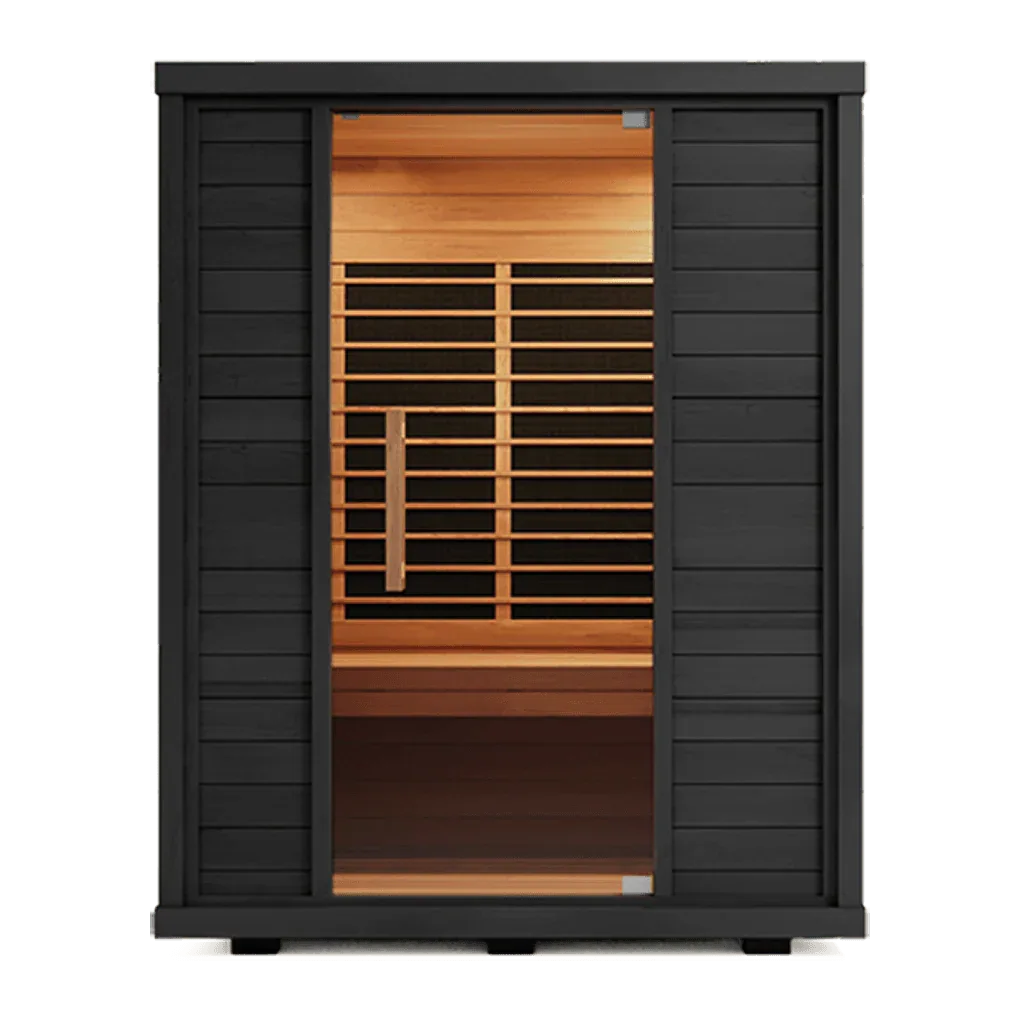

Imagine stepping into your own private sanctuary at the end of a demanding day. The ambient lighting is soft, the air is clean, and a deep, enveloping warmth immediately begins to soothe your nervous system. As you settle onto the smooth, aromatic wood, the day's stress melts away. This is not just a luxury; it is a systematic biological upgrade, a dedicated space designed to lower cortisol, trigger deep muscular recovery, and prepare your body for profound, restorative sleep. It is an investment in your long-term health, a daily retreat that returns your physiology to its optimal baseline.
However, this vision of a restorative home oasis vanishes when you fall into the trap of discount infrared saunas. Drawn in by rock-bottom prices, many buyers unknowingly purchase a hollow shell: a drafty wooden box equipped with low-grade, physiologically inert heating panels. While these units promise the benefits of infrared therapy, their engineering shortfalls deliver nothing more than a superficial, drafty sweat. To truly justify the premium investment of a high-quality home sauna, we must step past the marketing jargon and examine the rigorous physics of infrared energy and human biology. When we analyze the science, the difference between a cheap substitute and a medical-grade sanctuary becomes shiftless and undeniably clear.
Why Discount Heaters Fail to Deliver Therapeutic Wavelengths
The primary failure point of discount infrared saunas lies within the heating element itself. To understand why, we must look to the international standard for infrared categorization, ISO 20473. This standard strictly partitions the infrared spectrum into Near-Infrared (IR-A: 0.78–1.4 µm), Mid-Infrared (IR-B: 1.4–3.0 µm), and Far-Infrared (IR-C: 3.0–1000 µm).
Discount saunas typically use thin-film carbon or low-grade ceramic heaters that struggle to maintain a stable, high-emissivity surface temperature. Due to poor manufacturing tolerances and uneven electrical resistance, these cheap heating elements suffer from "spectral drift." Instead of emitting a concentrated band of therapeutic Far-Infrared energy, their emissions scatter widely, often peaking in the useless outer ranges of IR-B or failing to generate enough radiant flux altogether. Without high emissivity, the efficiency with which a surface emits thermal radiation, a heater cannot deliver a dense field of infrared photons to your body, rendering the session physiologically inert. High-end systems, such as the Sun Home Equinox, rely on carbon-ceramic hybrid heaters engineered to maximize spectral purity and maintain a consistent, high-emissivity output. Sun Home Saunas
Spectral Mismatch: Near-IR vs. Far-IR Absorption in Skin and Subcutaneous Tissue
The human body is composed of approximately 60% water, and this biological reality dictates how we absorb thermal energy. Water molecules possess specific vibrational and rotational modes that resonate when exposed to electromagnetic wavelengths. According to the absorption spectrum of water, this resonance peaks dramatically in the Far-Infrared band, specifically around 9.4 µm.
When a premium sauna emits far-infrared waves in the 8–14 µm range, it achieves a perfect spectral match with your body's water molecules. This triggers rotovibrational excitation, converting electromagnetic energy directly into kinetic heat within your tissue. This allows far-infrared energy to penetrate deeply into the subcutaneous tissue layers (up to 30–40 mm).
In contrast, discount saunas often rely on cheap near-infrared bulbs or misaligned heaters that emit primarily in the 0.78–2 µm range. While near-IR can penetrate skin via an optical window, it does not match the vibrational resonance of water molecules efficiently for whole-body heating. Instead, it scatters in the highly sensitive epidermis and dermis (less than 1–2 mm deep). This superficial heating triggers your skin's thermal nociceptors (pain and heat sensors) early, making you feel intensely hot on the surface while your core temperature remains virtually unchanged. You end up hot, uncomfortable, and unbenefited.
Threshold Biology: Time-Temperature Curves for HSP70 and Core Body Heating
The true biological benchmark of a successful sauna session is the upregulation of Heat Shock Proteins, specifically HSP70. These molecular chaperones repair damaged cellular structures, prevent protein aggregation, and mediate systemic vasodilation. However, HSP70 synthesis is not a linear response; it is a threshold-dependent biological event.
To trigger the transcription of HSP70, your core body temperature (typically validated via tympanic or rectal measurements) must reach a threshold of 38°C to 40°C (100.4°F to 104°F) and sustain that elevation for a minimum of 15 to 30 minutes.
Discount saunas fail to achieve the necessary radiant flux density (expressed in watts per square centimeter) to overcome the body's natural thermoregulatory defenses, such as evaporative cooling through sweating. Because cheap heaters cannot deliver a sustained dose of resonant far-infrared energy, your core temperature plateaus well below the 38°C threshold. You may sweat superficially due to the trapped hot air inside the cabin, but your cells never receive the thermal stress required to initiate cellular hormesis, cardiovascular conditioning, or HSP70 synthesis. You are essentially sitting in an expensive, dry, drafty closet.
EMF Exposure Risks in Low-Cost Carbon and Ceramic Units
While you step into a sauna to detoxify and destress, a cheap unit may actually introduce a hidden environmental stressor: high levels of Electromagnetic Fields (EMF) and Extremely Low Frequency (ELF) radiation.
Electric currents flowing through any heating element naturally generate magnetic and electric fields. Premium infrared saunas use advanced engineering to mitigate this. They employ dual-conductor heating elements or bifilar winding patterns, where two currents flow in opposite directions adjacent to one another. This geometric arrangement allows the magnetic fields generated by each conductor to cancel each other out, keeping EMF levels safely below 1 milligauss (mG) at the point of body contact, in alignment with the safety principles of the ASTM E2986-18 standard.
Discount manufacturers bypass this costly engineering step. Their heaters use simple single-conductor paths, which act as massive loop antennas. It is common for bargain-basement carbon panels to emit magnetic fields exceeding 10 to 30 mG directly against your back. Instead of promoting parasympathetic relaxation, exposing your cellular structures to high EMF levels during a thermal stress event can trigger cellular oxidative stress, completely undermining the health benefits you purchased the sauna for.
Material Substitutions: Cheaper Wood, Shielding, and Air Sealing Drawbacks
To hit incredibly low retail prices, discount manufacturers must cut corners on materials and structural integrity. The consequences of these substitutions are severe and directly impact your health and safety:
- Uncertified Wood & Toxic Glues: High-end saunas use double-wall construction made from sustainably harvested, hypoallergenic woods like Canadian Red Cedar or premium Basswood. Discount units often use cheap, unseasoned hemlock or plywood held together with cheap chemical glues. Under the high thermal loads of a sauna session, these glues outgas Volatile Organic Compounds (VOCs) like formaldehyde, which you then inhale in a confined space.
- Poor Air Sealing and Insulation: Bargain saunas lack proper tongue-and-groove fitment and double-wall insulation. The resulting drafts force the low-grade heaters to run constantly at 100% capacity just to keep the cabin warm, accelerating heater degradation and increasing EMF emissions.
- Lack of Safety Certification: Premium units carry electrical and safety certifications from recognized testing laboratories (such as ETL, UL, or CE). Many cheap imported units lack these certifications entirely, presenting a genuine electrical and fire hazard in your home.
Practical Tolerances: What Parameters Can Salvage a Discount Sauna?
If you already own a discount sauna or are operating on a highly restricted budget, there are minor adjustments you can make to optimize your sessions, though they cannot fully replicate the performance of a medical-grade system:
- Reduce Distance to Heaters: The intensity of radiant energy falls off with the square of the distance (the inverse-square law). Sitting as close to the panels as possible maximizes the infrared dose, though you must weigh this against the increased EMF exposure from unshielded heaters.
- Extend Session Pre-Heat Times: Allow the cabin to pre-heat for at least 45 minutes to saturate the wood walls with thermal energy. This helps stabilize the ambient temperature and reduces convective drafts.
- Use Premium Portable Alternatives: If a high-end cabin sauna is out of reach, do not waste money on a cheap wooden unit. Instead, consider a high-quality, low-EMF portable option like the Infrared Sauna Blanket. This delivers targeted, direct-contact far-infrared energy safely and efficiently without the structural compromises of a cheap wooden cabin.
Ultimately, trying to "hack" a poorly engineered sauna is a losing battle against physics. To experience the true physiological transformation of deep infrared therapy without toxic outgassing or dangerous EMF exposure, investing in a clinically verified, medical-grade cabin is the only reliable path forward.
Pros
- Perfect spectral alignment with water molecules for deep 30-40mm tissue penetration
- Shielded dual-conductor heaters keep EMF safely below 1 mG
- Sustained thermal output easily crosses the biological threshold for HSP70 production
- Zero-VOC medical-grade construction avoids toxic outgassing
Cons
- Higher initial investment compared to discount imports
- Requires dedicated space and a standard 120V or 240V outlet
Technical Verdict
Discount infrared saunas fail because they violate basic laws of thermodynamics and biological resonance. To achieve cellular repair, cardiovascular benefits, and true stress relief, you must utilize a system engineered with high-emissivity, low-EMF heaters that output within the precise 8–14 µm far-infrared band.
→ View Specs & Pricing