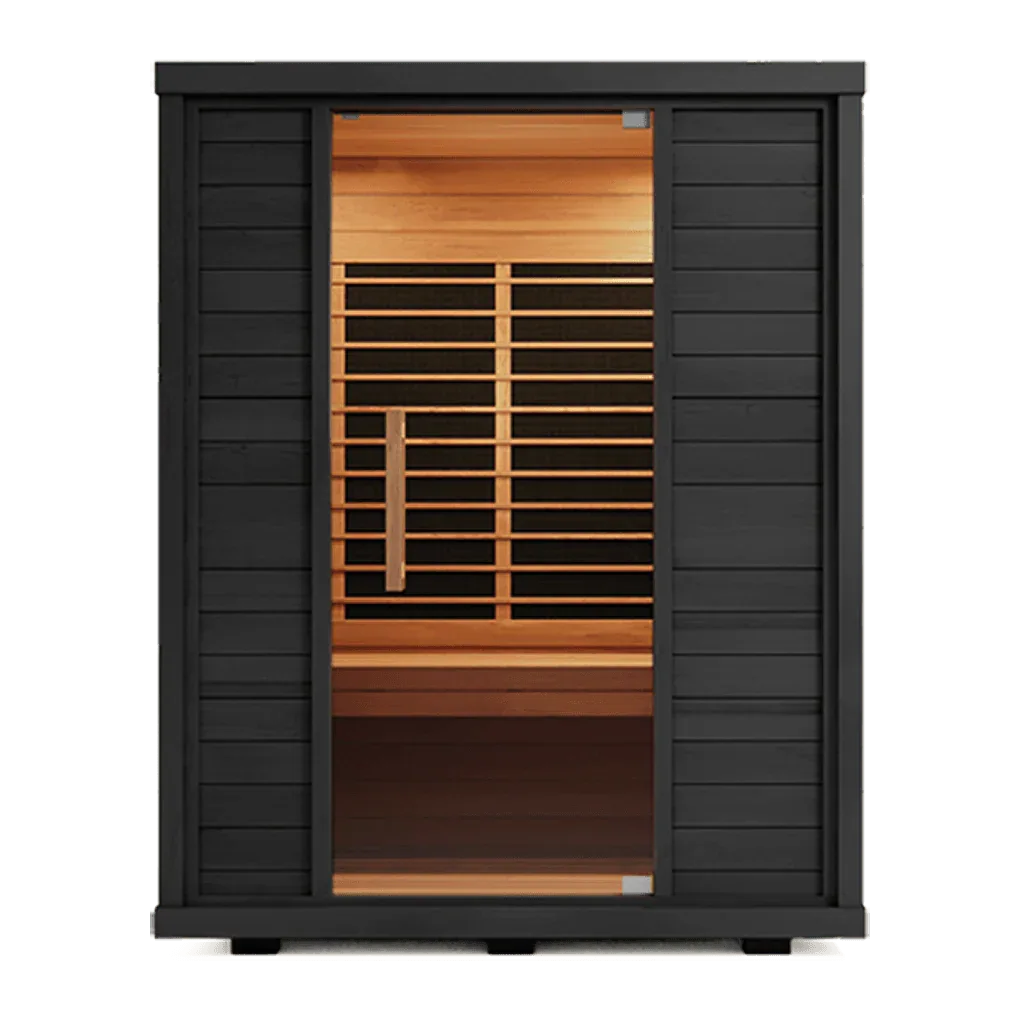

Imagine stepping into a sanctuary where the chaos of the outside world instantly fades. A private cabin of hand-selected, aromatic western red cedar, where the air is perfectly warm, and a deep, penetrating heat begins to untangle the tightest knots in your shoulders. This is not merely a break from your day; it is a systemic reset. Within minutes of settling onto the ergonomic bench, your heart rate mimics a gentle cardiovascular workout, your nervous system shifts from fight-or-flight to deep restoration, and your skin glistens as your body undergoes deep, cellular detoxification. This is the promise of a true home sauna sanctuary.
Yet, behind this restorative lifestyle upgrade lies a complex thermodynamic and biological reality. Many saunas marketed as "full spectrum" fail to deliver these promised benefits because they lack a scientifically calibrated spectral profile. They treat infrared light as a singular, monolithic heat source. In reality, to achieve profound physiological changes, from upregulating cellular energy to inducing rapid, toxin-releasing sweat, your sauna must deliver a precise, gradated blend of Near-Infrared (IR-A), Mid-Infrared (IR-B), and Far-Infrared (IR-C) wavelengths. Choosing the right system, such as the Sun Home Equinox cabin, requires looking past marketing buzzwords and examining the rigorous physics of human photobiology. Sun Home Saunas
Spectral Decomposition: IR-A, IR-B, and IR-C Tissue Attenuation
To evaluate the efficacy of a full-spectrum infrared sauna, we must first look to ISO 20473, which strictly defines the boundaries of the infrared spectrum. Infrared radiation is divided into three distinct bands: Near-Infrared or IR-A (0.78–1.4 μm), Mid-Infrared or IR-B (1.4–3.0 μm), and Far-Infrared or IR-C (3.0–1000 μm). Each band possesses a radically different tissue attenuation coefficient, dictating how deeply the energy penetrates your body before being converted into biological work.
According to medical engineering standards like IEC 60601-2-35, the human skin barrier reacts selectively to these wavelengths. IR-A experiences the lowest attenuation in human tissue, allowing it to penetrate through the epidermis and dermis into the subcutaneous adipose tissue, up to a depth of 5 to 10 mm. By contrast, IR-C is highly absorbed by water, meaning it is almost entirely captured in the outermost stratum corneum layer of the skin (<0.5 mm). Without a precise mix of these three bands, a sauna cannot deliver a true full-spectrum experience; it will either merely bake the surface of your skin or fail to generate the deep core heating required for metabolic conditioning.
Cytochrome c Oxidase: ATP Yield Under Narrowband Irradiance
The true magic of the IR-A spectrum occurs at the mitochondrial level through a process known as photobiomodulation. Within your cells, the primary target of this light is Cytochrome c Oxidase (CCO). Complex IV of the mitochondrial electron transport chain. CCO acts as a light receptor, with distinct absorption peaks in the near-infrared spectrum, particularly around 670 nm and 830 nm.
When IR-A photons strike CCO, they dissociate nitric oxide (a harmful inhibitor of cellular respiration) from the enzyme's catalytic center. This allows oxygen to bind freely, facilitating the rapid transfer of electrons across the mitochondrial membrane. The result is a significant up-regulation of Adenosine Triphosphate (ATP) synthesis, alongside a mild, beneficial release of reactive oxygen species (ROS) that triggers cellular repair mechanisms. To achieve this metabolic upgrade, a sauna must use high-quality quartz or halogen emitters capable of delivering a concentrated dose of IR-A. Broadband carbon heaters, while excellent for gentle heating, cannot generate the targeted irradiance necessary to drive this photochemical reaction.
Water Vibrational Coupling: Why IR-B Dictates Sweat Latency
While IR-A works on a cellular level, Mid-Infrared (IR-B, 1.4–3.0 μm) is the engine behind a fast, profuse sweat. The human body is composed of roughly 60% water, and water molecules exhibit strong vibrational overtones (specifically the O, H stretching and bending modes) at approximately 1450 nm and 1940 nm.
When a sauna emitter projects wavelengths within these precise bands, the energy couples directly with the vibrational frequencies of the water molecules in your dermis. This resonance causes rapid, localized heating of the interstitial fluids. Unlike dry air saunas that require grueling 200°F (93°C) environments to force a sweat, an IR-B rich environment stimulates your sweat glands within minutes at a comfortable ambient temperature. This rapid sweat latency means you spend less time waiting for your sauna to heat up and more time in a deep, relaxing state of detoxification.
The Stratum Corneum Barrier: IR-C as a Purely Thermal Agonist
Far-Infrared (IR-C, 3.0–1000 μm) is the foundation of traditional infrared therapy. Because IR-C is highly absorbed by the water in the stratum corneum (<0.5 mm), it acts as a pure thermal agonist. It does not initiate deep-tissue photobiomodulation, but it excels at heating the air and the skin surface to trigger systemic cardiovascular changes.
This surface heating activates your skin's Transient Receptor Potential Vanilloid 1 (TRPV1) receptors, signaling your brain to initiate vasodilation. Blood vessels dilate, shunting blood to the extremities, lowering blood pressure, and boosting circulation. Also this gentle, persistent thermal stress triggers the synthesis of Heat Shock Protein 70 (HSP70). These molecular chaperones repair damaged, misfolded proteins within your cells, protecting against cellular aging and oxidative stress. For those seeking portable options that focus primarily on this soothing, surface-level IR-C experience, high-quality alternatives like the Infrared Sauna Blanket offer an exceptional, space-saving entry point into thermal therapy.
Optimal Panel Configuration: Heater Profiles and Fraunhofer Alignment
To build a true full-spectrum sanctuary, sauna engineers cannot rely on a single heater material. Instead, they must combine ceramic, carbon, and quartz emitters to span the entire infrared spectrum.
- Carbon Heaters: These deliver low-temperature, long-wavelength IR-C (3,000 nm and beyond). They are ideal for lining the walls of the cabin, providing a gentle, enveloping heat that keeps you comfortable for extended sessions.
- Ceramic Heaters: These emit a blend of mid and far-infrared (IR-B and IR-C), offering higher intensity heat to drive deeper vasodilation.
- Quartz/Halogen Heaters: These are the only emitters capable of generating the high temperatures required to produce shorter IR-A wavelengths (780–1400 nm) to penetrate deep enough to stimulate Cytochrome c Oxidase.
By carefully configuring these heaters, premium systems avoid the spectral gaps common in cheap imitations, ensuring your body receives a continuous, therapeutic dose of energy across all three bands.
Pros
- True full-spectrum emission spanning IR-A, IR-B, and IR-C for complete cellular and thermal activation
- Ultra-low EMF and ELF shielding ensures a safe, non-toxic environment
- Premium Western Red Cedar construction resists moisture and provides natural antimicrobial benefits
Cons
- Requires dedicated space and a standard 15A or 20A home electrical outlet
- Higher initial investment compared to cheap, single-wavelength imported saunas
Technical Verdict
By integrating distinct IR-A, IR-B, and IR-C emitters, the Sun Home Equinox fulfills the biological requirements for both deep-tissue photobiomodulation and robust thermal detoxification. It is a scientifically validated, premium home upgrade engineered for longevity.
→ View Specs & Pricing