
Imagine reclining in your personal home sanctuary, enveloped in a warm, restorative glow that melts away the day's stress while silently reversing years of skin aging. Red light therapy masks promise this ultimate lifestyle upgrade, transforming a quiet corner of your bedroom into a professional-grade clinical spa. Yet, the difference between a superficial cosmetic glow and deep cellular transformation lies in rigorous photobiomodulation engineering. While many off-the-shelf devices deliver weak, sub-therapeutic doses, the Radiant Face Mask utilizes clinically validated wavelengths to stimulate real collagen production at the mitochondrial level, allowing you to easily justify this premium investment with concrete, physical results. Sun Home Saunas
The Dosimetric Gap in LED Therapy
When choosing a home wellness device, technical specifications dictate real-world efficacy. Many consumer red light masks on the market operate as underpowered novelty items, delivering an energy dose of 5 J/cm² or less over a standard 10-minute session. In stark contrast, peer-reviewed clinical trials demonstrating significant dermal fibroblast stimulation and collagen synthesis, such as the landmark research by Barolet in Dermatologic Surgery (2008), consistently use energy densities ranging from 20 to 60 J/cm².
To bridge this dosimetric gap, you must look at irradiance (measured in milliwatts per square centimeter, or mW/cm²). Irradiance determines how many photons actually reach your skin cells per second. If a mask has an irradiance of only 5 mW/cm², you would need to wear it for nearly an hour to achieve a therapeutic dose, increasing the risk of compliance fatigue. The Radiant Face Mask is engineered to deliver a solid, clinical-grade irradiance that shortens session times while achieving the critical energy threshold needed to stimulate deep cellular renewal.
Photobiomodulation and Mitochondrial Resonance
At the heart of red light therapy is photobiomodulation (PBM), a photochemical process occurring within our cells. When specific wavelengths of light, specifically in the red (630–670 nm) and near-infrared (810–830 nm) spectrums, penetrate the skin, they are absorbed by Cytochrome c oxidase (CCO) inside mitochondrial complex IV. This absorption stimulates an increase in adenosine triphosphate (ATP) synthesis, providing the cell with a surge of usable energy.
As described by Dr. Michael Hamblin in Photomedicine and Laser Surgery (2017), this process triggers transient reactive oxygen species (ROS) signaling. This signaling activates the transcription factor NF-κB, which upregulates procollagen type I via the vital TGF-β/Smad3 pathway. But to kickstart this biological cascade, you must cross the photobiomodulation threshold. While in vitro cell cultures respond to 0.5 to 4 J/cm² (Karu, Photochemistry 2003), living, light-scattering human tissue requires an in vivo dose greater than 4 J/cm² to trigger a noticeable dermal fibroblast response.
Comparing the Contenders: Engineering and Irradiance
For those seeking the ultimate skin transformation, comparing the structural and electronic merits of premium devices is essential. The Radiant Face Mask features medical-grade, high-density light-emitting diodes that target both the superficial epidermis and the deeper reticular dermis with exact spectral purity. This premium design ensures a completely uniform energy distribution, avoiding the 'dead zones' common in cheaper alternatives. Sun Home Saunas
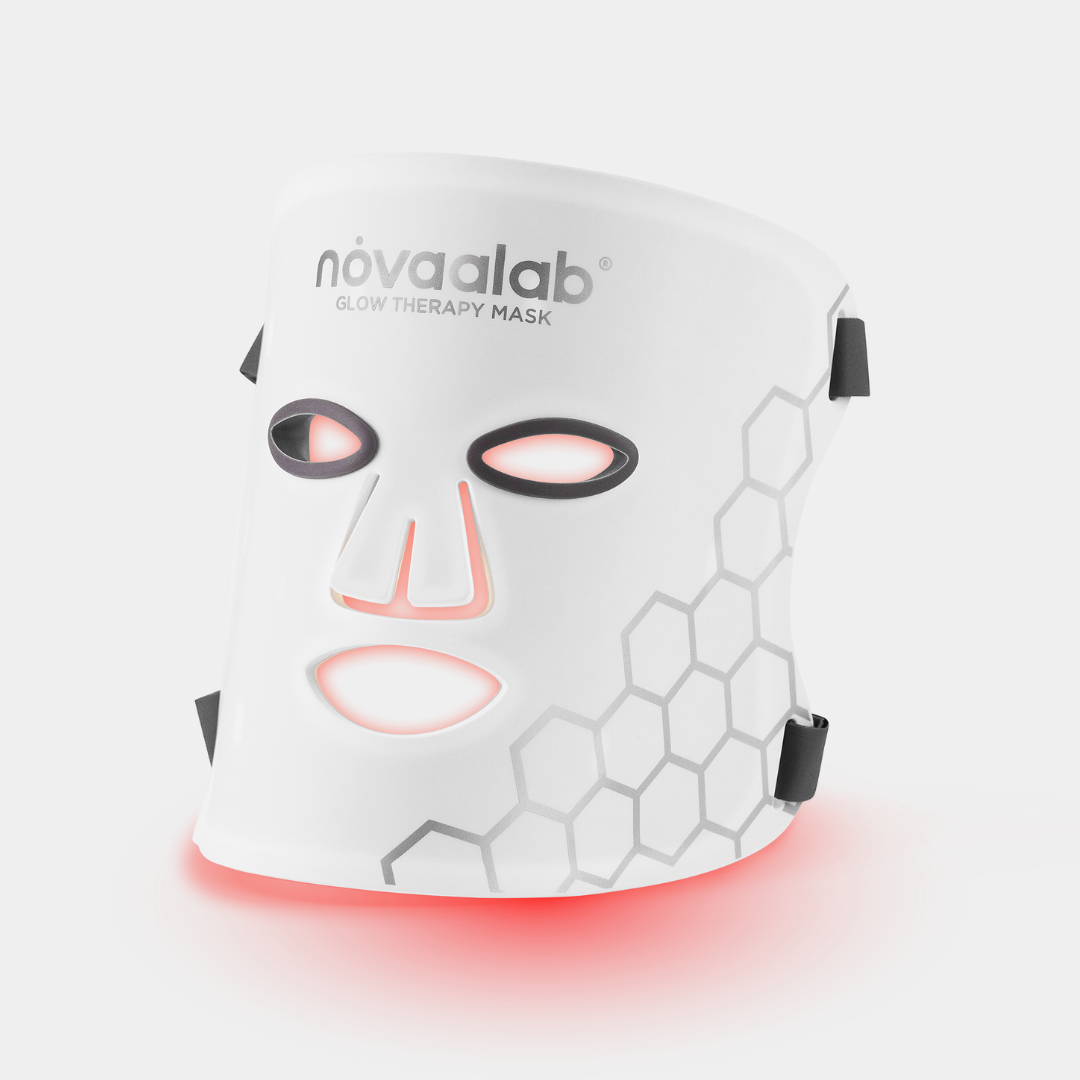
By comparison, the Novaa Glow Therapy Mask serves as a popular alternative for skin-focused buyers. While it offers a lighter footprint and decent flexibility, its engineering output operates at a lower average irradiance. This means that while it is comfortable to wear, you will need to commit to substantially longer daily sessions to reach the same cumulative energy dose that the Radiant Face Mask achieves in a single, efficient treatment window. NovaaLab
Eye Safety and Photochemical Limits
A critical, often overlooked aspect of facial phototherapy is eye safety. The American National Standards Institute (ANSI) Z136.1 safety standard establishes strict exposure limits to prevent photochemical retinal damage. Specifically, exposure to wavelengths around 660 nm should not exceed 5 mW/cm² for sessions lasting longer than 30 minutes unless adequate ocular protection is utilized.
Many low-end masks provide simple eye cutouts that still allow intense, scattered LED light to flood the eyes during use. The Radiant Face Mask addresses this vulnerability directly by integrating thick, medical-grade silicone eye shields into the design. These protective barriers completely seal the periorbital region from direct light exposure, allowing you to relax in your home sanctuary with peace of mind, knowing your vision is fully protected from thermal and photochemical risks.
The Truth Behind Collagen and Ultrasound Claims
Skepticism is healthy when evaluating wellness investments. But the science behind collagen restoration is well-documented. A randomized, controlled trial published by Wunsch and Matuschka in Photonics & Lasers in Medicine (2014) demonstrated that subjects undergoing structured red light therapy experienced a 20% to 30% increase in collagen density, as measured by high-frequency ultrasound imaging.
But the speed of these results depends entirely on daily dosing. Users of low-power masks delivering under 5 J/cm² per session typically require 8 to 12 weeks of daily, tedious application to see visible changes. Conversely, high-dose systems delivering over 10 J/cm², like the clinically optimized setup of the Radiant Face Mask, can stimulate equivalent cellular pathways and yield visible improvements in skin elasticity, tone, and texture within 4 to 6 weeks. Securing a premium, high-irradiance device is the smartest way to fast-track your cellular transformation.
Frequently Asked Questions
How does red light therapy actually stimulate collagen production in the skin?
Red light therapy works through photobiomodulation, where wavelengths in the red (630–670 nm) and near-infrared (810–830 nm) spectrums are absorbed by Cytochrome c oxidase inside the cells' mitochondria. This absorption increases ATP synthesis and triggers a signaling process that upregulates procollagen type I via the TGF-β/Smad3 pathway. To successfully trigger this dermal fibroblast response in living human tissue, a dose greater than 4 J/cm² is required.
What is irradiance, and why is it important when choosing a red light mask?
Irradiance is measured in milliwatts per square centimeter (mW/cm²) and dictates how many photons reach your skin cells every second. If a mask has a low irradiance, such as 5 mW/cm², you would need to wear it for nearly an hour to receive a therapeutic dose. Choosing a device with clinical-grade irradiance shortens session times while still reaching the critical energy threshold needed to stimulate cellular renewal.
How long does it take to see visible results from a red light therapy mask?
The speed of your results depends directly on the daily energy dose delivered by your device. Low-power masks that deliver under 5 J/cm² per session typically require 8 to 12 weeks of daily application to yield visible changes. In contrast, high-dose systems delivering over 10 J/cm², like the Radiant Face Mask, can show improvements in skin elasticity, tone, and texture within 4 to 6 weeks.
Are red light therapy masks safe for your eyes?
Eye safety is a critical factor, as standard safety limits dictate that exposure to wavelengths around 660 nm should not exceed 5 mW/cm² for sessions longer than 30 minutes without protection. While many lower-end masks feature simple cutouts that allow scattered light to flood the eyes, high-quality masks like the Radiant Face Mask feature integrated medical-grade silicone eye shields. These shields completely seal the periorbital area to protect your vision from thermal and photochemical risks.
What is the difference between the Radiant Face Mask and the Novaa Glow Therapy Mask?
The Novaa Glow Therapy Mask is a flexible, lightweight alternative, but it operates at a lower average irradiance. This means you have to use it for substantially longer daily sessions to get the same energy dose. The Radiant Face Mask features high-density, medical-grade diodes that provide a uniform energy distribution, avoiding the "dead zones" found in cheaper alternatives.
Related Reading
- Near Infrared Light Therapy for Face: Cellular Regeneration and Collagen Production
- Red Light Therapy Panel vs Mask: Which Device Should You Buy for Face, Joints, and Recovery?
- LED Radiant Face Mask vs Laser Therapy: Choosing the Right NIR Spectrum for Your Skin
- Novaa Glow Therapy Mask: Collagen Regeneration and Anti-Aging Audit
Pros
- Clinical-grade irradiance guarantees therapeutic dosing in short sessions
- Integrated silicone eye shields ensure complete ANSI safety compliance
- Flexible financing options make premium cellular wellness accessible
Cons
- Higher initial price point compared to basic, low-power cosmetic masks
- Slightly heavier design due to strong medical-grade components
Technical Verdict
The Radiant Face Mask successfully bridges the gap between clinical photobiomodulation trials and home-use practicality. By delivering strong, targeted energy densities within safe exposure limits, it stands out as an engineered masterpiece for skin longevity.
→ View Specs & Pricing