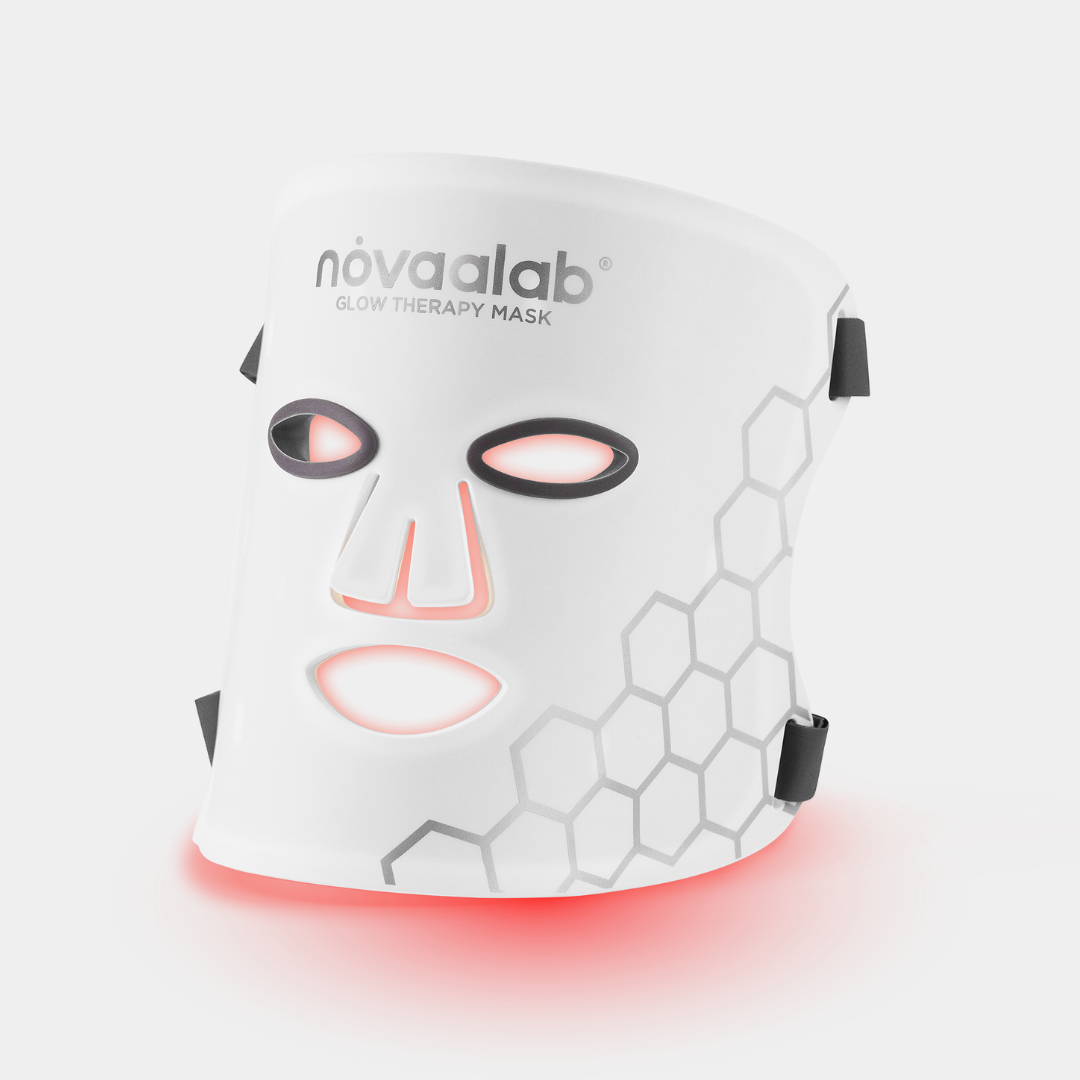

Imagine escaping the noise of a demanding day, retreating into your private sanctuary, and enveloping your face in a warm, gentle shield of pure cellular energy. This is not just skincare; it is a ritual of deep restoration—a dedicated physical and mental space where you reclaim your skin's youthful brilliance and your own peace of mind. As you close your eyes and let the soothing wavelengths penetrate your skin, you are stepping into a scientifically calibrated light environment designed to rejuvenate you at a molecular level. This luxurious home treatment provides a profound sense of well-being that radiates outward, offering a visual and emotional transformation that fits seamlessly into your daily self-care routine.
But beneath this tranquil experience lies a complex field of photobiophysics. When choosing between the diffuse, uniform healing of an LED mask, such as the Novaa Glow Therapy Mask, and the highly concentrated beam of a targeted laser, you are navigating the subtle physics of light-tissue interactions. Both methods deliver red and near-infrared (NIR) photons deep into the skin, yet they trigger fundamentally different biological kinetics. Selecting the right modality for your personal wellness sanctuary requires a rigorous, scientific look at spectral bandwidths, coherence lengths, energy dosimetry, and cellular safety profiles.
Photon-Tissue Interactions: Absorption Spectra and COX
Frequently Asked Questions
What is the difference between an LED face mask and laser therapy?
An LED mask, such as the Novaa Glow Therapy Mask, offers a diffuse and uniform healing experience. Conversely, laser therapy utilizes a highly concentrated, targeted beam of light. While both methods deliver red and near-infrared photons deep into the skin, they trigger fundamentally different biological kinetics.
What scientific factors should I evaluate when choosing between LED and laser skin treatments?
To choose the right light therapy, you must navigate the physics of light-tissue interactions. A scientific comparison requires evaluating spectral bandwidths, coherence lengths, energy dosimetry, and cellular safety profiles. These factors determine how the different light environments interact with your skin.
How does an LED radiant face mask benefit the user during a home treatment?
A home LED mask treatment serves as a relaxing ritual that envelopes the face in a warm, gentle shield of cellular energy to rejuvenate the skin at a molecular level. This scientifically calibrated light environment provides a deep restoration and a profound sense of well-being. It offers a visual and emotional transformation that fits easily into a daily self-care routine.
Do LED masks and laser therapies use the same type of light?
Both of these light therapies deliver red and near-infrared (NIR) photons deep into the skin. However, they differ in how that light is structured and delivered. LED masks provide a diffuse and uniform light environment, whereas lasers use a highly concentrated, targeted beam.