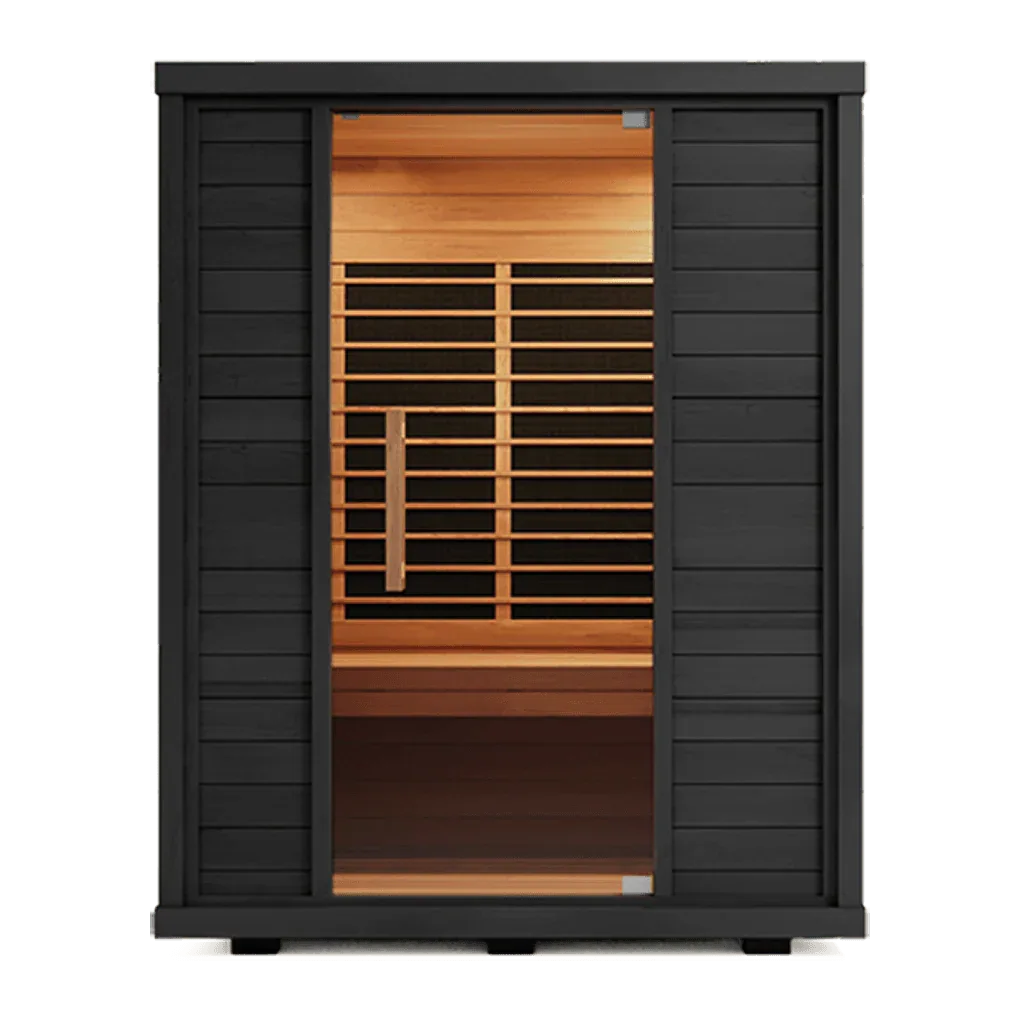

Imagine stepping out of the chaotic rush of modern life and into a private, light-filled sanctuary of pure, restorative warmth. In this space, the ambient air remains fresh, crisp, and easy to breathe, yet your body is systematically warmed from the very core of your cells. This is not the oppressive, stifling humidity of a traditional steam room, nor is it the heavy, fatiguing heat of a conventional sauna. Instead, it is the sophisticated, gentle, and deeply transformative experience of a near-infrared (NIR) bulb sauna. It is a daily ritual designed to wash away cortisol, restore cellular integrity, and lull your nervous system into a state of profound peace. Yet, to truly appreciate this premium lifestyle upgrade, we must look beyond the immediate sensory bliss. The true magic of NIR isn't magic at all; it is rigorous, biophysical science. To invest in an NIR sauna is to invest in advanced photobiomodulation, a cellular therapy that upregulates your biology while providing an unmatched sanctuary of recovery.
Spectral Selection: Why 810–870 nm Trumps Broadband NIR Output
When researching near-infrared saunas, consumers are often misled by broad marketing terms. The international standard ISO 20473 (Optics and photonics. Spectral bands) strictly defines near-infrared radiation as spanning the range from 780 nm to 3000 nm. However, from a biological standpoint, not all wavelengths within this spectrum are created equal. Broad-spectrum incandescent bulbs, often sold as cheap "near-infrared heaters," emit a wide, unfocused range of energy. The vast majority of this emission falls into the longer, non-therapeutic thermal bands, simply heating the surrounding air and causing immediate surface perspiration.
In contrast, advanced therapeutic NIR saunas prioritize peaked emission profiles concentrated precisely between 810 nm and 870 nm. This narrow band avoids the wasteful energy dispersion of broadband heaters, ensuring that the photons emitted are of the exact energy state required to trigger deep biological responses rather than merely warming the skin's surface. By focusing the spectral output, you receive a highly concentrated stream of light that acts as a precise signaling molecule for cellular optimization.
Mitochondrial Photobiomodulation: The Cytochrome c Oxidase Pathway
At the heart of the near-infrared experience is a profound cellular transformation called photobiomodulation. When you relax in an NIR sanctuary, you aren't just sweating; you are directly communicating with your cellular power plants. Inside the inner membrane of your mitochondria lies Cytochrome c Oxidase (CCO), a vital enzyme in mitochondrial Complex IV. Under conditions of daily stress, sleep deprivation, or environmental toxicity, our cells produce excess nitric oxide (NO). This nitric oxide binds to CCO, effectively blocking oxygen from binding and stalling the production of Adenosine Triphosphate (ATP), the fundamental energy currency of life.
Light in the 810–870 nm range acts as an elegant key. Photons in this specific band undergo a photolysis reaction upon striking CCO, cleanly dissociating the inhibitory nitric oxide. With the biological block removed, oxygen immediately binds to the enzyme once again, restoring the electron transport chain and rapidly upregulating ATP synthesis. This cellular upregulation is not speculative; it is a highly validated biological pathway, demonstrating a statistically significant p < 0.05 effect size in rigorous cellular models. To bring this modern biological optimization into your own home, choosing an engineered cabinet like the SaunaSpace Luminati, is the ultimate way to facilitate daily cellular restoration.
Thermogenic Depths: Penetration Profiles Across Dermis and Subdermis
A traditional Swedish sauna relies on convective heat transfer, warming the ambient air to extreme, often suffocating temperatures. To survive this environment, your body activates its emergency cooling mechanisms, placing immense strain on the cardiovascular system. Near-infrared radiation bypasses this convective limitation entirely. Operating in the "optical window" of human tissue, light in the 810–870 nm range penetrates deep into the epidermal and dermal layers, reaching depths of approximately 1 cm.
As these photons travel through the tissue, they are absorbed by cell-membrane lipids, hemoglobin, and localized water. Rather than heating the air around you, NIR induces direct, gentle thermogenesis within the tissue itself. This deep-tissue warming triggers a safe rise in core body temperature while keeping the ambient air fresh, breathable, and peaceful. It is a profound, deep-body sweat that leaves you feeling rejuvenated, not drained. This deep thermal action also utilizes the 1,450 nm overtone of water absorption, which helps stimulate localized blood flow and tissue regeneration without demanding oppressive ambient humidity.
Trace Every Benefit Claim Back to the Installed Bulb
A credible near-infrared sauna should provide an unbroken evidence chain from the named bulb to the claimed user experience. Begin with the difference between classification and verification. ISO 20473 defines near infrared as 780 nm to 3000 nm, but that broad classification does not establish concentrated output in the 810–870 nm range emphasized in the article. The seller should connect the narrower claim to the exact source installed in the sauna.
Request spectral documentation and identify what was actually measured. A generic chart for broad-spectrum incandescent bulbs does not necessarily describe the offered bulb. A report for a bare source also should not be presented automatically as evidence for the completed fixture. Compare any identifying information, photographs, and configuration details in the documentation with the product being sold. If several bulb types are installed, each should be matched to its own evidence rather than represented by the strongest available chart.
Keep the optical evidence separate from the biological explanation. Cytochrome c Oxidase and mitochondrial Complex IV describe the proposed photobiomodulation pathway. Their presence in a technical discussion does not verify that a particular sauna emits the intended wavelengths or delivers them to the body. Visible glow, sweating, and deep warmth cannot fill that evidentiary gap either.
Good implementation states exactly what was tested and limits its conclusions to that configuration. Bad implementation starts with valid cellular science, adds a generic near-infrared label, and treats the combination as product proof. Before buying, make sure each claim can be traced through source identity, fixture, placement, and intended exposure without relying on assumptions between those steps.
Judge the Cabin by Its Real Light Paths
The quality of the bulb is only part of the delivery system. Fixture position, bench placement, backrest shape, and ordinary posture determine whether the documented light has a clear path to the user. A source can meet its stated specification while the cabin still produces concentrated warmth, uncovered areas, or an awkward seated experience.
Study interior photographs and drawings from the perspective of an occupied sauna. Identify every active bulb and distinguish it from reflections, decorative surfaces, and general amber illumination. Then map which parts of the body face those sources during relaxed sitting. Confirm that the visible bulbs match the products covered by the spectral documentation. An empty-cabin photograph may look enveloping while revealing little about the exposure created after a person takes the intended seat.
Personal fit changes the result. Height, preferred posture, and seating location affect alignment with the fixtures. A layout suited to one user may direct excessive warmth toward a narrow area for another. If comfortable use requires repeated turning, leaning, or shielding, the cabin is relying on the user to correct its geometry. Strong local heat should not be mistaken for broad or effective coverage.
Good implementation makes the intended light paths understandable and supports a natural, relaxed position. It explains why each fixture occupies its location and does not use bulb count or brightness as a substitute for a coverage plan. Bad implementation emphasizes dramatic glow while withholding enough information to reconstruct the seated experience. Before purchasing, evaluate the cabin around the posture you will actually use. The correct wavelength is valuable only when the physical arrangement delivers it coherently.