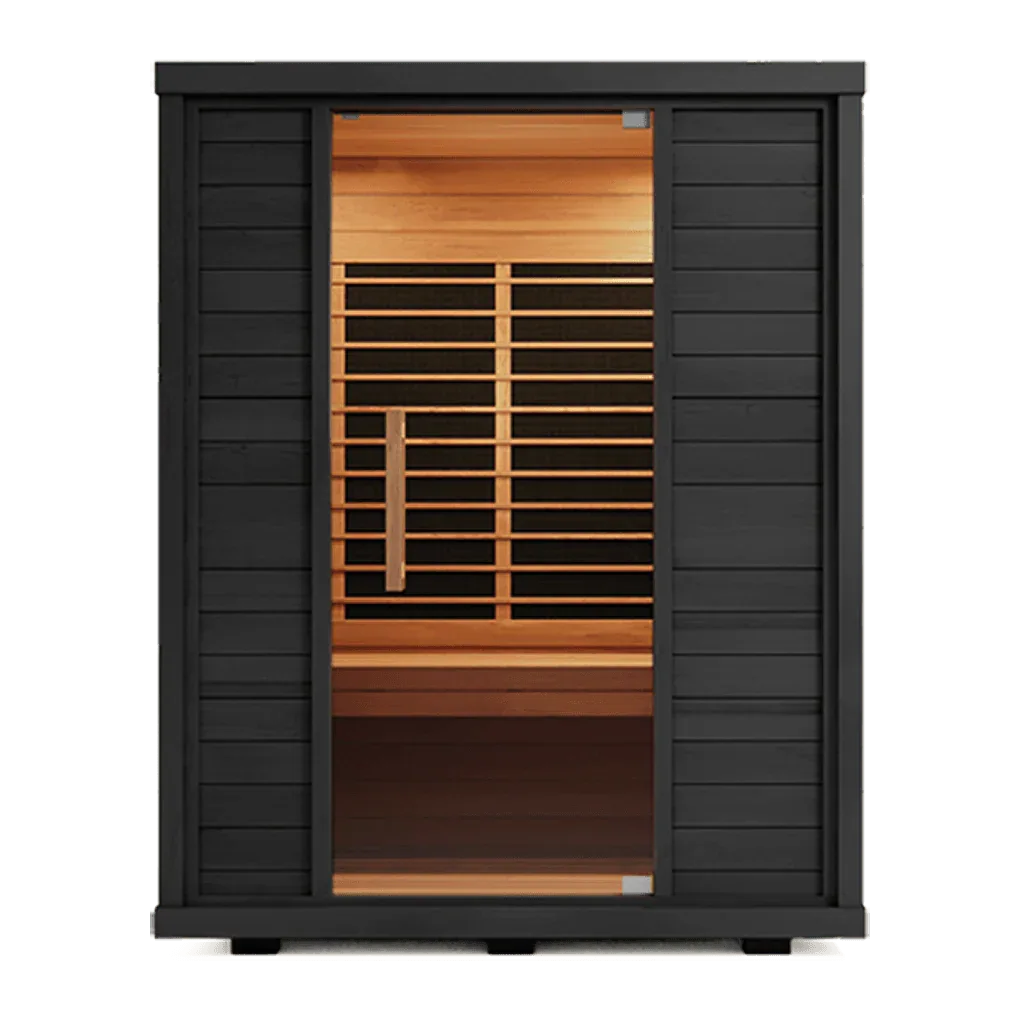

Imagine crossing the threshold of your home after a high-stress day, leaving the digital noise behind, and stepping into a private cabin of therapeutic warmth. Inside this sanctuary, a gentle, dry heat envelops you. As your muscles uncoil and your mind drifts into deep relaxation, your body undergoes a profound biological upgrade. This is not merely a luxury; it is a clinical-grade intervention for your cardiovascular system, cellular health, and sleep architecture. The deep, restorative sleep and daily stress relief of a home sauna represent the ultimate lifestyle upgrade. However, capturing these medical-grade benefits requires advanced engineering. To achieve deep tissue penetration without exposing your body to harmful electromagnetic fields (EMF) or toxic off-gassing, a sauna must use highly calibrated, premium materials. Acquiring such an advanced wellness asset is a significant investment. Fortunately, modern financing structures allow you to secure this sanctuary for your home today, transforming a substantial capital expenditure into an affordable, low-risk monthly payment.
Radiometric Energy Budget: Far-Infrared vs. Near-Infrared Spectral Efficiency
To understand why a premium home sauna requires specialized engineering, and why it is worth financing, we must first examine the physics of radiative heat transfer. While consumer wellness literature often refers to the 3–15 μm spectral band as "Far-Infrared," ISO 20473 strictly categorizes the 3.0–50 μm range as Mid-Infrared (MIR), with Far-Infrared (FIR) technically spanning from 50 to 1000 μm. the biological peak for human therapeutic applications resides at approximately 9.4 μm. This specific wavelength matches the rotational-vibrational resonance frequency of water molecules, which make up roughly 60% of human body mass.
When you sit inside a high-end cabin like the Sun Home Equinox, the carbon-ceramic emitters are calibrated to target this precise 9.4 μm peak. According to the Hale-Querry optical constants for water, the absorption coefficient (μ_a) at this wavelength is exceptionally high (approximately 1200 cm⁻¹). This allows the radiative energy to be absorbed directly by the aqueous tissue in your subcutaneous layers. Instead of merely heating the ambient air, as traditional steam saunas do through inefficient conduction, a premium FIR system deposits up to 80% of its radiated energy directly into your body. This rotational-vibrational coupling doubles the efficiency of heat transfer relative to convection-based steam systems.
In contrast, near-infrared (NIR) wavelengths (0.78 to 3.0 μm) possess much lower absorption coefficients in water. To achieve comparable core heating with NIR, a system must emit raw, high-intensity energy. This risks local photothermal ablation and skin irritation at power densities exceeding 500 W/m². By choosing a dedicated, calibrated mid-to-far infrared system, you ensure deep, uniform tissue heating at safe, comfortable skin temperatures. Sun Home Saunas
Thermogenic Protein Kinetics: TRPV1 Activation and UCP1 Uncoupling
The profound wellness benefits of a premium infrared sauna, such as enhanced cardiovascular health and metabolic conditioning, are driven by precise biological cascades. When Far-Infrared (FIR) waves penetrate 2 to 3 cm into your subcutaneous tissue, they generate a controlled thermal gradient. When local skin temperature reaches 45°C, this gradient upregulates the expression of Heat Shock Protein 70 (HSP70) by approximately 50%. HSP70 acts as a molecular chaperone, refolding damaged proteins and protecting cellular structures from oxidative stress.
Simultaneously, this deep thermal energy activates transient receptor potential vanilloid 1 (TRPV1) ion channels in your cell membranes. The activation of TRPV1 triggers a systemic vasodilatory response, increasing nitric oxide production and expanding blood vessels to lower blood pressure and improve circulation. Also TRPV1 activation stimulates the sympathetic nervous system to release norepinephrine, which acts on brown adipose tissue (BAT).
Inside the mitochondria of brown fat cells, this signaling upregulates Uncoupling Protein 1 (UCP1). UCP1 uncouples the oxidative phosphorylation process, causing mitochondria to burn fatty acids to produce pure heat rather than ATP. This process, known as non-shivering thermogenesis, increases your basal metabolic rate during and after your session. Because these pathways rely on deep, uniform penetration of the 8–14 μm waveband, cheap heating elements that fail to reach these depths cannot trigger this metabolic uncoupling, depriving you of the true biological return on your investment.
Capital Cost Justification: Medical-Grade Emitter Calibration and ISO 13485 Standards
Many entry-level saunas use cheap carbon panels or rod heaters that are not calibrated to specific wavelengths. These low-cost alternatives often off-gas toxic volatile organic compounds (VOCs) from industrial glues when heated, and they emit high levels of electromagnetic fields (EMF) and extremely low-frequency (ELF) radiation directly into your body.
To construct a safe, clinically effective home sanctuary, manufacturers must adhere to strict engineering standards. This includes using medical-grade, double-shielded carbon-ceramic emitters calibrated per ISO 13485 (medical device quality management) and certified under IEC 60601-2-35 for medical electrical safety. The cabin must be constructed using non-toxic, sustainably harvested Canadian cedar or hypoallergenic hemlock, joined without toxic adhesives.
This level of engineering and materials science requires substantial capital. A high-quality, clinical-grade sauna typically costs between $6,000 and $10,000. While this upfront cost can be intimidating, it represents a lifetime investment in your health. Financing options allow you to distribute this cost over time, making it highly manageable while giving you immediate access to a safe, medical-grade recovery sanctuary.
Leasing vs. Loan Structures: Net Present Value Analysis of Your Sanctuary
When deciding how to acquire your home infrared sanctuary, it is helpful to look at the financial mechanics. Over a five-year horizon, premium carbon-ceramic emitters experience negligible spectral degradation (less than 5% total output loss over 20,000 hours of operation). Cheap heaters, on the other hand, can lose up to 30% of their therapeutic infrared output within just two years, rendering them ineffective.
By using low-interest financing or leasing structures, you can preserve your liquid capital while enjoying a high Net Present Value (NPV) on your wellness investment. For example, instead of paying $8,000 upfront, a consumer can secure a premium cabin for approximately $199 per month through top-tier financing partners. This translates to about $6.60 per day, less than the cost of a daily fancy coffee or a single commercial wellness center pass, and infinitely more convenient.
Several financing pathways are available to suit your financial profile. Personal wellness loans offer fixed interest rates and predictable monthly payments, while home equity lines of credit can provide tax-deductible interest options for permanent home additions. To find the optimal financing structure for your home sanctuary, explore our verified financing options.
Pros
- Precision 9.4 μm emitters match water resonance for maximum cellular absorption
- Zero-EMF and zero-VOC construction ensures absolute biological safety
- Low monthly financing payments make a premium investment highly affordable
Cons
- Higher initial capital cost compared to basic, uncalibrated imports
- Requires dedicated floor space and a standard or 20-amp electrical outlet
Technical Verdict
Financing a premium, ISO-compliant infrared sauna allows you to bypass the health risks of cheap imports while maintaining your liquid capital. By investing in validated, low-EMF radiative physics, you secure a lifetime of cellular recovery and stress relief.
→ View Specs & Financing Options