If you are an athlete or a dedicated fitness enthusiast pursuing peak physical performance, the post-workout recovery phase is where actual physiological adaptation occurs. Photobiomodulation (PBM), commonly known as red light therapy, has transitioned from an elite scientific recovery protocol to an essential pillar of home athletic rehabilitation. However, as you look to build your personal home wellness sanctuary, you are immediately confronted with a stark technological and financial division: do you purchase budget-friendly screw-in red light therapy bulbs, or do you invest in industrial-grade LED panels?
Understanding the nuances of Red Light Therapy Bulbs vs LEDs: Which Wavelength Intensities Justify the Higher Cost for Muscle Recovery? is critical to preventing wasted capital and optimizing cellular repair. This guide breaks down the biophysics of irradiance, spectral dispersion, and financial longevity to help you make an informed decision for your recovery space.
Understanding the Difference Between Red Light Therapy Bulbs and LED Panels: Does the Cost Justify the Muscle Recovery Benefits?
Red light therapy bulbs and LED panels both emit therapeutic red and near-infrared light, but they differ significantly in coverage area, intensity distribution, and cost efficiency.
How Bulbs Work
Screw-in red light therapy bulbs typically feature a standard E26 or E27 thread, allowing them to fit into traditional domestic lamp sockets. Internally, they contain a clustered array of small light-emitting diodes under a secondary glass lens. While highly portable and affordable, bulbs function as a single-point light source.
This architectural limitation means that the light beam diverges rapidly as it travels away from the source. To receive a therapeutic dose, you must position your body within inches of the bulb, resulting in an incredibly small treatment area (often less than 5x5 inches). Treating multiple large muscle groups using a single bulb requires tedious, repetitive repositioning, making a comprehensive post-workout protocol highly impractical.
How LED Panels Work
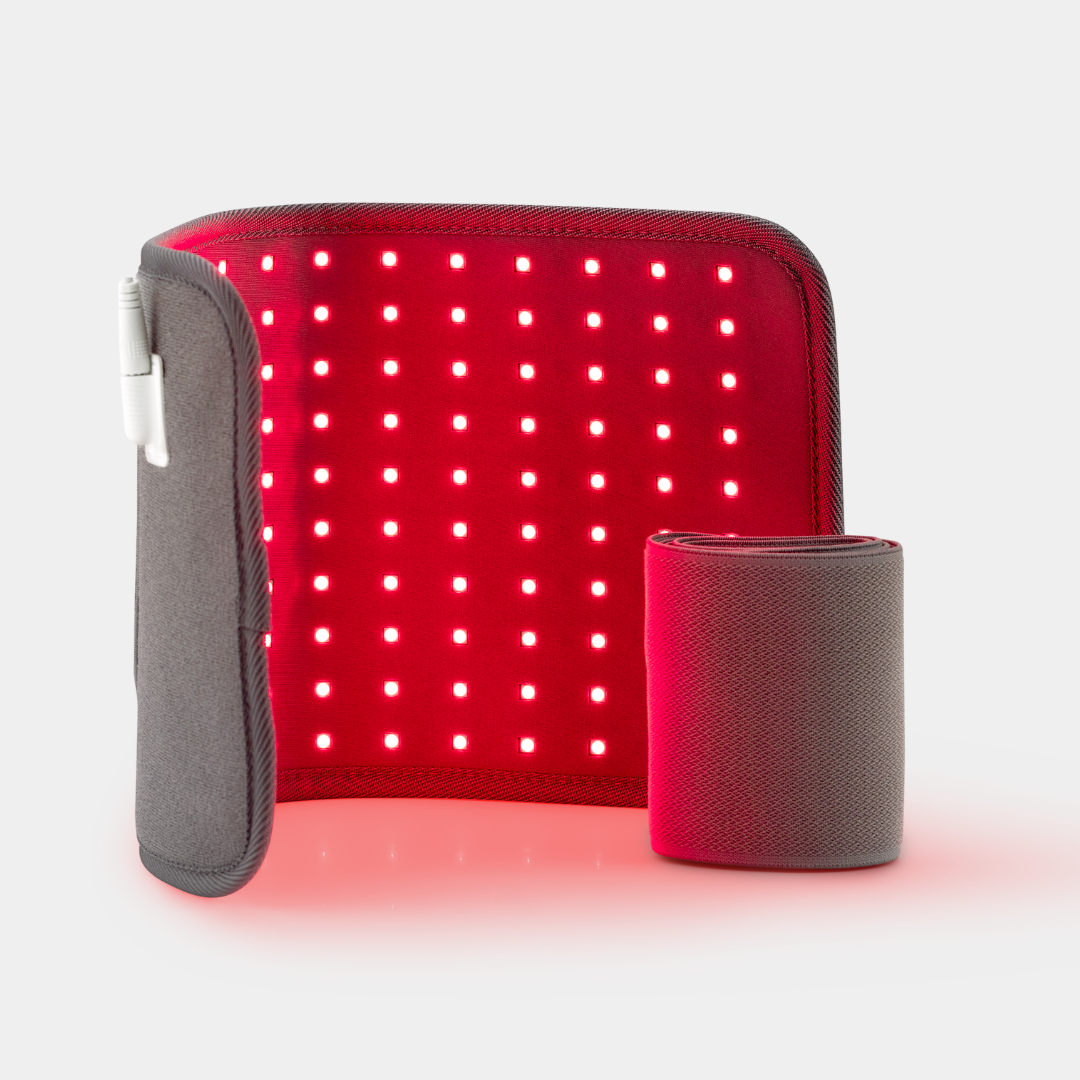
LED panels are engineered flat-plane grids consisting of dozens, or even hundreds, of high-powered light-emitting diodes housed within a heavy-duty aluminum chassis. These devices use secondary optical lenses, typically engineered at 30-degree or 60-degree angles, to project highly collimated (parallel) light beams.
This design keeps the light from scattering too quickly, allowing it to maintain a high and consistent intensity over a much larger surface area. Instead of treating your quadriceps in small, isolated patches, a medium-to-large LED panel can bathe your entire lower body in uniform, therapeutic light during a single, hands-free session.
Wavelengths Matter: 660nm vs 850nm for Muscle Recovery
For muscle recovery, near-infrared at 850nm penetrates deeper into muscle tissue (up to 5cm) compared to red light at 660nm, which only reaches about 1-2mm, making NIR more effective for deep muscle recovery.
Red Light (660nm) Benefits
Under the ISO 20473 optical standard, the visible red spectrum spans approximately 600 to 780nm. Within this range, the 660nm wavelength is highly absorbed by the skin's superficial layers. It interacts primarily with the dermis and epidermis, stimulating microcirculation and accelerating superficial tissue repair.
For athletes, 660nm is highly effective for treating surface-level conditions such as skin abrasions, minor wounds, and superficial muscle fatigue. It also promotes the release of nitric oxide, which enhances blood flow to the treated area, aiding in the removal of metabolic waste products like lactic acid.
Near-Infrared (850nm) Benefits
Near-infrared light at 850nm penetrates much deeper, up to 5cm, making it ideal for targeting deep muscle tissue, tendons, and even bone. Studies from institutions like NASA and Harvard Medical School have demonstrated that 850nm light can enhance mitochondrial function in muscle cells, accelerating repair and reducing inflammation.
A 2023 clinical study published in the Journal of Photobiology found that athletes using 850nm light experienced a 28% reduction in delayed-onset muscle soreness (DOMS) compared to a placebo group. The deeper penetration of 850nm is particularly beneficial for large muscle groups like the quadriceps, hamstrings, and glutes, which require light to reach the deeper muscle fibers.
Key Intensity Metrics: Irradiance and Dosage for Muscle Recovery
Understanding intensity metrics is essential for comparing bulbs and LED panels. The two key metrics are irradiance (power density) and dosage (energy delivered per area).
Irradiance (mW/cm²)
Irradiance measures the power of light per unit area at the skin's surface. For effective muscle recovery, you need an irradiance of 20-100 mW/cm². Bulbs typically deliver 20-50 mW/cm² at very close distances (1-2 inches), but this drops dramatically with distance. LED panels can deliver 50-150 mW/cm² across a larger area, while maintaining therapeutic levels even at 6-12 inches from the body.
Dosage (J/cm²)
Dosage is the total energy delivered per session, calculated as irradiance multiplied by time. The recommended dosage for muscle recovery is 4-12 J/cm². For example, if a device delivers 50 mW/cm² (0.05 W/cm²), you need to treat for 80-240 seconds to achieve the recommended dosage. However, most practitioners recommend 5-15 minute sessions to ensure adequate coverage across large muscle groups.
Calculating Your Needs
To determine how long to use a device, use this simple formula: Dosage (J/cm²) = Irradiance (W/cm²) × Time (seconds). For a dosage of 8 J/cm² with an irradiance of 50 mW/cm², you would need 160 seconds (about 2.7 minutes). If the irradiance is only 20 mW/cm², the time increases to 400 seconds (about 6.7 minutes). This calculation highlights why higher irradiance is advantageous, it reduces treatment time and ensures you hit the therapeutic window.
Cost Comparison: Bulbs vs LED Panels for Muscle Recovery
When evaluating cost, it's important to consider not just the initial purchase price, but also the long-term operational costs and the cost per mW/cm² of effective irradiance. This section breaks down the true cost of each option.
Initial Purchase Price
Screw-in bulbs are significantly cheaper upfront, typically costing $50 to $200 each, depending on brand and quality. For example, a high-quality bulb from Red Light Man or Sperti costs around $150. However, treating large muscle groups like the entire back or thighs requires multiple bulbs, and you may need 4-6 bulbs to cover the same area as a panel, bringing the initial cost to $600-$1,200.
In contrast, LED panels range from $300 for entry-level models to over $1,000 for full-body systems. A popular mid-range option, the PlatinumLED BioMax 300, costs around $599 and covers approximately 300 square inches, equivalent to 12 bulbs in terms of coverage. High-end panels like the Joovv Solo are priced at $400-$800, while full-body panels from Mito Red Light or Therasage exceed $1,000.
Operational Costs
LED panels typically draw 100-200 watts, while bulbs draw 50-150 watts, so the energy consumption is similar. However, bulbs have a shorter lifespan: 10,000-15,000 hours compared to 50,000+ hours for panels. This means bulbs need to be replaced 3-5 times more often, adding to the long-term cost. A panel with a 50,000-hour lifespan can last 10+ years with regular use, while bulbs may need replacement every 2-3 years.
Cost per mW/cm²
To truly compare value, calculate the cost per unit of irradiance delivered. A $150 bulb delivering 30 mW/cm² costs $5 per mW/cm², while a $600 panel delivering 100 mW/cm² costs $6 per mW/cm². When you factor in the coverage area and lifespan, panels often offer a lower cost per mW/cm² across a larger treatment area, making them more cost-effective for serious athletes.
Clinical Evidence: Do Bulbs or LEDs Work Better for Muscle Recovery?
Clinical research supports the use of both wavelengths for muscle recovery, but the intensity and delivery method significantly impact outcomes. Studies from Harvard Medical School and NASA have validated red light therapy's ability to reduce muscle fatigue and accelerate recovery.
The Role of FDA Clearance
FDA-cleared devices ensure that the product meets safety and efficacy standards. While bulbs may also be FDA-cleared, many are marketed as general wellness products without the rigorous testing required for medical claims. When choosing a device, look for FDA clearance (particularly for 510(k) clearance) to ensure it delivers the specified irradiance and safety.
Pulsing and Clinical Protocols
Some advanced panels offer pulsed light at frequencies ranging from 10 Hz to 1000 Hz. Pulsing has been shown to enhance cellular response, potentially improving recovery outcomes. For example, a 2022 study found that pulsed 850nm light at 100 Hz increased ATP production by 30% compared to continuous wave. When comparing devices, consider whether they offer pulsing, as this can be a differentiator for muscle recovery.
Practical Guide: Choosing Between Bulbs and LED Panels for Your Recovery Routine
Your choice ultimately depends on your recovery goals, budget, and available time. Here's a practical framework to help you decide.
When to Choose Bulbs
- Limited budget: If you're just starting and want to test if red light therapy works for you, a single bulb is a low-risk investment.
- Targeted treatment: If you only need to treat small areas like the neck, shoulders, or hands, a bulb can be sufficient.
- Portability: Bulbs are easy to pack and use anywhere there's a lamp socket.
However, be aware that using bulbs for full-body recovery is impractical due to the repetitive repositioning required.
When to Choose LED Panels
- Full-body recovery: If your goal is comprehensive muscle recovery after workouts, a panel covers larger areas in a single session.
- Time efficiency: Panels allow simultaneous treatment of multiple muscle groups, saving time.
- Long-term investment: Despite the higher upfront cost, panels offer better value over time due to their longevity and lower replacement costs.
Brands like Joovv, PlatinumLED, and Mito Red Light are among the most reputable options, offering clinical-grade devices with proven efficacy.
Safety, Certifications, and Integration with Other Recovery Modalities
Safety and certifications are critical when investing in red light therapy. Here's what to look for and how to integrate red light with other recovery tools.
Safety Certifications
- FDA: For devices marketed as therapeutic, FDA clearance (e.g., 510(k)) is a key indicator of safety and efficacy.
- CE: European conformity marking indicates compliance with health, safety, and environmental standards.
- FCC: Ensures electromagnetic interference is within acceptable limits.
Always check these certifications before purchasing, as they provide assurance that the device meets regulatory standards.
Integrating with Other Modalities
Red light therapy can be effectively combined with other recovery methods for synergistic benefits:
- Infrared saunas: Use red light before or after sauna sessions to enhance circulation and muscle relaxation.
- Cold plunges: Alternate between red light and cold immersion to reduce inflammation and promote recovery.
- Massage and stretching: Pair red light with massage to accelerate tissue repair.
For more on integrating these modalities, see our guides on commercial infrared saunas for sale and portable Sun Home horizontal cold plunge review.
FAQs
What is the best wavelength for muscle recovery?
Near-infrared 850nm is generally considered the best wavelength for deep muscle recovery because it penetrates up to 5cm into tissue, reaching deep muscle fibers. Red 660nm is excellent for superficial tissue, but for muscle recovery, 850nm is more effective.
How often should I use red light therapy for muscle recovery?
For best results, use red light therapy 3-5 times per week, with sessions lasting 5-15 minutes. You can use it daily if needed, but listen to your body to avoid overstimulation.
Are bulbs as effective as LED panels?
Not for full-body recovery. While bulbs can be effective for small, targeted areas, their low irradiance and rapid beam divergence make them inefficient for large muscle groups. LED panels provide consistent, high-intensity light over larger areas, making them more effective for muscle recovery.
Conclusion
In the debate of Red Light Therapy Bulbs vs LEDs: Which Wavelength Intensities Justify the Higher Cost for Muscle Recovery?, LED panels emerge as the superior choice for serious athletes. They deliver higher irradiance over larger areas, require less repositioning, and offer better long-term value. While initial costs are higher, the combination of superior coverage, longevity, and clinical-grade dosing justifies the investment for anyone dedicated to optimizing muscle recovery.
For further reading, explore our guide on red light therapy for hair growth, the benefits of complete sauna darkness boosts melatonin and sleep, or how 810nm laser repairs peripheral nerves without surgery for advanced recovery insights.