
Imagine escaping the relentless noise of the world into a private, light-drenched sanctuary of radiant heat right inside your home. A space where your muscles immediately unclench, deep relaxation washes over your nervous system, and your body prepares for the most restorative sleep of your life. For many, this dream of a daily health sanctuary is deferred by the assumption that true therapeutic heat therapy requires a five-figure investment. But what if you could unlock the exact same clinical benefits for under $2,000? To do so safely, you must look past the glossy marketing of budget cabins and examine the hard engineering: spectral purity, electromagnetic safety, and structural integrity. This is the definitive guide to securing a high-performance, medical-grade home sanctuary without the premium price tag.
Spectral Purity: Why True FIR Is Non-Negotiable
To understand how a home sauna delivers its biological magic, we must look at the electromagnetic spectrum. Under ISO 20473, infrared is categorized into near, mid, and far bands. Far-infrared (FIR) photons, specifically in the 5 to 20 μm range with a peak near 9.4 μm, are the crown jewel of metabolic therapy. This precise wavelength matches the resonant vibrational frequency of water molecules within your body's cell membranes.
When these FIR photons interact with the ceramide-lipid bilayers in your dermis, they induce resonant O-H stretch absorption at approximately 3,000 cm⁻¹. Instead of simply heating the air around you, as traditional convection saunas do, this energy penetrates up to 1.5 mm into the dermis and subcutis, raising local tissue temperature by 3 to 5 °C within 10 to 15 minutes.
This localized hyperthermia triggers a profound biological cascade. At the cellular level, heating tissue to 39–42 °C upregulates heat shock proteins, specifically HSP70 and HSP90. These molecular chaperones repair damaged, misfolded proteins and safeguard cellular integrity. Simultaneously, clinical studies demonstrate that this mild hyperthermic state decreases circulating IL-6 pro-inflammatory cytokines, driving down systemic inflammation and promoting rapid muscle recovery. To achieve this in a budget-friendly layout, portable infrared systems like the Infrared Sauna Blanket focus this exact energy directly against the skin, maximizing photon delivery while keeping costs under $1,000.
The 5 Critical Specs: Materials, Shielding, and Safety
When shopping for a home sauna under $2,000, you cannot afford to take a manufacturer's claims at face value. You must evaluate five critical engineering benchmarks:
-
Watt Density: Budget carbon heaters often spread low wattage over too large an area, resulting in weak infrared emission. Look for carbon-ceramic hybrid heaters that balance high emissivity with a surface temperature engineered to consistently output the 9.4 μm peak.
-
Heater Composition: Pure ceramic heaters run extremely hot but have a narrow path of projection. Pure carbon panels distribute heat evenly but often lack the punch to reach true therapeutic temperatures quickly. Carbon-ceramic hybrids offer the ideal compromise.
-
EMF Shielding: Alternating current (AC) power lines generate parasitic 60 Hz electromagnetic fields (EMF). Emerging biophysics research suggests these fields can disrupt voltage-gated calcium channels (such as Nav1.2 and Cav channels) in human cell membranes, effectively antagonizing the beneficial HSP response. Ensure your unit is verified under 2 mG at a distance of 12 inches.
-
Wood Species: Premium saunas use Canadian Hemlock or Western Red Cedar graded under strict ASTM structural guidelines. Cheap alternatives use softwood sapwood that warps under thermal stress and harbors mold.
-
UL 1275 Listing: A certified heating appliance must carry a recognized safety listing. Never place an unlisted electrical heater inside a wooden enclosure in your home.
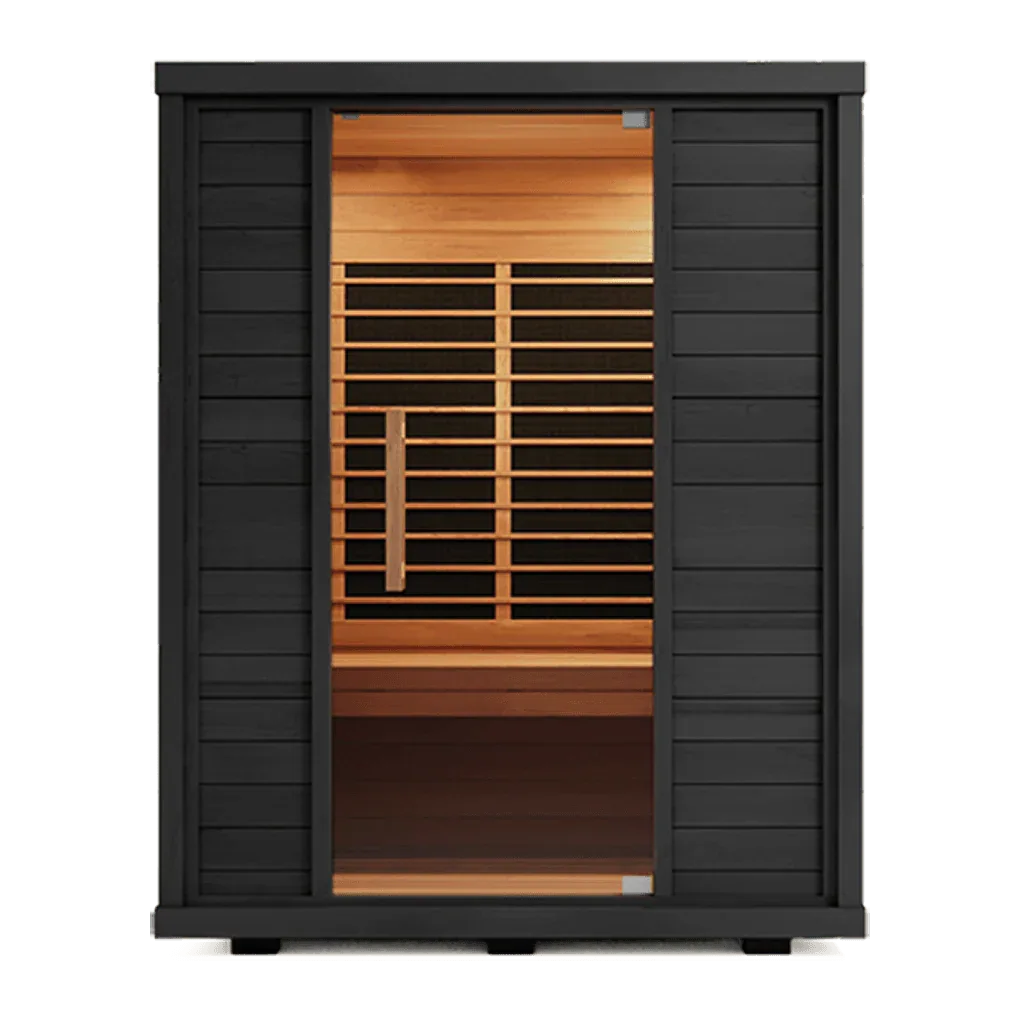
For those seeking premium, low-EMF performance in a full cabin experience without compromises, investing in a certified system like the Sun Home Equinox ensures absolute safety. Sun Home Saunas
Thermal Budget: Heater Placement and Core Body Uniformity
In any thermal chamber, performance is governed by thermodynamic stability. Budget wooden cabins under $2,000 often cut corners on insulation, using thin 1/4-inch double-wall hemlock panels that yield an insulation rating of only R-1.5 to R-2. This low R-value allows rapid thermal dissipation through the cabin walls, forcing the heaters to run constantly just to maintain ambient temperature.
To compensate for this, heater placement must be strategic. If the emitters are only placed behind your back, your front core acts as a radiator, shedding heat into the cooler parts of the cabin. To achieve true core body temperature elevation, a sauna must deliver 360-degree coverage, including back, side, and front calf heaters. Without this uniform distribution, your body cannot reach the consistent 38.5 °C core temperature necessary to trigger profound cardiovascular benefits, such as nitric oxide release and improved endothelial function.
Material Integrity: Eliminating VOC Off-Gassing and MDF
Your home sanctuary should be a place of detoxification, not toxic exposure. Under temperatures exceeding 45 °C, materials inside a sauna cabin begin to outgas. Many budget manufacturers use medium-density fiberboard (MDF), particleboard, or cheap plywood in structural areas hidden from view. These engineered woods are bonded using urea-formaldehyde adhesives, which off-gas hazardous volatile organic compounds (VOCs) when heated.
To guarantee material safety, demand zero-VOC certification and ensure that only water-based, non-toxic glues are utilized. Hemlock wood must be kiln-dried to a moisture content below 8% to prevent warping, sap leakage, and mold growth, conforming to international standards of lumber quality. Always ask the manufacturer for their raw material safety data sheets (MSDS) before committing to a purchase.
The Smarter Alternative: High-Performance Portable Infrared
If your budget is strictly capped at $2,000, attempting to squeeze a full-sized, dual-walled wooden cabin into your home often forces you to accept dangerous compromises in EMF shielding, wood quality, and heating efficiency. Fortunately, there is a way to access pure, clinical-grade far-infrared therapy without compromising on safety or your budget.
High-end portable infrared devices, such as professional-grade sauna blankets, concentrate all of their engineering into the heating element itself rather than expensive wooden cabinetry. By placing the low-EMF carbon heaters in direct proximity to your body, these systems eliminate the energy waste associated with heating an entire cabin's volume. This maximizes the photon-to-skin transfer rate and delivers an intense, sweat-inducing hyperthermic session at a fraction of the cost, complete with flexible financing options and comprehensive warranties to eliminate any purchase friction.
Pros
- Accesses therapeutic 5-15 μm far-infrared wavelengths at a fraction of cabin costs
- Low-EMF construction protects cellular signaling pathways
- Extremely space-efficient, portable, and easily stored under a bed
- Zero risk of VOC off-gassing from cheap adhesives or engineered wood
Cons
- Does not offer the social, multi-person experience of a full cabin sauna
- Requires lying down rather than sitting upright during treatment
Technical Verdict
Engineering a high-performance heat sanctuary under $2,000 requires prioritizing spectral purity and electromagnetic safety over physical cabin size. Portable far-infrared technology delivers the exact same cellular hyperthermia and HSP70 upregulation as a $10,000 cabin, safely and efficiently.
→ View Specs & Pricing