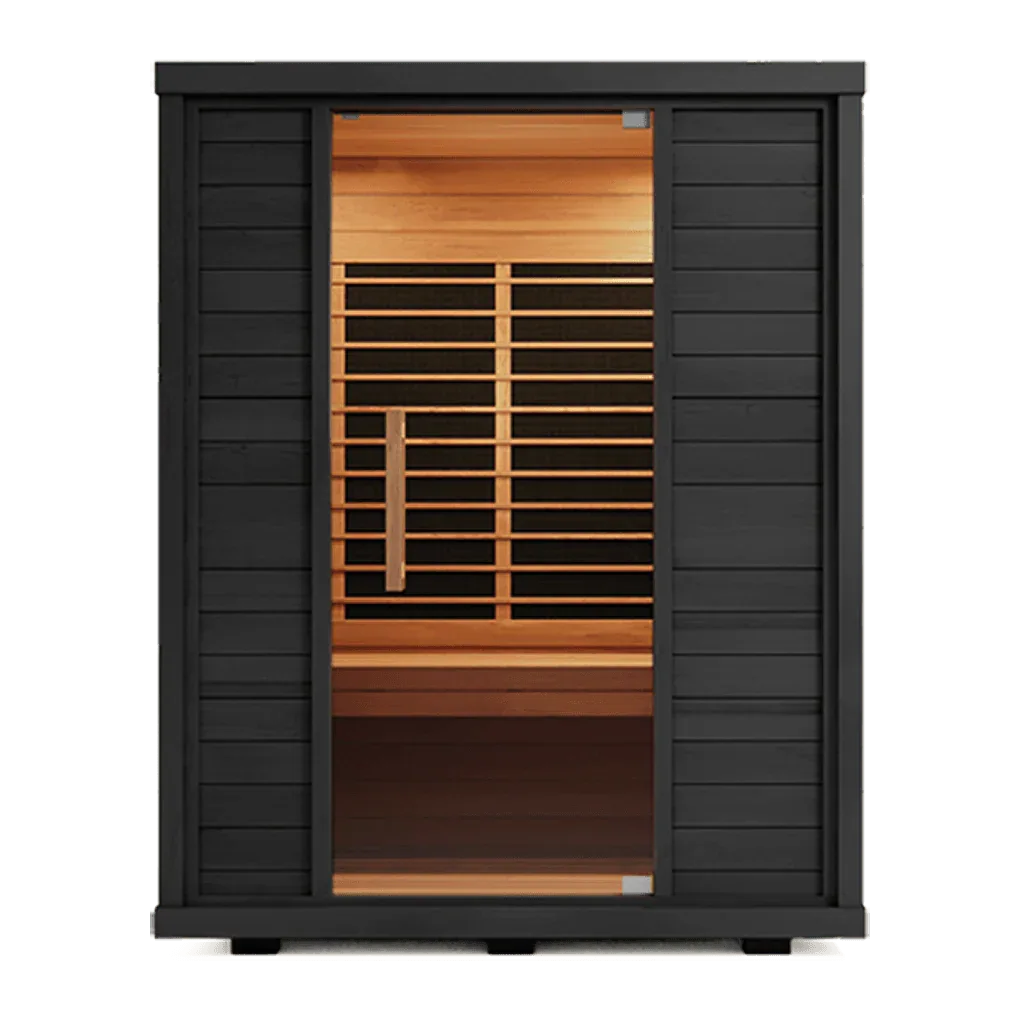

Imagine crossing the threshold of your home after a taxing, high-stress day, leaving the noise of the outside world behind as you step into a deeply therapeutic, restorative private sanctuary. Within the Western red cedar cabin of the Sun Home Solstice 4-Person Sauna, your breathing slows, your autonomic nervous system transitions from sympathetic fight-or-flight to parasympathetic rest-and-digest, and a deep, penetrating warmth begins to relax tight muscle tissue and induce a profuse, purifying sweat. This profound sensory experience, your daily physical and mental reset, is not an accidental luxury. It is the result of meticulous thermoregulation engineered to maintain the perfect thermal envelope. At the heart of this physical sanctuary is a highly advanced piece of hardware: the SaunaLogic 2 controller. Sun Home Saunas By managing energy, current, and heat transfer with microsecond precision, this digital nervous system ensures your personal retreat operates safely, efficiently, and at the exact thermal peak required for cellular recovery.
PID Tuning Logic: Minimizing Overshoot via Ziegler-Nichols Autotuning
Traditional, low-cost sauna controllers use basic bimetallic or simple on-off thermostat relays. This outdated design causes a jarring "saw-tooth" temperature profile, where the heater cycles fully on until it overshoots the target temperature, and then cycles completely off, leaving you shivering as the room cools before restarting. The SaunaLogic 2 eliminates this discomfort by employing a highly sophisticated Proportional-Integral-Derivative (PID) control loop. Operating under the safety and construction guidelines of IEC 60335-2-53, the controller constantly monitors the room's thermal state and dynamically modulates power to the resistive heating elements.
To achieve a stable thermal environment, the controller's firmware uses a modified Ziegler-Nichols closed-loop tuning algorithm. During the initial heat-up cycle, the system calculates the thermal inertia of the sauna room, typically ranging from 0.5 to 1.5 m³ of air volume along with the thermal mass of the interior timber and rocks. By determining the ultimate gain and ultimate period of oscillation, the PID loop establishes precise coefficients: Proportional gain (KP) handles the immediate temperature error, Integral gain (KI) eliminates the systematic steady-state error, and Derivative gain (KD) dampens the rate of thermal change. The result is an exceptionally smooth, critically damped thermal rise that caps temperature overshoot at less than 2°C, ensuring a perfectly consistent environment for deep relaxation.
Wiring Topology: 4-Wire vs. 3-Wire Delta Configurations
Power delivery is the backbone of any high-performance heating system. When upgrading or installing the SaunaLogic 2 controller, understanding the electrical wiring topology is critical. For residential applications, a 4-wire single-phase configuration (L1, L2, Neutral, and Ground) is standard. This setup ensures that while the heavy resistive load is driven by 240V across L1 and L2, the controller's internal microprocessor, Wi-Fi module, and low-voltage relays can safely draw 120V between either line and neutral. This division prevents voltage imbalances and ensures complete separation of control and power circuits.
In commercial settings, or where a 3-phase delta supply is present, the wiring must be carefully balanced. A 3-wire delta configuration utilizes three active phases without a neutral line to supply the primary heating elements. If the elements are improperly balanced across these three phases, it can lead to phase-to-phase voltage fluctuations and excessive neutral currents in upstream distribution panels. Sun Home Saunas The SaunaLogic 2's contactor stage can be configured to split the load evenly across phases, maintaining electrical equilibrium and adhering to local electrical codes while protecting sensitive internal electronic components from phase-imbalance wear.
NTC Thermistor Placement: Averaging Chamber vs. Stove-Embedded Feedback
The performance of even the most advanced PID loop is entirely dependent on the quality of its input data. The SaunaLogic 2 relies on a high-precision Negative Temperature Coefficient (NTC) thermistor, specifically a 10kΩ resistor at 25°C with a beta parameter (β) of 3950. As the temperature rises, the thermistor's electrical resistance decreases in a highly predictable, non-linear curve, allowing the microprocessor to resolve temperature changes with a resolution of 0.1°C.
However, physical placement of this sensor is a critical engineering challenge. If the thermistor is mounted too close to the heater (stove-embedded feedback), it reads the rising radiant plume of heat directly off the elements rather than the actual air temperature of the room. This leads to premature heater shutoff, leaving the seating benches cold. Conversely, placing the sensor in a dead-air zone on the ceiling can cause thermal lag, where the heater runs too long and overshoots the safe operating limit. The optimal placement is a ceiling-mounted averaging chamber, positioned approximately 12 inches below the ceiling and offset 24 inches horizontally from the edge of the stove. This positioning ensures the sensor reads the true convection currents of the cabin, guaranteeing that when you set your sauna to a therapeutic 175°F (79.4°C), the air surrounding your body is precisely that temperature.
SSR Sizing and Heat Sink Thermal Resistance
To execute high-frequency pulse-width modulation (PWM) control without the noisy and wear-prone clicking of mechanical contactors, the SaunaLogic 2 utilizes Solid State Relays (SSRs). These semiconductor switches use a triac or back-to-back thyristor design triggered by an optocoupler, completely isolating the low-voltage control circuitry from high-voltage lines. By synchronizing switching with the AC line voltage's zero-crossing point (per NEMA ICS 2-1995 standards), the SSRs minimize electromagnetic interference and line voltage harmonics.
However, SSRs have an inherent forward voltage drop, typically around 1.2V. When driving a heavy resistive heating load, such as an 8.5kW element drawing roughly 35A, this voltage drop generates significant thermal energy within the solid-state junction itself (P = I × V, resulting in approximately 42 Watts of waste heat). Without efficient heat dissipation, the internal silicon junctions will rapidly exceed their maximum rated operating temperature (usually 125°C), leading to thermal runaway and permanent switch failure. To prevent this, the SaunaLogic 2 housing is designed with a premium aluminum heat sink. This heat sink must maintain a total thermal resistance (Rθ) of less than 0.5 °C/W from the junction to the ambient air. High-conductivity thermal paste must be applied evenly between the SSR metal backing plate and the heat sink to eliminate micro-gaps and maximize heat transfer. Sun Home Saunas
GFCI Integration: Arc-Fault Mitigation in High-Moisture Environments
Saunas are demanding environments for electrical components, combining high ambient temperatures with higher relative humidity. When water is poured over hot rocks to generate steam, micro-condensation can settle on electrical connection points, deteriorating insulation materials over time and increasing the risk of current leakage or electrical arc faults. To protect users, the SaunaLogic 2 integrates dual-channel Ground Fault Circuit Interrupter (GFCI) monitoring, engineered to meet the stringent requirements of UL 943 and National Electrical Code (NEC) Article 424.44.
The system continuously monitors the vector sum of currents flowing through the active lines. If an imbalance is detected, indicating that current is escaping to ground through a moisture path or a human body, the integrated GFCI circuit trips, severing all power within 25 milliseconds at a threshold of 30 mA. Also the system incorporates a redundant, hardwired Class 155 thermal cutoff. If room temperatures exceed a safe mechanical threshold (typically 130°C), this high-limit switch physically interrupts power to the main contactor coil, providing a failsafe mechanism that bypasses all software and processor control to prevent thermal runaway.
Firmware Update Protocol: CAN-Bus Flashing via J1939 Connector
The SaunaLogic 2 is not a static piece of hardware; it is an intelligent, software-driven platform. To support continuous performance optimization, customizable heating profiles, and smooth integration with modern smart-home ecosystems, the controller features a dedicated communication and diagnostic port. using the highly reliable Controller Area Network (CAN-Bus) protocol, standardized under SAE J1939, the controller communicates internally with auxiliary heating elements, chromotherapy lighting arrays, and external user interfaces.
When a firmware update is required to optimize PID coefficients or add integration features, technicians or advanced users can flash the motherboard using a secure CAN-to-USB interface plugged into the J1939 diagnostic connector. This differential bus communication standard is exceptionally solid against electromagnetic noise, ensuring that firmware updates are flashed to the non-volatile EEPROM memory without any risk of data corruption or device bricking. This future-proof architecture guarantees your home wellness sanctuary remains at the modern of thermal engineering and software capability for years to come.
Pros
- Highly precise PID-loop control keeps temperature fluctuations below 2°C
- Solid State Relays (SSRs) with zero-crossing switching extend component lifespan
- solid dual-channel GFCI safety protection designed for high-humidity environments
Cons
- Requires professional installation by a licensed electrician for proper 240V wiring
- Higher initial investment compared to basic analog controllers
Technical Verdict
The SaunaLogic 2 represents the absolute pinnacle of residential sauna thermal management. By combining Ziegler-Nichols PID auto-tuning, solid SSR switching, and rigid safety protections, it transforms a simple heating cabin into a scientific instrument of recovery, providing the ultimate reliable thermal sanctuary.
→ View Specs & Pricing